|
Dear neighbor,
The Minneapolis City Council has concluded its business for the calendar year which means we have officially completed our first term.
At our final meeting of the year, the City Council unanimously passed a resolution declaring unsheltered homelessness a public health emergency. This resolution was brought forward by my office along with Council Members Osman, Payne, Wonsley, Ellison, Chughtai, Koski and Chowdhury (this passed unanimously).
By declaring unsheltered homelessness a public health emergency, the Minneapolis City Council is committing to exploring all policies, actions, partnerships, and investments to urgently and meaningfully address this emergency alongside the Mayor and the City of Minneapolis.
My hope is that we begin to treat unsheltered homelessness with a public health approach rather than the current inhumane and regulatory approach. We should treat our neighbors with dignity and compassion.
Sincerely,
Jason Chavez
Content Warning: violence, hate and death.
Trans Lives Matter. We’re witnessing an anti-trans violence epidemic. Savannah Ryan Williams should be alive today and she mattered.
She was shot in the head and left for dead on November 29, 2023 on Fourth Ave South near Lake Street. Trans community members, like everyone else, should never have to worry about what’s going to happen to them. Or if hate crimes will be committed against them.
I’m committed to doing my part to listen to our community in ways the City can better support our trans community.
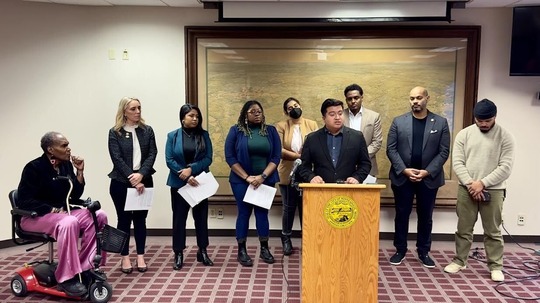 The Mayor and his administration are planning to evict Camp Nenookaasi on December 14, 2023. During this holiday season, there are going to be 180+ additional people without a place to go. This plan will lead to people having no place to sleep, mass displacement of people, and the formation of new encampments in our neighborhoods.
The Mayor was recently sent a letter by 60+ faith leaders in Minneapolis asking him to reconsider this mass displacement effort.
Council members Jamal Osman, Elliott Payne, Robin Wonsley, Jeremiah Ellison, Jason Chavez (myself), Aisha Chughtai, Emily Koski, and Aurin Chowdhury also submitted a letter to Mayor Frey's Office regarding our concerns:
We, the undersigned members of the Minneapolis City Council, are formally contacting you to express our concerns regarding the planned December 14, 2023, eviction of an encampment located at the 23rd Street and 13th Avenue South intersection in the Ventura Village neighborhood of Ward 6. This encampment, commonly known as Camp Nenookaasi, is home to over 180 residents.
This encampment was formed approximately 4 months ago in August, 2023. Community members in South Minneapolis have self-organized to create systems of safety, security, peacekeeping, and care at the Camp. Many of them attended the December 5, 2023 Public Hearing on the 2024 City Budget to share powerful and heartbreaking stories of their experiences.
Camp Nenookaasi has proven to be a unique example of an encampment. Since its formation, Camp Nenookaasi has successfully transitioned 74 residents into permanent housing, helped countless residents access basic healthcare, and supported dozens of residents in starting the journey of sobriety from substance use disorder. Notably, they have ensured no resident has lost their life due to an overdose.
It’s impossible to transition the remaining 180+ residents to a permanent home or long term shelter in a week. Camp Nenookaasi residents and the community members supporting them have been clear: they need more time and resources to get the residents living in Camp Nenookaasi into permanent housing, not a permanent delay of a future closure. The residents, community members, and service providers want to be a part of the solution in reducing homelessness, ending the cycle of encampment formation and eviction, and addressing serious and urgent public health issues our unsheltered community faces.
Unsheltered homelessness and encampments are a reality our city is struggling with, one that is stemming from many causes. The U.S. Department of Housing and Urban Development’s Understanding Encampments of People Experiencing Homelessness and Community Responses report found that “increases in homelessness are first and foremost the result of severe shortages of affordable housing, combined with a lack of political will to dedicate sufficient resources to address this problem. Encampments form in response to the absence of other, desirable options for shelter.”
We can all agree that encampments are not the long term solution, nor should we consider living in a tent outside in subzero temperatures “dignified housing.” But neither is the current approach carried out by the administration you lead. Without a permanent, dignified place to go, unhoused residents will continue to form new encampments after each closure. It’s time for us to put our differences aside. We must work together to explore new, evidence-based solutions. We’re sincerely offering our partnership to meaningfully and urgently address this crisis.
We request the following actions from you and your administration:
First and foremost, delay the eviction of Camp Nenookaasi until February 16, 2024. The eviction on December 14, 2023 will only lead to harm done to unsheltered residents through the loss of relationships to the service providers giving them critical services to meet healthcare and housing needs. This eviction, like previous evictions, will disburse unsheltered residents throughout our city and will lead to the formation of new encampments impacting the health and safety of neighboring Minneapolis residents.Evicting Camp Nenookaasi will displace around 180 people, and in conjunction with other planned and recent evictions will continue to intensify the crisis of encampments across the city. Finally, this will break trust in government services at a time when we need our unsheltered population to feel they can receive reliable services to access housing, treatment, and other support.
Second, between now and February 16, 2024, pursue all efforts to address public health needs at Camp Nenookaasi and the surrounding community. Coordinate with Hennepin County, our organizational and community partners, and service providers to increase the frequency and amount of resources available to unsheltered residents at this site to provide healthcare, substance use disorder treatment, and most importantly access to permanent housing. In carrying this out, we request that you work with the community members who have been organizing and supporting the operations at Camp Nenookaasi.
Finally, we request you meet and work with us to collaborate on short-term, medium-term, and long term solutions to reduce homelessness, prevent the formation of encampments, and address the serious and urgent public health issues unsheltered populations in Minneapolis face. The solutions we are bringing forward include and are not limited to: coordinating with partners in governmental agencies and service provider organizations to open a Navigation Center with wrap-around services available onsite, supporting the Council’s efforts to enact a Safe Outdoor Space Ordinance and an Encampment Response Policy Ordinance, and presenting solutions to dramatically increase the availability of permanent housing options for residents transitioning out of homelessness. We look forward to a response from you, one that includes your commitment to working with us to meaningfully and urgently address our city’s unsheltered homelessness crisis.
Sincerely,
Jamal Osman, Ward 6 Council Member
Elliott Payne, Ward 1 Council Member
Robin Wonsley, Ward 2 Council Member
Jeremiah Ellison, Ward 5 Council Member
Jason Chavez, Ward 9 Council Member
Aisha Chughtai, Ward 10 Council Member
Emily Koski, Ward 11 Council Member
Aurin Chowdhury, Ward 12 Council Member
 The Minneapolis City Council adopted the 2024 Budget on December 5, 2023.
The 2024 budget includes significant investments in the City’s record-setting affordable housing production, a historic level of funding for public housing, strategic inclusive economic recovery work, and alternatives for public safety strategies and police reform.
The budget also triples funding for climate action work across Minneapolis and allocates historic funding for the health of the city’s parks and public water systems.
The budget totals $1.8 billion with a tax levy increase of 6.2%.
Affordable and Public Housing
- Adds an additional $4 million in the Minneapolis Public Housing Authority, bringing the total ongoing funding to $5 million -- five times the previous funding level
- Increases funding to $18 million for the Affordable Housing Trust Fund, helping produce and preserve quality affordable housing across Minneapolis
- Invests $2 million in Minneapolis Homes, increasing affordable homeownership opportunities and addressing racial disparities in homeownership
- Adds $950,000 in capital funding for additional shelter capacity to help residents facing homelessness
- Expands Proactive Renter’s First and Alternative Enforcement Initiatives by more than $300,000, helping provide additional staff to focus on holding property owners accountable when traditional enforcement is not effective
- Replenishes the Renter Relocation Fund with $150,000 in one-time funding and $90,000 in going funding to continue providing services
- Created funds for a multitude of social services to be coordinated for people experiencing homelessness, unstable housing, food insecurity, and deep poverty to help meet basic needs in a safe and welcoming environment.
Climate and Public Health
- Invests $10 million annually into the Minneapolis Climate Legacy Initiative to support the City’s climate goals over the next decade, tripling previous climate work investments. This investment includes: $4.7 million toward weatherizing all homes in Minneapolis, $1.4 million in workforce training, and $850,000 in the City’s tree canopy program
- Puts forward nearly $3 million to address the opioid crisis, including for culturally responsive treatment facilities, new programming, and additional staff
- Invests $500,000 into Turning Point, a nonprofit on the Northside that provides culturally specific behavioral health services and training
- Adds nearly $1 million to a medical mobile unit that will travel around the city to provide opioid treatment and services to residents
- Adds $730,000 to go toward Electric Vehicle Charging stations across Minneapolis
- Ensured culturally specific opioids recovery and harm reduction services to be implemented.
- Supported community health and wellbeing in high-need areas throughout the city.
Economic Inclusion
- Invests an additional $3 million to the Ownership and Opportunity Fund to provide ownership opportunities to local BIPOC small business owners
- Adds nearly $1.3 million for future planning and development of George Floyd Square, including art preservation and community engagement
- Provides a direct investment of $420,000 in neighborhood organizations across the city, increasing the base budget for each neighborhood from $10,000 to $15,000 and ensuring that every neighborhood receives a minimum of $5,000 in equitable engagement funds
- Supports the implementation of recommendations from the Vibrant Downtown Storefronts Workgroup with $650,000 in funding
- Invests $315,000 in the Community Planning and Economic Development (CPED) department to help plan for upcoming recreational cannabis regulations
- Adds a Director of Strategic Initiatives in CPED to coordinate downtown activity and build partnerships
- Continues the Warehouse District Live pilot program with $750,000
- Expands funding for Black Business Week and Latino Business Week in Minneapolis
- Continues the Community Outreach and Safety Program that provides competitive grants to community-based organizations to provide training for young people interested in public safety careers
- Established funding to continue the Open Streets event series.
- Funded the Developers Technical Assistance Program (DTAP) to make certain that more resources can be made available to small and emerging real estate developers.
- Ensured fair raises for some of the lowest-paid city workers who support basic civic services.
- Increased labor standards co-enforcement programs to protect workers’ rights.
Community Safety and Police Reform
- Invests approximately $16 million for the implementation of the federal consent decree, funding a team of 34 dedicated positions in MPD, Civil Rights, and Information Technology.
- Expands the Behavioral Crisis Response program with ongoing funding of $2.9 million
- Funds 731 sworn officers in the Police Department and 8 classes of new hires, additionally investing $7.126 million for overtime and contracting with other law enforcement entities
- Builds out the Department of Neighborhood Safety and its violence prevention work with a $3.3 million investment
- Invests $2 million to add 15 new civilian positions within MPD to bolster investigative and administrative functions
- Supports the addition of three positions in the Office of Community Safety, helping to fulfill safety innovation work recommended through the Minneapolis Safe and Thriving Communities Report.
- Allocates $150,000 to the Minneapolis Fire Department to update computer systems in fire trucks to ensure personnel are quickly alerted of priority calls
- Funds a Lake Street Community Safety Center for residents to file police reports, turn in lost items, get information, connect with our public safety system, and organize alternatives to police work.
- Safety ambassadors for the seven cultural districts (38th Street South, Cedar Avenue South, Central Avenue, East Lake Street, Franklin Avenue East, West Broadway, Lowry Avenue North, Uptown, Dinkytown, Mill District, and East Hennepin) - staff in key commercial corridors who increase safety through visibility and connect residents to social services and resources.
- Sidewalk snow and ice removal- City-led clearing of key segments of Pedestrian Priority sidewalks and transit stops; increased enforcement to property owners with repeated violations; and sidewalk clearing services for seniors and elders.
- Public safety pilots for the proposed Third Precinct/Community Safety Center- $4 million to pilot new unarmed public safety programs rooted in diversion, restorative, and prevention services, at 2633 Minnehaha Ave.
- Increased domestic violence navigators and resources for survivors.
City Capacity and Performance
- Invests $2.7 million in the Minneapolis Park & Recreation Board to repair parkway systems across the city, an increase from $750,000 last year
- Allocates $500,000 annually via the City’s storm water fee to fund critical analysis of the Park Board’s storm water infrastructure
- Invests $470,000 for new Public Works equipment to increase lifespan of pothole repairs and continue efficient and effective snow clearance -- as well as $500,000 for a permanent snow removal and storage site
- Supports Minneapolis Animal Care and Control with a $365,000 investment, helping to better staff animal shelters
- Expands the Human Resources Department with eight permanent positions to improve the City’s ability to recruit and retain high-quality staff
- Increases investments in the Legislative Department, including constituent services planning, audit and evaluation work, data practices and records, elections, along with additional attorneys in the City Attorney’s office to support the Legislative Department.
- Enhanced funding for an additional 40 traffic calming projects to be completed in 2024.
- Established funds to repair the Witch’s Hat to be safely reopened.
- Amplified funds to optimize services and resources to our immigrant, refugee, and senior community members.
- Advanced funding for a new Legislative Department with a dedicated nonpartisan team to better serve residents through enhanced community outreach and engagement programs, communications, and constituent services.
- Improved the city's financial policies to strengthen government oversight and transparency.
 |
|
Minneapolis 311 and the Minneapolis Service Center will close Tuesday, Dec. 19, for a one-day training. Staff will gather to reimagine service delivery to Minneapolis residents and how they can continue to provide exceptional service.
They will resume regular business hours Wednesday, Dec. 20.
How to get information when 311 services are closed
You can get City information and make reports online whenever 311 is closed or leave a message for a call back.
- Find information about City topics or departments on the City website.
- Tell the City about issues from barking dogs to graffiti using an online form.
- Dial 311 or 612-673-3000 and leave a message for a call back when business hours resume.
As always, call 911 for emergencies.
About the 311 Service Center
The 311 Service Center offers City information and services online on the City website, over the phone at 311 or 612-673-3000, and in person at 505 Fourth Ave. S., skyway level.
|
 |
|
Human Rights Day is Dec. 10, and International Migrants Day is Dec. 18. The City Council approved a resolution Dec. 7 honoring Human Rights Day and International Migrants Day.
Human Rights Day honors the anniversary of the Universal Declaration of Human Rights, an international treaty that recognizes the rights we all hold as humans. This year marks the declaration’s 75th anniversary.
International Migrants Day recognizes another international treaty, the International Convention on the Protection of the Rights of all Migrant Workers and their Families. This document highlights the link between migration and fundamental human rights.
Online events recognizing Human Rights Day and International Migrants Day
Twin Cities Immigration Forum special edition: Join the City of Minneapolis Office of Immigrant & Refugee Affairs and the City of Saint Paul Immigrant and Refugee program. 4:30-6 p.m. Thursday, Dec. 14 Join the meeting on Teams.
Immigration 101 information session: Join immigration experts from the University of St. Thomas Law School and The Advocates for Human Rights for an online information session on immigration to the United States. Learn about different types of immigration status in the U.S., transition pathways and obtaining immigration status, and challenges and opportunities based on a person’s immigration status. 10:30-11:30 a.m. Friday, Dec. 1 Join the meeting on Teams.
Find more information on the City website.
|
How would you invest in regional transportation? The Metropolitan Council and the Transportation Advisory Board would like to know how you’d distribute funding for transportation projects. Your responses will help inform the Transportation Advisory Board as it considers projects this spring.
Use this tool to build your budget and learn more about the funding categories. The budget exercise will be open through Jan. 31.
Projects focus on results such as moving more people more effectively, managing congestion and improving air quality.
Are you looking to upgrade your windows, or improve your heating and cooling system? Minneapolis homeowners and property owners making energy-saving improvements can apply now for help.
Kosar’s story: From high bills to living in a paradise
Meet Kosar Mohamad, who, after years of high energy bills, went to the City for help weatherizing his home. After getting energy-efficient updates, Kosar describes living in his home as a “paradise.”
Watch Kosar’s story: Transforming Homes and Lives: The Green Cost Share Program in Minneapolis.
Apply now
Take the first step toward a more energy-efficient home, and help reduce climate change.
Visit the City website for more information, and apply for the City’s Green Cost Share program
In 2024, the minimum wage across the city of Minneapolis will rise to $15.57. First, on January 1, 2024, larger employers (having more than 100 employees) and franchises start paying at least $15.57.
Next, on July 1, 2024, all other employers (having 100 or fewer employees) reach the same required minimum wage of $15.57.
Find more information on the City’s website or email Civil Rights staff.
State of Minnesota law
Also in 2024, the State of Minnesota earned sick and safe time law is expanding paid sick leave protection to employees all across the state. It requires paid sick or equivalent leave (just like in Minneapolis) to be provided by all employers to their employees.
For more information, visit the MN Department of Labor and Industry’s website. Investment in people grows businesses and healthier communities.
Help for employers
No cost and risk-free (amnesty) compliance assistance for employers is available by emailing the Civil Rights Department or through free business legal advice provided by the City’s business technical assistance program.
 |
|
The City has won a grant to help make walking and biking to school easier. A Bloomberg Asphalt Art grant will help the City improve traffic safety on 21st Avenue South for students attending South High, Folwell Community School and Transition Plus School.
In spring 2024, the artist or artist team will visit schools and develop designs for the asphalt art project with students. Students can also help paint the artwork. The mural will be installed for two years.
Learn more about the South-Folwell Safe Routes to School Project.
|
Email: jason.chavez@minneapolismn.gov
Phone: 612-673-2209
Address: City Hall, 350 S. Fifth St., Room 307 Minneapolis, MN 55415
Or fill out our contact form here.
|
|