|
Dear Community,
It’s a busy time of year at City Hall when we work on the 2024 Budget as well as advancing ordinances and policy work before the end of the term. I’m excited to be advancing several ordinances related to reining in exploitative landlords, pay increases for rideshare drivers, and accountability for off-duty police work, as well as an extensive package of budget amendments to expand comprehensive public safety beyond policing. Council will be on break this week, so the next Ward 2 Update will come out on December 1st.
Sincerely,
Council Member Robin Wonsley
The city of Minneapolis received $19 million from the Minnesota State Legislature for use on public safety. The state legislature was extremely intentional with these Public Safety dollars and included a host of ways this $19 million could be spent, with various opportunities to build out the city’s new comprehensive public safety system. However, Mayor Frey proposed spending $15 million of the $19 million on retention incentives for police. This proposal emerged from the ongoing police union contract negotiations. The labor negotiations team brokered a standalone agreement in which officers would receive $15,000-$18,000 over the next three years. This standalone agreement did not include any structural reforms that many residents, many of my colleagues, and I have been advocating for.
During the special session, it was also confirmed that recruitment and retention bonuses have failed to be successful in Minneapolis, as well as other cities like Seattle, who recently offered $30,000 in bonuses and yet to see returns on their investment. It is worth noting Seattle entered into a consent decree with the United States Department of Justice due to their police being found to have a pattern of excessive force and police bias. Staff, including Police Chief O’Hara conceded that they were unsure if these incentives would work.
Despite repeated promises of a commitment to comprehensive public safety, the Mayor proposed to take over 80% of our comprehensive public safety dollars and give bonuses to MPD. This is doubly concerning when the administration has been unable to demonstrate, despite repeated asks, if these bonuses in fact do help retain and recruit officers.
The Mayor’s proposal was rejected by a majority of the Council. Many Council Members shared that this use of funds obviously does not align with the city’s stated intentions, and were displeased at the very poor process by which this proposal was brokered and brought forward. Council Members also shared the exciting alternative budget proposals they were advancing that would use the $19 million for community-focused public safety programs.
Following the rejection of the proposal at the Committee of the Whole on Tuesday, Mayor Frey called a special session of the Council to make us reconsider the item on Friday. It was voted down again for the same reasons.
While I was at the capitol earlier this year, my conversations with electeds was around the various opportunities these dollars could create that were beyond policing. If the intention was to use the majority of these dollars for just police bonuses legislators would have been more restrictive in potential uses, or just directly allocated money to police departments.
I also want to emphasize that the city’s inability to recruit and retain police officers is closely linked to dysfunction and problems within MPD. Every few weeks, there is a media story about an embarrassing incident related to MPD. Whether its MPD continuing to promote officers with problematic pasts into training and leadership positions, hiring incredibly problematic new officers, or early signs of failure to comply with the consent decree, MPD is not an attractive employer for serious, professional, and equity-oriented officers.
On the other hand, residents have made it clear repeatedly that they want the city to invest in expanding the comprehensive public safety system with programs like Behavioral Crisis Response, prevention, diversion, unarmed intervention, restorative and healing programs, and victims’ services. I am committed to working with my colleagues and residents to invest in comprehensive safety beyond policing. I am working with Council Member Jamal Osman on a proposal to use $4 million of the $19 million to invest in new pilot programs related to the Community Safety Center at 2633 Minnehaha.
Key votes: Council Members Payne, Ellison, Osman, Chavez, Chughtai, Koski, Johnson and myself voted against the Mayor’s proposal to give over 80% of the public safety dollars to MPD bonuses. Council Members Rainville, Vetaw, Goodman, Jenkins, and Palmisano voted in support. The votes were the same when the Mayor mandated a second vote on the same question.
Earlier this year, I authored the Fair Drives, Safe Rides policy along with Council Members Chavez and Osman. The policy guaranteed minimum wage equivalents and workers’ rights for rideshare drivers, and created safety and transparency protections for both riders and drivers. The policy was written in extensive consultation with drivers, city staff, and national experts. After receiving a majority vote of the City Council, it was vetoed by Mayor Frey. Council did not override the veto. During the veto and Council discussion on veto override, the Mayor and several Council Members expressed broad support for the goals of minimum wage equivalents and increased workers’ rights and safety protections, but expressed concerns with the specifics of the ordinance. We took these comments seriously and reached out to every Council Member and the Mayor to hear their specific concerns, feedback, and suggested changes.
During these conversations, Mayor Frey and a Council Member shared minimum compensation proposals they would prefer to the original proposal. Our legislative work on Fair Drives, Safe Rides has always prioritized using data as a basis for good policymaking. We have decided to do our due diligence and evaluate all three proposed minimum compensation models in a side-by-side analysis so that Council and the public can have clarity on which model gets drivers closest to a minimum wage equivalent.
To that end, we have introduced a legislative motion for a comparative analysis of the following three minimum compensation models. This comparative analysis will be presented to Council by January 19th, 2024:
Model A (Original proposal): A minimum compensation rate of $1.40 per mile and $0.51 per minute for the time transporting a rider.
Model B (Mayor Frey’s proposal): A minimum compensation rate of $1.17 per mile and $0.35 per minute for the time transporting a rider.
Model C (Alternative proposal): A flat rate of $24 per hour, applied only during time on the way to pick up a rider or during the time transporting a rider.
We look forward to using the results of this analysis to bring forward the policy that accomplishes the shared goal of guaranteeing minimum wage equivalents to drivers. We are hopeful that such a policy could pass with full support of the Council and Mayor early next year once there is full clarity on how the models compare to each other.
Key votes: No votes taken.
I gave a notice of intent to introduce an ordinance related to the city’s Vacant Building Registry. Last year, numerous residents reached out to my office expressing frustration with vacant buildings and their impacts in our community. They shared how vacant buildings hurt the vibrancy and safety of our commercial corridors, and how residential vacancy is a huge missed opportunity to help address our housing crisis. Since then, residents have organized around specific vacant commercial properties and have formed a coalition supporting fees on chronic residential vacancy.
Inspired by resident organizing, I authored a legislative directive to look at how the city could improve the current system for tracking vacant properties and incentivizing landlords to activate them. Thanks to that directive, it is now clear that there is an immediate action we can pursue now to increase financial penalties on landlords who keep their properties vacant for excessive periods of time.
I look forward to bringing this policy forward early next year. It’s just one of many I hope to take in collaboration with residents, city staff, and my colleagues to ensure we are activating our existing housing units and commercial properties for maximum benefit to the community.
Key votes: No votes taken.
Council voted on our policy priorities for the Minnesota State Legislature. This is a package of funding, policies, and laws that the City of Minneapolis advocates for at the state level to best support city goals.
I brought forward an amendment to include support for policies, programs, and funding that help Hennepin County and Minneapolis prepare for the closure of the Hennepin Energy Recovery Center, including source reduction, waste diversion, and more sustainable waste processing infrastructure.
Council Member Ellison and I will be bringing forward a legislative directive to begin to understand what is exactly needed in order for the City to be prepared for a HERC closure. The HERC closure has given the City of Minneapolis a large opportunity to become a leader in sustainable waste management. The added amendment to the legislative agenda will ensure we as a city, advocate for funds that will be needed to accelerate any of the operational and policy changes for a smooth transition.
Key votes: Unanimous support for my amendment for support with HERC closure.
Council voted on our policy priorities for the Minnesota State Legislature. This is a package of funding, policies, and laws that the City of Minneapolis advocates for at the state level to best support city goals.
I brought forward an amendment to seek authority for cities to charge fees that are reasonably related to the entire cost to the city of providing the service, permit or license.
During this term, my office has learned a lot about how fees work. The current state policy gives cities very limited authority in what fees we can charge, which creates barriers for the city to actually recoup all the costs associated with various issues. Examples of these issues include the social cost of carbon emissions, the impacts of vacant buildings on the rental market, and the true cost to taxpayers of off-duty police work. Addressing these limitations would allow the city to charge fees that more accurately capture the true cost of such programs. This amendment is also aligned with the League of Minnesota Cities policy platform.
Key votes: Unanimous support for my amendment expanding municipal fee authority.
The city has signed a $1,000,000 contract with the NYU Reimagining Public Safety Policing Project for implementation of the Safe and Thriving Communities Report. This is work that the city should be able to do in-house without spending an additional $1 million. The lead staff who were the architects behind the city’s internationally recognized Behavioral Crisis Response (BCR) team have all left, largely due to on-going challenges in receiving support in their work. The Office of Community Safety spent over a year failing to invest in the staffing and organizational infrastructure to do any work outside of media relations. While it is frustrating that we are incurring this additional cost and that it is happening several years after it should have begun, ultimately it is good that the city has committed to implementing the report which outlines a vision for a comprehensive public safety system.
Key votes: Contract passes unanimously.
Council was asked to approve a contract renewal with Hylden Law to act as the city’s lobbyists to the state legislature to advance the city’s priorities at the state level. The firm is led by Nancy Hylden, who served as legal defense for the Feeding our Future fraud, which stole hundreds of millions of dollars in child food aid. Unfortunately the majority of my colleagues supported this contract.
Throughout my term, I have continued to advocate for the city to do a better job of procurement with outside contractors. Repeatedly, department heads across the enterprise have disregarded best practices resulting in residents and potential vendors feeling as though the process is unfair. I will continue to advocate for better policies around procurement in the new term and will continue to provide updates through the Ward newsletter.
Key votes: I voted against the contract along with Council Members Payne, Chavez, and Chughtai. The majority of the Council supported the contract and it passed.
Council received a report on the city’s fund balances. Finance staff confirmed that the city is slated to have another surplus at the end of this year in the ballpark of $20-$30 million. In the past, this money has returned to the General Fund. However, Council has the budgetary authority to allocate these dollars during the first few months of 2024. I look forward to working with the community and my colleagues to use our authority to ensure these dollars are directed to the priorities residents care about most.
Key votes: No votes taken.
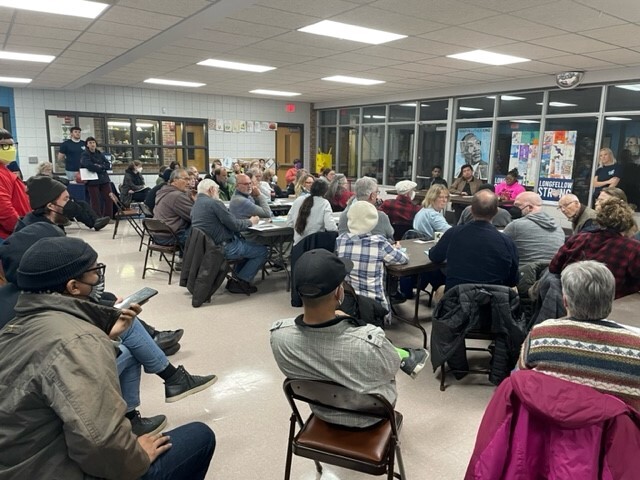
Thank you to Longfellow Community Council for hosting a community info session on the 3rd Precinct/Community Safety Center. It was a packed house and residents asked great questions. Neighbors expressed confusion and frustration at the rushed process, and concern that the city would continue to break its promises about investing in comprehensive public safety beyond police. Residents also expressed deep concern with lack of meaningful reform to MPD and opposition to having social services located in a police precinct.
I urge residents to continue holding the city accountable to these commitments. I am committed to using the full budgetary and fiscal authority of the Council in alignment with community priorities.
Email Council Member Wonsley and her staff at ward2@minneapolismn.gov
Or contact staff directly:
Policy Aide Celeste Robinson
Policy Aide Qannani Omar
Share your opinion or address an issue, use the Ward 2 contact form
|