|
As the days get longer and warmer, our thoughts of spring began increasing. We start thinking about our Spring to-do list and where and when to start. Now is the time to start the Spring cleaning and repair of bluebird boxes. Bluebirds arrive at nesting sites in February and March. The male selects a nest site and offers the female food. The female accepts the site by bringing nest material. She builds the nest. Second and even third nestings can occur through the summer until as late as August.
Eastern bluebirds once made their homes in tree cavities. Lacking good nesting spots these days, bluebirds have come to rely on nest boxes specially designed for them. A bluebird box placed by March can raise as many as three broods by summer’s end. In fourteen days, the eggs hatch, and in another couple of weeks the young are ready to fly from the box.
Bluebirds are rural birds, seen in open grasslands with scattered trees or fences. So, place boxes in open, grassy areas with perching sites. Meadows, pastures, savannas, cemeteries, or yards that are not too heavily shaded are ideal. It is best if the grass is short. Fence lines, power lines, scattered trees, or nearby woods provide good perches. Boxes placed in forests, inner cities, shaded yards, cultivated fields, or areas with only tall grass will probably be unsuccessful.
Tips for placing bluebird nesting boxes:
- Mount the box on a lone post
- Height: 4 to 5 feet.
- Space: 300 feet apart, you can pair nest boxes about 15–20' apart
- Painting is not necessary. If painted, use light gray or tan paint.
- Entrance hole should face east towards open habitat
For more information on Bluebirds and next boxes check out: Missouri's Bluebirds | MDC Discover Nature (mo.gov) and NestWatch | Eastern Bluebird - NestWatch.
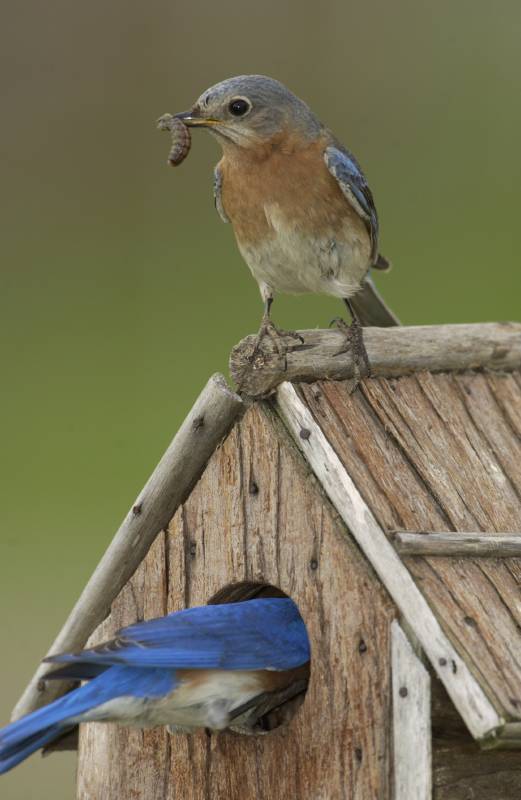 Bluebirds at nest box.
|