|
Monarchs are the only butterfly known to migrate long distances. It takes four generations to complete the journey to Mexico; the fourth generation will live the longest and travel the farthest, over 2,000 miles in flights. The monarchs of the fourth generation are the monarchs you see in the fall. This generation lay eggs during their return in the spring. Monarchs will stop for nectar for fuel along the way and store up fat to last through the winter; and will ride air currents to help conserve energy as they travel back to the same mountain forest in Mexico where their great-grandparents spent last winter.
How are monarchs able to find their way to a location they have never visited? Scientists and engineers at Michigan and Massachusetts universities believe they are close to answering this question. It is believed that monarchs have the innate ability to integrate the time of day and the sun’s location in the sky. Their large complex eyes track the sun’s position in the sky and their internal clock is centered in the antennae. The eyes and antennae send information to the brain. How this all works together is a modern navigation marvel.
Monarchs are declining throughout much of North America due to habitat loss in Mexico and the use of herbicide in North America. The use of herbicides by large scale farming has eradicated nearly all weeds, including milkweed, which eliminates places for monarchs to breed. The monarch larva feeds on a variety of milkweeds; the chemicals from these plants are stored in the insect’s body which makes it very unpalatable and toxic to many predators.
Ways to help the Monarchs:
- Make a monarch habitat at least 100 square feet.
- Plant native plants, including several different milkweed species and nectar plants, that need lots of sun.
- Plant in soil with good drainage.
- Plant milkweed and nectar plants close together to help shelter monarchs from predators and the elements.
For information on creating backyard habitat for monarchs and other butterflies visit https://mdc.mo.gov/wildlife/attracting-wildlife/backyard-habitat-monarch-butterflies. You can preorder your plants for your Monarch garden today and pick them up at our Fall Native Plant Pick Up here at Shoal Creek Conservation Education Center on Saturday, September 19, 2020.
On Wednesday, September 9, 6:00 p.m. is our Virtual Monarch Magic program that will allow you to learn more about the life cycle and migration of these beautiful butterflies before they quietly flutter away to their winter hibernaculum in Mexico. Be sure and register at https://mdc-event-web.s3licensing.com/Event/EventDetails/174304.
For more information about monarchs visit https://nature.mdc.mo.gov/discover-nature/field-guide/monarch.
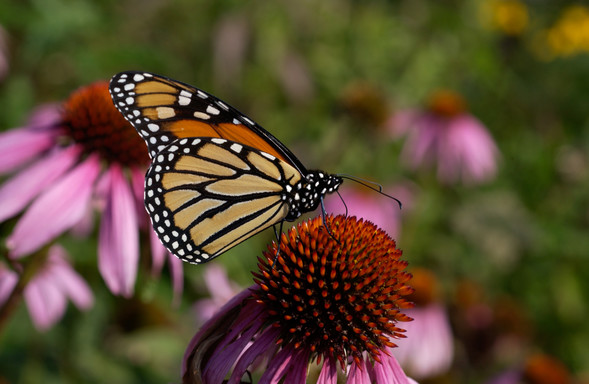 Monarch on Purple Coneflower
|