|
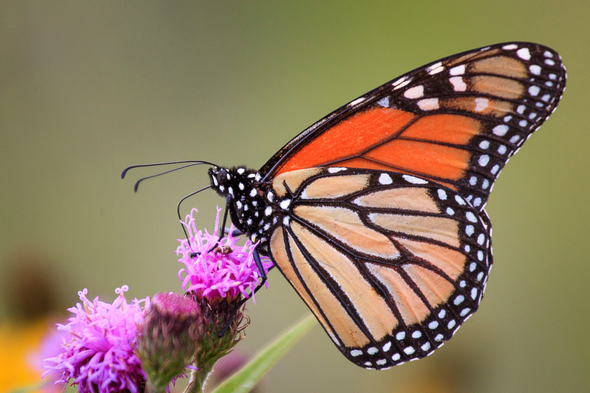
Visitors will enjoy a variety of interactive learning
experiences at this pollinator festival, such as monarch butterfly
tagging.
ST. CHARLES, Mo.—Using mysterious powers rivaling a GPS, monarch butterflies navigate a
landscape more vast than the span of the continental United States. With instinct alone as their guide and in
perfect sync, thousands journey through the air each autumn to one particular
mountain range in Mexico. It’s a specific roosting site custom-made for their
needs.
The showy, familiar orange
and black monarchs are the only insects that make this amazing migration. This incredible odyssey goes right through
Missouri. The Missouri Department of
Conservation (MDC) along with the U.S. Department of Energy (DOE), Missourians
for Monarchs, and a host of other partners are celebrating the monarch
migration with a special festival of pollinators. Monarch Madness takes place Saturday, Sept.
15, from 10 a.m.—3 p.m. at the DOE Weldon Spring Site Interpretive Center in St.
Charles. The event is free and open to
all ages.
Though monarchs are the
headliners, the Monarch Madness festival will celebrate all pollinating
creatures that help our plants thrive.
The event is free and will offer an interactive and fun way to learn
about pollinator declines and what people can do to help.
The event will also feature
kids’ crafts, games, exhibits, native garden demonstrations, butterfly tagging,
food trucks, music, and more. Visitors
can purchase native plants and get helpful advice on how to grow
monarch-sustaining plants at home. Guests
can also enjoy viewing and hiking the
site’s 150-acre restored Howell Prairie.
Limited parking will be
available on-site. Additional parking is available at neighboring Francis
Howell High School with a short, half-mile walk along the gravel Hamburg Trail
to the site. The Weldon Spring Interpretive Site is located at 7295 Highway 94,
approximately two miles south of I-64/40. For more information, call
636-300-2600.
Monarch Madness sponsors
include St. Charles County Prks, Missouri Master Naturalists, Missouri Master
Gardners, and Great Rivers Greenway.
As monarchs flit from plant
to plant in search of food, they spread pollen crucial to the reproduction of
their host plants. More than 75 percent
of the Earth's flowering plants depend on pollinators. It’s a relationship
vital to the survival of each—and us.
One out of every three bites of food we eat exists because of
pollinating insects.
Pollinator decline in the
recent past is a source of growing concern among scientists. It’s estimated that in the last 20 years, monarch
populations have plummeted more than 80%.
Dwindling habitat for these colorful butterflies is believed to be the
source of the drop.
Though the numbers for
monarchs may seem grim, people can do something to help. Planting backyard butterfly gardens can help
monarch populations recover.
Establishing milkweed and nectar plants will also give them a boost on
their long journey. Monarch Madness will
help visitors learn how they can make a difference. For more information about monarchs, go to https://goo.gl/C8imS5.
|