|
It’s
time to put out feeders! Their numbers will increase throughout the month of
April.
JEFFERSON
CITY, Mo. – The Missouri Department
of Conservation (MDC) encourages people to discover nature this spring by
learning about the ruby-throated hummingbird. Missourians will begin seeing
these birds this month as the tiny long-distance fliers return to the state as part
of their spring migration.
“Hummingbirds will be arriving soon and
a few have already been spotted in southern Missouri,” said MDC State
Ornithologist Sarah Kendrick. “It’s time to put out feeders! Their numbers will
increase throughout the month of April.”
Hummingbird feeder sugar water does not
need to be colored red, added Kendrick. The birds will find it and drink it
without coloring.
She noted hummingbirds.net/map.html is a fun and useful website to see when and where
hummingbirds are migrating. The migration map shows locations where the birds
have already been spotted this year as they migrate northward into the U.S. and
Canada. The website also allows visitors to help out by submitting dates and
exact locations of hummingbird sightings. Other online resources, such as eBird.org, also use birder-submitted information to track bird
sightings as they move northward.
Like about 80 other bird species that
breed in Missouri, hummingbirds typically migrate south in early fall and
migrate back north in the spring.
“Hummingbirds arrive in Missouri in
April and May to nest and raise their young. They then make their fall
southward migration in mid-August with most leaving by early October,” Kendrick
said. “A few birds overwinter in extreme southern coastal states, but most
overwinter from southern Mexico to Costa Rica. These tiny birds are so amazing!
During migration, they fly nonstop for 600 miles from the Gulf Coast of the
U.S. to the Yucatan Peninsula over the Gulf of Mexico and then back on their
return trips. They can lose half their body weight during this 24-hour flight.”
Early spring arrivals rely on sap oozing
from sapsucker-drilled holes and insects for food. With warmer weather, they
soon switch to eating nectar from many different kinds of flowers later in
spring. This gives them energy needed to catch insects all day long to feed
their young.
Hummingbirds are more than just a delight
to watch zipping around at your feeder, they also play very important roles in
our ecosystem.
“Hummingbirds are important pollinators
for many plants that require a long-billed pollinator,” Kendrick said. “And
because of their small size, hummingbirds can end up as food for predators,
such as large insects, spiders, other birds, and frogs.”
She added, “Another great way to help
hummers and other migratory birds is to grow native plants. Native plants
attract native insects, which are a vital food source for breeding birds. Great
native plants for hummingbirds include cardinal flower, jewelweed, and trumpet
creeper.”
Learn more about helping hummingbirds at
nature.mdc.mo.gov/discover-nature/activities/bird-feeding/attracting-hummingbirds.
Hummingbirds are found across Missouri
throughout the summer and can be seen around nectar feeders outside homes and
in parks and gardens. Hummingbirds nest in wooded areas on small tree branches
10-20 feet up, and are frequently observed near forests and streams. Learn more
through MDC’s online Field Guide at nature.mdc.mo.gov/discover-nature/field-guide/ruby-throated-hummingbird.
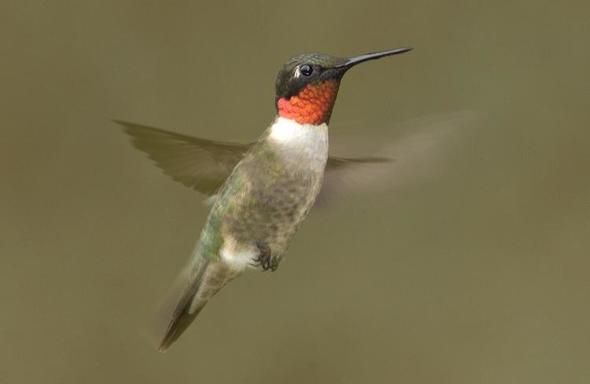 Ruby
throated hummingbirds are important pollinators for many plants that require a
long-billed pollinator. Learn more at nature.mdc.mo.gov/discover-nature/field-guide/ruby-throated-hummingbird
|