|
You may be surprised by who hibernates and who doesn’t.
CAPE GIRARDEAU, Mo. – There’s no need to rescue wildlife, even in winter,
according to Missouri Department of Conservation (MDC) naturalists. Though
winter is a challenging season for wildlife, each species has their own method
of surviving the cold. Some of them migrate, some hibernate, and others simply
den up and stay warm.
According to Jordi Raos, a naturalist at the Cape Girardeau Conservation
Nature Center, woodchucks, or groundhogs, are considered true hibernators. In
late summer, they fatten up to prepare for a deep sleep that usually lasts
until winter is over. They conserve energy reserves while sleeping by lowering
their body temperature by about half and their heartbeat down to about four to
five beats per minute from the normal 160 beats per minute.
“Other true hibernators include Franklin’s ground squirrels, meadow jumping
mice and some species of bats,” Raos said.
Though bears are widely thought of as hibernators, they aren’t true
hibernators. A bear’s sleep is not as deep as a groundhog’s. They fatten
themselves before winter and their heart rate drops, but their body temperature
doesn’t go down much.
“This is probably because black bear females are usually pregnant when they
sleep, and the babies growing inside them need warmth,” Raos explained. “Bears
can even nurse in their winter dens.”
Frogs, snakes and turtles don’t hibernate, but they go into what’s called torpor,
or a dormant state that closely resembles death. Green frogs spend winter in
the mud at the bottom of ponds and box turtles bury themselves in soft ground.
Snakes find shelter in a den or crevice and may spend the winter in a tangle of
other snakes–sometimes not all the same species. Some frogs, including
Missouri’s Wood Frog, deal with lower temperatures by becoming slightly frozen.
The livers of these frogs secrete a sugary substance that allows them to freeze
without dying for up to a few weeks.
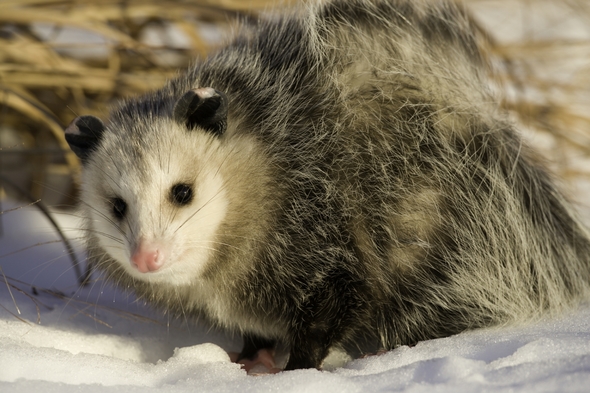
Skunks, raccoons and opossums don’t hibernate, but will nap in dens, trees,
or logs during the coldest parts of winter. Their naps might last weeks, but
when the weather turns balmy, they venture outdoors. These nocturnal animals may also switch to
searching for food during the day to avoid colder night temperatures.
“This is a great time to take a hike or go out in your yard to look for
tracks, scat and chew marks to see who’s been out and about,” Raos said.
She suggests taking photos of tracks and scat with something else in the
photo for a size comparison. Then the photos can be used to compare to a guide
book or MDC’s online field guide for identification of who left the tracks.
MDC’s online field guide can be found at www.mdc.mo.gov.
|