|
October 2026
StormCon 2026 highlighted Minnesota stormwater success stories
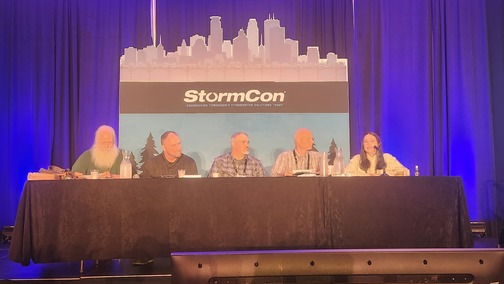
At the national StormCon 2026 Conference in Minneapolis in August, the MPCA, MS4 cities, and the University of Minnesota had a chance to highlight our regulatory approach, our stormwater innovations, and our cutting edge stormwater research. MPCA Commissioner Katrina Kessler gave a keynote address. Municipal Stormwater Unit Supervisor Duane Duncanson took part in a panel about how the MPCA, nonprofit advocacy groups, and cities have worked together to create stormwater regulations that are both appropriate and effective. MPCA staff gave presentations or served on panels on the Clean Streets, Cleaner Waters street sweeping initiative as well as Minnesota’s use of education and robust enforcement to increase stormwater permit compliance.
“One thing we often forget is that Minnesota has built a lot of systems and created resources like the Clean Water Land and Legacy Amendment, the Stormwater Manual, and the Adopt-A-Drain program that give us the tools we need to be a leader in keeping stormwater clean and safe,” said MPCA Hydrologist Paula Kalinosky.
The MS4 Implementation Guide, our downloadable resource for building a municipal stormwater program from scratch, was one of the resources staff shared at the conference. If you're interested in this resource, click HERE.
The MPCA Chloride Reduction Grant program seeks proposals |
|
 |
The MPCA is seeking proposals from eligible organizations to reduce chloride pollution at the source. Grantees will lead local efforts in Minnesota communities that have elevated chloride in surface waters or in wastewater effluent.
Chloride levels continue to rise in Minnesota’s surface waters and groundwater. Chloride is toxic to our native freshwater fish, insects, amphibians, and plant life. Sixty-eight waterways already exceed the state’s criteria of 230 mg/L and more than 100 are considered high risk. To restore and protect Minnesota water resources, we need to reduce chloride at the source. To accomplish this, the MPCA has created the Chloride Reduction Grant program that offers funds to targeted communities through a competitive process every two years. The goal of this grant program is to strategically reduce chloride from known sources using a chloride reduction action plan that will reduce chloride pollution in local water resources.
Chloride reduction actions can include several strategies, examples include:
- water softening rebate programs for residents and businesses
- source reduction at commercial, residential, municipal/public, and industrial facilities
- redevelopment with use of low or no chloride needed surfaces and strategies
- equipment or technology upgrades for winter maintenance activities
- offering trainings within the community to a variety of audiences
- other strategies that eliminate or greatly reduce the need for chloride materials
Applications are due no later than 4:00 p.m. on Wednesday, November 25, 2026.
Visit the MPCA's grants & loans website to learn more about this opportunity and for instructions on how to apply: Apply now - Chloride reduction grants | Minnesota Pollution Control Agency (state.mn.us)
This grant program is offered by the MPCA’s Chloride Reduction Program and funded through the Clean Water Land and Legacy Amendment funds.
 |
|
Minnesota Stormwater Manual has global reach |
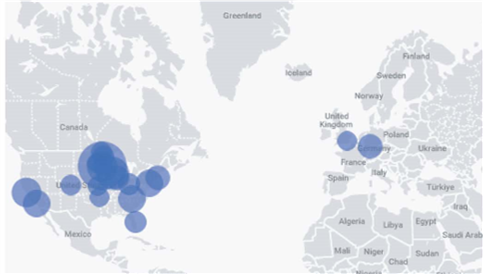
A recent review of Minnesota Stormwater Manual users shows the nation-wide and world-wide impact of this online resource.
The current manual contains about 1,100 pages of unique content and covers 24 broad topic areas including:
-stormwater permit programs (Municipal Stormwater, Construction Stormwater)
-introduction to stormwater foundational concepts
-innovative stormwater management, e.g. Green Stormwater Infrastructure (GSI), Low Impact Development (LID).
-pollution prevention practices
-design, assessment, operation, and maintenance of stormwater BMPs
According to Google Analytics, in the last 90 days, the manual had:
Total # views = 80,000 (~900 per day, spikes of up to 2,500 per day)
Total # users = 29,000
- 90% of users are from the United States (All 50 states represented)
- 10% of users are international. Users live in over 100 different countries.
Top 5 countries represented:
- United States
- Canada
- Mexico
- Brazil
- China
Most frequently visited topics for all visitors (rank is approximate)
- erosion and sediment control
- soils and design infiltration rates
- design criteria for infiltration/bioretention practices
- MIDS calculator homepage
- plants for stormwater
- all things green infrastructure
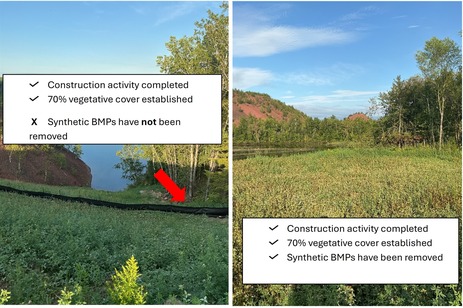
As summer reaches its end, many construction projects may be nearing completion. All permittees covered under the NPDES/SDS General Construction Stormwater Permit must submit a Notice of Termination within 30 days of reaching permit termination conditions (permit item 4.2). You meet permit termination conditions once all construction activity is complete, permanent vegetation covers the entire site (with a density of 70 percent cover), and all temporary synthetic erosion prevention and sediment control best management practices (BMPs) have been removed. Permittees must submit photos demonstrating that these conditions have been met through the MPCA’s e-services page.
2026 Salt Symposium Oct. 27-28
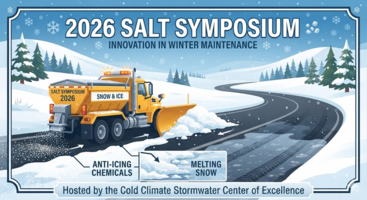
The 2026 Salt Symposium marks an exciting new chapter in one of the nation’s leading forums on chloride reduction, winter maintenance, and freshwater protection.
Now hosted by the University of Minnesota Cold Climate Stormwater Center of Excellence (CCSCoE), the symposium continues its long-standing mission of bringing together researchers, public agencies, industry leaders, educators, and practitioners to advance innovative, science-based solutions for managing salt use in cold climates. Building on more than two decades of collaboration and leadership established by Fortin Consulting, the Freshwater Society, and Bolton & Menk, the 2026 Salt Symposium will expand opportunities for research, training, and cross-sector collaboration focused on protecting infrastructure, water resources, and community safety while designing a lower salt future. The program is now available, registration is open, and sponsorship opportunities are available!
Dates: Oct. 27 – 28, 2026; 8am - 4pm Central Daylight Time
Online only (i.e., virtual)
|
 |
|
Brush up your Smart Salting skills |
|
The MPCA Chloride Reduction Program partners with organizations across the state to host Smart Salting trainings. The winter maintenance trainings integrate science with practical strategies that keep pavement safe and save money and time while reducing salt and its impacts on infrastructure and the environment. The following trainings are open to the appropriate audiences and meet MS4 annual winter maintenance training requirements. For groups of 12 or more, consider hosting your own training and contact smartsalting.pca@state.mn.us. For details on trainings visit the Smart Salting Trainings page.
Smart Salting trainings:
Roads certification – City, county, and private plow drivers that maintain roads.
Oct. 22, RCWD/Anoka County/CCWD - Blaine - Register FULL
Parking lots & Sidewalks certification – Parks, private contractors and winter maintenance
Oct 8, MN Zoo - Apple Valley – Register CLOSES OCT. 1st
Oct. 19, St. Louis County SWCD -Hermantown – Register
Oct. 20, MWMO - Minneapolis - Register WAITLIST
Nov. 12, NMCWD -Eden Prairie - Register
Property Managers certification– Property managers, winter maintenance managers, environmental professionals, MS4 permit staff.
Oct. 13, Dakota County - online - Register
Nov. 19, MWMO - online - Register
Smart Salting Refreshers - for those currently Smart Salting certified only – Dive into a specific winter maintenance topics and meet MS4 annual winter maintenance training requirements. Does not renew a certification.
Oct. 7, Weather for Winter Maintenance, Dakota County - online – Register
Nov. 10, Liquid Deicer, Dakota County - online – Register
|
|
|
|
|
 The EPA Office of the Municipal Ombudsman helps communities navigate clean water and safe water programs. This is an independent non-regulatory office that provides resources and gives municipalities an alternative way to resolve their concerns about the MS4 permit and other clean water regulations. Concerns shared with the office are handled with discretion and care. To learn more, click HERE.
|