|
In this Issue
Comment now on our 2022 Metropolitan Council draft budget
We are accepting public comment on our 2022 draft budget through Dec. 8. The budget totals about $1.2 billion, including the cost of operations, pass-through funding programs, and debt service (loan repayments). It reflects our legislative charge, overall mission, goals, and priorities for the current period.
Met Council revenue comes from four primary areas: customer payments, state funds, federal revenues, and local property tax, which is proposed at $91 million for 2022.
These revenues go to support planning and services, including:
-
Metro Transit, which provides bus, light rail, and commuter rail services. We also operate Metro Mobility, for certified riders with disabilities, and contracted transit services. Overall, Met Council provided 94% of total regional transit ridership in 2020.
-
We collect and treat wastewater for 111 communities, representing 90% of the region’s population.
-
We partner with 10 regional park implementing agencies to plan, acquire land, and develop facilities for regional parks and trails.
-
Our Metro HRA provides safe, stable, and affordable housing opportunities for about 7,200 households with low incomes.
-
We support local community vitality through grant programs, local planning assistance, robust regional data collection and analysis, and other tools.
Offer public comments at Metro Transit Police Work Group in December
We’re encouraging members of the public and advocates to join the Metro Transit Police Work Group at its meeting Dec. 17 to provide comments about safety and policing on our transit system.
The work group has been meeting twice a month since September to prioritize and discuss safety issues related to our transit system and the role the Metro Transit Police Department plays. The group discussions are building upon the public engagement and internal analysis regarding safety on our transit system.
There are a number of ways you can make sure your feedback is included in the Dec. 17 meeting, which will be held virtually from 9 to 10:30 a.m.
At the most recent meeting of the group, attendees discussed a survey of Metro Transit Police Department personnel, which revealed concerns about safety on the system and other long-term concerns about working conditions. Council members also discussed this survey information at the Nov. 17 Committee of the Whole meeting. We encourage you to follow the meeting on our website.
I am privileged to serve on this work group and know the challenges we’re weighing to provide a safe transit system that is safe for everyone – including people who have negative experiences with police officers. Please don’t hesitate to reach out with any questions or concerns you want to make sure I understand and reflect in these conversations.
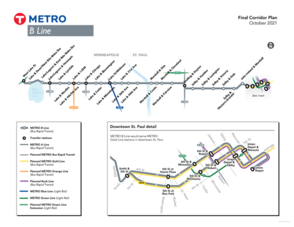
On Oct. 13, the Metropolitan Council approved the final corridor plan for the METRO B Line, including all 33 stations and routing. The project now moves into the detailed design phase, which will occur into 2022, with construction in 2023 and service anticipated to begin in 2024. The B Line is a $65 million bus rapid transit line that will substantially replace local bus route 21, connecting Union Depot in Saint Paul with Uptown in Minneapolis along Selby and Marshall avenues and Lake Street. The approved plan built upon over 2,500 community comments and coordination with cities and counties. BRT improves the transit experience by providing faster, reliable service every 10 minutes, seven days a week during the day and most of the evening, on streamlined routes with upgraded stations and onboard amenities.
Route 21 is Metro Transit’s second busiest bus route with about 10,000 daily rides in 2019, but it runs in a corridor with an average speed as low as 8 miles per hour during rush hour. The B Line aims to make service about 20% faster.
|
With the recent passage of the Infrastructure Investment and Jobs Act, more funds for transportation projects of all kinds will be made available to our region. The Met Council expects additional funds for the Regional Solicitation process managed in collaboration with the Transportation Advisory Board, which will allow for consideration and funding of more applications. Our region has a significant backlog of transit and transportation needs that we can start addressing soon. More details are forthcoming.
After a successful 2019 pilot, Metro Transit is hoping to grow the Residential Pass program to include more multi-family properties located on transit lines. The hope is to make passes available to residents in up to 20 properties this year, and to continue expanding the program in the future. The pilot showed residents are more likely to ride with a Residential Pass. Property owners pay $14 a month to buy passes for each building unit; a typical parking stall can cost up to $20,000. “Giving transit passes and building fewer parking spots are among the best strategies for developers to get a permit to build,’’ said Michael Krantz, a development analyst with Metro Transit’s Transit-Oriented Development office. For more information about the Residential Pass program, please email tod@metrotransit.org.
|
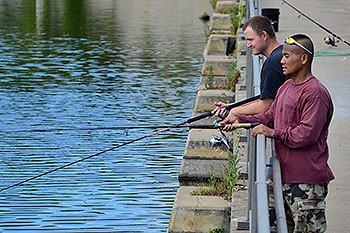
Earlier this year, the Met Council voted to dedicate more than $2 million to parks agencies across the region to advance equity work and programming. This is the second year of awarding equity grants for projects in the regional parks. Twenty-three projects were funded, including funding for a BIPOC Ambassador Program in Saint Paul regional parks, accessibility improvements in Washington County regional parks, mental health and nature-based wellness programming in Scott County, and many more. A full list of projects funded can be found on our website.
|
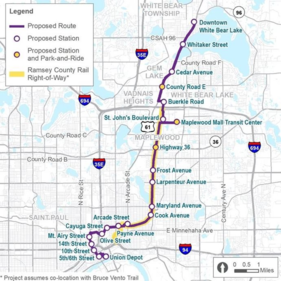
The METRO Purple Line (formerly the Rush Line) — a bus rapid transit project planned to start service to the northeast metro area in late 2026 — has received environmental clearance from the Federal Transit Administration (FTA). Clearing this hurdle helps to pave the way to transfer the project from Ramsey County to the Met Council in late 2021 or early 2022. This was the final stage of the environmental review process for the Purple Line project. Over the past three years, county project staff have taken in thousands of comments from the community, connecting with more than 3,400 people at events, pop-up meetings, open houses, virtual events, and a variety of other efforts. In 2020, the cities of Saint Paul, White Bear Lake, Vadnais Heights, and Maplewood passed resolutions of support for the project’s preliminary design plans. The 15-mile METRO Purple Line will connect Saint Paul, Maplewood, White Bear Township, Vadnais Heights, Gem Lake, and White Bear Lake.
|
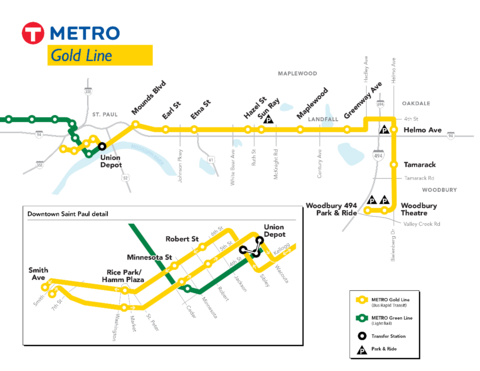 Earlier this year, the Federal Transit Administration approved the METRO Gold Line bus rapid transit project to prepare for construction. Project engineers have been developing blueprints for construction, which is scheduled to begin in 2022. This puts the Gold Line BRT is on track to begin service in 2025. Information on the construction schedule will be available soon. The planned 10-mile dedicated bus rapid transit line will connect Saint Paul, Maplewood, Landfall, Oakdale and Woodbury generally along I-94. To view design plans and ask questions here. View and ask questions on Gold Line's design plans here. |