|
In this Issue
Comment now on our 2022 Metropolitan Council draft budget
We are accepting public comment on our 2022 draft budget through Dec. 8. The budget totals about $1.2 billion, including the cost of operations, pass-through funding programs, and debt service (loan repayments). It reflects our legislative charge, overall mission, goals, and priorities for the current period.
Met Council revenue comes from four primary areas: customer payments, state funds, federal revenues, and local property tax, which is proposed at $91 million for 2022.
These revenues go to support planning and services, including:
-
Metro Transit, which provides bus, light rail, and commuter rail services. We also operate Metro Mobility, for certified riders with disabilities, and contracted transit services. Overall, Met Council provided 94% of total regional transit ridership in 2020.
-
We collect and treat wastewater for 111 communities, representing 90% of the region’s population.
-
We partner with 10 regional park implementing agencies to plan, acquire land, and develop facilities for regional parks and trails.
-
Our Metro HRA provides safe, stable, and affordable housing opportunities for about 7,200 households with low incomes.
-
We support local community vitality through grant programs, local planning assistance, robust regional data collection and analysis, and other tools.
Offer public comments at Metro Transit Police Work Group in December
We’re encouraging members of the public and advocates to join the Metro Transit Police Work Group at its meeting Dec. 17 to provide comments about safety and policing on our transit system.
The work group has been meeting twice a month since September to prioritize and discuss safety issues related to our transit system and the role the Metro Transit Police Department plays. The group discussions are building upon the public engagement and internal analysis regarding safety on our transit system.
There are a number of ways you can make sure your feedback is included in the Dec. 17 meeting, which will be held virtually from 9 to 10:30 a.m.
At the most recent meeting of the group, attendees discussed a survey of Metro Transit Police Department personnel, which revealed concerns about safety on the system and other long-term concerns about working conditions. Council members also discussed this survey information at the Nov. 17 Committee of the Whole meeting. We encourage you to follow the meeting on our website.
I am privileged to serve on this work group and know the challenges we’re weighing to provide a safe transit system that is safe for everyone – including people who have negative experiences with police officers. Please don’t hesitate to reach out with any questions or concerns you want to make sure I understand and reflect in these conversations.
The METRO Orange Line bus rapid transit line is planned to start service on Dec. 4! This line will travel along I-35W, connecting Minneapolis, Richfield, Bloomington, and Burnsville, providing frequent, all-day service in both directions, seven days a week. This route will upgrade and replace the existing local Route 535 with enhanced service and amenities. New station features will benefit other transit riders along the I-35W corridor. We will also increase transit service along several routes that connect with the Orange Line. Learn more about the new connecting bus service.

Like many transit agencies, Metro Transit is facing a significant driver shortage, which means we don’t have enough staff to meet our schedules. We apologize to anyone who has experienced times when a bus or train was not there when it was scheduled to be there. Since March, we’ve been working hard to hire more drivers with monthly one-day hiring events. These events streamline the hiring process and are providing on-site CDL training. We also offer hiring and referral bonuses. Drivers start at more than $21 per hour – even during training – and receive outstanding benefits, including paid training, health care, annual salary increases, a pension plan, an unlimited-ride bus pass, and a $1,000 hiring bonus. Combined with upcoming service adjustments, we hope to deliver the quality service we strive to provide to our riders.
|
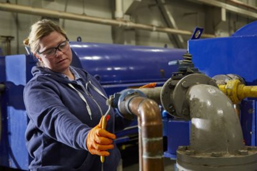
This fall, the U.S. Environmental Protection Agency (EPA) honored Met Council Environmental Services with a 2021 WaterSense Excellence Award. The award recognizes our agency’s dedication to helping consumers and businesses save water, despite the challenges and disruptions of the COVID-19 pandemic. WaterSense is a voluntary partnership program the EPA sponsors and is both a label for water-efficient products and homes, and a resource for helping consumers learn ways to save water. The program honored Met Council Environmental Services as a 2021 Excellence Award winner for strategic collaboration.
Earlier this year, all nine plants were recognized during the National Association of Clean Water Agencies (NACWA) Peak Performance Awards program. Based on their performance through 2020, six plants earned Platinum Awards for achieving five or more consecutive years of full compliance with their clean water discharge permits. Our plants combined now have 117 years of consecutive compliance.
|
The Twin Cities region gained 314,000 residents over the last decade, bringing the total population to 3.16 million in 2020, according to decennial U.S. census counts released August 12. Significant growth occurred in both urban center cities and suburban edge cities. Not only has the seven-county area grown since 2010, it continues to transform: the share of residents who identify as Black, Indigenous or people of color (BIPOC) now stands at 31%, up from 24% in 2010. Learn more about the changing demographics of our region. |