|
In this Issue
Serving on the Met Council’s Climate Work Group
Earlier this month, we held our inaugural meeting of the Met Council’s new Climate Work Group. We are tasked with developing and helping implement the Council’s Climate Action Plan. The six of us (five Council Members and one community member) will work with staff to:
-
Guide Met Council member, partner agency, and public engagement
- Identify areas in the plan where more investigation or discussion is needed
- Point out barriers to implementing impactful strategies and identify potential solutions to those barriers
- Guide and monitor progress of Climate Action Plan development and implementation
- Identify emerging climate change issues and strategies to bring back for the full Met Council’s consideration
I’m excited to begin this incredibly important work. This is the biggest long-term issue we face as a region, state, and nation. Getting this right and moving smart and aggressively on climate change will ensure we’re not only saving future dollars – but it will also ensure that our children will enjoy the same standard of living we enjoy today. As Minnesotans, we value the natural resources of our region and won’t shirk our responsibility to safeguard them. We need to live out those values in the priorities our regional institutions work towards. Further below, you can read how Metro Transit is doing its part to responsibly transition to a zero-emission fleet of vehicles. Please get in touch with me and the committee if you have input you would like to share.
Comment now on our 2022 Metropolitan Council draft budget
We are accepting public comment on our 2022 draft budget through Dec. 8. The budget totals about $1.2 billion, including the cost of operations, pass-through funding programs, and debt service (loan repayments). It reflects our legislative charge, overall mission, goals, and priorities for the current period.
Met Council revenue comes from four primary areas: customer payments, state funds, federal revenues, and local property tax, which is proposed at $91 million for 2022.
These revenues go to support planning and services, including:
-
Metro Transit, which provides bus, light rail, and commuter rail services. We also operate Metro Mobility, for certified riders with disabilities, and contracted transit services. Overall, Met Council provided 94% of total regional transit ridership in 2020.
-
We collect and treat wastewater for 111 communities, representing 90% of the region’s population.
-
We partner with 10 regional park implementing agencies to plan, acquire land, and develop facilities for regional parks and trails.
-
Our Metro HRA provides safe, stable, and affordable housing opportunities for about 7,200 households with low incomes.
-
We support local community vitality through grant programs, local planning assistance, robust regional data collection and analysis, and other tools.
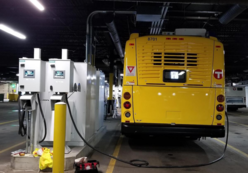
Metro Transit is committed to reducing vehicle emissions by bringing more electric buses into its fleet. The Met Council is responsible for developing a Zero-Emission Bus Transition Plan and revising the plan once every five years. The plan will identify short-term (2022-2025), medium-term (2026-2030), and long-term (beyond 2030) opportunities, risks, and implementation strategies to transition Metro Transit's bus fleet to zero-emission technology. Metro Transit is engaging interested stakeholders and communities in our region and hosted facilitated workshops in November that can be viewed here. Get involved and take a survey on the Zero-Emission Bus Transition Plan.
We are currently planning for the purchase of eight 40-foot electric buses that will be used on local routes beginning in 2023, electric bus charging equipment in the new Minneapolis Bus Garage, and the purchase of up to 70 electric buses in 2025, some of which will be used on the planned METRO Gold Line and METRO Purple Line.
|
With the recent passage of the Infrastructure Investment and Jobs Act, more funds for transportation projects of all kinds will be made available to our region. The Met Council expects additional funds for the Regional Solicitation process run in collaboration with the Transportation Advisory Board, which will allow for consideration and funding of more applications. Our region has a significant backlog of transit and transportation needs that we can start addressing soon. More details are forthcoming.

Like many transit agencies, Metro Transit is facing a significant driver shortage, which means we don’t have enough staff to meet our schedules. We apologize to anyone who has experienced times when a bus or train was not there when it was scheduled to be there. Since March, we’ve been working hard to hire more drivers with monthly one-day hiring events. These events streamline the hiring process and are providing on-site CDL training. We also offer hiring and referral bonuses. Drivers start at more than $21 per hour – even during training – and receive outstanding benefits, including paid training, health care, annual salary increases, a pension plan, an unlimited-ride bus pass, and a $1,000 hiring bonus. Combined with upcoming service adjustments, we hope to deliver the quality service we strive to provide to our riders.
|
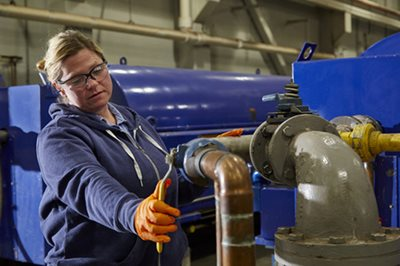
This fall, the U.S. Environmental Protection Agency (EPA) honored Met Council Environmental Services with a 2021 WaterSense Excellence Award. The award recognizes our agency’s dedication to helping consumers and businesses save water, despite the challenges and disruptions of the COVID-19 pandemic. WaterSense is a voluntary partnership program the EPA sponsors and is both a label for water-efficient products and homes, and a resource for helping consumers learn ways to save water. The program honored Met Council Environmental Services as a 2021 Excellence Award winner for strategic collaboration.
Earlier this year, all nine plants were recognized during the National Association of Clean Water Agencies (NACWA) Peak Performance Awards program. Based on their performance through 2020, six plants earned Platinum Awards for achieving five or more consecutive years of full compliance with their clean water discharge permits. Our plants combined now have 117 years of consecutive compliance.
|
The Twin Cities region gained 314,000 residents over the last decade, bringing the total population to 3.16 million in 2020, according to decennial U.S. census counts released August 12. Significant growth occurred in both urban center cities and suburban edge cities. Not only has the seven-county area grown since 2010, it continues to transform: the share of residents who identify as Black, Indigenous or people of color (BIPOC) now stands at 31%, up from 24% in 2010. Learn more about the changing demographics of our region. |