|
In this Issue
I am reaching out today to share a few opportunities with you about how you can engage with the Metropolitan Council and help us shape our budget and policies. We want to hear from you!
Comment now on our 2022 Metropolitan Council draft budget
We are accepting public comment on our 2022 draft budget through December 8. The budget totals about $1.2 billion, which includes the cost of operations, pass-through funding programs, and debt service (loan repayments). The budget reflects our legislative charge, overall mission, goals, and priorities for the current period.
Met Council revenue comes from four primary areas: customer payments, state funds, federal revenues, and local property tax, which is proposed at $91 million for 2022.
These revenues go to support planning and services, including:
- Metro Transit, which provides bus, light rail, and commuter rail services. We also operate Metro Mobility, for certified riders with disabilities, and contracted transit services. Overall, Met Council provided 94% of total regional transit ridership in 2020.
- We collect and treat wastewater for 111 communities, representing 90% of the region’s population.
- We partner with 10 regional park implementing agencies to plan, acquire land, and develop facilities for regional parks and trails.
- Our Metro HRA provides safe, stable, and affordable housing opportunities for about 7,200 households with low incomes.
- We support local community vitality through grant programs, local planning assistance, robust regional data collection and analysis, and other tools.
If you are interested in commenting on our budget, we would welcome your feedback. You can visit www.metrocouncil.org/budget for more information about the 2022 budget and ways you can comment.
Offer public comments at Metro Transit Police Work Group in December
We are also encouraging members of the public and advocates to join the Metro Transit Police Work Group at its meeting on December 17 to provide comments about safety and policing on our transit system.
The work group has been meeting twice a month since September to prioritize and discuss safety issues related to our transit system and the role the Metro Transit Police Department plays. The group discussions are building upon the public engagement and internal analysis regarding safety on our transit system.
There are a number of ways you can make sure your feedback is included in the December 17 meeting, which will be held virtually from 9 to 10:30 a.m.
-
Sign up at info@metc.state.mn.us to make comments during the meeting.
-
Record a message at 651-602-1500 to be played during the meeting (time permitting).
-
Email your comments to info@metc.state.mn.us to be shared with work group members.
At the most recent meeting of the group, attendees discussed a survey of Metro Transit Police Department personnel, which revealed concerns about safety on the system and other long-term concerns about working conditions. Council members also discussed this survey at the November 17 Committee of the Whole meeting, which can be viewed online.
Pandemic Response Update
For the past 20 months, the COVID-19 pandemic has required Council employees to rethink and dramatically shift operations to continue our critical services and to protect employees, customers, and the public at large. Our employees, many of whom are front-line workers including our transit operators and wastewater treatment plant employees, have displayed an extraordinary amount of creativity, resilience, hard work, and perseverance to address professional and personal challenges throughout the pandemic. I am very appreciative of all of the work our employees have done during the pandemic, including:
- Distributing over 1 million masks on transit
- Delivering over 27,000 grocery and food shelf deliveries to Metro Mobility customers
- Providing over 350,000 rides to health care workers through Metro Mobility
- Outfitting a small fleet of Metro Transit buses to become mobile vaccine units to reach Minnesotans across the state to provide COVID-19 vaccinations
- Expanding our transit Student Pass program
- Partnering with researchers to test wastewater at our treatment plants for SARS-CoV-2 viral material to assess COVID-19 prevalence
Thank you to our staff for their hard work and adaptability during this challenging time.
If you have thoughts on our budget or transit safety initiatives, I hope you will reach out with comments. I welcome any other thoughts or inquiries from you!
Sincerely,
Molly Cummings
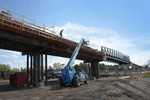
Construction continues on the METRO Green Line Extension (also known as the Southwest light rail project). More than 50% of the construction is already complete, with 11 of the 16 stations under construction or nearly complete and the first tracks in place. Once the 14.5-mile line opens, it will connect the communities of Minneapolis, St. Louis Park, Hopkins, Minnetonka, and Eden Prairie with existing service that extends into downtown Saint Paul. The line is spurring development in the region; we have already seen more than $1.5 billion of investment within a half-mile of the line. We have unfortunately run into construction delays due to the complexity of the line, which is not uncommon for projects as large as this one. We have not yet determined the anticipated opening date but will share that information as it is available. Subscribe to updates about the project to learn more about the new timeline and how the line will benefit the region.
|
The METRO Orange Line bus rapid transit line is planned to start service on December 4! This line will travel along I-35W, connecting Minneapolis, Richfield, Bloomington, and Burnsville, providing frequent, all-day service in both directions, seven days a week. This route will upgrade and replace the existing local Route 535 with enhanced service and amenities. New station features will benefit other transit riders along the I-35W corridor. We will also increase transit service along several routes that connect with the Orange Line. Learn more about the new connecting bus service.
Congratulations to the City of Bloomington for receiving Livable Communities Act funds for predevelopment near the 98th Street Station. The Met Council’s Livable Communities Fund supports investment in local projects that promote jobs, housing choices, development and redevelopment, and connections between where people live and the places they want to go. Bloomington was awarded a grant for:
-
98th Street Station — $150,000 to identify the development potential of several parcels next to the METRO Orange Line station that are currently land-banked for a potential roadway interchange. The study will explore alternative interchange concepts to determine if the site can support new mixed-use development, including affordable housing, commercial space, public realm improvements, and shared parking.

Earlier this year, the Met Council voted to dedicate more than $2 million to parks agencies across the region to advance equity work and programming. This is the second year of awarding equity grants for projects in the regional parks. 23 projects were funded, including funding for a BIPOC Ambassador Program in Saint Paul regional parks, accessibility improvements in Washington County regional parks, mental health and nature-based wellness programming in Scott County, and many more. A full list of projects funded can be found on our website.
|
The Twin Cities region gained 314,000 residents over the last decade, bringing the total population to 3.16 million in 2020, according to decennial U.S. census counts released August 12. Significant growth occurred in both urban center cities and suburban edge cities. Not only has the seven-county area grown since 2010, it continues to transform: the share of residents who identify as Black, Indigenous or people of color (BIPOC) now stands at 31%, up from 24% in 2010. Learn more about the changing demographics of our region.
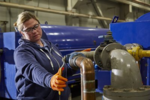
The Met Council’s nine wastewater treatment plants continue to earn high honors for compliance with their federal clean water discharge permits. Earlier this year, all nine plants were recognized during the National Association of Clean Water Agencies (NACWA) Peak Performance Awards program. Based on their performance through 2020, six plants earned Platinum Awards for achieving five or more consecutive years of full compliance with their clean water discharge permits. Our plants combined now have 117 years of consecutive compliance.
|
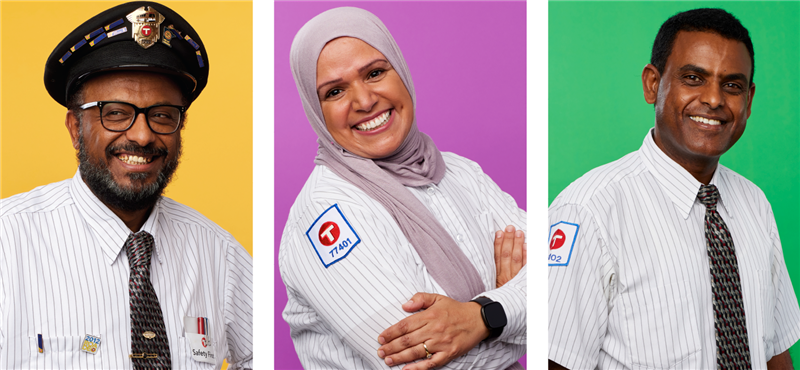 Like many transit agencies, Metro Transit is facing a significant driver shortage, which means we don’t have enough staff to meet our schedules. We apologize to anyone who has experienced times when a bus or train was not there when it was scheduled to be there. Since March, we’ve been working hard to hire more drivers with monthly one-day hiring events. These events streamline the hiring process and are providing on-site CDL training. We also offer hiring and referral bonuses. Drivers start at more than $21 per hour – even during training – and receive outstanding benefits, including paid training, health care, annual salary increases, a pension plan, an unlimited-ride bus pass, and a $1,000 hiring bonus. Combined with upcoming service adjustments, we hope to continue to deliver the quality service we strive to provide to our riders.
After a successful 2019 pilot, Metro Transit is hoping to grow the Residential Pass program to include more multi-family properties located on transit lines. The hope is to make passes available to residents in up to 20 properties this year, and to continue expanding the program in the future. The pilot showed residents are more likely to ride with a Residential Pass. Property owners pay $14 a month to buy passes for each building unit; a typical parking stall can cost up to $20,000. “Giving transit passes and building fewer parking spots are among the best strategies for developers to get a permit to build,’’ said Michael Krantz, a development analyst with Metro Transit’s Transit-Oriented Development office. For more information about the Residential Pass program, please email tod@metrotransit.org.
|
|