|
In this Issue
This is a tough time for Minnesota as the COVID-19 pandemic wears on. Though we’ve been seeing promising news in recent weeks, officials are still carefully watching trends and advising care and distancing.
We need to wear our masks and keep our chins up, stay six feet apart, but also focus on the horizon, and avoid large gatherings while remaining as connected to our friends, families, and communities as best we can.
It’s challenging. Yet we persist to provide critical services to our communities each day. For us at the Metropolitan Council, that means continuing to provide transit service, helping provide special transit service for our front-line health workers, ensuring operations at the region’s wastewater treatment plants continue, supporting local governments with their work, and providing options to people who need housing.
The pandemic has provided an opportunity for us to examine new ways to continue supporting our customers and the communities we serve.
- Transit ridership has been down significantly this year, but we have continued to operate local bus and rail service on regular schedules to assure passengers and operators can safely distance on our vehicles.
- Our contracted services group has continued to support Metro Mobility ADA-mandated services, and we have been able to augment services. Throughout the year, contracted services have supported grocery, goods, and food shelf delivery. In addition, contracted services have provided nearly 127,000 trips for people who work at a health care facility.
- Staff have continued to engage communities, at a safe distance, in all aspects of the region’s planning and operations, including a survey of our transit customers about how they feel about transit, safety, and the impacts of community unrest on transit service.
Blue Ribbon Committee
Just before Labor Day, Gov. Tim Walz appointed a Blue Ribbon Committee to examine the mission and work of the Metropolitan Council. Specifically, the group is appointed to discuss and consider recommendations related to three key topics:
The group has been meeting since September and will submit a report to the governor by Dec. 31. To catch up on the meetings and see the final report when it’s submitted, visit the committee’s website.
Conversation with community on transit safety
Earlier this fall, we finalized our partnership with the Citizens League to engage customers and communities in conversations about their experiences with the transit system and Metro Transit Police Department. This conversation to provide community insight on transit safety will deeply engage community around questions of safety and the impact of interactions on and near our region’s transit system.
The Citizens League team is putting pieces in place and conversations will be more prominent in community beginning soon. This initial phase of engagement will extend through spring 2021. We are working to balance how we engage with community at this time of pandemic, but know how important this conversation is.
We want to intentionally center our customers and our communities in this process. They will be leading the way as we examine what safety really means for our operators, our customers, our neighbors in community, the youth riding our system, and leaders.
Stay tuned for more information about how to follow this process and connect with this work.
Budget
The Metropolitan Council approved its 2021 budget on Dec. 9.
The 2021 budget is balanced through the availability of programming federal Coronavirus Aid, Relief, and Economic Security (CARES) Act funding and use of reserves. Absent federal CARES Act funding, we would be telling a very different story. Federal CARES Act funding is not enough by itself to cover all our lost revenues. However, CARES Act grants – along with a large use of one-time transit reserves, and a reduction of bus services to 80% and administrative reductions – allow us to present a balanced 2021 budget, with no increase to our general purpose levy.
Learn more about the budget and let me know if you have any questions.

The Federal Transit Administration in September signed a Full Funding Grant Agreement for construction of the METRO Green Line extension (Southwest LRT project). The $928.8 million award will cover nearly half of the $2.003 billion construction cost of the light rail extension, which when finished will provide a one-seat ride from Eden Prairie through downtown Minneapolis to downtown Saint Paul.
Construction of the project started in November 2018 and signs of progress can be seen throughout the project’s alignment. In Eden Prairie, Minnetonka, Hopkins, St. Louis Park, and Minneapolis, construction crews have been busy building tunnels, bridges, and stations in anticipation for opening day 2023.
|
Metro area residents who want to help shape regional policy and services are invited to apply for one of several advisory committees to the Metropolitan Council. The Met Council relies on these committees to help develop solutions that best serve the entire region.
We are seeking diverse perspectives – across geography, income, age, race and ethnicity, ability and life experiences – to inform our policy-making and operations. Visit our website for more information about the current committee vacancies and application process. Consider applying to serve on one of these four advisory groups:
District 7 residents can apply for openings on the EAC, TAAC, and MPOSC. Priority will be given to applications submitted by December 31.

The 2040 Regional Parks Policy Plan outlines the Met Council's goals and strategies for the development of our world-class regional parks and trails. It describes how the regional parks system will be developed and operated to support Thrive MSP 2040 goals.
In August, the Metropolitan Council proposed to add, modify, or expand 26 parks and trails to the regional parks system, and create or adjust several policies. The public comment period has closed and the plan update will go to the Council for approval on Dec. 23. Learn more about the plan update.
|
After a summer of listening to and learning from to the public, Metro Transit has evaluated and identified the top candidates for future bus rapid transit lines as part of Network Next.
Now, we are asking the community to rank the top corridors to help prioritize implementation using an online survey. The corridors to choose from for near-term implementation are Central (Route 10), Como/Maryland (Route 3), Johnson/Lyndale (Route 4), and Rice/Robert (Routes 62 and 68). Once prioritized, three corridors will be designated as the future METRO F, G, and H Lines.
Bus rapid transit lines provide a streamlined route with fast, frequent bus service about every 10 minutes. Bus stops are upgraded to stations with features like electronic NexTrip signs, heat, and security cameras.
Network Next is a 20-year plan for expanding and improving the Metro Transit bus network. With the METRO A and C lines serving customers, and the METRO D, B, and E lines all planned to open by 2024, Metro Transit is working to identify the next bus rapid transit corridors.
Take the survey by Jan. 20, 2021.
After years of unsuccessful discussions with BNSF Railway regarding colocation of light rail transit and freight rail in the Bottineau Corridor, BNSF Railway remains unwilling to allow the METRO Blue Line Extension (Bottineau Light Rail Transit) project to be built on its property. Hennepin County and the Met Council now feel it is time to work with agency and community partners to explore opportunities to advance this critical project without using BNSF Railway right of way.
Our commitment to the METRO Blue Line Extension LRT project has not changed. We are optimistic that moving this project in a new direction presents an exciting opportunity to revisit and improve the METRO Blue Line Extension project to serve even more people and destinations, while maintaining as much of the existing alignment as possible. We are asking community members to provide input on community priorities and help us shape future engagement work along the METRO Blue Line Extension corridor. One way you can do this is by completing a short online survey.
We are also currently seeking residents and business representatives for two volunteer advisory committees. The Community Advisory Committee and the Business Advisory Committee provide guidance to the Metropolitan Council and Hennepin County as we advance the Blue Line project and assist in the development of communications and community engagement activities. Applications to be appointed by the Metropolitan Council and Hennepin County are welcomed through Jan. 8, 2021. Apply now. For more information about committees visit the METRO Blue Line Extension Committee website.
|
In October, the legislature passed, and Gov. Walz signed, a bonding bill that authorizes $1.36 billion in general obligation bonds, $300 million in trunk highway bonds, and $100 million in housing infrastructure bonds. The new law includes funding for several Metropolitan Council priorities, including:
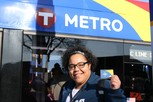
Refugees and residents receiving unemployment insurance may apply for the Transit Assistance Program (TAP), a pillar of Metro Transit’s commitment to equity. Since 2017, TAP has offered eligible riders the opportunity to ride for $1, less than half the regular adult fare.
Metro Transit recently won a “Management Innovation” award from the Minnesota Public Transit Association for broadening the reach of the TAP Program during the COVID-19 pandemic. More than 211,000 people in the Twin Cities region are currently unemployed, a 10.4% unemployment rate.
Nearly half of Black workers and 1 in 4 white workers have applied for unemployment benefits since March, according to the state. Between 1,000 and 5,000 refugees arrive in Minnesota annually. To be eligible for TAP, residents must qualify for programs like SNAP, Medical Assistance, or a Housing Choice Voucher.
Learn more about the Transit Assistance Program.
|
Metropolitan Council Environmental Services was recently honored by Utility of the Future Today, a joint initiative of clean water agencies, for being forward-thinking and innovative, and adding valuable service to communities.
The Council’s Environmental Services division is among 65 entities recognized this year for stewardship, resource recovery, partnership, and engagement. It marks the second year the wastewater treatment agency has received commendation for “Transformational Programming.”
“This is well-deserved recognition for the work that our Environmental Services division performs around-the-clock, 365 days a year,” said Council Chair Charlie Zelle. “We are nationally known for our excellent service at rates 40% below the national average for agencies of similar size.”
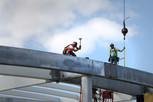
The METRO Orange Line Bus Rapid Transit moves ever closer to its opening one year from now. This service will provide a much-needed upgrade for residents along the I-35W Corridor, and connecting bus routes will need to maximize its benefits. Metro Transit is conducting a Connecting Bus Service Study for routes in the I-35W corridor area in Minneapolis, Richfield, Bloomington, and Edina. Public participation will be important. Stay tuned for opportunities for input early next year.
|
|