|
We at Metro Transit deliver environmentally sustainable transportation choices that link people, jobs and community conveniently, consistently and safely.

From General Manager Wes Kooistra
Even under normal circumstances, our annual budgeting process must consider risks and uncertainties.
Our largest source of operating revenue, a tax on vehicle purchases, is notoriously hard to predict. Efforts to create more dedicated transit funding have fallen short, leading us to rely on one-time state funds for ongoing operating costs.
While continuing to cope with these issues, we must now confront the unprecedented disruption caused by the COVID-19 pandemic. As is true for many businesses and organizations, the pandemic’s many uncertainties increase the risks of what we know today.
A preliminary 2021 operating budget shared with Metropolitan Council Members this week recognizes and accounts for the challenges we are facing, including:
-
Proceeds from the state’s Motor Vehicle Sales Tax (MVST) that are well short of earlier expectations;
-
An expected drop in fare revenues, as 2020 and 2021 ridership falls below half the annual totals we’ve seen in recent years;
-
Increased costs related to cleaning and other pandemic-related safety measures.
As we manage these challenges, we have three objectives that rise above the others:
- Providing service that protects the health and safety of our riders and employees;
-
Providing essential services to people who rely on transit to get to work and address their personal needs;
-
Keeping our staff employed.
Meeting these objectives will be very difficult as it is, but without the federal CARES Act funding this would be impossible. Through 2021, fare and MVST revenues are projected to decline by more than $240 million across the Council’s transportation services, including Metro Transit, Metro Mobility, Transit Link, and contracted bus services. In addition to the lost revenue, we must account for new COVID-driven expenses, such as rigorous cleaning and disinfecting and added trips to maintain social distancing.
The Council’s allocation of $214 million in one-time federal funds is critical to our 2020 and 2021 budgets, but it is not enough to cover our expected revenue losses and added expenses. To close the gap, we are tapping available reserves, reducing service plans to 80% of pre-COVID levels and cutting administrative expenses. We need to watch every dollar.
Our budgets represent our priorities. This should be most evident when we are most challenged. In June, I directed staff to begin developing an equity analysis for our operating budget and Capital Improvement Program (CIP), one of several initial equity action steps.
Metro Transit has considered equity in its budgeting before, but we will be more deliberate and intentional in our approach moving forward. As we begin this work, we are examining the ways that:
-
Service funded in the preliminary 2021 budget can meet the needs of riders who rely on transit the most;
-
Existing programs that contribute to more accessible and equitable transit can be improved, such as Better Bus Stops and the Transit Assistance Program;
-
Organizational practices critical to advancing equity are supported, including public engagement, workforce equity efforts and purchasing from or contracting with traditionally disadvantaged businesses.
The budget presented to the Council is a preliminary budget. We will continue to review our spending plans against our priorities, learn more about the pandemic's impact on our revenue streams and hear from the public. Changes will continue to be considered until the Council adopts the final 2021 budget this December.
|
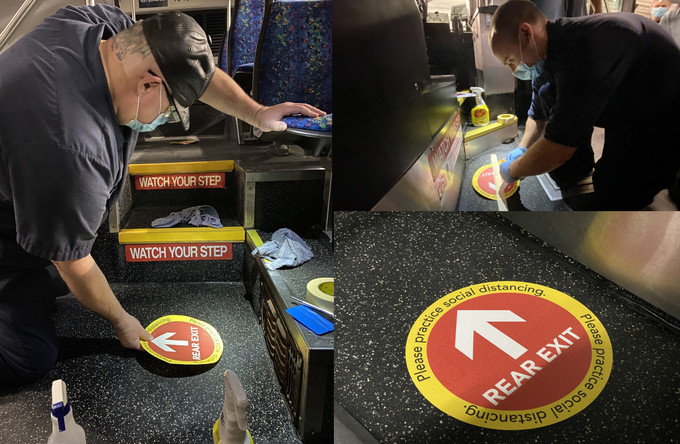 Technicians at each service garage are installing floor decals that direct customers to exit out the back door, if they are able to do so. Onboard announcements that remind people to exit out the back are also available to operators. The reminders were put in place after front-door boarding and onboard fare collection resumed on Saturday, Aug. 1.
To reduce farebox interactions, Metro Transit continues to encourage customers to use contactless fare payment options like Go-To Cards and the Metro Transit app. Protective shields have also been installed on all in-service buses that were not already equipped with permanent barriers, and thousands of face masks have been distributed at busy boarding areas in recent weeks.
Learn more about Metro Transit's response to COVID-19
Council's COVID-19 Leave Policy remains in effect
As the pandemic continues and school districts determine their plans for the school year, the Met Council’s COVID-19 Leave Policy remains in effect. There is no plan to update the leave policy at this time.
The policy provides for leave time and some pay for employees if they are unable to telework and fall into one of these three scenarios:
-
They need to self-quarantine or have COVID-19 symptoms and need to self-isolate.
-
They are caring for others who need to self-quarantine or are symptomatic.
-
They need to provide childcare because the school, place of care, or childcare provider is unavailable due to COVID-19.
Review the COVID-19 Leave summary and the full COVID-19 Leave policy document for more information. Questions should be directed to a manager, Human Resources representative or the Employee Resource Center.
Find the latest information about COVID-19
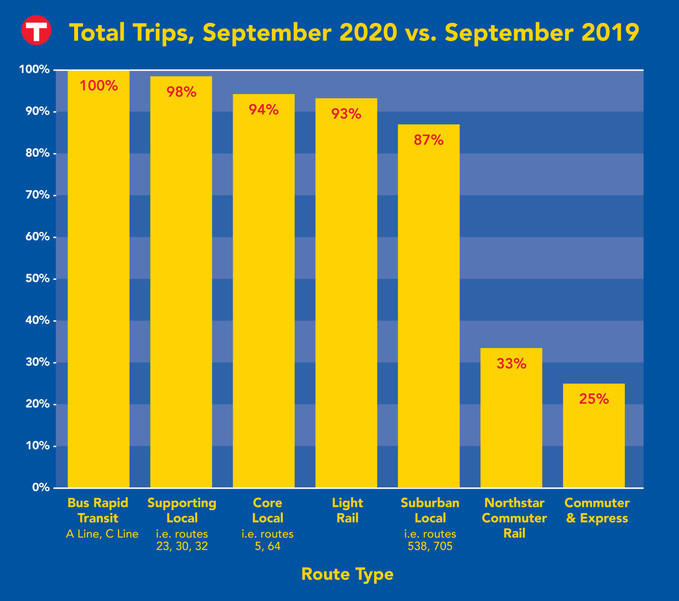
Beginning Saturday, Sept. 12, service on light rail and many local bus routes will return to nearly pre-pandemic levels while service on the METRO A Line and METRO C Line will be fully restored.
Commute-oriented express bus routes and the Northstar Commuter Rail Line will continue to operate on limited schedules. More than 50 express routes will remain suspended.
The service changes reflect continued growth in ridership and efforts to support recommended social distancing guidelines. July’s ridership was nearly 2.4 million, a 31% increase from June’s total.
Passenger limits – 10 people on a 40-foot bus and 15 people on a 60-foot bus – will remain in place.
In addition to more trips, other notable changes being made in September include:
-
To improve speed and reliability, 60 bus stops with low boardings will be eliminated along the Route 63 corridor. In addition, several stops will be relocated to the farside of signalized intersections and six new shelters will be installed.
-
Route 54 will begin serving a new transit center at the Minneapolis-St. Paul International Airport’s Terminal 1. Since April, Route 54 customers traveling to the airport have been transferring to the Blue Line due to construction.
-
Routes 7 and 68 will be extended to provide residents in south Minneapolis and St. Paul better access to services.
-
Special trips serving area high schools will not operate unless there is a return to in-person learning.
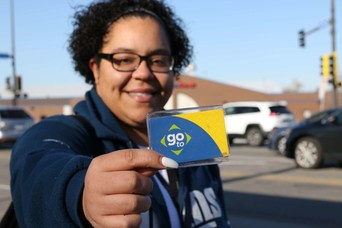
Refugees and residents receiving Unemployment Insurance may apply for the Transit Assistance Program (TAP) in the coming weeks.
The expanded eligibility supports Metro Transit’s commitment to equity. More than 211,000 people in the Twin Cities region are currently unemployed, or a 10.4% unemployment rate.
Nearly half of Black workers and 1 in 4 white workers have applied for unemployment benefits since March, according to the state. Between 1,000 and 5,000 refugees arrive in Minnesota annually.
|

Nicollet Operator Terrence Boyce, recently received the following commendation from a customer who appreciated the way he supported ADA customers.
"I'd like to let my bus driver know I miss him! Although my classes and job are both remote now, and I won't be on campus in the fall, I appreciated how he would always make sure I was able to get to my seat before pulling away, and that he would align the bus with the ADA pad so nobody had to walk through a snowdrift to board. I have an invisible disability, so I really relied on the Route 6 to get to class in the winter when I didn't feel safe walking that far. He was also friendly and would wish us all a good morning as we boarded."
|
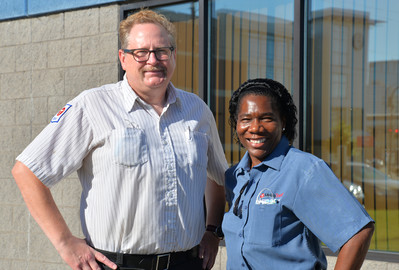
One of the most significant and challenging hurdles to becoming a bus operator or mechanic technician at Metro Transit is the state-required Commercial Drivers License road test. It’s a test that’s also in high demand, meaning people who seek the test through the state may wait weeks before they can take it.
So it’s considered a significant win that two Metro Transit instructors, CJ Camp and Jean Hammonds, will soon become state-certified, third-party CDL testers who can administer the test as new hires work their way toward full-time employment.
Their certifications follow background checks, weeks of classroom training and a difficult final exam, which they each passed on their first attempt.
"I'm looking forward to this because it's a chance to help people go further in life," said Hammonds, who began as a part-time bus operator 32 years ago.
While bus operator hiring has been paused, Camp and Hammonds will put their certifications to use next month when they begin training and testing a group of prospective technicians who are in the final stages of the Metro Transit Technician Training program. The program offers participants a paid Metro Transit internship and can help cover some of the costs of earning an associates degree.
Instructors Mark Davis and Steve Nichols are also certified to administer the state’s CDL test. Camp and Hammonds stepped forward after recent retirements left the Instruction Center down two of its state-certified instructors.
“I couldn’t believe how well it worked out,” Instruction Center Manager Dan Stoffer said. “I’m really proud of them and am especially happy they’ll be able to immediately apply what they’ve learned.”
|
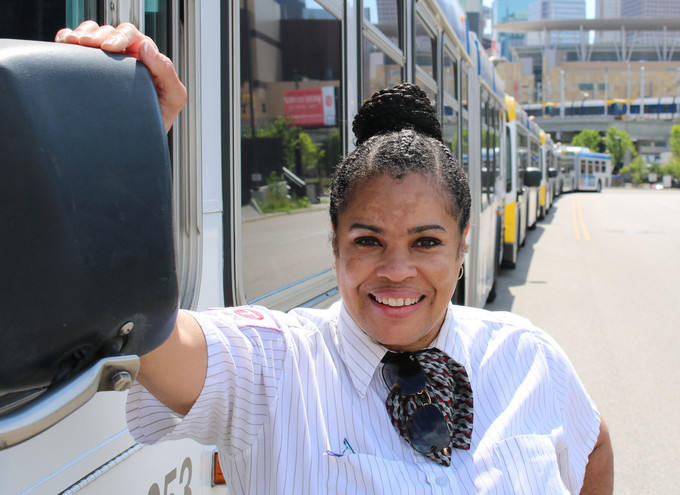
For 20 years, Marva Wagner worked on and off as a banquet server and at an optical company while raising two children. She hoped to advance her career, but found out it was a dead end.
In 2018, she attended the People of Color Career Fair and rediscovered Metro Transit's career advancement opportunities. "Transit runs in my family and friends," Wagner said. "My current dispatcher knew my aunt who worked here! And several family friends, too. "
Last May, Wagner was offered a job, the chance to earn her Commercial Drivers License and a mentor with 12 years of experience. That mentor, Barbara Mestas, was a source of constant support. "It was an added treat to have a mentor," Wagner said. "I can call or text her anytime if I need help."
Wagner continues to seek support and feedback through the mentorship program, which is jointly led by Metro Transit and the ATU as part of a formal apprenticeship program.
"It's not only extra training, but a support group," Wagner said. "We share stories to help each other out. No matter what problem you have, someone else has been there before."
Now working the extraboard at Heywood Garage, Wagner said she'd like to continue building her career at Metro Transit. "I hope someday to become an instructor," she said. "But, one that still drives -- I want to stay sharp."
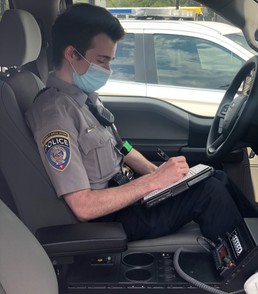
Across the organization, Metro Transit employees’ work has been changed by the COVID-19 pandemic. These "In This Together" Q&As illustrate how employees are adapting both on and off the clock. Read more interviews here.
How has the pandemic affected your day-to-day work?
As a Community Service Officer (CSO), a lot of our work revolves around promoting Metro Transit’s values of community-oriented policing through community engagement. As a result of the pandemic, many of the special events from which we could achieve this engagement were canceled or put on hold. Despite this, we still have the opportunity to positively engage with others through the performance of our other duties and continue to assist our community with this goal in mind.
What’s it like working through a pandemic?
It can be a challenge at times. Some of our other duties include performing fare inspections and responding to calls for service that do not require a sworn police officer. While in the performance of these duties that involve contact with the public, we want to ensure their well-being. With safety as a vital priority, this is why we continue to move forward with appropriate personal protective equipment.
How has your life changed outside of work?
I was attending my last semester of college when the decision was made to close campus and everyone began the transition into online coursework.This was a sudden change for my classmates and me as we were completing a lot of group projects at the time. Consequently, many of our new schedules started to vary from each other and communication became difficult. Thankfully, we were able to make arrangements and graduate together without further incident. Outside of this, I am excited for what is to come and hopeful for the future.
|

As Mustafa Adam enters the job market, he can tell potential employers about his experiences managing gameday crowds and monitoring Go-To Card vending machines as a Revenue Operations intern for the past two years.
What his resume might not reflect is that he assumed those responsibilities while undergoing a fourth round of cancer treatment and recovering from COVID-19 this summer.
As he wraps up his internship this week, Adam credited his supervisors, Abdul Ahmed and Dennis Dworshak, not just for helping him learn but for recognizing when he was overwhelmed and stressed from cancer treatments.
“It is great to accomplish your goals, but it was always nice knowing I had co-workers willing to give me a hand,” said Adam, who graduated from Augsburg College in 2018 with degrees in business administration and economics.
Adam is now working to become a certified financial planner and looking forward to starting graduate school at the University of Minnesota. His time at Metro Transit, he said, has helped him prepare for whatever career path he takes.
"This job has really developed me as a professional and given me the ability to make presentations, talk among a group of people in a confident manner and to manage projects,’’ he said.
Above right: Mustafa Adam (left) with his younger brother Shihab.
Augsburg football player's fight with cancer (KARE-TV)
Mustafa Adam named nominee for Mayo Clinic Comeback Player honor (Augsburg)
Managers: Watch for more internship information soon
Due to COVID-19, the Council's 2020 internship program was significantly reduced. Even so, 25 interns were hired earlier this summer and there are now 52 interns working across the Council. Sixty percent of the recently hired interns are people of color, and half identified as female. Human resources will provide managers additional information about the 2021 internship program soon. For more information, contact Luis Martinez.
|
40 years of service
- Robert Little, #5272, Facilities Technician
20 years of service
- Merhej Abouhadir, #2093, Operator, Heywood
- Richard Bork, #3679, Janitor
- Hough Dale, #2084, Operator, Nicollet
- Charles Dufoe, #2097, Bus Operator, Ruter
- Michael Nelthrope, #5592, Mechanic-Technician, Heywood
- Cha Pao Thao, #3680, Janitor
- James Till, #2091, Operator, Heywood
- Richard Tischner, #2085, Operator, South
Help us celebrate retirements, new hires and promotions in Insights by sending information to insights@metrotransit.org.
View the print version of this week's Insights or continue reading on MetNet.
Metro Transit’s employee newsletter, Insights, is published weekly. Employees are invited to submit comments, letters to the editor and story ideas. Contact the editor at insights@metrotransit.org.
© 2020 Metro Transit
|