|
We at Metro Transit deliver environmentally sustainable transportation choices that link people, jobs and community conveniently, consistently and safely.
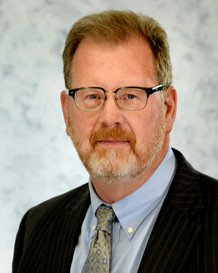
From General Manager Wes Kooistra
In past columns, I have shared that as a white person I am not confident speaking about race. I find myself in an appointed position of leadership facing the complex issue of systemic racism as a white male who has benefitted from systems of racial oppression.
I feel conflicted expressing this because I and other white people should not make ourselves the center of attention in these discussions. But my narcissistic struggle with my role and response is irrelevant when juxtaposed with the struggle of people who personally experience the consequences of systemic racism.
The introduction to Dr. Robin DiAngelo’s book, White Fragility, articulates a message that is important for me to hear and that I believe is worth sharing:
“…I believe that white progressives cause the most daily damage to people of color. I define white progressives as any white person who thinks he or she is not a racist, or is less racist, or in the “choir,” or already “gets it.” White progressives can be the most difficult for people of color because, to the degree that we think we have arrived, we will put our energy into making sure that others see us as having arrived. None of our energy will go into what we need to be doing for the rest of our lives: engaging in ongoing self-awareness, continuing education, relationship building, and actual antiracist practices. White progressives do indeed uphold and perpetrate racism, but our defensiveness and certitude make it virtually impossible to explain to us how we do so.”
What I take from this is that we must reflect, seek education, build relationships, and act – not just in this moment, but throughout our lives.
The literature about advancing equity in transit lists many recommendations that are mostly pointed toward outcomes – addressing inequities in access, developing equitable fare policies that include decriminalizing fare evasion, creating better access to affordable housing and using operations and capital projects to advance meaningful employment in low-income communities and communities of color.
But one process recommendation is always included, and that is engagement with communities. Listening is critical to our self-awareness, our on-going education, the building of trust relationships, and effective action. What we hear and do is so much more important than what we say. I want us to direct our energy toward listening and applying what we hear in our responses and in our actions.
Since the June 8 Metro Transit Virtual Town Hall, my direct reports team has spent time considering the messages we received and how we can apply these insights to our work. As part of these meetings, I have asked each of my directors and operations officers to reexamine their role and the role that their department plays in advancing equity in our organization and our region.
I am reexamining my role as well. On Wednesday, I sent my direct reports a list of initial actions we need to take to advance equity in transit this year. This is a start toward better addressing many of the recommendations for advancing equity in transit, including developing a public engagement approach that is not just project-based, but that supports an ongoing dialogue with communities. I have asked my leadership team to share these initial steps with their staff, but please know that this is just a start. There is so much more to do.
We have asked you to submit your thoughts and ideas to the Equity and Inclusion team at EquityMT@metrotransit.org. An online form where ideas can be submitted anonymously has also been created.
Please continue to send us your thoughts. I very much look forward to seeing the ideas that have been submitted, and to the continuing dialogues that will lead to actions that advance equity in transit.
|
 Photos courtesy Jim Lester
In partnership with We Push For Peace, a non-profit led by South Operator Tray Pollard, Metro Transit staff collected and distributed household supplies, non-perishable food and masks in south Minneapolis on Saturday, June 20. At the distribution event, residents were also invited to sign up for the Transit Assistance Program, which allows qualified individuals to ride for $1, leading to the highest single-day registration for the program this year.
On Thursday, bus operators handed out masks at some of the region's busiest boarding locations, including the Brooklyn Center Transit Center and the Chicago-Lake Transit Center. Today, operators will distribute masks at Snelling and University avenues, the Mall of America and other sites. The goal is to donate around 10,000 fabric masks. Customers are required to wear a face covering whenever they ride.
View more photos from Saturday's supply drive
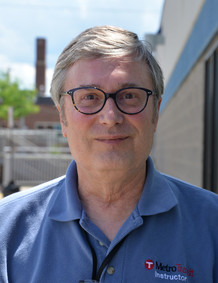
Instructor Denny Johnson, right, will retire on Friday, July 3, after nearly 41 years of service. Johnson began his career at the old Snelling Garage and was among Metro Transit's first group of instructors.
One of the best parts of his work as an instructor, he said, was meeting people from all over the world who came to Metro Transit with a desire to work hard. As his career progressed, many of his former students would see him and remark about the impact his patient, early guidance had on their lives. “You realize you really do make a difference,” Johnson said this week.
Johnson said he would miss the banter between colleagues, and commuting with fellow riders he’d befriended while commuting on the bus. In retirement, he plans to devote more time to several interests, including technology, cooking and the outdoors, and to enjoy living at a more relaxed pace. “I’m going to take each day and enjoy it, whatever it brings,” he said.
Read more about the careers of Metro Transit's longest-serving retirees
To note a retirement, promotion or new hire in Insights e-mail insights@metrotransit.org.
|

Heywood Operator William Vacura received the following commendation from a Route 755 customer who appreciates his continued dedication during the COVID-19 pandemic.
I want to commend an essential worker who has continued to provide essential service to me and the community by providing safe and efficient transportation. I've had the honor of riding the bus with this operator on other routes and saw him today on my 755A. It was nice to see him showing his continued commitment and service to us customers during this time of need. He is truly an outstanding and essential bus operator. Thank you William, as well as all other drivers at Metro Transit.
Terri
Crystal
|
Light rail trains will run more frequently and more scheduled trips will be added to several core urban local bus routes beginning Saturday, June 27.
Green Line and Blue Line trains will operate every 15 minutes between 5 a.m. and 11:30 p.m., every day of the week starting Saturday. Since March, light rail trains have been operating every 20 minutes between 6 a.m. and 9 p.m.
Bus routes that will see more scheduled trips include the 5, 10 and 18. To support social distancing, unscheduled trips were previously operating on these and other busy routes as operators were available.
No schedule changes will be made on the Northstar Commuter Rail Line, which has reduced weekday service and no service on weekends.
This weekend's changes follow schedule adjustments that took effect on Saturday, June 13. The additional scheduled service is made possible by the return of bus and train operators who had been on leave due to COVID-19.
Additional scheduled service changes will be made in September. Service is expected to increase to about 80% of its pre-pandemic level when those changes take effect this fall, and service will likely remain at that level through the end of 2021.
Ridership has increased slightly in recent weeks but remains about 67% below its pre-pandemic level.
 Historically, five fuelers have spent their entire eight-hour overnight shifts refueling buses at the Heywood Garage. That work promises to be done more efficiently in the future, though, thanks to new fueling equipment that was recently installed at the garage.
The new equipment allows reels and hoses to be moved further and more easily, and keeps them safely out of the way as buses are pulled in and out of the fueling area. The current setup was designed when gas went into the front of the bus, but fuel now goes in the rear.
New high-flow nozzles also dispense diesel fuel more quickly and cleanly than the models they replaced, which were similar to those found at commercial gas stations.
"It's more efficient, cleaner and safer," Maintenance Supervisor Carlos Gutierrez said. "It's a definite upgrade."
There are five fuel islands at the Heywood Garage, each with hoses for diesel fuel and def fluid, which helps clean up engine emissions.
The new equipment is part of a larger modernization effort wrapping up at the garage. In-ground hoists, renovated offices, LED lights and ceiling fans were also included in that work. A new operator breakroom on the north end of the garage also opened earlier this year.
Plans to similarly upgrade fueling areas at other garages are in the works.
 Photos by Ryan Miller
Facilities Maintenance has begun repairing shelters that were recently damaged in St. Paul and Minneapolis, including the replacement of glass at this shelter just west of the METRO Blue Line's Lake Street Station.
Around 100 shelters saw complete or significant glass breakage, and several were damaged to the point they needed to be replaced entirely. The damage occurred amid demonstrations over George Floyd's death.
More than 400 hours will likely go into shelter and station repairs throughout the impacted areas. Repairs may be held up in part due to the unusually large demand for material, including window gasket and rivets, but all avenues are being explored to secure needed supplies.
Across the organization, Metro Transit employees’ work has shifted in recent months. To illustrate how staff is adapting, Q&A’s will be regularly featured in Insights. To share your story or suggest someone who is doing outstanding work, e-mail insights@metrotransit.org.
How has the pandemic affected your day-to-day work?
Because bus driver hiring has been suspended, I’m no longer supporting candidates through the hiring process. Instead, I'm serving as a program advocate for Building Strong Communities, an apprenticeship preparatory program. The program is designed to help prepare individuals for careers in construction, in part by supporting the construction of the Green Line Extension. I'm grateful to have a job and that I am able to serve in a new capacity.
What’s it feel like working amid a pandemic?
Recently, the pandemic has really taken a backseat to the civil turmoil in the community. It’s hard to be fearful about COVID-19 while also being present in this moment of major reckoning. I'm trying to give both these transformative, once-in-a-lifetime occurrences the proper level of respect and care. I had a professor in grad school who said, “We [humans] are a crisis driven-species,” and boy, was she right.
How has your life changed outside of work?
One of the biggest personal losses has been the joy of riding the bus with my 2.5-year-old son. He's developed relationships with many drivers, who talk to him and make him feel grown up. (His favorites are Fatima Barboza, Hakeem Sylla, Marina Voss, Machelle (Mickey) Albert, and Wondi Dingato, although we love them all.) My heart aches for the drivers’ increased exposure while I’m able to telework and keep my risk low. It hardly seems fair. I am very proud of the commitment of the drivers, now more than ever.
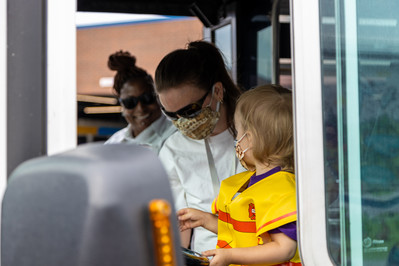
Above: Linnae, her son and operator Machelle (Mickey) Albert at the recent supply drive. Read an extended version of this Q&A on MetNet.
|
 Nicollet Operator Brendan Anderson captured a fitting Pride Month image outside the Nicollet Garage this week after rain showers gave way to a brilliant rainbow.
Employees are invited to learn more about supporting members of the LGBTQ+ community by calling into a virtual Lunch and Learn next week. The event will begin at 12:30 p.m. on Tuesday, June 30. Hosted by the Council's Pride Committee, speakers will address how to be a supportive co-worker to LGBTQ+ colleagues, LGBTQ+ Black history, the history of Pride Month and answer questions.
Register for the event and receive call-in information

Several Metro Transit and Metropolitan Council employees were recently recognized for their communications and marketing work.
The recognition came from the Minnesota Association of Government Communicators (MAGC), which held its annual Northern Lights awards on June 17 (this year's event was held online). The Metro Transit staff who took home awards were:
-
Ryan Miller and John Komarek, who received a Northern Lights award for the video series “Hey, Where Does This Bus Go?” The Northern Lights award is the highest honor in each category.
-
Elissa Erickson, who received a Silver Award for her work on a campaign encouraging the use of transit to get to special events (above). The campaign debuted just before the 2019 NCAA Men's Final Four, held at U.S. Bank Stadium.
-
Adam Mehl, Rich Bothe, Ellen Thomson, John Sanborn, Sharon Feiner, Elissa Erickson, Sam Changtum, who shared an Award of Merit for the redesign of Metro Transit's website. The redesigned website debuted in December 2019.
In addition, Met Council photographer Jeff Syme was honored with the Scott Pengelly Lifetime Achievement award.
After working as a newspaper reporter and photographer, Syme began working at the Metropolitan Waste Control Commission in 1989. He joined the Council's Communications Department when the commission and other regional agencies merged a decade later.
In addition to his photography, Syme is the editor of The Wire, the Met Council's internal newsletter. See some of the photos colleagues used in Syme's nomination at jeffsyme.com.
|
Metro Transit’s employee newsletter, Insights, is published weekly. Employees are invited to submit comments, letters to the editor and story ideas. Contact the editor at insights@metrotransit.org.
© 2020 Metro Transit
|