|
We at Metro Transit deliver environmentally sustainable transportation choices that link people, jobs and community conveniently, consistently and safely.
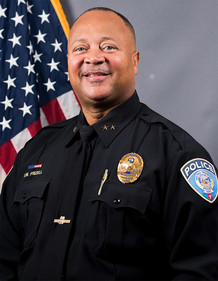
From Police Chief Eddie Frizell
When I joined the Metro Transit Police Department last summer, I spent a lot of time listening to officers, staff, community members and partners. At garages, on the bus and in the community, I wanted to learn all I could about the department and those we serve.
One of the most striking and immediate things I discovered was how diverse the department is. For the first time in my career, I found myself in rooms where all the officers were a person of color or female.
My long-term predecessor, now Commissioner of Public Safety John Harrington, had truly set me up for success, and I knew I was in a position to lead a department defined by its professionalism, diversity and commitment to fairness.
The tragic and unnecessary loss of George Floyd has further amplified an intense debate about whether those same ideals are universally reflected across the law enforcement community.
And with good reason. The actions that led to Floyd’s death, including the failure of other officers to intervene, are undeniably troubling and go against everything I have been taught and taught to others during my 30-year career in law enforcement.
Sadly, it is also just the latest example of how people of color are treated differently by police, often with fatal consequences.
As a black police chief, the great great grandson of a Mississippi slave, a product of the Civil Rights movement and a military veteran who has seen hatred fuel killings around the world, the disparities we see in policing are especially personal and upsetting.
I understand systemic racism, and I have experienced it myself. I know what it looks like, what it smells like, and how it erodes a society. The struggle is real, and it is not over.
Because the need for change is evident, I am eager to participate in the larger conversation occurring here and across the country.
As part of our path forward, Metropolitan Council Chair Charlie Zelle called this week for a comprehensive review of the department’s policies, practices and the relationships we have with police agencies throughout the region. I welcome this review and the opportunity to turn its findings into actions that make a difference.
While it may seem like progress cannot come quickly enough, progress is being made.
Since becoming police chief, we have expanded our commitment to protecting at-risk, unsheltered individuals. We have assigned officers to geographic areas so they can better understand the communities they serve. And we have been open to new approaches, like the proposal to shift fare enforcement responsibilities from police to non-sworn personnel.
Our efforts to improve can and must continue. And we must continue to listen – not just because the moment demands it, but because we truly want to serve our community in the best way that we can.
As someone who saw firsthand the immediate aftermath of Dr. Martin Luther King Jr.’s assassination, I can say from experience that the memories of recent weeks will not soon fade. I can also say from experience that they have the power to lead us closer to the outcomes we all hope to see.
Thank you for sharing your voice, for the opportunity to serve you, and for your continued support.
Learn more about the Council's planned review of the Metro Transit Police Department
Share your thoughts on supporting response efforts, advancing equity
Metro Transit’s Equity and Inclusion team is collecting ideas about how the agency can support the community and foster a more inclusive environment. The ideas will help inform recommendations to Metro Transit leadership in the coming weeks. Among the ideas submitted already: a community advisory committee, implicit bias training for staff and a review of hiring and promotion practices. Share your thoughts by e-mailing EquityMT@metrotransit.org.
|
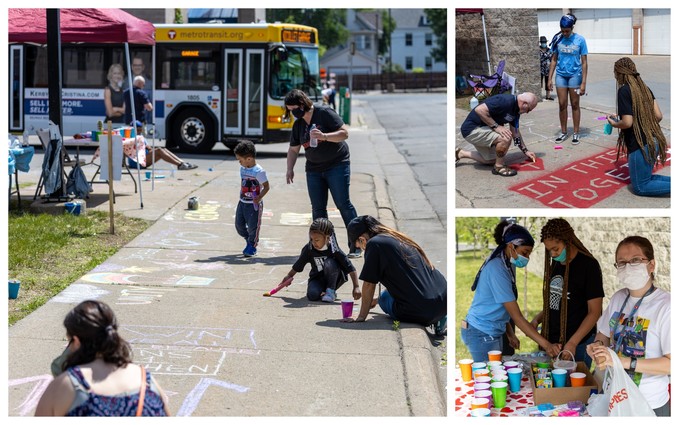 Several employees and their families decorated the sidewalks outside the Nicollet Garage with encouraging messages during a Chalk Walk on Saturday, June 6. The event was organized by members of Advancing Women in Transit, an employee resource group.
On Saturday, June 20, another Chalk Walk will be at the Metro Transit Campus. The event will run from 9 a.m. to noon. Home goods, personal care items and non-perishable food that will be distributed throughout the community will also be collected at the event. Items can also be sent in advance to the Metro Transit Mailroom, Re: Donation Drive, 570 N. Sixth Ave., Minneapolis, 55411. The donations will be distributed by Metro Transit volunteers in partnership with We Push for Peace, a non-profit led by South Operator Tray Pollard.
Sign up to donate needed items here, and sign up for volunteer shifts here.
For more information, contact Carrie Desmond, Amina Wolf, Sarah Berres or Tray Pollard.
"In This Together" yard signs available
To help demonstrate Metro Transit's commitment to the community and to each other, yard signs with the “In This Together” logo are available to all employees. Signs were delivered to each work site this week. To request a sign, contact Drew Kerr at drew.kerr@metrotransit.org.

Transit Information Center Representatives Kyle Bennett, Ella Brakob and Jacqueline Curlott each spoke with and impressed a regular caller who sought help last week. The TIC received more than 5,700 calls when bus service resumed on Wednesday, June 3, following several days of suspended service. -- the highest call volume in the last four years.
"I know some people only complain, and I've had my fair share of complaints, but I received great service from some of your folks today, and I thought you should know what a great job they are doing. Give them my thanks and a congratulations for being so good at their jobs!"
|
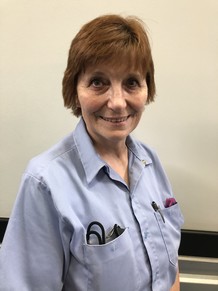
Several long-serving employees have recently retired. While retirement celebrations have been temporarily been put on hold, those who retire with more than 30 years of service will still be recognized in Metro Transit's Wall of Fame and online.
Recent retirees include:
> Janitor Ramona "Mona" Shafer, right, who retired on June 5 with 30 years of service. Shafer began her career in the Revenue Department and spent 12 years in Finance before becoming a janitor. For the past five years, she has worked at the Green Line's Operations & Maintenance Facility. At the time of her retirement, Shafer was the third-highest seniority janitor at Metro Transit. In retirement, Shafer planned to spend time traveling, gardening and enjoying the last chapter of life.
> East Metro Mechanic Technician Gary Cagle, who retired in May with 39 years of service. A self-described backyard mechanic, Cagle learned how to maintain buses by learning from others on the job. During his career, he spent time at every garage except for old Northside. In retirement, he looked forward to spending more time with family, including several grandchildren, completing projects around the house, and woodworking.
> East Metro Mechanic Technician Tim Jacobsen, who retired in April with 35 years of service. Jacobsen spent time at the South, Heywood and old Snelling garages before spending the last 20 years of his career at East Metro. Just 12 hours after punching out for the final time he started learning and practicing a whole new trade as a manual machinist. Outside the shop, Jacobsen plans to spend his time motorcycling and with his two sons.
Congratulations to these employees who also retired in May
-
John Howley, Manager-Transit Information, 32 years of service
-
Charles McCallum, Operator-East Metro, 7 years of service
-
Gloria Hunt, Instructor, 30 years of service
-
John Powell, Janitor-East Metro, 35 years of service
-
Fue Vang, Train Operator, 19 years of service
-
Cher Vang, Operator-East Metro, 19 years of service
Read more about the careers of recent retirees
To recognize employees who have retired or achieved a career milestone, please e-mail insights@metrotransit.org.
|
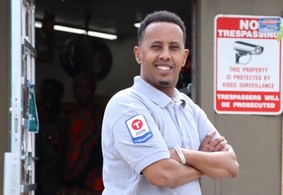
On Route 21, Nicollet Operator Omar Iye drives community members up and down Lake Street. It's familiar turf -- Iye lives in the Whittier neighborhood with his three children.
As a Somali immigrant, he also relates to many of the small business owners who have set up shop in south Minneapolis.
So when locally owned businesses were threatened during recent demonstrations, Iye did what he could to deter potential troublemakers. For three nights, he stood in front of businesses and asked people to leave them alone.
"It felt like a war zone," Iye said. "I've experienced this back in Somalia, but never thought something this would happen here in Minnesota."
Iye later helped clean up the neighborhood. Now, he hopes for calm.
"I hope we return to peace, not only in my neighborhood, but everywhere," Lye said. "I'll continue to be a good neighbor and help build a good neighborhood for my kids."
Rider's Almanac: Metro Transit employees building community on and off the clock
|

Even before George Floyd's death shook the community, the COVID-19 pandemic was putting staff under an unusual amount of stress. Now, as the nation faces unrest, there is an even greater risk of burnout and trauma.
And the list of consequences is long – employees may find it harder to focus, become impatient or simply shut down. Those in positions to make changes may be troubled by limits on what they can do.
Even so, transit is an essential service that must be maintained.
While challenging, Charlotte DiBartolomeo, the founder and CEO of the Red Kite Project, says employees can find strength from within and from those around them. To build resiliency,DiBartolomeo, right, suggests:
- Creating small teams that you can share concerns with and provide mutual support to. If you have a mentor or mentee, strengthen that relationship.
- Utilizing free counseling services provided through Sand Creek or other mental health resources.
- Communicating openly. Managers should ask their teams what they can do to support them and staff should be vocal about what they need to succeed. Empowered employees are resilient employees.
- Be gentle in conversations with yourself and others.
“Resilience is about internal and external resources,” DiBartolomeo said. “The internal resource is the ability to feel and communicate empathy because that builds relationships and people are healthier with good, strong relationships. The external resource is having a supervisor who is supportive and makes your safety a priority.”
The Red Kite Project is a Philadelphia, Pa.-based organization that offers resiliency and de-escalation training at transit agencies across the United States. Metro Transit operators and managers started going through Red Kite training in 2018; in-person classes have been suspended for now, but online resources are available.
For more information about The Red Kite Project visit redkiteproject.com.
Adapted from an article DiBartolomeo wrote in April for Metro magazine.
AWT hosting conversations about George Floyd's death, racism
Employees are invited to join discussions about racism and the death of George Floyd in the coming weeks. The discussions are being hosted by Advancing Women in Transit, a staff-led Employee Resource Group, and are open to all employees. The call-in events will be held from noon to 1 p.m. on Wednesday, June 17, and Wednesday, June 24. For call-in information contact Jennifer Kochaver at jennifer.kochaver@metrotransit.org or 612-341-5626.
Coping with the Trauma of Community Violence
Sand Creek counselor Brad McNaught will lead two telephone town halls about coping with the trauma of community violence. The calls will run from 10 a.m. to 11 a.m. today, Friday, June 12, and on Friday, June 19. Employees should have received an e-mail with call-in information.
|

Regularly scheduled service adjustments take effect on Saturday, June 13.
Service will remain about two-thirds what it was before service was reduced this spring due to the COVID-19 pandemic. Buses are largely operating on Saturday schedules and light rail trains are running only from 6 a.m. to 9 p.m. daily.
Notable changes taking effect on June 13 include:
- More scheduled trips will be added to Route 21, above right, and many of these will extend to the Midway to help residents who lost neighborhood services during recent demonstrations.
- Service on several bus routes, including the A Line, C Line 5, 18 and 21, will extend past 11 p.m., later than they have been operating since reduced service schedules took effect.
- Routes 25 and 75 return to a weekday schedule.
Metro Transit will continue to ask customers to use transit for essential travel only, to cover their face while riding and to board through the rear door if they can do so.
The next round of scheduled service changes will take effect on September 12. Additional service may be added before then if demand increases and enough operators are available.
Learn more about the service changes taking effect June 13
Previously: Pandemic makes service planning more important than ever
|

June is Pride Month, an annual celebration of the LGBTQ community and a commemoration of the 1969 New York City riots that became a tipping point for the LGBTQ movement and the modern fight for LGBTQ rights.
Throughout the month, employees are invited to share their Pride. To tell your story, contact Ryan Miller at ryan.miller@metrotransit.org.
What does Pride mean to you?
Pride is an expression of happiness and self-awareness. It’s a celebration for people who think they are different but in reality there is no difference. I say celebrate until you can’t celebrate any more – be yourself not just in the month of June but every day.
How have you celebrated Pride Month in the past?
Last year, I joined others Metro Transit employees marching in the parade and enjoyed every bit of celebrating and embracing an amazing community of people who love being themselves. I celebrate Pride not just in June but every day. The LGBTQ community deserves the same love and respect as anyone else.
Why is Pride important to you now?
We’ve all been impacted by the pandemic and the tragic loss of George Floyd. Through all of this, we have to find a way to support the Pride movement. I love people and there is nothing that can take away the love that I have.
Tavera Ojo, an LGBTQ ally, joined Metro Transit in 2016. Prior to joining Metro Transit, she spent 13 years at Metro Transit in St. Louis, Mo.
Point of Pride: Mercedes Gohl, energy & sustainability intern
|
Employees who been more active in the community recently, or who have been exposed to someone who was, are reminded to watch for COVID-19 symptoms and get tested.
Council employees are eligible for free COVID-19 testing through HealthPartners, and all Metro Transit employees can access free testing at drive-up sites or the Well@Work clinic at the Heywood Office or at any HealthPartners or Park Nicollet drive-up site.
To make an appointment at the Well@Work Clinic call, 952-967-7468. To make an appointment at a drive-up site, call 952-853-8690 and tell the scheduler you are a “transit essential worker.” Test results are typically available in two to three days.
Metro Transit employees may be tested regardless of whether they are showing symptoms and can be tested more than once if they feel they need to do so.
Councilwide, there have been 40 confirmed cases of COVID-19 reported by employees since the pandemic began; there are currently 23 active cases.
Find the latest information about COVID-19
View the print version of this week's Insights or continue reading on MetNet.
Metro Transit’s employee newsletter, Insights, is published weekly. Employees are invited to submit comments, letters to the editor and story ideas. Contact the editor at insights@metrotransit.org.
© 2018 Metro Transit
|