|
In this Issue
Now
that this year’s legislative session has ended, I wanted to take a moment to
reflect and highlight some of the Council related successes our region achieved
this year.
As you
know, during the session, the House Transportation Omnibus Bill proposed cuts
to Metro Transit that would have ballooned our budget deficit from $74 million
over the next two years to $125 million and cut transit in our region by 40%.
Due to your advocacy, the final bill that passed the Legislature and was signed
by Gov. Mark Dayton contained neither funding cuts nor service cuts. In the end, the
legislature allocated an additional $70 million of new one-time funding to the
Council that addresses the transit budget deficit over the next two years. Although
this is no doubt a win for our region, it is important to note that this
increase is not a sustainable solution and leaves significant funding
challenges in the years to come.
In addition to regional transit’s success at the Capitol, below are some
of the high-level funding and policy wins across the Council to come out of the
2017 Legislative Session:
- The bonding bill provides funding for
long-sought renovations at our Mall of America Transit Station and for the
METRO Orange Line, including the final share of local money needed to realize a
long-held vision for bus rapid transit service on Interstate 35W.
- The tax bill includes $126 million in transit
bonding authority to be used over three years to replace aging buses and
to fund region-wide capital maintenance projects.
- Nearly $500,000 was included to continue our transit technician
training program, which will give another group of job-seekers a unique
chance to build their careers at our organization.
- Our Environmental Services Division received
$1.9 million for work on regional projects that address water supply
issues. It also received $3.7 million to continue its inflow and
infiltration mitigation grant program – this critical program helps cities
fund projects to combat storm water intrusion into the regional wastewater
system.
- Community Development will work with regional
park implementing agencies to distribute parks funding provided by four
bills. Since the Metropolitan Council matches state dollars for land
acquisition and bonding projects, some of the state funding from this
session will unlock additional regional resources that will benefit our
regional parks.
- The annual Metropolitan Council governance
reform initiatives were again not included because we continue to deliver impressive
outcomes for the region, including great transit service, affordable and high-quality
wastewater service, comprehensive land planning that supports affordable
infrastructure, and much, much more.
Please don’t hesitate to reach out to me should you have any concerns or
areas in which myself or the Council can be helpful.
Marie McCarthy, District 10
Earlier this year, my
colleagues and I were faced with the daunting news of a large budget deficit
and an overwhelming possibility of cuts in transit services. The
difficult prospect of considering a potential transit fare increase – something
that hasn’t occurred in this region for nearly a decade – needed to be
addressed As our staff crunched the numbers and finalized the two-year transit
budget, we also launched a public comment process to hear from residents,
businesses, leaders and other regional stakeholders about the impact of raising
regular route transit fares by either 25 cents or 50 cents. Metro Mobility and
Transit Link fares could go up even more.
And hear from you we
did!
We did the usual
public hearings and open houses – which typically aren’t well attended - but we
also conducted dozens more community and pop-up meetings at transit stations to
meet people where they are and garner feedback from riders in a much more real
and authentic way. We received more than 6,000 comments during the public
comment process. Thank you for your overwhelming interest in this important
regional issue!
It was important to me
to meet and hear from customers at our community events and open houses. However, I also wanted to personally reach
out to residents in a manner that was convenient for them to weigh in on the
discussion – at the point of service, the transit locations. I led pop-up engagement at the Rosedale
Transit Center and the Northtown Park & Ride in Blaine – we spoke to and
collected surveys from more than 100 riders. I found the experience illuminating
as I heard the basic challenges transit riders encounter on our system and how
this increase would impact them and their families.
When we began the
public comment period in April, our goal was to collect at least 1,000 surveys
from riders. By the end of the process in June, we had received more than
1,600.
My thanks to the
riders who participated in this process – we need your insights to make an
informed decision about increasing fares. I also want to thank all the Council
staff who facilitated the outreach process and put in the extra effort to reach
out and engage those impacted to make this experience more meaningful and
informative.
The Council’s policy
is to capture about 28% of the operating costs for each transit ride through
the customer fare. For several years, we’ve only been recovering about 22% of
the operating costs. To maintain the quality of service customers have and
expect – and to remain good stewards of public dollars – we do need to consider
raising fares. But it’s important for us to know where to prioritize funds so
that those most dependent on our system still can afford it. We also have to be
sensitive to those least able to afford it.
Thus, we’ll also be considering a low-income rider assistance program
that has been piloted over the past several years.
Although this is a
difficult conversation to have, I am pleased with the engagement we’ve seen
thus far – and I hope riders will continue to be engaged and to use this
important service, no matter the ultimate decision on our region’s fares.
The Council plans to
vote on the fare increase proposal July 26.
The Metropolitan
Council’s Housing and Redevelopment Authority, Metro HRA, will open its waiting
list for 150 available units specifically for families through its Family
Affordable Housing Program. Eligible families can apply from Aug. 1 through
Aug. 4.
The Metro HRA offers single family homes,
duplexes and townhomes throughout suburban Hennepin, suburban Ramsey, and Anoka
counties. Housing units include two, three, four, and five bedroom choices.
Read the entire notice here.
Apply Tuesday Aug. 1
through noon Friday Aug. 4
METRO HRA will
accept online applications ONLY from Tuesday, Aug. 1 at 8 a.m. through
noon, Friday, Aug. 4.
Learn more about the METRO HRA and its role administering
federal housing programs.
The Metropolitan Council is the regional planning organization for the
seven-county Twin Cities metro area. It runs the regional bus and light rail
system, and Northstar Commuter rail. The Council collects and treats
wastewater, manages regional water resources, plans regional parks, and
administers funds that provide housing opportunities for low- and
moderate-income individuals and families. The Council is appointed by and serves
at the pleasure of the governor.
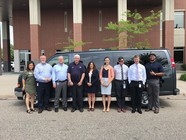
City of Blaine tour. On June 14, I participated in a tour of
the City of Blaine with Mayor Tom Ryan, City Manager Clark Arneson, Planning
& Community Development Director Bryan Schafer and Economic Development
Coordinator Erik Thorvig. We took a driving tour of the city and viewed the
three park-and-ride lots, the large employer campuses within the city, new
affordable and market-rate developments being constructed and some other local
staples including the Blaine Sports Center – which has over 4 million visitors
each year. My district’s Sector Representative Eric Wojichik, SolSmart Solar
Advisor Cameron Bailey, Community Relations Director Jenn O’Rourke, and
Community Relations Specialist Zoë Mullendore joined me on the tour.
Fare proposal community
meetings. Throughout May and June, I was able to participate in a number of fare
increase meetings the Council hosted.
- On May 17, I co-chaired the public hearing in the city of Anoka with District 9 Council Member Ed Reynoso.
- On May 30, I helped host
the Maplewood open house with District 11 Council Member Sandy Rummel.
- On June 13, I held a fare
increase pop-up at the Rosedale Mall Transit Center. I was able to connect with
dozens of transit users that were both using the transit center to get to work
at the Mall and to transfer to different bus routes.
- On June 13, I attended the open house meeting in north Minneapolis along with my Minneapolis colleagues, Council Members Gary Cunningham, Cara Letofsky and Gail Dorfman.
- On June 23, I spoke to
riders at the Northend Park and Ride facility in Blaine and better understand
what a fare increase would mean for them.
Anoka State of the
County – On June 6, Chair Adam Duininck and I
attended the annual State of the County speech put on by the Anoka Area Chamber
of Commerce. It was great to hear from Chair Rhonda Sivarajah on the
state of Anoka County and to see the entire county board, host-Andover Mayor
Julie Trude, and Blaine Councilmember Julie Jeppson in attendance.
Anoka County Local Government Official Meeting - On May 31, we received a legislative overview of successes and updates on the many projects throughout the county. New to the discussion, Commissioner Julie Braastad spoke on the recent study by MN DOT and Metropolitan Council, “Principal Arterial Intersection Conversion Study” of Highway 65. It was eye opening to see how many high priority intersections there are in this corridor.
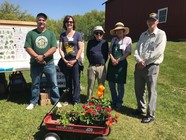
Annual North Oaks Garden Club Plant Sale - On May 13, it was a beautiful May day at the Hill Farm as the Garden Club once again sold plants to support community projects in and around North Oaks. Not only was there an ample supply of beautiful annuals and perennials, the Natural Resources Commission was giving out free tree saplings. Additionally, it was a great opportunity for residents to ask questions and gather information and brochures on many subjects ranging from water resources, aquatic life, lakes, wetlands, invasion species, trees, plants and the Metropolitan Council.
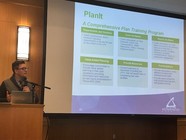
Shoreview Comp
Planning Kick Off - On May 11, I
attended the City of Shoreview’s 2040 Comprehensive Plan Update kick off
meeting. Attendees of the meeting were all members of the city’s advisory
committees and commissions, who will be the main working groups for the city’s
2040 update. District 10 Sector Representative, Eric Wojchik, presented on the
Council’s process and laid the foundation for the city’s conversation. It was
encouraging to see the creative approach the City of Shoreview is taking to the
2040 updates. Attendees were encouraged to place post-it’s on city maps along
the back wall and break out into small groups to discuss the specific chapters
of Shoreview’s plan. The city named their comp plan update process:
“Destination 2040.”
Metro Mobility riders
advocate at the Capitol. On
May 2, I joined Metro Mobility riders from Hammer Residences – a supportive
housing development in Wayzata for children and adults – at the Capitol on as
they met with members about potential service cuts. We spoke with legislators
about Metro Mobility as a lifeline to mobility, independence, health, and
quality of life. I attended the meeting with Sen. Steve Cwodzinski
where a good dialogue between the advocates and the senator took place. He was
generous with his time and listened thoughtfully to attendees concerns and
challenges with the current system as well as what would occur should there be
a significant cut to existing service.
Metro Chambers
Regional Convening - On May 1, I participated
in a local chamber-sponsored transit event in Blaine that centered on
advocating for transit funding at the legislature. Hosted by East Metro
Strong, the Minneapolis Regional Chamber of Commerce and the St. Paul Area
Chamber of Commerce, the point of the meetings was to drive home what a 40% cut to transit services could look like. The chamber events were
planned to educate employers on the cuts proposed by the House.
New Brighton Open House - On April 29, many residents attended the New Brighton open house to get updated on topics that are in the news or on their mind. The National Research Center presented the city's community survey data. City Manager Dean Lotter spoke on the expansion of Water Treatment Plant 1, an update was given on the Comprehensive Plan and the city council participated in a panel discussion and answer questions from the residents. Local officials Ramsey County Commissioner Mary Jo McGuire, Sen. Carolyn Laine, Rep. Connie Bernardy and myself also answered questions from residents.
Advancing
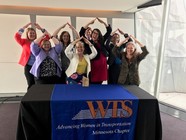
Women In Transportation Award - April 27 - It was an honor to attend the recognition of
the A Line success under the strong leadership of Metro Transit Project Manager Katie Roth. The A Line was planned, designed,
constructed, and implemented by a team of women. The
A Line has set the precedent for a new type of rapid bus service in the Twin
Cities — it’s the first of 11 arterial bus rapid transit (BRT) corridors planned
for implementation in the next decade. Through the end of 2016, the A Line corridor has
seen ridership increase of 33.5%. It is approximately 20% faster
than the local bus it replaced, and has consistently and reliably achieved an
on-time performance track record of over 92% — a great start for the first
arterial BRT corridor in the Twin Cities.
Commuter Choice
Awards. On April 24, Chair Adam Duininck, Council Members Cara Letofsky, Katie Rodriguez and
I attended the Commuter Choice Awards co-hosted by Metro Transit and the
regional Transportation Management Organizations (TMOs). The event brought
together sustainable transportation professionals, advocates, and other
regional stakeholders to recognize Twin Cities employers, building management
companies, public agencies, organizations, and individuals that are working to
improve mobility for area commuters. |