CVSO Office Updates
Happy November to Olmsted County’s Finest!
Operation Green Light: Honoring the veterans in our communities
This Veterans Day, Olmsted County is joining counties across the country in Operation Green Light for Veterans, an initiative led by the National Association of Counties (NACo) and the National Association of County Veterans Service Officers (NACVSO). From November 4–11, 2026, counties are encouraged to light public buildings and landmarks green to show veterans that they are seen, appreciated and supported.
But Operation Green Light is about more than turning a building green. It is a reminder that veterans are part of our communities every day. They are our neighbors, friends, parents, grandparents, coworkers, and community leaders.
Veterans Day Is about living veterans
Memorial Day is a time to remember and honor those who died while serving our country. Veterans Day is different. It is an opportunity to recognize and thank the men and women who served and are still with us today.
This November, take a moment to recognize the veterans in your life. Call a family member who served. Thank a coworker. Ask a veteran about their military experience. Attend a Veterans Day event in your community. Even a simple, sincere “Thank you for your service” can be meaningful.
For some veterans, their military service may have been decades ago. For others, their transition to civilian life may be more recent. Regardless of when they served, Veterans Day is an opportunity to let them know that their service is remembered and valued.
Shine a light for veterans
The green light is a simple symbol of support. By lighting homes, businesses and county buildings green, our communities can send a clear message: Veterans belong here, and their community supports them.
Operation Green Light also helps remind veterans and their families that resources are available. County Veteran Services Offices can help veterans understand and access benefits and services they may have earned through their military service.
This Veterans Day, look for the green lights throughout Olmsted County and remember the reason behind them. Take the opportunity to honor a living veteran—not just for what they did in uniform, but for the person and neighbor they are today.
Olmsted County Veteran Services is proud to stand with our veterans and their families this Veterans Day and every day.
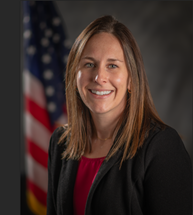 Tiffany Canfield
County Veteran Services Officer (CVSO) & Manager
tiffany.canfield@olmstedcounty.gov
507-328-6358
Veteran Service Office Snapshot
September 2026
Total claims submitted to VA:
- Compensation: 57
- VA Healthcare: 8
- DIC / Survivor's Pension: 4
- Burial: 7
- CHAMPVA: 1
- Records Request: 1
- Special Monthly Pension: 3
Veterans in office: 63
Outreach visits: 3
Total phone calls: 304
Average number of calls per day: 10
Average call length: 3 minutes and 48 seconds
Rochester VA Clinic flu shots
Veterans who are enrolled in VA healthcare can drive up and get their flu shots at the Rochester VA Clinic from 1:00 - 3:00 p.m. on Thursday, October 29, 2026 and Thursday, November 5, 2026. Covid shots are by appointment only.
The address to the clinic is 3551 Commercial Drive SW (the old Fleet Farm building).
Marine Corps Birthday Ball
Honor Bound Veterans: Know your strengths
Veterans,
You already know what you’re bad at.
Let’s spend 90 minutes figuring out what you’re naturally good at... and how to use it!
Honor Bound Veterans is hosting Know Your Strengths, a free interactive workshop led by Bethany von Steinbergs of Flourish Consulting.
Bethany’s session, Discovering Our Innate Potential, uses the principles behind Gallup’s CliftonStrengths® to help you better understand the talents that come naturally to you and how to use those strengths more intentionally in work, relationships, goals, and everyday life.
Saturday, November 14 9:00–10:30 AM VFW Post 1215 — Rochester
The workshop is free (yes.. that's $0.00 also known as Free-Fifty-Free) and open to veterans and their families. We’re limiting attendance to 50 people, so registration is required.
Sign Up HERE (yes, really.. right here)
You do not need to take the CliftonStrengths assessment beforehand.
Come spend 90 minutes focusing on what you already bring to the table.
Did I mention there will be food?
Respectfully,
Bryan Ehni
President, Honor Bound Veterans
Veteran Non-Profit Organization
(507) 269-5401
https://honorboundveterans.com/
Rochester Grizzlies Heroes Night
How to Read Your VA Decision Letter
Your VA disability rating isn’t the only number that matters. A date buried deep in the letter can be worth tens of thousands of dollars.
A Department of Veterans Affairs rating decision letter can run anywhere from three pages to more than 30, written in dense regulatory language and packed with legal citations.
Most veterans open it, find the percentage, and stop reading. That's a mistake. Several other sections of the letter determine how much money actually shows up, when it starts, and whether the VA got something wrong that's worth appealing.
You're Actually Getting 2 Documents
After a claim is decided, the VA sends two separate pieces of paperwork that are easy to confuse.
The notice letter, sometimes called the award letter, is the shorter summary: It states your combined rating, your monthly payment amount and your effective date up front.
The rating decision itself is the longer document, broken into sections covering the decision, the evidence considered, and the reasons for the decision for each condition individually.
The Decision Section
This section is numbered and goes condition by condition. For each one, it states whether service connection was granted, denied or deferred; and if granted, the percentage assigned along with that condition's effective date.
Check this section against what you filed for. If a condition you claimed doesn't appear here at all, that's not a denial, it's an omission, and it needs to be raised with VA directly rather than assumed to have been considered and rejected.
Reasons for Decision — The Section Most Veterans Skip
This is the part that reads like homework, and it's the most useful section in the entire letter. For each condition, VA explains which evidence it relied on and which rating criteria it applied to land on that number. Read it closely, and you can usually see exactly why you ended up where you did.
Sometimes the letter references evidence you never actually submitted or fails to mention something you know you sent in.
Cited in a 2024 Government Accountability Office review, the Court of Appeals for Veterans Claims remanded roughly 80% of appealed decisions over three fiscal years, largely because the reasoning behind the decisions didn't hold up under review.
Effective Date — Where the Money Is
Under the federal regulation governing this determination, the effective date of an award is the date VA received the claim or the date entitlement arose, whichever is later. In practice, that means the effective date sets the point VA's payments start retroactively, and it can differ from condition to condition within the same letter if you filed a supplemental claim adding something later.
One exception is worth knowing before you separate from service: A veteran who files a claim within one year of separation is entitled to an effective date going back to the day after separation, even if VA takes months to actually decide the claim.
Filing that same claim just past the one-year mark loses that protection and falls back to the general rule, tied to the date VA received the paperwork rather than the date you left service.
A veteran rated at 70% with no dependents draws $1,808.45 a month in 2026. Pushed back two years, a delayed effective date works out to $43,402.80 in back pay lost to a single missed date.
Why the Rating Percentage Isn't the Only Number
The disability percentage gets the attention, but three other figures in the letter determine what you actually receive. The combined rating, if you have more than one service-connected condition, uses a whole-person formula in which a 50% rating and a 30% rating combine to 65%, not 80%, before rounding to the nearest 10%.
The monthly payment amount reflects that combined rating together with any dependents on file — not the individual condition ratings on their own. And some code sheets mark a condition as static, meaning VA considers it permanent and unlikely to improve; a static rating is generally not scheduled for future reexamination and carries more protection against a future reduction than a rating without that designation.
If Something Looks Wrong
You have one year from the date of the decision to file a Notice of Disagreement if you believe any part of it is incorrect, whether that's the percentage, the effective date, or a missing condition. Within that window, veterans can pursue a Supplemental Claim with new evidence, a Higher-Level Review asking a senior adjudicator to take a second look at the same record, or an appeal directly to the Board of Veterans Appeals.
Which path makes sense depends on what actually went wrong, and free help identifying that is available through any accredited Veterans Service Organization, including the DAV, VFW, and American Legion.
The VA Math No One Explains
Combined Disability Ratings
A 50% rating plus a 30% rating is not 80%. It is 65%, which rounds to 70%.
If you have multiple service-connected disabilities, you’ve probably done the mental math: A 50% rating plus a 30% rating should equal 80%. It does not. The VA does not add disability ratings together. It uses a formula many veterans have never had explained to them, and the difference between what you expect and what the VA awards can mean hundreds of dollars per month for the rest of your life.
Understanding how the math works will not change your ratings. But it will help you verify that the VA got the calculation right, understand when it is worth pursuing an increase, and recognize how close you may already be to the next threshold that changes your benefits.
The Whole Person Concept
The VA treats your body as a whole: 100%. When a disability is rated, it represents a percentage of that whole person that has been lost to service-connected conditions. The formula works like this:
- Start at 100%.
- Apply your highest-rated disability first.
- Whatever is left becomes the new baseline.
- Then apply your next-highest rating to that reduced baseline. Repeat for every additional condition.
The logic behind the formula is that you cannot be more than 100% disabled. If your highest rating has already taken 50% of your whole person, your next disability can affect only the remaining 50%. The formula is defined in 38 CFR § 4.25.
How the Math Works: Step by Step
Example: 50% PTSD and 30% knee. Two service-connected conditions. Most veterans expect 80%. Here is what the VA does.
-
Step 1: Start at 100%. You begin as a whole person, 100% healthy.
-
Step 2: Apply the highest rating; 50% PTSD is applied first. 50% of 100 = 50 points lost. Remaining healthy: 50%.
-
Step 3: Apply the next rating to what remains: 30% knee is applied to the remaining 50%, not the original 100%; 30% of 50 = 15 points lost. Remaining healthy: 35%.
-
Step 4: Calculate combined disability; 100% minus 35% remaining = 65% combined disability.
-
Step 5: Round to the nearest 10%: 65% rounds to 70%. VA pays at the 70% rate: $1,808.45 per month in 2026 for a single veteran.
-
What you expected vs. what you get: 80% would have paid $2,102.15 per month. The difference is $293.70 per month — $3,524.40 per year.
The Rounding Rule — And Why It Matters More Than You Think
After the VA calculates your combined percentage, it rounds the result to the nearest 10%. Five rounds up, four rounds down. That means a combined value of 54.9% rounds down to 50%. A combined value of 55% rounds up to 60%.
The rounding rule creates specific thresholds that carry far more financial weight than others. The most important is 95%, which rounds up to 100%. The difference between a 90% rating and a 100% rating in 2026 is $1,576.28 per month for a single veteran — not counting the additional benefits that unlock at 100%, including CHAMPVA health care for dependents, free dental care, commissary and exchange access, and tax benefits in most states.
A veteran whose combined value calculates to 94% rounds down to 90% and receives $2,362.30 per month. A veteran at 95% rounds up to 100% and receives $3,938.58. One percentage point in the underlying calculation is the difference between those two outcomes. Understanding where you sit in relation to that threshold is worth knowing.
Adding a Third or Fourth Condition: The Shrinking Return
Each condition you add to the combined rating calculation has less impact than the one before it. That is not a flaw in the system. It is the formula working as designed. The smaller your remaining healthy percentage, the smaller the chunk a new rating can take from it.
Here is a three-condition example. A veteran has 50% PTSD, 30% knee, and 20% tinnitus. After combining the first two conditions, the remaining healthy percentage is 35%. Applying 20%to 35% takes 7 points. Remaining healthy: 28%. Combined disability: 72%. That rounds to 70% — the same as the two-condition combination. The 20% tinnitus rating added nothing to the monthly payment.
This is why some veterans with four or five rated conditions receive the same monthly compensation as veterans with two. The math diminishes each addition. The only way to move the needle meaningfully at higher combined values is to pursue a significant increase on an existing rating rather than adding new lower-rated conditions.
The Bilateral Factor: An Exception That Helps You
If you have service-connected conditions affecting both sides of the same paired limb — both knees, both shoulders, both hands — the VA applies a bilateral factor before combining those ratings with your other conditions. The bilateral factor adds 10% of the combined value of the paired conditions before those are rolled into the wider calculation.
Example: 30% left knee and 20% right knee. Combined value of those two: 44%. Bilateral factor: 10% of 44 = 4.4 points added. Bilateral subtotal: 48.4%, which the VA rounds to 48% before combining with other conditions. That extra 4.4 points can be the difference between rounding up or down at the final combined value. If you have bilateral conditions and the VA did not apply the bilateral factor, your combined rating may be understated.
How to Verify that the VA Got the Calculation Right
The VA makes math errors. Not frequently, but it happens. Your rating decision letter shows each individual rating and the combined result. To verify the calculation yourself, work through the formula in the order the VA lists your conditions, highest to lowest, and check that each step applies the rating to the remaining healthy percentage rather than the original 100%.
The VA publishes a Combined Ratings Table in 38 CFR § 4.25 that shows the combined value for any two ratings. For three or more conditions, apply the table once for the first two ratings, then use the result as the starting point for the next condition. Free VA math calculators are also available at VA.gov and on multiple veteran service organization sites that will do the calculation for you.
If you find an error, a Higher-Level Review is the correct path to challenge a math mistake. You are not submitting new evidence; you are asking a senior reviewer to verify the calculation. The process is free, can be initiated at VA.gov, and does not require a VSO or attorney, though both can help if the issue is more complex than arithmetic.
What Happens When You Approach 100%
Veterans who are currently rated between 70% and 90% are often closer to the 100% threshold than they realize. The VA's whole person math means that combinations of conditions can reach the 95% rounding threshold in ways that are not obvious until you run the numbers. A veteran at 90% combined needs an underlying calculation of 95% or higher to round to 100% — which requires finding additional or worsened service-connected conditions that pushes that calculation past the threshold.
Veterans who cannot reach 100% through their scheduled ratings may qualify for Total Disability Individual Unemployability, known as TDIU, which pays at the 100% rate if service-connected conditions prevent substantially gainful employment. TDIU is a separate path to 100% pay that operates independently of the combined rating formula.
Veterans with questions about their rating calculation can contact their local VA regional office, work with a Veterans Service Organization representative at no cost, or use the VA's online tools at VA.gov. VSO representation is free and available through organizations including the DAV, VFW, American Legion, and American Veterans.
Operation Enduring Freedom 25th Anniversary
The Afghanistan War Began 25 Years Ago: Its Legacy Is Still Being Written
Operation Enduring Freedom would become the longest war in U.S. history.
Operation Enduring Freedom began Oct. 7, 2001, when U.S. and British forces launched airstrikes against al-Qaeda and Taliban targets in Afghanistan, less than a month after the Sept. 11 attacks, according to the Naval History and Heritage Command's official account of the operation. This month marks 25 years since that first strike. The war it opened would become the longest in U.S. history, stretching across four presidential administrations before its final, chaotic weeks in August 2021.
From Enduring Freedom to Freedom's Sentinel
Operation Enduring Freedom's combat mission formally concluded Dec. 28, 2014, according to the Naval History and Heritage Command. Four days later, on Jan. 1, 2015, the Army's official account of the transition states that Operation Freedom's Sentinel began in its place, splitting the U.S. effort into two distinct missions: a counterterrorism campaign against remaining al-Qaeda networks and a train-advise-assist role supporting Afghan security forces that ran alongside NATO's Resolute Support mission.
The renaming marked a shift from a U.S.-led combat operation to a longer-term advisory posture that would continue for nearly seven more years.
The Cost, By the Numbers
A Congressional Research Service report dated July 29, 2020, compiling figures from the Pentagon's Defense Casualty Analysis System as of July 16, 2020, put U.S. deaths in Operation Enduring Freedom at 2,349, including 1,370 killed in action, with 20,149 troops wounded in action. Those figures predate the war's final year and do not include the 13 U.S. service members killed at Abbey Gate in August 2021 or other losses in the war's closing months, so the true final total is higher than the last comprehensively documented figure available.
The financial toll is still being tallied by researchers years after the withdrawal. The Costs of War project at Brown University, whose figures were detailed by co-founder Neta Crawford in reporting by WPRI, put the war's total budgetary cost at roughly $2.3 trillion and its overall death toll, including Afghan civilians, security forces, opposition fighters and U.S. personnel, at more than 176,000, with more than 47,000 of those Afghan civilians. Crawford's project has cautioned that the estimate excludes indirect deaths from the war's disruption of food supplies, health care and infrastructure, meaning the human cost is likely undercounted rather than overstated.
The Withdrawal's Final Chapter: Abbey Gate
The war's last major U.S. combat losses came during the August 2021 withdrawal, at the Abbey Gate entrance to Hamid Karzai International Airport in Kabul. A presidential proclamation marking the attack's fifth anniversary this year states that a suicide bombing there Aug. 26, 2021, killed 13 U.S. service members, wounded 45 more, and injured more than 160 Afghan civilians who had gathered at the gate seeking evacuation.
The same proclamation states that the withdrawal from Bagram Airfield on July 2, 2021, was carried out without notifying Afghan security forces beforehand, after which Taliban fighters seized the base and freed thousands of prisoners held there. That sequence, the U.S. departure from its main airfield followed weeks later by the collapse of the Afghan government and the attack at Abbey Gate, remains one of the most scrutinized stretches of the entire 20-year war.
A War Still Being Assessed
Twenty-five years on, the scale of Operation Enduring Freedom is still coming into full view, with researchers and government auditors continuing to revise cost and casualty figures years after the last U.S. troops left. For the veterans who served across its two decades, from the initial 2001 airstrikes through the withdrawal a generation later, the anniversary lands as both a marker of how long the war ran and a reminder of how much of its final accounting is still being written.
Medicare Corner
Changes are Coming for 2027
Fall is almost here, which means one of the busiest times of the year in the Medicare world is right around the corner!
Medicare's Annual Enrollment Period (AEP) begins October 15 and runs through December 7, and this year I'm encouraging Medicare beneficiaries to pay especially close attention to the information they receive about their 2027 coverage.
Every year, Medicare Advantage and prescription drug plans can make changes to premiums, benefits, prescription coverage, provider networks, pharmacies, and other plan details.
This year, we're seeing some particularly significant changes in our local Medicare market. Some plans will be leaving the Southeast Minnesota market altogether, while others will be changing significantly for 2027.
For some beneficiaries, the plan they have today may look very different next year—or may no longer be available at all.
That's why my message this fall is simple:
Review rather than assume.
During AEP, I'll be working closely with my clients to review their 2027 options based on their individual needs, including their doctors, prescriptions, preferred pharmacies, and healthcare priorities.
💡Did You Know?
Medicare beneficiaries who are enrolled in a Medicare Advantage or prescription drug plan receive an Annual Notice of Change (ANOC) explaining how their current plan will change for the coming year.
It's an important piece of mail!
If you work with Medicare beneficiaries, encourage them to open their Medicare and insurance mail this fall rather than setting it aside. Those notices can contain important information about changes taking effect January 1.
📞 A Good Time to Reach Out
As you work with clients, residents, employees, patients, friends, or family members this fall, please keep an eye out for people who may need some extra Medicare guidance.
A good time for someone to connect with me is when they:
- Receive notice that their Medicare plan is changing or ending.
- Aren't sure whether their doctors or prescriptions will still be covered in 2027.
- Are overwhelmed by all of the Medicare advertising and aren't sure what applies to them.
- Are turning 65 or preparing to retire and aren't sure where to begin.
Medicare can be confusing in a normal year. With the changes we're seeing locally for 2027, I expect many people will have questions.
Sometimes they don't need a sales pitch, they simply need someone who can explain what's happening and help them understand their choices.
That's what I'm here for.
If you have questions regarding Medicare, please reach out to Jill
Call or text: 507-218-8377
Email: jill@medcitymedicare.net
or visit her website: www.medcitymedicare.net
PTSD: (Part 5) Supporting a Family Member with PTSD
As a family member of a person suffering from PTSD, we must be strong to help them combat the disorder.
The support of friends and family members is critical for servicemembers experiencing symptoms of posttraumatic stress disorder (PTSD), especially when many service members choose not to get the help they need because of the stigma that surrounds psychological health care. Paul Rose, the author of this Navy Medicine Live blog post knows this firsthand. Read about how he helped his brother, a U.S. Army veteran, get the help he needed for his combat-related PTSD. And then explore the resources identified at the end of this post to support military members and those who support them.
When my kid brother left for Iraq he was just that -- a kid. He returned home shattered inside. The "dark pit," as he calls it, was hidden underneath his gruff, infantry-tattooed exterior. No one in our family could have predicted what he would experience or the after-effects that continue to haunt him today.
Many sailors, soldiers, Marines and airmen return from deployments with posttraumatic stress disorder. As a family member of a person suffering from PTSD, we must be strong for them in a variety of ways to help them combat the disorder. I received an up-close and personal look at how it can affect a person, when my younger brother came to live with me after separating from the U.S. Army.
Shortly after graduating from the U.S. Army Infantry School at Fort Benning, Ga., my younger brother found his newly-issued boots on the sandy ground in Mosul, Iraq -- during a time that would turn out to be one of the bloodiest during the war. His main duties were to provide infantry support to convoys, security detail, and to locate and apprehend insurgents.
He came home with an inescapable burden on his back. He continually woke up, drenched in sweat, with nightmares so real he could still see the terrifying images in his dark room. His mind was filled with the lives he had to take, the friends he lost -- some to the enemy, some to suicide -- and the near-misses of death's cold, bony grip on his own neck.
He talked to no one about the sleepless nights and the recurring feelings of depression and hopelessness. The stigma associated with being diagnosed with PTSD kept him from seeking help. The disorder eventually caused him to exit the Army before his enlistment was up. A short time later he'd be living in my finished basement, as my wife and I adjusted to life with our two kids and a newly discharged war veteran.
My brother would continually become overwhelmed with routine things like paying his bills, getting up for work or dealing with relationships. PTSD was winning the battle against him, and he did not know how to fight back. Even after he hung up his uniform, he still carried himself like an invincible infantry soldier. Deep down he knew he needed help, but was still too afraid, ashamed and overwhelmed to seek it.
The year he spent with us was an extremely trying time. As he was learning how to get better, we were learning how to help him. Being a family member of someone who has been diagnosed with combat-related PTSD can be difficult, but the most important thing we did was to provide a stable support system for him.
There were times my brother could be so frustrating that we would get into screaming matches. He would peel out of the neighborhood, the screech of his car tires echoing through the house, and I would pray he came home that night. His behavior became more erratic. I helped him apply for jobs. He would hold one for a short time and then quit, normally after losing his temper or becoming fed-up with it. All of these actions are a correlation to the internal fight he was struggling with.
After much convincing by my wife and I, he finally overcame his fear of the stigma associated with the disorder and went to the local Department of Veterans Affairs (VA) medical center, where he was evaluated and given a service-connected disability for PTSD, as well as for injuring his back while deployed, but most importantly access to the tools and programs to fight it.
The nightmares still remained. We continued our support. I gathered research on the subject, finding that a mix of therapy, medication and a healthy lifestyle could decrease the effects. He started taking a prescribed medication and spoke with social workers at the VA hospital regularly. I dragged him to workouts with me and created healthy athletic competition for us, including intramural sports, which was something he enjoyed and looked forward to all week. We made sure he remembered his appointments, encouraged him in his work and most importantly, ensured that he knew he was a valuable part of our family dynamic. I tried to keep him from getting overwhelmed by telling him to take things "one day at a time." It became a mantra for us.
It's been a few years since my brother was in Iraq with an M4 slung over his shoulder. And he's a long way from the 8-year-old who dug foxholes in my mother's backyard while dreaming of being a soldier. He would never take back his time in the Army and believes very much in his mission in Iraq. When he eventually made me one of the few people he shared his experiences with, he confessed with tear-filled eyes of times he came close to taking his own life. He assured me that war is not glorious or heroic. He did what he had to do because the soldiers serving beside him needed him, and each one of them would have done the same thing, he said.
After a year with us, he had gotten his PTSD under control, with help from the VA and support from his family. He continues to maintain his appointments, take his medication, work out on a regular basis and has a steady job. He is living on his own and is still fighting hard.
While there is no clear-cut route to helping a family member with combat-related PTSD, the one thing we can do for those close to us who are suffering, is to offer support. Without his family, I don't know where my brother would be today -- if he would even be alive. But I do know that he is winning the war -- one day at a time.
ID Cards at the Rochester VA Clinic
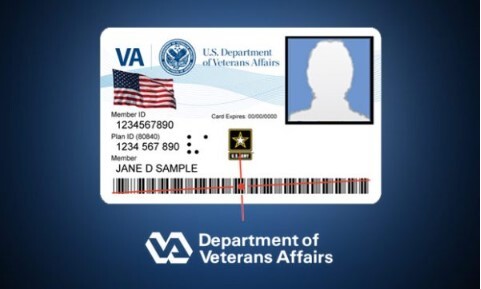
VA ID Cards may be obtained at the Rochester VA Clinic by appointment only
Please call the VA at 1-866-414-5058 to make an appointment in Rochester.
A veteran can also apply for a VHIC (Veterans Health Identification Card) by creating a My HealtheVet portal account and then going to a VHIC location on that site. From there you can apply for the HVIC online by submitting an ID (such as your MN license) and a self-photo. It only takes about 5-10 minutes. The card should arrive by mail in 1-2 weeks. Click on the button below to apply.
Click HERE for more information on veteran ID cards.
*The Minneapolis VA Medical Center issues ID cards daily.
JOBS
Olmsted County Veterans Organizations
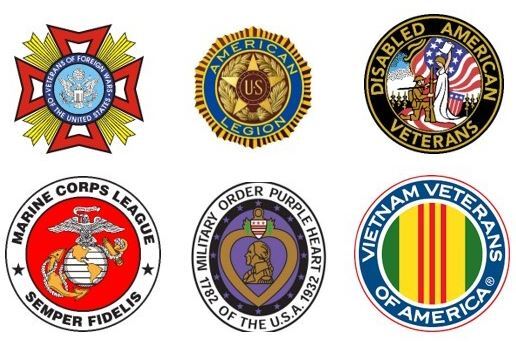
Get involved! Support a local chapter! Check out these veteran organizations for becoming a member and member resources:
Local organizations
American Legion Post 551 (Eyota)
American Legion WM. T. McCoy Post 92 (Rochester)
American Legion Ivan-Stringer Post 164 (Stewartville)
Disabled American Veterans (DAV) - Mayo SE Minnesota Chapter 28
Honor Bound Veterans
Marine Corps League - THOR #606
- Address: PO Box 8490, Rochester, MN 55903
- Telephone: 507-251-6919
- Email: SemperVince@hotmail.com
- Point of contact:
- Mark Shuster
- Vince Reynolds
Minnesota POW / MIA Riders Association (Rochester)
Order of the Purple Heart - Chapter 7110, Rochester MN
Facebook: https://www.facebook.com/p/Purple-Heart-Chapter-7110-Rochester-MN-100079537844682/
Veterans of Foreign Wars (VFW) Post 9647 (Oronoco)
Veterans of Foreign Wars (VFW) Post 1215 (Rochester)
Local Service Organization Meetings
For a full list of local organizations and meetings, please click on the blue button.
"To promote the interests and welfare of veterans, their dependents and survivors and to enhance their quality of life through counseling, claims assistance, education, advocacy and special projects."
2100 Campus Dr. SE, Suite 200
Rochester, MN 55904
507-328-6355
|