CVSO Office Updates
Greetings Olmsted County’s FINEST!
I don’t know about you all, but did January feel like it lasted 100 years for you too?? I keep thinking that it’s going to be February only to find out that it is January 56th! ANYWAY, I hope you are all staying warm! There is light at the end of this winter tunnel. We've just got to hold out a bit longer.
VA Pension & Fiduciary Benefits – What Veterans and Families Need to Know
Overview
VA Pension benefits provide needs-based monthly financial assistance to certain wartime Veterans and their survivors who have limited income and assets. These benefits are designed to help cover basic living expenses.
Types of VA Pension Benefits
Eligible Veterans and survivors may qualify for one or more of the following:
- Veterans Pension
- Survivors Pension (for surviving spouses and dependents)
- Dependency and Indemnity Compensation (DIC)
- Burial and Plot-Interment Allowance
Basic Eligibility Requirements
To qualify for a VA Veterans Pension, the Veteran must:
- Have not received a dishonorable discharge
- Have served at least 90 days on active duty, with at least one day during a recognized wartime period
- Meet income and net worth limits set by Congress
Service Requirements (One Must Apply)
- Began active duty before September 8, 1980
- Enlisted after September 7, 1980 and served at least 24 months or the full period ordered to active duty (with limited exceptions)
- Entered service as an officer after October 16, 1981, served at least 24 months, and did not previously meet the 24-month requirement
Additional Qualifying Factors (One Must Apply)
- The Veteran is age 65 or older
- Has a permanent and total non-service-connected disability
- Is a patient in a nursing home due to disability
- Receives Social Security Disability Insurance (SSDI) or Supplemental Security Income (SSI)
Recognized Wartime Periods
-
World War II: December 7, 1941 – December 31, 1946
-
Korean Conflict: June 27, 1950 – January 31, 1955
-
Vietnam War:
In-country Vietnam: November 1, 1955 – May 7, 1975
All other service: August 5, 1964 – May 7, 1975
-
Gulf War: August 2, 1990 – Present (end date to be set by law)
VA Survivors Pension, Dependency and Indemnity Compensation (DIC), and Related Benefits – Key Information for Families
The VA Survivors Pension provides monthly, needs-based payments to:
- Surviving spouses, and
- Unmarried dependent children of wartime Veterans who meet income and net worth limits set by Congress.
In addition, surviving spouses, children, or parents of a Service member who died in the line of duty, or a Veteran who died from a service-connected condition, may qualify for Dependency and Indemnity Compensation (DIC). DIC is a tax-free monetary benefit.
Burial and Plot-Interment Allowance
VA burial allowances provide flat-rate financial assistance to help cover eligible Veterans’ burial and funeral expenses.
VA Fiduciary Program
The VA Fiduciary Program protects Veterans and beneficiaries who are unable to manage their VA benefits due to:
- Injury
- Disease
- Advanced age
- Youth
VA appoints fiduciaries to manage benefits and conducts ongoing oversight to ensure beneficiaries’ needs are met.
Interested in becoming a fiduciary?
- Contact the nearest VA Regional Office
- Call 800-827-1000
- Be prepared to provide the beneficiary’s name, VA file number, and your contact information
Aid and Attendance (A&A) and Housebound (HB) Allowances
Aid and Attendance and Housebound benefits provide additional monthly payments on top of a VA pension.
You may qualify if one or more of the following apply:
- You require assistance with daily activities (such as bathing, feeding, or dressing)
- You are required to stay in bed or spend much of the day resting due to illness
- You reside in a nursing home due to physical or mental disability
- You have significant vision loss, including:
> Corrected vision of 5/200 or worse in both eyes, or
> Visual field limited to five degrees or less
Survivors Pension Eligibility (Quick Guide)
A surviving spouse may be eligible if:
- They have not remarried after the Veteran’s death, and
- The Veteran did not receive a dishonorable discharge
Unmarried children of a deceased wartime Veteran may also qualify.
Important Program Rules
- Aid and Attendance and Housebound benefits cannot be received at the same time
- Rates for VA Pension, Survivors Pension, A&A, and HB are updated periodically on VA.gov
Need Help?
Your County Veterans Service Office (CVSO) THAT’S US! You can call us at 507-328-6355 to discuss your options.
We look forward to hearing from you this month! Stay warm and keep fighting the good fight my friends!
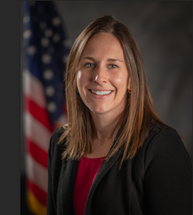 Tiffany Canfield
County Veteran Services Officer (CVSO) & Manager
tiffany.canfield@olmstedcounty.gov
507-328-6358
Veteran Service Office Snapshot
December 2026
Total claims submitted to VA:
- Compensation: 96
- VA Healthcare: 20
- DIC: 1
- Burial: 17
- Survivor’s Pension: 0
- CHAMPVA: 0
- Records Request: 1
- Special Monthly Pension: 0
Points of contact with veterans (office visits, incoming mail, phone calls
returned, emails returned, etc.): 366
Veterans in office: 71
Outreach visits: 1
Total phone calls: 257
Average number of calls per day: 8
Average call length: 3 minutes and 17 seconds
Women Veterans Spotlight
Happy February Sisters!!
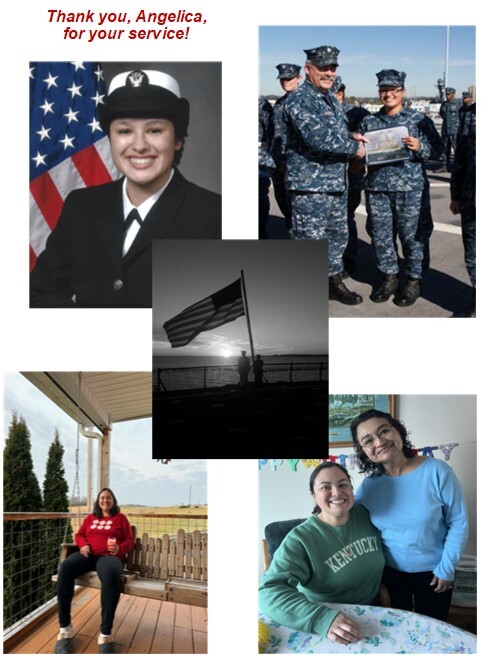
This month, I am proud to highlight a leader whose dedication and advocacy continue to make a meaningful impact for Veterans in our community. Our Women’s Spotlight recognizes the DAV Chapter 28 Commander, Angelica Reincke, whose commitment to service, collaboration, and support for disabled Veterans exemplifies the strength and leadership of women in Veteran advocacy. Through her work with the Disabled American Veterans and ongoing partnerships across local and state Veteran-serving organizations, she plays a vital role in keeping DAV Chapter 28 members informed on Veteran-related issues and benefits. In her volunteer role, she works to support Veterans in need, helps organize community events, and serves as a strong, visible leadership role model for the Veterans and community she serves.
Angelica Reincke
Navy | 3.5 years| Ship’s Serviceman
Current Chapter: Currently I’m working towards my Bachlor’s Degree in Health Care Leadership and Administration through Winona State University. I am the current Disabled American Veteran’s Chapter 28 of Rochester Commander. I love giving back to those who served and helping them in any way I can. I also enjoy spending time with my friends and family, playing pickleball, reading and going for long walks.
Why I served: A large reason why I enlisted is because I wanted to get out of my small town of Elgin, MN and see more of the world, expand my horizons and have new adventures. My father was also a Navy veteran so that’s a large part of why I joined the Navy.
My Time in uniform: I was stationed on the USS Pearl Harbor LSD-52 out of San Diego, California for my whole 3.5-year enlistment. During my time there I went on two deployments. One for 8 months to the Middle east and one for about 3 months over to some different islands near Samoa. I grew a lot as a person, and it really pushed me to become a better version of myself. I saw parts of the world which I don’t think I would have otherwise and made some great friends.
There were some challenging moments and struggles as well but I think it made me a stronger person in the end and shaped me to become the women I am today.
What I loved most: I loved the bonds and camaraderie you built with your fellow shipmates. That is something I think if you haven’t served it is hard to understand. I loved traveling to different parts of the world and learning more about other cultures. I also am proud to say I’m one of the few who have served in our U.S military.
What Challenged Me Most: I think what was most challenging to me was the time away from family and missing everyday events. You take those for granted when you live close by and your family is always there.
Life After Service: After my time in service came to an end in 2014, I moved and lived in Connecticut for about 6 years and eventually made my way back home to Rochester, MN. In 2019, I got a job at the Mayo Clinic here in Rochester in the General Services Dispatch area and worked there for 2 years until I moved to my current role in the parking and badge office at Mayo where I’ve been for the last 5 years. I’ve been in school since about 2019 working towards my bachelor’s and I hope to eventually complete my master’s degree as well. I really enjoy my volunteer work with the DAV and spending time with my mom and stepdad who live here in Rochester.
What Still Stays with Me: Being disciplined and a hard worker really stays with me. I learned to always be on time and just do what you are supposed to do. And do it to the best of your ability.
Sisterhood Beyond the Uniform: I have a lot of great relationships still from my fellow women shipmates that I served with. Although we have taken different paths we keep in touch. I have made many new bonds though with my fellow DAV women veterans. Hearing their stories and how we all have similar experiences really has made us closer.
What I miss-and What I Don’t: I miss the bonds we created and the memories we shared. Although sometimes it was hard it was those friends that helped me get through those challenging times, something I’ll never forget.
I don’t miss the freedoms that we as civilians take for granted, being able to wear what we’d like, dye our hair, paint our nails, etc.
The Lesson I Live By: Always doing the very best you can do.
Words For the Next Generation: Similar to what my friend Brittany said, be your own advocate! I can’t say that enough, no one is going to understand and fight for you more than yourself. And no one understands you better. Whatever it is, be your own advocate.
-Tiffany
“You can’t raise the bar without raising a little hell”- so let’s raise some hell, shall we ladies??
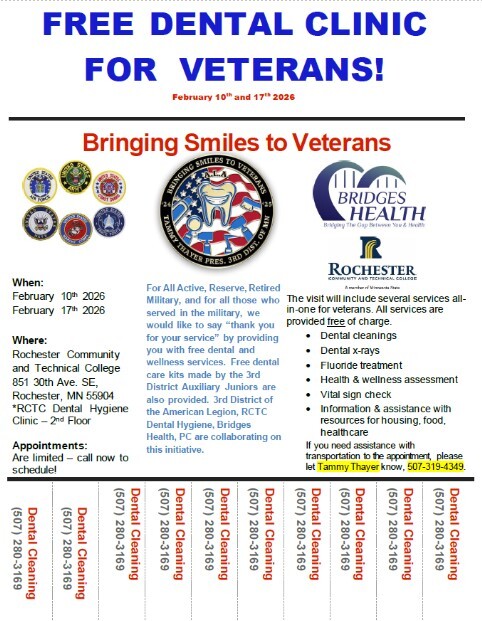
Free Dental Clinic for Veterans
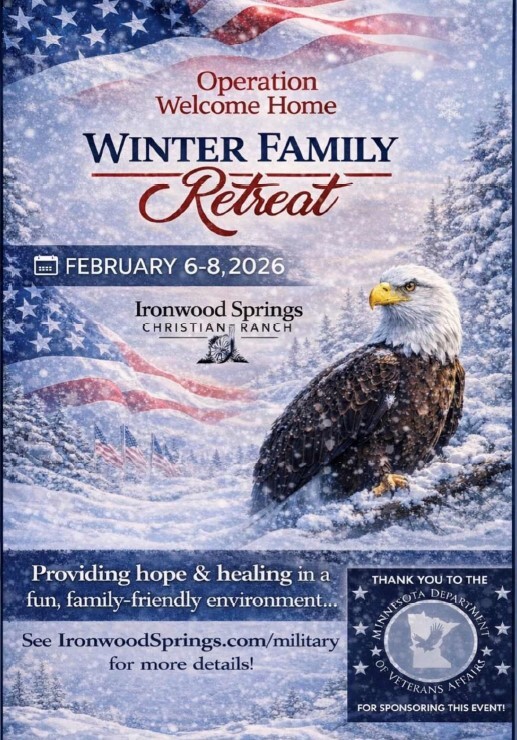
Operation Welcome Home Winter Family Retreat
Cold Weather Clothing Drive
Our community has many homeless veterans in need of winter clothing. VFW Post 1215 is partnering with MACV (Minnesota Assistance Council for Veterans) to host a clothing drive specifically for winter attire. Please drop off your donations in the designated boxes at VFW Post 1215, 2775 43rd St NW, in Rochester, MN.
Attention Members of VFW Post 1215
Members of VFW Post 1215 in Rochester will now be meeting on the third Tuesday of the month. The buffet will start at 5:30 pm and the meeting will begin at 6:00 pm. Please visit this link to view the calendar: https://vfw1215.org/events/
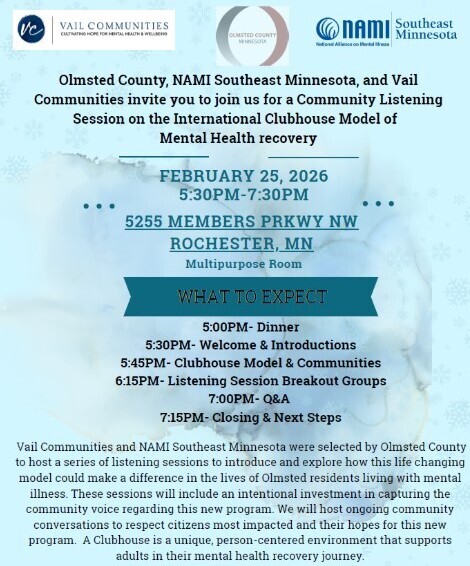
NAMI Community Listening Session
Disability Claims - Secondary Conditions
Veterans Often Overlook These VA Disability Claims: Secondary Conditions Explained
A Marine Corps veteran rated 70% for post-traumatic stress disorder didn't know his sleep apnea counted as a separate disability. An Army veteran with a service-connected back injury never filed for the knee problems that developed from limping for years. A Navy veteran rated for tinnitus had no idea his depression qualified as a secondary condition.
These veterans left money on the table. More importantly, they missed recognition for disabilities that directly resulted from their service-connected conditions.
Secondary conditions are disabilities caused by conditions the Department of Veterans Affairs already recognizes as service connected. The VA rates them separately and adds the percentage to your overall disability rating. But the VA doesn't automatically grant them. You have to file a claim and prove the connection.
Most veterans don't realize this option exists until years after their initial rating. Some never find out.
What Counts as a Secondary Condition
The basic rule is simple: If a service-connected disability causes or aggravates another condition, that second condition can be rated as secondary.
Sleep apnea from PTSD is the most common example. PTSD causes hypervigilance, nightmares and disrupted sleep patterns. These contribute to obstructive sleep apnea. File with medical evidence linking the two, and the VA can rate the sleep apnea secondary to PTSD.
Knee or hip problems from a back injury follow the same logic. A service-connected lumbar spine condition forces you to walk differently to avoid pain. That altered gait puts stress on your knees and hips. Over time, you develop osteoarthritis or other joint damage. Those joint problems are secondary to the back condition.
Mental health conditions secondary to chronic pain work the same way. Constant pain from a service-connected injury leads to depression, anxiety or worsening PTSD. The mental health condition becomes secondary to the physical injury.
The secondary condition doesn't have to be related to military service directly. It just has to be caused by something that is.
Common Secondary Conditions Veterans Miss
Sleep apnea secondary to PTSD appears in claims constantly, but many veterans don't connect the dots until a sleep study shows moderate or severe apnea. The VA can rate sleep apnea at 0%, 30%, 50% or 100% depending on whether you need a CPAP machine and whether you actually use it.
Joint problems secondary to back, hip or knee injuries are extremely common. Compensating for pain in one area shifts weight and stress to other joints. A veteran with a 40% rating for a left knee injury might develop right knee problems from favoring the injured side. That right knee qualifies as secondary.
Radiculopathy secondary to spinal conditions affects thousands of veterans. Nerve damage from a service-connected back or neck injury can cause pain, numbness or weakness in your arms or legs. Each affected nerve can be rated separately as secondary to the spinal condition.
Mental health conditions secondary to physical disabilities show up across the board. Chronic pain, mobility loss and visible scarring all contribute to depression and anxiety. These aren't just "part of" the physical condition. They're separate disabilities that deserve separate ratings.
Migraines secondary to traumatic brain injury or neck injuries are frequently overlooked. The VA can rate migraines based on frequency and severity, from 0% for less frequent episodes to 50% for very frequent completely prostrating headaches.
How to Establish Service Connection for Secondary Conditions
You need three things: a current diagnosis of the secondary condition, medical evidence linking it to your service-connected disability, and a claim filed with the VA.
The current diagnosis comes from a doctor. Go to sick call at the VA or see a private physician. Get the condition documented. Sleep apnea requires a sleep study. Joint problems need X-rays or MRIs showing damage. Mental health conditions need evaluation from a psychiatrist or psychologist.
The medical nexus is the hard part. You need a doctor to write an opinion stating it's "at least as likely as not" that your service-connected condition caused or aggravated the secondary condition. This is called a nexus letter.
Some VA doctors will write these opinions during compensation and pension exams. Others won't touch them. If the VA examiner won't establish the connection, get a private medical opinion. Veteran service organizations and disability attorneys can help arrange this.
The claim itself is filed through VA.gov, by mail, or with help from a veteran service organization. You're filing for a new condition secondary to an existing service-connected disability. The form asks you to identify the primary condition and explain the relationship.
Why This Matters for Your Overall Rating
The VA doesn't add disability percentages together in a straight line. A veteran with 70% for PTSD and 50% for sleep apnea doesn't get 120%. The VA uses a combined ratings table that produces a lower total than simple addition.
But secondary conditions still increase your overall rating significantly. A veteran at 70% who adds a 50% secondary condition jumps to 90% overall. That's the difference between $1,716.28 and $2,241.91 per month in 2026. Over a lifetime, the gap runs into hundreds of thousands of dollars.
Getting to 100% often requires claiming secondary conditions. A veteran with 70% for one condition and 30% for another might sit at 80% combined. Add three more secondary conditions rated at 10% each, and you could reach 100%. That unlocks full commissary and exchange privileges, ChampVA health coverage for dependents, and property tax exemptions in many states.
The retroactive pay matters, too. If you file five years after developing a secondary condition, the VA can pay retroactively to your effective date depending on when you filed. But you can't get paid for years you never claimed.
What to Do Now
Look at your current service-connected disabilities and ask whether they've caused other problems. Has your back injury led to knee pain? Has your PTSD disrupted your sleep? Has chronic pain from your service-connected condition led to depression?
Get those secondary conditions diagnosed. See a doctor. Get the evaluation done. Document everything.
Then file. The VA won't automatically give you credit for conditions you haven't claimed, even if the connection seems obvious. You have to ask.
If you need help, contact a veteran service organization. DAV, VFW, American Legion and other VSOs employ accredited representatives who help with claims for free. They know which secondary conditions to look for and how to establish the medical connection.
The biggest mistake is assuming the VA already knows about your secondary conditions or that they're already included in your rating. They're not. You have to claim them.
Stay on Top of Your Veteran Benefits
Military benefits are always changing. Keep up with everything from pay to health care by subscribing to Military.com, and get access to up-to-date pay charts and more with all latest benefits delivered straight to your inbox.
Karen's Korner - Got the Winter Blues?
Three winters in a row, the same Marine Corps veteran watched his symptoms spike every November. Nightmares intensified. Anxiety got heavier.
By January, he was sleeping 12 hours a day and avoiding everyone. Then spring would arrive, and the fog would lift. He figured he was losing it until his Department of Veterans Affairs provider explained the pattern:
Winter amplifies PTSD symptoms through biology, darkness and isolation that hits veterans hard.
The Biology Behind It
Your brain needs sunlight to regulate mood and sleep. Less daylight disrupts your circadian rhythm, throwing off when your body wants to wake up or shut down. Sleep quality tanks. Energy drops. Mood follows.
Sunlight affects serotonin production. Your brain makes less of this mood-regulating neurotransmitter when you're not getting enough light. For veterans already dealing with PTSD, this drop can push symptoms from manageable to overwhelming.
Seasonal Affective Disorder affects about 5% of the general population. Veterans with PTSD face a double hit. Seasonal depression compounds existing trauma symptoms. Intrusive memories intensify. Avoidance behavior increases. Hypervigilance spikes.
Why Veterans Get Hit Harder
Shorter days kill motivation to go outside. Cold weather becomes another excuse to skip the gym or bail on social plans. The holidays bring financial stress and forced family interactions that trigger symptoms.
Combat veterans often deployed to extreme heat. The shift to cold can be jarring and act as a physical reminder of coming home, which itself can be a trauma trigger. Some veterans deployed during winter months, on the other hand, making the season itself a trauma anniversary.
VA research shows that light therapy consultations peak on Dec. 21 or 22, the darkest days of the year. Many veterans don't recognize the seasonal pattern until symptoms hit crisis levels.
What the VA Offers
Light therapy is first-line treatment for seasonal depression and works for veterans with PTSD. The VA provides light boxes at no cost. These devices produce 10,000 lux of bright light, over 20 times brighter than typical indoor lighting. You sit in front of it for 30 minutes every morning. Most veterans' experience improvement within one to two weeks.
The VA also offers cognitive behavioral therapy adapted for seasonal depression. This targets negative thoughts about winter, schedules pleasant activities despite the weather and maintains social connections during dark months.
Talk to your VA primary care provider or mental health provider about seasonal symptoms. Your provider can order a light box consult or refer you to CBT. Some VA medical centers keep light boxes available for immediate use.
Private light boxes cost between $50 and $200 if you're not enrolled in VA care. Look for devices that produce 10,000 lux and filter out UV light. Use it first thing in the morning, not at night. Don't stare directly at the light.
What You Can Do Now
Here’s how you can start to mitigate the effects of seasonal symptoms:
- Get outside during daylight hours, even when it's cold. A 20-minute walk in natural sunlight regulates your circadian rhythm better than any supplement.
- It counters seasonal depression. The VA offers fitness programs, and some facilities provide free gym access. Movement increases serotonin production and improves sleep quality.
- Stay connected. Winter isolation makes PTSD worse. Veteran's groups, peer support programs and regular phone calls with other veterans help maintain connections that protect against depression.
- Watch for warning signs. If your PTSD symptoms consistently worsen between November and March, document when symptoms spike so you can show your provider the seasonal connection.
- Start light therapy before the worst hits. Prevention beats crisis management.
Winter will always be darker and colder. PTSD symptoms don't have to get worse every year.
MDVA Health & Disability-Related Programs
The Minnesota Department of Veterans Affairs (MDVA) is responsible for administering and highlighting a number of health and disability-related programs for Minnesota Veterans and their families. These include benefits and services in the areas of disability claims, outreach, dental, optical, special needs, homelessness prevention, and health information on issues like depleted uranium and hepatitis c.
Please contact your local County Veterans Service Officer (CVSO) for personal assistance and more information on these programs. Find your CVSO at www.macvso.org or by calling 1-888-LinkVet (546-5838) MDVA's one-stop customer service line for all Minnesota Veterans and their families.
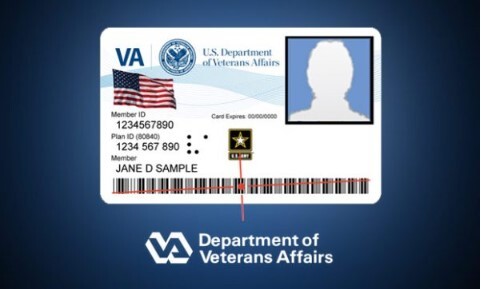
ID Cards at the Rochester VA Clinic
VA ID Cards may be obtained at the Rochester VA Clinic by appointment only on the following dates:
March 19, 2026
May 21, 2026
July 16, 2026
September 17, 2026
November 19, 2026
Please call the VA at 1-866-414-5058 to make an appointment in Rochester.
*The Minneapolis VA Medical Center issues ID cards daily.
Click HERE for more information on veteran ID cards.
Camp Bliss Events
2026 Camp Bliss Retreats for Veterans, Law Enforcement and People with Disabilities!
Located in the heart of northern Minnesota, Camp Bliss is a year-round, wheelchair-accessible retreat and private rental destination set on 48 acres of pine and hardwood forest. Surrounded by the peaceful waters of Long Lake, Lake 3, and Lake 4, our property offers a unique setting for vacations, weekend getaways, weddings, conferences, and special events.
With lodging options designed for all abilities, Camp Bliss is committed to creating inclusive experiences for everyone. Each private rental helps support our mission of providing low or no-cost retreats for Veterans and individuals with disabilities.
From canoeing, kayaking, and paddleboarding in the summer to snowshoeing and fireside relaxation in the winter, Camp Bliss invites you to slow down, explore the outdoors, and make lasting memories…and find your bliss!
- We will not be charging a registration fee for Veteran getaways for the next two years, we have secured funding from the MDVA. For non-qualifying Veterans there will be a fee of $100 per person to attend a getaway or retreat. If you have questions about the guidelines, please call Lori at (320) 281-2016.
- We will now be allowed to get reimbursement for spouses, children, and active-duty service members!
You may come up to two retreats per year!!!! MDVA Calendar Year September 1, 2025 – August 30, 2026. We have added many exciting retreats due to this!! A complete list of 2026 Retreats and Getaways are listed below! **Because there will not be a registration fee, you will still be required to submit the appropriate documentation, DD214 (Member 4) and Driver’s license or state ID. If a spouse is attending and has a different last name, you will be required to show proof of marriage before you are considered “registered.” Once you are, please commit fully to attending your retreat as there are limited spots for each one and if you do not show up, that is a Veteran’s spot that you have eliminated
If a Retreat/Getaway says FILLED, please email or call Kirsten to be put on a waiting list: Register@campbliss.org or call 320-281-2016
2026 Upcoming Camp Bliss Retreats.
Veterans & Spouses Ice Fishing Getaway: February 13 - 15, 2026 Register by January 30, 2026
Veterans & Spouses Getaway: March 6 - 8, 2026 Register by January 30, 2026
Veterans Turkey Hunt Getaway: April 24 - 26, 2026
Register by March 30, 2026
Veterans & Family Getaway: May 8 - 10, 2026
Register by April 3, 2026
Veteran & Child Turkey Hunt Getaway: May 15 - 17, 2026
Register by April 10, 2026
Warriors & Walleyes Outdoors
Warriors & Walleyes Outdoors is a wonderful organization that offers veterans and their guests guided hunting and fishing trips. With tremendous support from experienced guides, veterans who attend these events create fantastic memories.
LOW Ice Fishing
-
Location: Arnesen's Rocky Point Resort
Lake of the Woods, MN
-
Dates: February 26 - March 1, 2026
LOW Veterans Fishing Event
-
Location: Arnesen's Rocky Point Resort
Lake of the Woods, MN
-
Dates: July 30 - August 2, 2026
- Forms must be submitted no later than January 1, 2026
For more information regarding any of the events listed above, please click below:
JOBS
Local Service Organization Meetings
For a full list of local organizations and meetings, please click on the blue button.
"To promote the interests and welfare of veterans, their dependents and survivors and to enhance their quality of life through counseling, claims assistance, education, advocacy and special projects."
2100 Campus Dr. SE, Suite 200
Rochester, MN 55904
507-328-6355
|