Spin the Wheel of Waste at the Olmsted County Fair
The Olmsted County Free Fair runs July 21 - July 27. As in past years, the Environmental Resources Department will host an educational booth in the Conservation Building throughout the week.
Come spin the Wheel of Waste and learn how to properly recycle/dispose of a variety of waste items in Olmsted County. The Conservation Building is located in the northeast corner of the fairgrounds at the intersection of 14th St SW and Fairgrounds Ave SE.
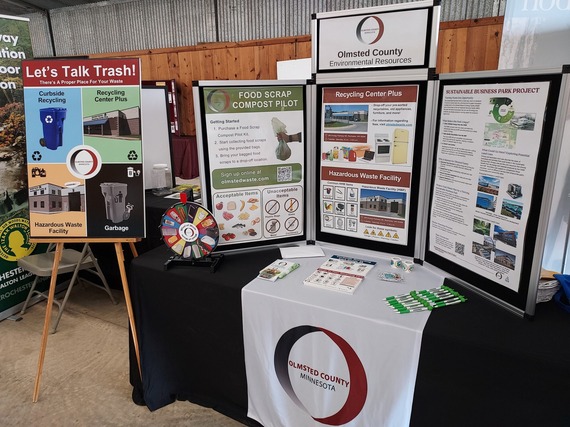 Environmental Resources Fair Booth; photo credit: Anthony Wittmer
Food Scrap Composting Pilot Project - Year One Update
Are you interested in composting but don’t have the space or time for a backyard bin? Join Olmsted County’s food scrap composting pilot project—a convenient and accessible way to turn your food waste into something valuable.
Launched in June 2024 with just 50 households, the program has seen strong community interest and rapid growth. In its first 12 months, participation has increased to 234 households. Together, these residents have diverted more than 53,650 pounds of organic material from the waste stream!
Even more impressive is the quality of participation—contamination has remained under 2%, meaning nearly everything collected is suitable for composting. That’s a big win for both the environment and the efficiency of the program. To learn more and get involved, visit our website.
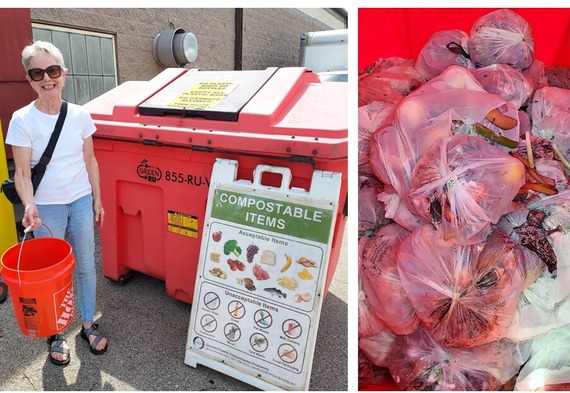 A pilot project participant drops off food scraps for composting; photo credit: Anthony Wittmer
First Fix-It Clinic a Success!
Olmsted County's first Fix-It Clinic was held on Saturday, May 3, 2025, in collaboration with the annual EarthFest Rochester, MN Expo, at St. Mary's University -- Cascade Meadow. Nearly 20 amazing volunteers helped fix broken appliances, torn clothing, and more, for 55 community members.
Of the 76 total items brought in, 66 were repaired or mended. Participation was simple. Residents could bring in two items per household, which were weighed and documented. They were then matched with a mender or fixer best suited to repair the item(s). The next Fix-It Clinic will be held on Saturday, September 6, 2025. Visit our website for event details.
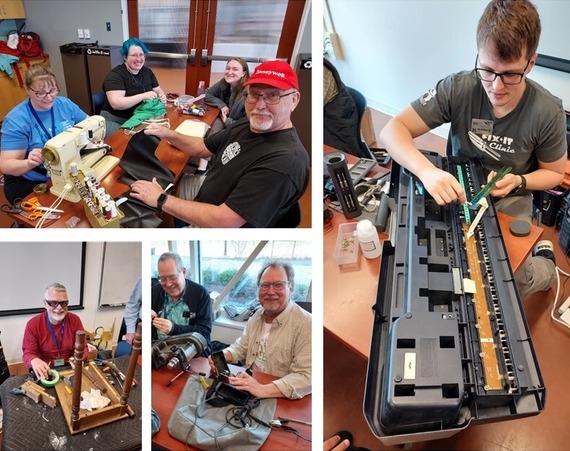 Volunteer fixers and participants at the May 3 Fix-It Clinic; photo credit: Anthony Wittmer
Sustainable Business Park Planning Begins as Land Use Options are Explored
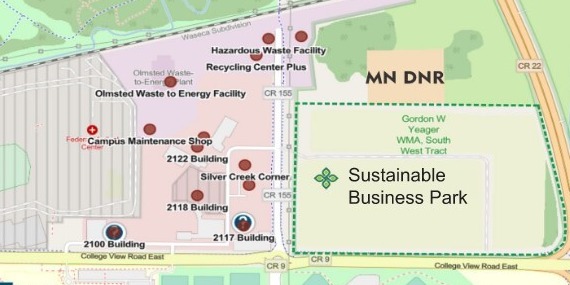 The Sustainable Business Park would be located across the street from the Olmsted County Government Campus; graphic via SEH, Inc.
Turning Waste Into Opportunity
The Sustainable Business Park is a bold new vision to transform 72 acres of vacant land into a thriving hub for green innovation. Located next to the Olmsted Waste-to-Energy Facility (OWEF) and a future state-of-the-art Materials Recovery Facility (MRF), this park will attract businesses that can use the energy and materials we already produce—turning waste into economic opportunity.
What Makes this Park Unique?
○ Clean, Reliable Energy from the OWEF—The OWEF converts trash into steam and electricity, dramatically reducing landfill use while producing a steady supply of energy.
○ High-Quality Recyclables from the MRF—The future MRF will sort recyclables using advanced technology and human expertise, creating a consistent stream of materials ready for reuse.
○ A Closed-Loop System—Businesses at the park can tap into these resources—cutting costs, maximizing the use of local resources by keeping products and materials in use, minimizing environmental impact, and supporting a circular economy.
Why it Matters for Olmsted County
○ Generates new revenue by selling energy and turning your discarded materials into valuable resources, creating new products.
○ Expands the tax base by developing underused land near the County Campus.
○ Attracts innovative businesses that create jobs and align with our sustainability goals.
○ Supports residents by reducing environmental impact and boosting the local economy.
What Could Go Here?
Primary and secondary land uses describe the types of businesses and activities that could locate in the Sustainable Business Park. Primary uses are the core industries that directly benefit from the energy and materials produced by the OWEF and MRF. This could include technology driven businesses, modern industrial facilities, as well as educational or material research and development.
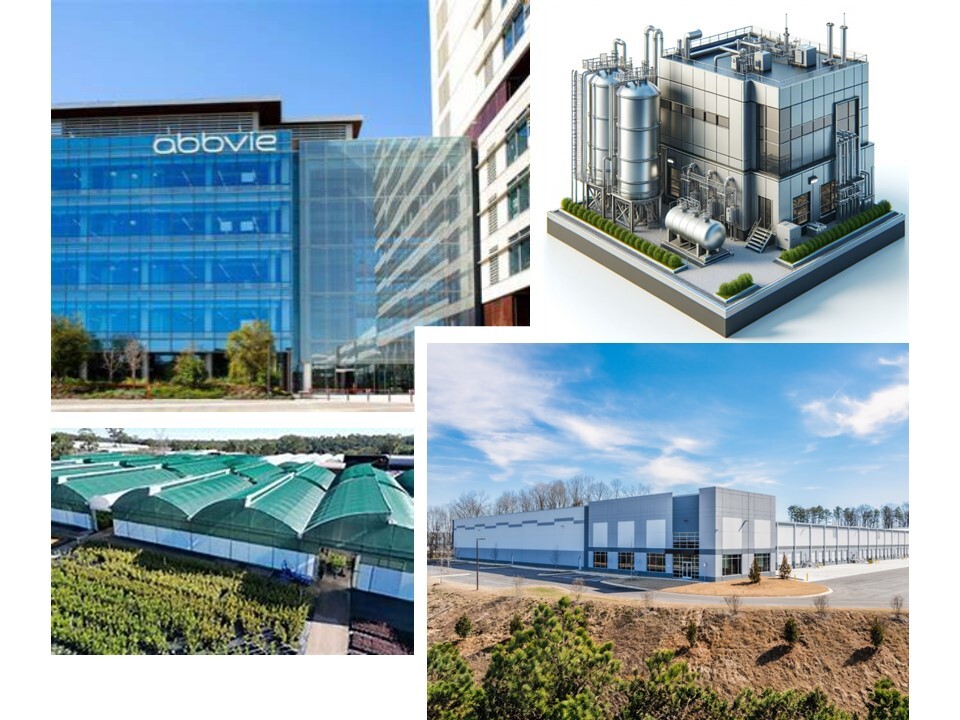 Possible primary land uses in the Sustainable Business Park via SEH, Inc.
Secondary uses support or complement those industries—such as offices, public services, parks, or other placemaking elements that enhance the park’s functionality and community value.
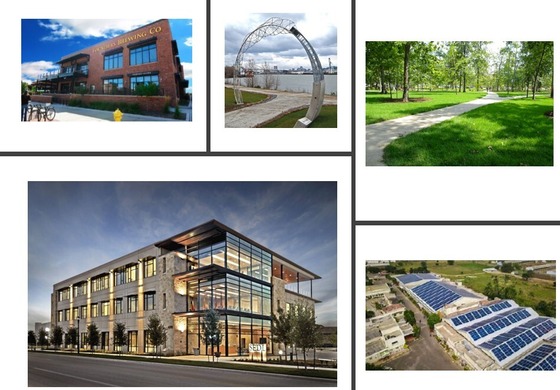 Possible secondary land uses in the Sustainable Business Park via SEH, Inc.
Look for project updates on our website as we work to find the best fit for the site.
Sharon Schriever Retires after 42 Years in Solid Waste
Congratulations to Sharon Schriever on her retirement! She has been a fixture within this department from the very beginning and contributed in countless ways, particularly in outreach/education.
When Sharon started, there was not always a proper place for your waste in Olmsted County. Over the course of her employment, the following facilities came online—Recycling Center Plus, Hazardous Waste Facility, Compost Site, Waste-to-Energy Facility, and Kalmar Landfill. Each new facility brought with it the need for thoughtful promotion and public education. Sharon's work helped shape a more sustainable and informed community. We're grateful for her 42 years of service!
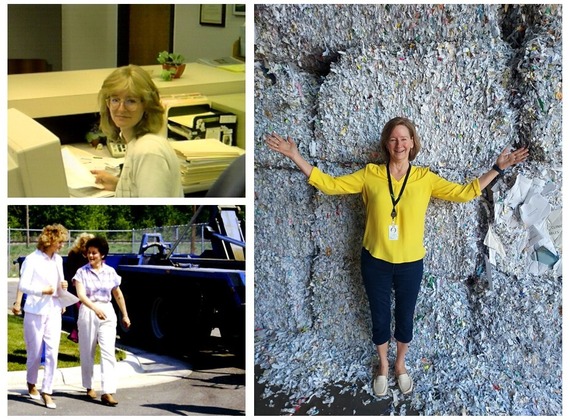 Top left: Sharon works behind the department's reception desk (photographer unknown). Bottom left: Sharon walks with a coworker across the Solid Waste Campus (photographer unknown). Sharon stands in front of baled office paper ready for recycling; photo credit: Anthony Wittmer
Sustainability Corner: Travel Light, Travel Right - How to Reduce Waste on the Go
Whether you're heading out for a weekend getaway or embarking on a month-long adventure, travel can often come with a trail of trash. From single-use plastic bottles to airplane snacks wrapped in layers of packaging, the environmental footprint of a trip can be larger than you think.
The good news, with a bit of preparation and mindfulness, reducing waste while traveling is not only possible, it can also enhance your experience.
Here’s how you can travel more sustainably and reduce waste every step of the way.
1. Pack Smart and Light
Before you even leave home, your packing choices can make a big difference.
-
Reusable essentials: Bring a refillable water bottle, travel mug, reusable utensils. These items help you avoid single-use plastics while on the move.
-
Solid toiletries: Choose shampoo bars, conditioner bars, and bar soap instead of liquids in plastic bottles. They're TSA-friendly and create less waste.
-
Minimal wardrobe: Pack versatile clothing that can be mixed and matched. Less luggage means a lighter carbon footprint, especially when flying.
2. Eat and Drink with Care
Food packaging waste can pile up quickly while traveling.
-
Skip the disposables: Say no to plastic straws, lids, and cutlery when ordering food.
-
Bring your own snacks: Pack nuts, dried fruit, or sandwiches in reusable containers to avoid buying individually packaged snacks.
3. Be a Low-Waste Lodger
Your accommodations can be a big part of your waste reduction strategy.
-
Choose eco-conscious lodging: Look for hotels, hostels, or rentals that have sustainability practices in place, such as composting, recycling, and refill stations.
-
Decline daily housekeeping: Opting out of daily towel and linen changes saves water, energy, and detergent waste.
-
Bring your own toiletries: Avoid using the small, single-use, plastic bottles provided by hotels.
Sustainable travel isn't about being perfect, it’s about being conscious. Every reusable item you pack, every low-waste meal you enjoy, and every mindful choice you make adds up. When you reduce your waste while traveling, you're not only helping the planet, you're engaging more thoughtfully with the world around you.
Bon voyage—and remember, the best memories don’t come wrapped in plastic.

Kalmar Landfill Goes Solar!
Olmsted County has taken another step toward its sustainability goals with the installation of a new 49.45 kW DC solar array. The system is expected to generate approximately 52,000 kilowatt-hours (kWh) of electricity annually—enough to offset the full electrical consumption of the county’s scale house and associated building site.
The solar project supports several county priorities, including reducing electricity costs, cutting greenhouse gas emissions, and supporting the local clean energy economy. By participating in net metering with People’s Energy Cooperative, the county can return excess electricity to the grid, further maximizing the value of the system.
This initiative is part of a broader commitment to renewable energy and climate action. The project is expected to pay for itself over an 18-year period through energy savings and operational efficiencies.
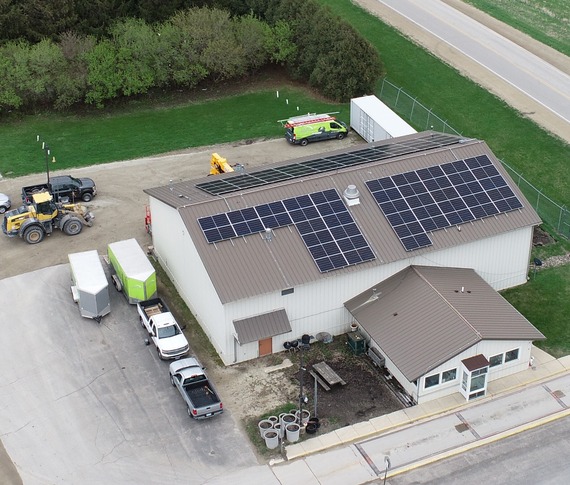 Solar array at the Kalmar Landfill; photo credit: Olmsted County Surveying Staff
Disposal Discussion: Old Pots and Pans
Metal pots and pans should NOT be placed in your curbside recycling cart. Instead, they can be recycled at the Olmsted County Recycling Center Plus. They would be considered scrap metal, so there is no disposal fee. Handle covers do not need to be removed. Drive into the facility's entrance on the east side of the building. A staff member will direct you to the appropriate recycling container.
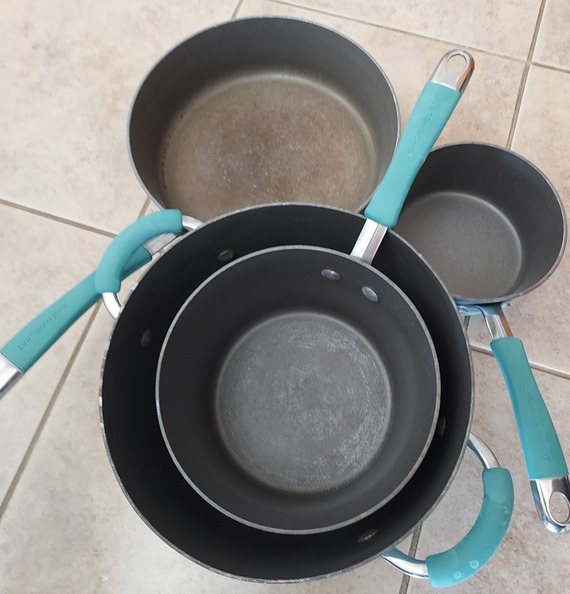 Household pots and pans; photo credit: Anthony Wittmer
|