Stories of Impact: Harm reduction innovations for people experiencing homelessness
In 2024, the Minnesota Department of Health (MDH) launched the Harm Reduction, Health, and Housing Hubs program to reduce drug-related deaths and other harms among people experiencing homelessness. This program is part of the Comprehensive Drug Overdose and Morbidity Prevention Act of 2023. Through a competitive process, MDH selected three Hub grantees: Churches United in Ministry (Chum) in Duluth, the Native American Community Clinic (NACC) in Minneapolis, and Northwest Indian Community Development Center (NWICDC) in Bemidji.
In the first seven months of the program, these three organizations have:
- Provided services to 5,592 total participants.
- Reached 988 new participants.
- Helped 67 people move into housing.
Beyond the data, the grantees are developing promising new approaches to support the health and wellbeing of people experiencing homelessness.
Reconnecting to Community through Ceremony
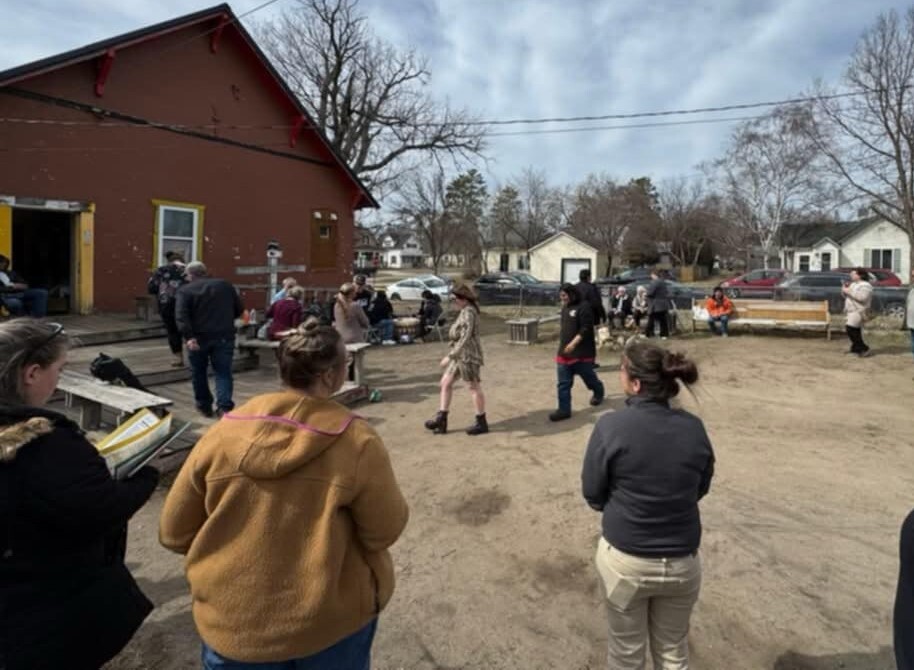
NWICDC’s Oshki Waakaa'igan "New House" housing program and the Ombishkaa "Rising Up" Re-Entry Program have joined forces with The People's Church shelter to establish a community sweat lodge. The sweat lodge ceremonies (called Madoodiswan in Ojibwe) provide an accessible and welcoming space for unhoused individuals seeking a traditional healing experience. This collaboration aims to foster cultural connection and support for those in need, ensuring that the sweat lodge remains a safe and inclusive resource within the community.
To date, the New House program has hosted five sweat lodges with a total of 64 participants. Following the sweats, the New House program has helped several participants get into residential treatment programs and then permanent housing.
 Quote from sweat lodge participant:
The stories they shared of feeling like they’ve never really had a ceremony to just express their healing needs, and this felt like a ceremony just for them to talk about being homeless. One elder gentleman said for the first time in many years he felt like he was reminded to step away from drinking and go home. He had family he could stay with but because of the guilt and shame of how he acts when drinking he stays away. Another shared that within the last two years he lost his mother, father, and brother and that was all his safety and security gone so he had nowhere else to go and was feeling overwhelmingly hopeless but by the second door he felt his family’s presence and cried in the lodge. He felt hope for the first time in years.
Harm reduction vending machines in shelters
Churches United in Ministry is the largest shelter in Greater Minnesota, sheltering nearly 1,500 people each year. Churches United in Ministry estimates that at least half of these guests are currently using substances. The shelter is using its Hub grant to expand its harm reduction and overdose prevention services. It recently installed harm reduction vending machines stocked with boxes of naloxone, wound-care kits, and fentanyl and xylazine test strips at both its overnight shelter and warming center. The vending machines were purchased online and are located next to the laundry room. Churches United in Ministry staff report that the vending machines have significantly increased their distribution of harm reduction supplies compared to when guests had to request them from staff. They are going through 20-30 boxes of naloxone each week compared to 15 boxes per month when naloxone was only available through the front desk. Churches United in Ministry is also purchasing Brave buttons and sensors to notify staff and first responders when there is a suspected overdose in their programs.
Pregnancy testing and prenatal care for unsheltered people
The Native American Community Clinic is a community health clinic located in the Phillips neighborhood of South Minneapolis, home to the largest population of urban Native Americans in Minnesota. In addition to providing medical, dental, and behavioral health services at the clinic, the clinic also has an outreach team that provides full spectrum harm reduction services to people living outside. The Hub grant is helping the clinic connect its outreach and clinical services. The Native American Community Clinic is bringing medical services, like blood draws in the community and providing navigation services and incentives to help bring people into the clinic for more comprehensive services. Through a separate grant, the clinic will also provide medication lockers in a community center to help unsheltered people store and regularly take their medications.
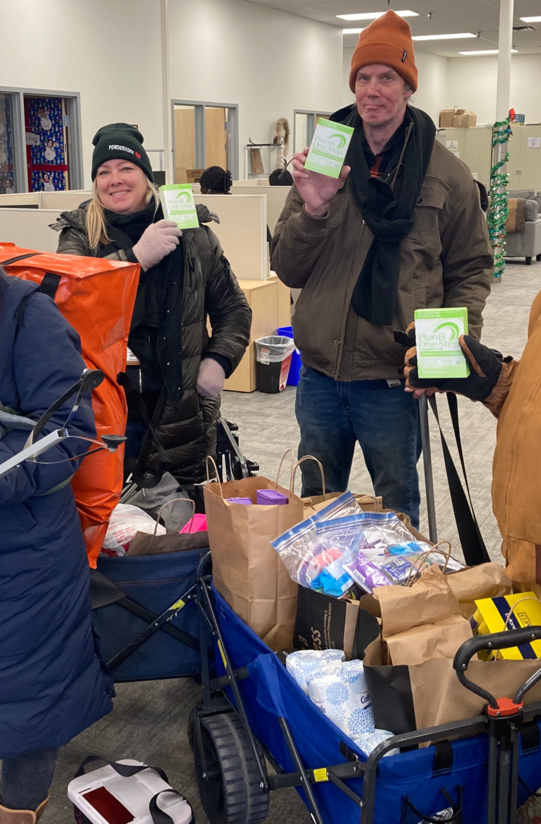 The Native American Community Clinic's initial focus for the Hub program is on supporting pregnancy testing and linkage to obstetric care. Pregnancy and reproductive health decisions can be extremely difficult for unhoused people. They may be delayed in detecting pregnancies and then face external judgment and internalized stigma when seeking care. To breakdown these barriers, the clinic outreach team is partnering with doulas and the Native American community obstetrics clinic to engage unsheltered people, offering pregnancy tests and infectious disease testing in encampments and incentives and navigation support for pregnant people to go into the clinic for ultrasound and follow-up appointments.
The monthly fatal overdose snapshot provides a look at the prior month's overdose death data. This snapshot was created by MDH and is close to real time data.
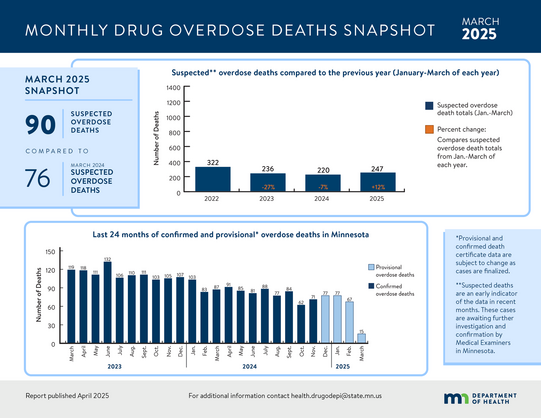 You can view the snapshot on MDH's Monthly Drug Overdose Death Snapshot page, or open the PDF version here: Monthly Drug Overdose Deaths Snapshot: March (PDF)
Our data team noted that the number of suspected cases went up in the first quarter of 2025. This was the first time they increased since 2023.
Please reach out to health.drugodepi@state.mn.us with questions related to the snapshot or with any additional data needs.
|