All
sponsors of the Child and Adult Care Food Program (CACFP) implemented the new
meal pattern changes on October 1, 2017. To help you prepare, MDE Nutrition
Program consultants completed eleven New Meal Pattern workshops throughout the
state between April and October. Course materials from the workshops are now available. These New CACFP Meal Pattern training resources
include a video for each of 12 chapters, the actual PowerPoint presentation with scripts,
training activities, handout materials, and a comprehensive participant
workbook. Plan now to use these materials for your annual CACFP training, new
staff training, or as a resource for questions. Access the New Meal
Pattern Training Tools for CACFP.
Back to top
The
infant meal pattern for 6 to 11 months contains serving sizes beginning with
zero for all food components except breast milk or formula. Serving sizes
beginning with zero recognize that not all infants are ready to eat solid foods
right at 6 months of age. Zero does not mean optional. It means that an
infant is not developmentally
ready for solid food at 6 months of age and needs additional growth and
development before solid foods are introduced.
The new meal pattern will
allow parents and guardians to provide only one food component for the infant
meal to remain reimbursable. Breast milk counts as a parent-provided component.
If
parents/guardians provide more than one food component, the meal or snack
cannot be claimed for reimbursement.
Three food components are required
for snack in the new infant meal pattern. The additional component is a
vegetable, fruit, or combination of both. Ready-to-eat breakfast cereals are an
option at snack only and can be served instead of bread, crackers, or iron-fortified
infant cereal.
Updated forms for the infant
room will help sponsors with infant recordkeeping. The new forms include infant
menu records, infant food production records and infant room training materials (Chapter 2).
Back to Top
 Being able to identify creditable foods within the new meal pattern requirements is one of the top concerns. So we encourage you to have some of these USDA Training Tools available in the kitchen as a resource, and in your office as you plan menus and prepare food orders. Listed below are just a few highlights for crediting in the new meal pattern:
-
Leafy greens such as romaine or spinach – 1 cup credits as 1/2 cup vegetable.
-
Dried fruit such as raisins – 1/4 cup credits as 1/2 cup fruit.
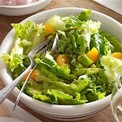
- Salad mixtures of vegetable and fruit – 1/4 cup mandarin oranges and 1/2 cup romaine credits as 1/4 cup fruit and 1/4 cup vegetable.
|
Back to Top
Fruits and
Vegetables ‒ More Matters is a great website
from the Produce for Better Health Foundation. Production staff and menu
planners will enjoy the selection, preparation and storage information for many
fruits and vegetables. Recipes that had been tested with young children and recipe
demonstration videos are also featured. Examples of the variety of resources
available are “Fruits and Vegetables on a Budget,” “Shopping for Fruits and
Vegetables” and programs that teach kids about fruits and vegetables.
Whole Grain Training
for Child Care Providers ‒ In-person and online
training about whole grains by the University of Minnesota Extension Service. (A
small fee is required for this training.)
Energizers for
Nutrition Education ‒ Short
activities for young and old alike from the University of Minnesota Extension
Service. Each activity includes guidance on the target audience, preparation
needed, how to run the activity, making adaptations, and using the energizer
with other health and nutrition-related lesson plans. Print or download one or
more of these activities and get energized today!
Eat Smart, Live
Strong is
a tool kit developed through the SNAP-ED Connection of the United States
Department of Agriculture. This toolkit is designed to improve fruit and
vegetable consumption and physical activity for 60-74-year-olds. Take a look at
these materials and which sections of the resource could be adapted to your adult
care settings.
Back to Top
Scholarship Opportunity to attend the National Child Nutrition Conference April 19-21, 2018!
The National CACFP Conference has evolved into the National Child Nutrition Conference for 2018. Fourteen Scholarships to attend the conference are available through the National Child Nutrition Foundation. Apply now through January 24, 2018. More information is available on the CACFP Conference Scholarship Information webpage.
|
|
 |
Back to Top
Grain Requirements in the Child and Adult Care
Food Program; Questions and Answers (CACFP 01-2018)
View USDA Memo (CACFP
01-2018).
Updated
program requirements for grains:
- How to determine if a grain
product is creditable and if it meets the whole grain-rich criteria.
- How to determine if breakfast
cereals meet the required sugar limit criteria and are whole grain-rich,
enriched or fortified.
- How to document compliance with
grain requirements.
- An updated Exhibit A: Grain
Requirements for the Child Nutrition Programs shows ounce equivalents and
minimum serving sizes for each group of grain products.
-
Questions and Answers.
Feeding Infants and Meal Pattern Requirements in
the Child and Adult Care Food Program: Questions and Answers (CACFP 02-2018)
View USDA Memo (CACFP
02-2018).
Updated
program requirements for feeding infants that were effective October 1, 2017.
- Creditable infant formulas.
- Breast milk or formula provided
by a parent or guardian.
- Solid foods (complementary
foods).
- Questions and Answers.
Back to Top
|