|
|
Nov. 2, 2022
November is Native American Heritage Month. There are four tribal nations located within Iron Range Resources & Rehabilitation’s service area: Grand Portage, and portions of Bois Forte, Fond du Lac and Leech Lake. All are sovereign, federally recognized tribes whose people have lived in northeastern Minnesota for centuries. Each has an independent relationship with the United States and state of Minnesota governments.
Billie Isham, Iron Range Resources & Rehabilitation's full-time Tribal Liaison, works to support government-to-government relations between the agency and the four tribal nations. Isham fosters partnerships related to projects that impact community, business and workforce development. Recent projects supported by agency grants include:
|
-
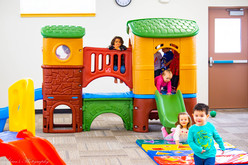
Bois Forte Head Start and Early Head Start Facility Expansion: A new large motor room was added to the Vermilion Sector site for children ages zero to five. The new Vermilion Motor Room provides space for children to participate in skill building and physical activities that aid in their physical and mental development and prepare them for Kindergarten. The new room may also be used as a central command center during public emergencies.
-
Bois Forte Dam Replacement: Replace a failing concrete dam on Nett River with a new rock arch dam. The dam is used to support water level control in Nett Lake, Bois Forte’s premier wild rice lake and can produce up to one million pounds annually. Wild rice is a long-standing cultural and subsistence food resource for tribal members, and is also a revenue source for the tribe and its members. The project is anticipated to begin later this year.
-
Bois Forte Broadband: Construct a fiber to the home buildout for band members in the reservation. The advancement in broadband will allow band members to telework, children to access online learning, health care clinics to provide virtual medicine, and home-based businesses to compete and grow.
-
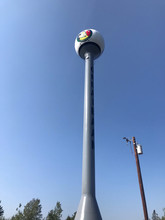
Fond du Lac Reservation Water System Improvements: A new 60,000-gallon elevated water storage tower, two new wells, a water main distribution extension and a water treatment plant are being added with project completion scheduled for December. The new water system was designed to reduce water contaminant levels, provide water for fire protection where none previously existed, and pave the way for expansions and growth in surrounding communities. The new system will serve 90 households and 500 people within a portion of the tribal territory.
-
Grand Portage Community Center Infrastructure Upgrade: Replace the outdated and inefficient heating system and indoor swimming pool liner and decking. The center houses the Oshki Ogimaag (Young Leaders) Charter School which provides local, quality education with an emphasis on the Anishinaabe culture to grades K-6. The center is home to a tutoring program, after school programming, youth summer camps, fitness center, gymnasium and the Elderly Nutrition Program.
-
Tribal Nation Workforce Training: Minnesota North College Customized Training Solutions designed programs to provide new opportunities for up-skilling tribal members. Training has included commercial driver’s license (CDL) with Grand Portage, Occupational Safety and Health Administration (OSHA) with Leech Lake and welding with Bois Forte.
|
“The projects our agency supported connected to the tribal nations are extremely important to tribal families, businesses and employers located within the reservations,” said Commissioner Mark Phillips, Iron Range Resources & Rehabilitation. “Parents, children and families across northeastern Minnesota and in the region’s tribal nations need high quality child care, robust broadband, essential services, modern infrastructure, community gathering spaces and workforce training that creates opportunities for both the workers and the employers.”
In her role as Tribal Liaison, Isham brings knowledge, perspective and expertise to the agency. She works with Commissioner Phillips and community development staff to routinely consult with the tribal councils. They all work in partnership to identify the agency’s grant and loan programs that are a good fit for their economic and community development projects. In addition, Iron Range Resources & Rehabilitation staff attend Tribal State Relations Training which strengthens government-to-government relations.
Email Billie Isham or call her at 218-735-3017 for Tribal Relations information. Learn more about Iron Range Resources & Rehabilitation’s tribal relations.
Photo of child care room courtesy of Adrian’s Photography.
|
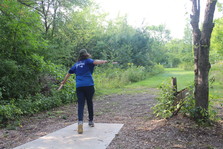
The city of Hibbing re-established 13 of the 18 holes on the North Disc Golf Course due to the expansion of Hibbing Taconite’s mining operations onto land that hosted the holes. Iron Range Resources & Rehabilitation supported the project with a $65,000 Mineland Reclamation grant. Total project investment was $130,000.
The North Hibbing Disc Golf course was established in 2006 as the region’s first and was quickly ranked the 5th best in Minnesota. It hosts numerous tournaments each year and draws participants from throughout the state. The original course provided distinguishing mine views and showcased historic aspects of the old North Hibbing town site.
|
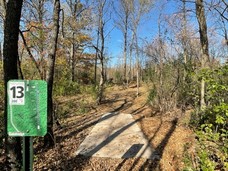
“When we re-established the 13 holes on different land, we wanted to ensure that the new holes upheld the course’s distinct features of mine views and town history,” said Hibbing’s Director of City Services Nick Arola. “The new holes play along the edge of the Hull Rust mine pit with scenic overlooks and compliment the other remaining five holes.”
The course is free to the public. The disc golf events and tournaments generate revenue to help maintain the course which is a low-expense city amenity.
|
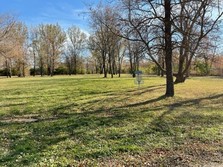
“The disc golf course project is an excellent example of how mining-impacted land was used to better the region’s outdoor recreation and contribute to the local economy and quality of life,” said Linda Johnson, Iron Range Resources & Rehabilitation Mining Reclamation Director. “The disc golf holes give players very scenic views of a mine, that like many others in the region have been transformed over time into a stunning landscape and overlook.”
Email Jim Plummer or call him at 218-274-7006 for Mineland Reclamation grant information.
|
The cities of Calumet and Keewatin demolished a combined total of 18 structures using Residential Redevelopment grants from Iron Range Resources & Rehabilitation. Since fiscal year 2021:
-
Calumet: 3 houses, 2 garages, 1 accessory structure.
-
Keewatin: 6 houses, 5 garages, 1 accessory structure.
Calumet received a grant for $20,556. Keewatin received two grants totaling $39,255.
|
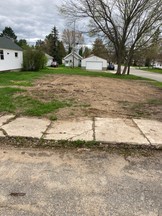
“Calumet’s comprehensive plan calls for eliminating blight and promoting health and safety in the community,” said April Serich, city clerk. “The properties were considered hazardous by our building inspector. One of the properties went to tax forfeit, and we were able to purchase it in order to ultimately eliminate the blight and improve our community for residents. The remaining two properties are ready for possible future development.”
Since 1982 the Residential Redevelopment grant has provided funding for demolition within the agency’s service area to eliminate blight, improve property maintenance, promote health and safety, and encourage economic development.
|
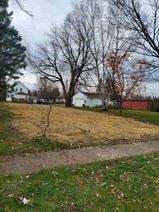
Grants may be awarded to cities, townships, counties and tribal governments to demolish single-unit residential homes, residential duplexes, residential multiplex homes, garages, sheds and barns. Homeowners interested in applying should contact their municipality. Grant money is still available to communities this fiscal year. Learn more about the Residential Redevelopment grant guidelines.
Email Danae Beaudette for information or call her at 218-735-3022. Iron Range Resources & Rehabilitation funds its grants through taxes paid by Minnesota’s mining industry.
|

by Melissa Cox, BusinessNorth
A decade ago, when it came to high-speed connectivity in rural regions, Minnesota did not have the access it so desperately needed.
“In 2010, internet connectivity in rural places was spotty and underutilized,” said Mary Magnuson, the Blandin Foundation’s grants program officer for rural placemaking. “Minnesota was ranked No. 23 in the U.S. for speed, and broadband was defined as 768 kilobits-per-second download and 200 Kbps upload – just enough to support slow video streaming.”
The broadband landscape across Northeastern Minnesota, and the state in general, has changed significantly since then, according to Magnuson, with gains made for providing access to high-speed connectivity. It comes at a time when such internet connections have become critical in business, education and often in day-to-day life.
“As of May 2022,” she said, “88.07% of Minnesota households have access to the 2026 state goal of 100 megabits per second download and 20 Mbps upload,” Magnuson said. “More people are working online, going to school online, seeing healthcare specialists online, and solving more of today’s challenges through solutions made possible through high-speed broadband internet.”
Read the full article.
Photo courtesy of Paul Brinkman.
|
|
|
|
|
|
The Ranger is a publication of Iron Range Resources & Rehabilitation. Our mission is to invest resources to foster vibrant growth and economic prosperity in northeastern Minnesota.
|
|
|
|