|
|
May 4, 2022
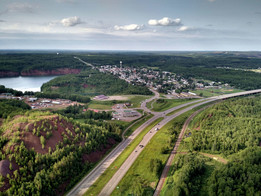
Like most communities on Minnesota’s Iron Range, Nashwauk has a rich mining history. It was the first mining community to develop in Itasca County on the western Mesabi Range. The first iron shipment from Hawkins Mine occurred in 1902, and in 1903 Nashwauk was officially incorporated with a population of 220. The town quickly flourished with homes and businesses. The mine closed in 1962 after 60 years of mining and producing hundreds of thousands of tons of iron ore that were transported by rail to the rest of the nation for the growth of America.
Today Nashwauk is home to more than 20 businesses, 450 households and over 950 residents. The city recently embarked on rehabilitating its commercial and residential building inventory. Iron Range Resources & Rehabilitation provided Nashwauk with a $3,000 Application Fund grant to help pay for a grant writer to apply for state level funding to assist with building rehabilitation.
|
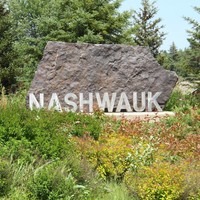
Nashwauk hired professional grant writer Richard Grabko of Community Resource Development, LLC. He successfully secured an $816,500 grant from Minnesota Department of Employment and Economic Development (DEED)’s Small City Development Program (SCDP) to help pay for owner-occupied housing and commercial rehabilitation.
Preparing an effective grant proposal, identifying funding sources and navigating the application process can be costly and requires technical expertise to which small communities often do not have access. Iron Range Resources & Rehabilitation’s Application Fund grant program assists communities with the costs of preparing and applying for larger grants such as SCDP that produce economic growth.
|

“The $3,000 Application Fund grant from Iron Range Resources & Rehabilitation resulted in our city receiving a substantial SCDP grant of over $800,000 to improve our building assets,” said April Kurtock, Nashwauk city administrator/clerk. “We were able to hire a professional grant writer to help us navigate the process. The end result will be significant improvements to the Nashwauk community which is appealing for both existing and new residents.”
The commercial portion of the project will allow for rehabilitation of six or more commercial properties and could include improvements to a building’s exterior, signs, awnings, mechanical systems, architectural services, ADA compliance and more. Work for both the commercial and residential projects will begin this year.
Nashwauk is a model example of how the Application Fund grant can improve communities in northeastern Minnesota. Grant writing assistance is part of Iron Range Resources & Rehabilitation’s commitment to advancing economic growth. For Application Fund grant information email Whitney Ridlon or call her at 218-735-3004.
Aerial photo courtesy of Joyce Peraaho.
|
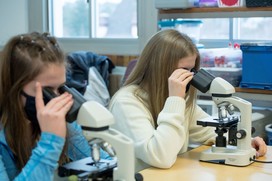
Grand Rapids Independent School District led the development of Next Career Pathways, an Itasca Area Schools Collaborative (IASC) program that provides high school courses and experiences to prepare students for occupations in seven industries including:
|
- Business.
- Computer science.
- Construction.
- Education.
- Health care.
- Manufacturing.
- Natural resources and agriculture.
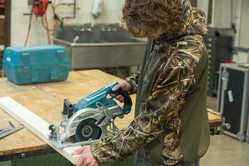
Approximately 1,000 students in eight high schools have access to Next and can gain valuable real-world skills through courses that provide relevant hands-on experiences. Courses include industry-standard-based competencies for students to learn a foundational set of skills that helps prepare them for college and career. The schools include: Bigfork, Deer River, Floodwood, Greenway, Grand Rapids, Hill City, Nashwauk-Keewatin and Northland Community. Iron Range Resources & Rehabilitation supported Next with a $2,505,000 Iron Range School Collaboration: Innovative Academic Programming grant.
Next Career Pathways is intended for 9-12th grade students, with some programming available to 7-8th grade students. The Next program team includes educators from the eight high schools and three local community colleges: Itasca, Hibbing and Mesabi Range. Regional industry leaders and business professionals provide input to help develop the courses and experiences.
|
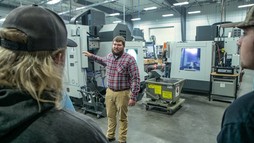
“Next began as a solution to a regional workforce challenge. Employers needed skilled workers, however the false narrative that there were no good jobs available here was pulling students elsewhere after graduation,” said Scott Patrow, Next director. “Our area’s education organizations and employers joined together to better support students by making them aware of job opportunities in the region.”
According to Patrow, regional and statewide industries are facing a workforce shortage. Next is launching students into careers that are in demand and connecting them to businesses that are hiring. Programs like Next are trending both statewide and nationally. High schools are adjusting their focus to make students aware of not only traditional four-year university opportunities, but also two-year college degrees and certification options for skilled trades. In addition, students can earn college credits in a specific field at no charge while still in high school.
|

The program was initially launched during the 2017/2018 academic school year with two career pathways, which included health care and manufacturing. Six additional pathways were added between 2018 and 2021. As a result, students have increased learning opportunities and the potential for job shadowing and internships at area businesses within numerous industries.
“Because of the collaboration across the school districts, students have greater access to career pathway courses and are not limited to career development opportunities based on where they go to school,” said Patrow. “Through partnering on shared courses and resources, we can have a broader regional impact on students and communities.”
|
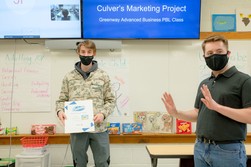
Next Career Pathways are designed to create seamless transitions to post-secondary partner programs. Career Pathways often include for-college-credit courses that transfer into the local community college programs and many courses and career pathway activities are led by college faculty. This relationship-building supports students as they begin to navigate their college and career planning.
Learn more about Next Career Pathways.
|
Arrowhead Intelligent Region (AIR) is a broadband partnership that was launched last year between Blandin Foundation, Northland Foundation and Iron Range Resources & Rehabilitation. The trio made available a pool of grant funds for local organizations working to support a broadband-fueled economy in northeastern Minnesota.
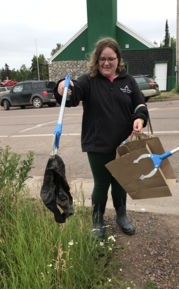
Minnesota Children’s Press of Grand Marais was awarded a $35,000 grant from the funding pool to deliver broadband education services. Children’s Press launched Litter Lab, a program designed to teach elementary aged children how to use technology to help solve a community litter problem with the potential to pollute Lake Superior.
Approximately 65 children ages 5 to 13 collected litter last summer in the harbor area of downtown Grand Marias. The children sorted, categorized and inventoried the litter according to the GPS coordinates where it was found. Some of the categories included clothing, food packaging, plastic bottles and containers, general paper products, and hygiene products such as plastic dental picks. Their field data was then entered into ArcGIS, an advanced online GIS engineering platform made by Esri that uses interactive maps and data-driven analysis tools that rely on top-tier broadband service to manage data. ArcGIS produced reports that considered the types of litter, coordinates of the litter’s location and proximity of nearby trash and recycling receptacles. From the reports, the kids could develop hypotheses about why litter was more prevalent in certain areas of the harbor. They also theorized about alternate, less bulky and non-plastic packaging design and options for some of the more commonly found items such as drink cups and bottles.
|

“As the project progressed, the kids began to see themselves as problem-solvers,” said Anne Brataas, founder of Minnesota Children’s Press. “The report data spurred great group discussions about effective placement of community trash receptacles, size and shapes of receptacles to accommodate varying sizes of waste items, and potential solutions for reducing litter.”
Brataas believes the success of the Grand Marais project could prompt the concept spreading into other communities across northeastern Minnesota. Communities can use the data and reports to make decisions about community recycling and the placement, design and signage for public trash receptacles. It could also lead to a mass rethink of how people stay hydrated such as bottle-refilling stations to reduce the amount of single-use plastic water bottles.
Littler Lab will be recognized at the Esri Education Summit on July 10 in San Diego, California. Brataas was chosen to present preliminary findings of the Grand Marais project, "Kids Thinking Spatially, Acting Sustainably" at the annual Esri conference during the session titled Building Environmental Literacy Through Experiential Learning.
|

“Litter Lab is an excellent example of how technology in northeastern Minnesota can be used to creatively solve community problems,” said Whitney Ridlon, Iron Range Resources & Rehabilitation community development representative. “It engaged the youngest of our rural population in the broadband economy by showing them how technology and internet connectivity can be used for the betterment of their very own community.”
Iron Range Resources & Rehabilitation supported the AIR broadband initiative with $150,000 in Development Partnership grants. For more information email Whitney Ridlon at Iron Range Resources & Rehabilitation or call her at 218-735-3004.
|
|
|
|
|
|
The Ranger is a publication of Iron Range Resources & Rehabilitation. Our mission is to invest resources to foster vibrant growth and economic prosperity in northeastern Minnesota.
|
|
|
|