March 3, 2021
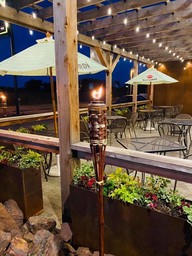
Boomtown Woodfire restaurant was one of 17 businesses in Eveleth that utilized the city’s forgivable loan program for companies negatively impacted by the COVID-19 pandemic. Eveleth received a $200,000 Taconite Area Community Relief grant from Iron Range Resources & Rehabilitation and combined it with $50,000 of its own money to create a lending pool of $250,000. The 17 businesses received 100% forgivable loans up to $12,000 on the condition that they remain open for two years from the date of disbursement.
Boomtown Woodfire owner Jessica Lietz closed her restaurant in mid-March last year due to statewide COVID-19 restrictions. She used the next two months to perform deep cleaning and routine maintenance of the Eveleth location and her two other Iron Range restaurants: Whistling Bird in Gilbert and Boomtown Brewery in Hibbing.
|
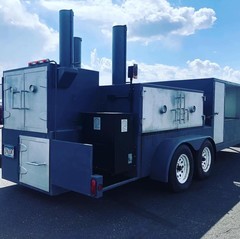
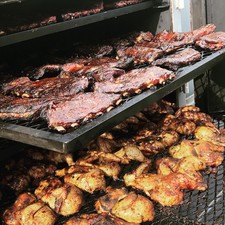
Boomtown Woodfire reopened mid-May with drive through barbecue service. Lietz acquired a commercial meat smoker trailer and smoked chicken, brisket and ribs. The barbecue quickly became popular, and cars lined up each Thursday for Boomtown’s new barbecue-to-go.
“My husband and business partner Erik had the idea for the smoker trailer,” said Jessica. “Two months into the pandemic, people were not quite comfortable dining out, and there was apprehension about public gatherings. The trailer concept was a great way to reopen and begin generating revenue. The barbecue became far more popular than we anticipated. People wanted to support local small businesses.”
|
As the weeks progressed, Lietz reopened their three locations but faced obstacles with national and global supply chains, available staffing, and reduced capacity and social distancing requirements for indoor dining. In mid-November Minnesota reported a spike in COVID-19 cases and a shortage of hospital beds. Restaurants and bars closed a second time for indoor service, Nov. 18 through Jan. 11. Boomtown Woodfire and the other two locations reopened in mid-January with indoor dining.
“This has been an extremely difficult 12 months,” said Lietz. “Our business is doing better now than a year ago, but we have not yet reached full financial recovery. The forgivable loan is filling some of the revenue gaps to cover operating expenses. The supply chains are still problematic which impacts our menus and offerings. Our staff has been very adaptable with the week-to-week fluctuations in availability of produce, meats and staple items.”
|

In spite of the struggles through COVID-19, Jessica and Erik are opening a fourth restaurant, Boomtown Duluth. It was originally scheduled to open in spring 2020, however statewide restrictions postponed the opening. Although an official date has not been confirmed, the couple is striving to open it by the Minnesota Fishing Opener which is an annual state tradition since 1948 that promotes the state’s recreational and fishing opportunities.
“The Duluth location has a great management team in place,” said Jessica. “The restaurant is situated on 27 acres at The Old Sunset. Erik and I have always enjoyed taking on challenges. The pandemic has certainly been one, and we are very optimistic about the future both personally and professionally.”
Lietz is a graduate of Virginia High School and University of Minnesota Duluth. With an original career goal to be a dentist, Lietz holds bachelor’s degrees in biology and chemistry. She and her husband Erik now own Lietz Properties LLC which owns the four restaurants that combined employ approximately 150 full- and part-time workers.
|
“Eveleth businesses have suffered significantly during the COVID-19 pandemic,” said Jackie Monahan-Junek, Eveleth city administrator. “With the grant money from Iron Range Resources & Rehabilitation, we structured a forgivable loan program to ensure that businesses could receive the help they needed.”
Iron Range Resources & Rehabilitation structured the Taconite Area Community Relief program so that Eveleth had funding and flexibility to provide aid to local businesses as the city saw fit. The economic development agency is committed to helping local communities and their businesses persevere through the COVID-19 challenge. Learn more about Iron Range Resources & Rehabilitation COVID Relief programs.
|
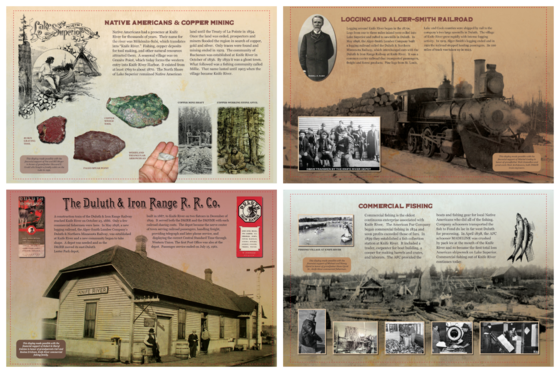 Four new outdoor interpretive display panels and other signage will soon be added at the Knife River Heritage & Cultural Center (KRHCC). The panels will be 2 feet by 3 feet and highlight the area’s history including: native people through copper mining, logging and railroading, the train depot and commercial fishing. (Pictured above.) Iron Range Resources & Rehabilitation supported the project with a Culture & Tourism grant.
The Cultural Center is home to the historic Knife River Depot and the 35-foot fish tug boat Crusader II. The depot’s exterior has been restored, and the interior is scheduled for future restoration to make it a fully functioning 1900s depot and open to the public.

A number of visitors to the KRHCC arrive by train on the North Shore Scenic Railroad (NSSR). Upon arrival, guests may tour the exteriors of the depot and tug boat. Adjacent to the depot area is Agate Beach, an area where people may hunt for the official state gemstone as designated by the Minnesota Legislature in 1969.
“Knife River has become a very popular site. Visits doubled in number last year when NSSR made Knife River the destination for eight fall color train rides,” said Paul von Goertz, KRHCC president. “The panels are the start of our educational program at the Heritage Center. Visitors can learn a quick history of Knife River through the panels’ text and pictures, as well as by seeing the depot’s restored exterior.”
|
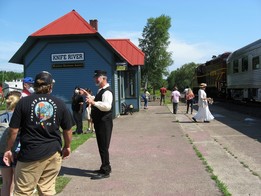
The Knife River community is located in Lake County along the North Shore Scenic Drive of Lake Superior between Duluth and Two Harbors. The township of 230 people is at the mouth of the 23.9-mile-long Knife River which drains into Lake Superior. The community’s name is speculated to have been given by the Ojibwe native people due to the long, sharp stones near the mouth of the river.
KRHCC spearheaded the grant application process, and private donations by individuals paid for half of the interpretive display panels. Email Danae Beaudette for Culture & Tourism grant information or call her at 218-735-3022.
Pictured above: The Knife River Depot agent greets passengers arriving from Duluth on a North Shore Scenic Railroad train.
|
An interactive digital map was developed that highlights the communities and places of interest along the 47-mile Edge of the Wilderness Scenic Byway that connects Grand Rapids and Effie. The project includes new mapping technology, photos, videos and digital display ads that can help promote the byway region and attract new visitors.
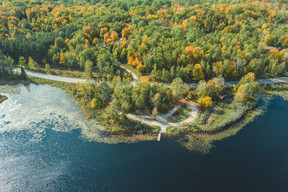
The road was once used by voyageurs and loggers through the Chippewa National Forest. Much of the road was recently reconstructed and offers a smooth ride with rolling hills, forests, swamps, historic and interpretive sites, scenic overlooks, lumberjack-influenced small towns, numerous resorts, campgrounds, lakes, fishing and hiking trails. Approximately three hours is needed to travel the entire length of the byway and visit the sites along the way. The land surrounding the byway is home to 1,000 lakes, 920 miles of rivers and streams and 150,000 acres of wetlands.
|
“The digital map project will be a significant marketing tool for the scenic byway and area; it has the ability to attract both in-person and virtual visitors,” said Tim Johnson, Edge of the Wilderness Lodging Association Executive Director. “The digital map, videos and photos provide a way to trip plan and explore the byway on smart phones, tablets, computers and other devices.”
The state of Minnesota has 22 designated scenic byways that total 2,948 miles. The byways are designated road corridors that have regionally outstanding scenic, natural, recreational , cultural, historic or archaeological significance. They offer an alternative travel route to major highways while telling a story of Minnesota’s heritage and natural beauty. The Minnesota Scenic Byways Commission was established in 1992. It serves to advocate for these routes that help the economic development of communities across the state through tourism and recreation.
|
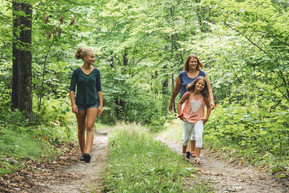
Iron Range Resources & Rehabilitation supported the project with a Culture & Tourism grant to Bigfork Valley Community Foundation. An additional 12 local organizations collaborated on the project including Arrowhead Regional Development Corporation, Blandin Foundation, Edge of the Wilderness Business & Lodging Associations, Itasca County, Minnesota Highway 38 Leadership Board, Northern Itasca Joint Powers Board, Visit Grand Rapids and the communities of Bigfork, Effie, Grand Rapids and Marcell.
“Many organizations united and collaborated on the development of the Edge of Wilderness Scenic Byway map,” said Johnson. ”The Itasca County area recently launched multiple digital mapping projects, including the art and history digital map of Grand Rapids. All of these projects combined are giving northeastern Minnesota a heightened online presence to draw new visitors and increase tourism spending.”
|
|