Jan. 8, 2020
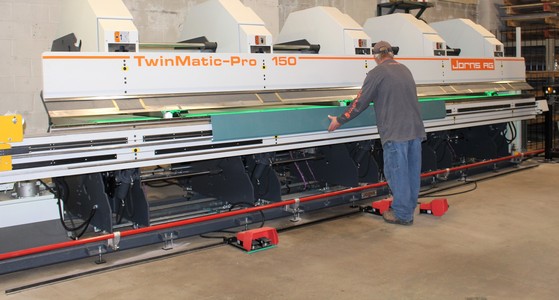 Hibbing-based Range Cornice & Roofing Company (RCR) added a fully automated metal-bending machine to its equipment fleet. The Jorns TwinMatic-Pro-150 Bender can bend lengths of metal sheeting that are up to 21 feet, and it can configure complex profiles simultaneously without manual rotation or flipping. The equipment purchase was supported by a bank participation loan from Iron Range Resources & Rehabilitation.
“Our existing equipment could handle up to 10-foot sheets,” said Shelley Marty, RCR co-owner. “The ability to machine sheets up to 21 feet has increased our efficiency and productivity.”
In addition to longer sheets, the new equipment automatically creates profiles that are tapered, parallel and overlapped. Prior to the new machine, the company outsourced tapered panels which are used to create domed roofs and some types of architectural panels.
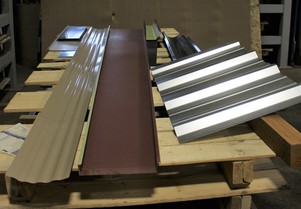
RCR sells and installs numerous types of commercial roofing systems and does commercial roof repairs. It produces and installs architectural sheet metal products such as wall panels, fascia, cornices and gutters. The company is 96 years old and was originally founded by Christopher B. Lee of Hibbing. It was run by the Lee family until 2004 when the company split. Shelley and her husband Terry Marty became partners with Timothy K. Lee. They kept the original name and focused on commercial roofing and architectural products. The Martys are both natives of northeastern Minnesota and were long-time employees at RCR prior to purchasing the company. In fact, it is where the couple met.
“The Lee family established Range Cornice & Roofing Company as a family owned and operated business,” said Shelley. “Our intention is to continue that tradition alongside our oldest son and about 25 other employees.”
RCR is a full union shop that distributes and installs its products throughout northern Minnesota. Watch a video of the new Jorns Bender at work.
New and existing businesses within the agency’s service area may be eligible for financial assistance packages to help with buildings, equipment, infrastructure, site work and workforce development. Email Scott Sundvall or call him at 218-735-3015 for more information.
|
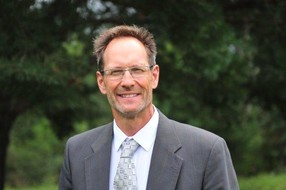
Last month, Gov. Tim Walz reappointed Roy Smith to the Governor's Workforce Development Board. Smith was first appointed to serve in this position by Gov. Mark Dayton.
Smith serves as the director of talent development in a joint role between Iron Range Resources & Rehabilitation and the Northeast Higher Education District.
The Governor's Workforce Development Board works to strengthen the skills of Minnesota's greatest asset — its workforce.
The Governor’s Workforce Development Board (GWDB) has a responsibility to advise the Governor on Minnesota’s workforce system.
The board represents key leaders from business, education, labor, community-based organizations, and government. The GWDB has statutory responsibility under the federal Workforce Innovation and Opportunity Act (WIOA), which provides leadership on opportunities and key workforce strategies for the state. In addition, the board provides a venue for workforce stakeholders building on a shared vision and mission.
Read the Hibbing Daily Tribune article "Q&A with Roy Smith, Walz latest appointment."
Visit the GWDB website.
|
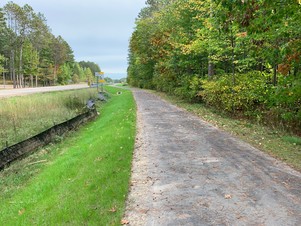
A new one-mile stretch of bituminous multi-use trail was completed and connects the cities of Grand Rapids and Cohasset. The new trail is a link between each community’s trail systems and provides a safe route for residents and tourists to traverse throughout the area.
Grand Rapids has nearly 50 miles of city trails; Cohasset has 30. The connector is 10 feet wide and runs alongside County Road 63. It connects residents of Grand Rapids to Tioga Recreation Area, a 460-acre natural playground sandwiched between Grand Rapids and Cohasset with mountain bike, cross country ski and hiking trails.
The two cities entered into a 20-year joint maintenance agreement to ensure the long-term care of the connector trail. Each will share in the expense and responsibility of daily and long-term upkeep.
“The new trail project is an excellent example of how collaboration between two communities can bring residents great results,” said Matt Wegwerth, Grand Rapids city engineer. “The people of Cohasset and Grand Rapids have access to a shared resource that expands their quality of life and recreation options.”
According to the Parks & Trails Council of Minnesota, parks and trails are instrumental in the state’s economic output. They increase retail sales, support jobs, attract new residents and businesses, and boost property values. Community parks, trails and open natural spaces are key factors that influence people’s decision on where to live and work.
“One of our agency’s goals is that communities within our service area invest in their foundational and social assets to ensure quality of life,” said Mark Phillips, Iron Range & Resources Rehabilitation commissioner. “The collaboration between Grand Rapids and Cohasset to connect their two cities is exactly the type of project that achieves that goal. They are strengthening their communities for their residents, tourists and businesses.”
Iron Range Resources & Rehabilitation provided a Regional Trails grant which helped pay for the trail construction. Other project partners included Minnesota DNR Local Connections grant program, the cities of Cohasset and Grand Rapids, and Itasca County. For Regional Trails grant information email Jim Plummer or call him at 218-274-7006.
Note: The city of Grand Rapids received a Regional Trails grant in FY20 for Phase II of the communities’ connector project. The Phase II grant will help pay for the final trail connector link between Grand Rapids and Cohasset. It will be completed next summer.
|
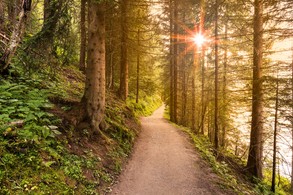
The Regional Trails grant program assists with design, engineering and construction of various types of new trails such as snowmobile, bicycle, ski, hiking and ATV. Eleven projects were recently awarded grants that will either create new trails or improve existing trails throughout the region.
-
Arrowhead Regional Development Commission, $17,621: Geographic Information System mapping and public engagement services to identify a trail route to close a 150-mile gap that spans through Ely, Grand Rapids, McCarthy Beach State Park and Lake Vermilion. NEW!
-
City of Chisholm, $30,000: ATV trail that connects Chisholm to Hibbing. NEW!
-
City of Cuyuna, $82,000: City of Cuyuna and Cuyuna Hills trail for pedestrian, hiking, cycling and snowshoeing that connects to 30 miles of trails within Cuyuna Country State Recreation Area. NEW!
-
City of Ely, $190,000: Phase II of the mountain bike trail system in Hidden Valley Recreation Area. NEW!
-
City of Grand Rapids, $250,000: Phase II of a multi-use trail connector between downtown Grand Rapids and Cohasset. NEW!
-
Crane Lake Township, $100,000: ATV/snowmobile trail improvement between Crane Lake and Vermillion Falls Picnic Area. IMPROVEMENT!
-
Iron Range Tourism Bureau, $50,000: Northern St. Louis County Trails Task Force will administer a new fund for upgrades to existing trails. NEW!
-
Lady Slipper Scenic Byway, $200,000: Pedestrian/bicycle trail connector and bridge across the Mississippi River, designated as the Lady Slipper Scenic Byway. NEW!
-
Over the Hills Gang ATV Club, $25,000: Emily Blind Lake Trail, an ATV trail connector within Crow Wing and Aitkin counties. NEW!
-
St. Louis & Lake Counties Regional Railroad Authority, $450,000: Two Mesabi Trail paved bicycle segments, the Palo Tia in Embarrass Township and a phase of the Vermilion State Park to Eagles Nest Town Hall. NEW!
-
Superior Hiking Trail Association, $60,000: “Gooseberry Gap” trail connector between Gooseberry River State Park and Split Rock Lighthouse State Park. NEW!
“Trails can have important economic impacts to a rural region,” said Mark Phillips, Iron Range Resources & Rehabilitation commissioner. “They attract tourism spending and auxiliary startup businesses such as rental and repair shops. Trails can also be a business recruiting tool for the health care and other large industries.”
Iron Range Resources & Rehabilitation funds the Regional Trails program through taxes paid by Minnesota’s mining industry. For more information email Jim Plummer or call him at 218-274-7006.
|
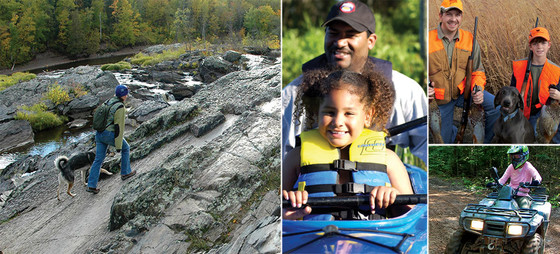 The Minnesota Department of Natural Resources and Explore Minnesota are partnering to launch a new Outdoor Recreation Task Force. The group will explore how Minnesota can connect more people to the health and wellness benefits of outdoor recreation, improve equitable access to outdoor recreation and better support the state’s thriving outdoor recreation economy. Applications to serve on the task force are being accepted until Friday, Jan. 10.
There is mounting scientific evidence of the significant health and wellness benefits of outdoor recreation. In addition, the impact of outdoor recreation to local, state and national economies is well-documented, as is the importance of Minnesota’s outdoor recreation opportunities as a key motivator for tourists to visit our state.
“Outdoor recreation provides substantial social, economic, and health-related benefits to Minnesotans,” said Gov. Tim Walz. “This task force represents a ‘big-tent’ effort to bring together a community of leaders who will make recommendations to make sure Minnesota is second-to-none in outdoor recreation and economic opportunity.”
Around the country, 16 states have created offices or commissions on outdoor recreation as a way to collaborate across agency and organizational boundaries to expand the benefits of outdoor recreation for the economy, environmental stewardship and quality of life.
Minnesota’s task force will make its recommendations to the DNR and Explore Minnesota by next fall about what Minnesota can do to enhance outdoor recreation opportunities.
Learn more and apply online.
|