Nov. 20, 2019
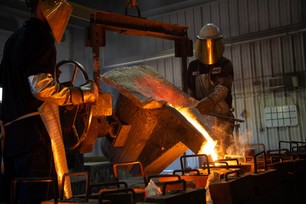
Hibbing-based Cast Corporation enhanced its equipment fleet and added a new power supply to further its position in the national tooling, casting and production manufacturing market.
The new power supply was supported by a bank participation loan from Iron Range Resources & Rehabilitation. It enables the facility’s two existing furnaces to operate simultaneously, resulting in higher production volumes. (Prior to the power supply upgrade, the two furnaces could not run at the same time.) Cast workers can now perform 20 heats per day instead of 12, which is the process of melting metals into liquids that are then poured into mold cavities. The mold material is removed after the metal has cooled and solidified leaving a casted product such as a grate bar or an ATV part.
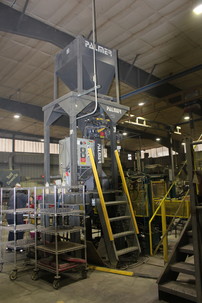
The increased melt capacity necessitated equipment upgrades to other parts of the manufacturing process to stay on pace with production. Cast improved or added new equipment to the facility’s molding, wet reclaim, and finishing processes. New equipment included a robot, friction band saw, grinder and cut-off machine.
“Introducing robots into our operations has greatly modernized production,” said Tim Bungarden, Cast owner. “Some of our long-term employees are producing the same or similar products they did ten years ago, but now they are producing them with the help of robots. Employees benefit from the robots performing the labor intensive work the employees once did such as heavy lifting. The employees focus on other duties on the production line, for example programming the robots.”
Cast supplies to many industries including mining, industrial, recreation and automotive. Some of its clients are Cleveland Cliffs, US Steel, B & R Engineering, AT&T, Vesco Dewatering, Weg and GPM of Duluth.
|
“Our greatest competitive advantage is the ability to offer complete service packages with tooling, castings, machining, and advanced 3D CAD/CAM technology,” said Bungarden. “We’ve got great quality employees who bring products from the concept stage through completion, or develop customer-provided models into prototypes, production patterns and permanent molds.”
Bungarden is a Minnesota native who grew up working in his family’s foundry, Municipal Castings, Inc. in Madison, Minnesota. He earned his engineering degree from South Dakota School of Mines & Technology and in 1990 relocated to Hibbing to work as an engineer at a local foundry. Bungarden established Cast in 1994 in Buhl, eventually outgrew the facility and transferred the business to Hibbing in 2005. Since then Cast has expanded its operations and added a foundry in 2014 to serve the local mining industry. Bungarden’s lifelong experience and innovation, commitment to adapting to economic trends, and Cast’s geographic location amidst a mining region have all been tremendous assets to the company’s growth.
“Foundries and casting operations are very capital intensive because they require large sophisticated equipment and continuous process improvements to adapt to changes in automation, technology and the industries we serve,” said Bungarden. “I started Cast with $2,300 of my own capital, and the agency has partnered with me along the way to continually expand production and sales.”
Today Cast has 54 full-time employees, and its products are sold to companies throughout the United States.
“What Tim Bungarden has done with Cast is evidence that entrepreneurship is alive and well on the Iron Range,” said Matt Sjoberg, executive director of business development at Iron Range Resources & Rehabilitation. “The company has evolved and grown through many stages over the years, and it has been a pleasure to work with Tim and his team to help, in a very small way, facilitate growth. Cast is a great example of economic diversification and what our agency strives to accomplish in the region.”
Note: Iron Range Resources & Rehabilitation provided Cast Corporation previous loans for equipment and business expansions.
|
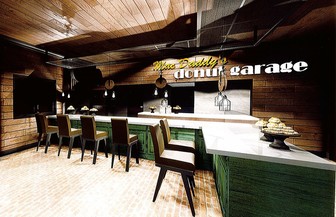
Entrepreneurs Shari and Mark Cowart are redeveloping the former Wells Fargo Bank building into MacDaddy’s Donut Garage in downtown Ironton. Scheduled to open in March, it will sell homemade donuts, pastries, coffee, hot chocolate, teas and other beverages. Sweet favorites include varieties of Long Johns, bismarks, cake donuts, cinnamon rolls and caramel pecan rolls.
Former residents of Iowa, the couple moved to Ironton and purchased the building last year. Iron Range Resources & Rehabilitation provided the city of Ironton a Commercial Redevelopment grant to assist with the internal demolition of the building to pave the way for the new business. The owners also utilized the Business Energy Retrofit (BER) grant program to make energy efficiency upgrades to the HVAC, roof, windows, doors and lighting.
Shari was a licensed hairstylist in Iowa and owned her own salon for 28 years. Mark has an extensive background in the automotive industry and is a sales manager at a dealership in nearby Baxter. Together they are applying their business, financial and service skills to their own enterprise. Shari will operate the new business full time, and Mark will assist with the financial planning while continuing in the auto industry.
Since age one, Shari spent summers in the Ironton/Crosby area where her grandparents owned a lake cabin. She is a Minnesota native but resided most of her adult life in Iowa. She often dreamed of moving back to her home state. Last year she and Mark decided it was time to make the move home to Ironton to be closer to her parents and help them in their retirement years.
|
“I have extremely fond childhood memories of my time in Ironton,” said Shari. “Mark and I are eager to develop a place downtown where people can gather and enjoy a donut and cup of coffee. Our goal is however to make MacDaddy’s Donut Garage more than just a donut shop. This project is really about bringing together a community and its people.”
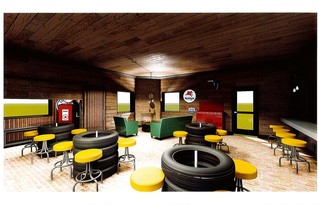
MacDaddy’s Donut Garage will pay homage to the automotive industry that was once a key part of the city’s economy. In addition to the iron ore industry which boomed in Ironton, the city was also home to numerous auto garages. The interior décor will feature relics of that era such as gas pumps, signs and other eclectic auto mechanic pieces. In addition to the coffee and donuts, there will be meeting and event rental space.
“Starting a business can be a difficult process,” said Shari. “The staff from Iron Range Resources & Rehabilitation and AEOA were huge allies and enormous sources of help and information. I would encourage anyone exploring the possibility of starting a business in northeastern Minnesota to consider some of the programs available through these two agencies.”
For Commercial Redevelopment grant information, email Chris Ismil or call him at 218-735-3010. For Business Energy Retrofit grant information, email Vince Meyer at AEOA or call him at 218-735-6828. Note: BER is funded by Iron Range Resources & Rehabilitation and administered through a partnership with Arrowhead Economic Opportunity Agency (AEOA).
Pictured above are architectural renderings of MacDaddy's Donut Garage.
|
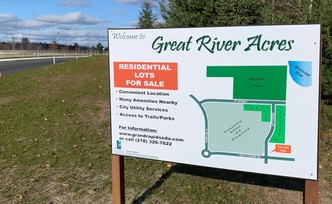
A new subdivision with 15 single-family residential lots was developed on the west side of Grand Rapids and in close proximity to the new West Elementary school scheduled to open in fall 2020. The new development, Great River Acres, has quick access to biking/walking/skiing trails, shopping, entertainment, Pokegama Golf Course and the Grand Rapids medical campus.
Each lot has a concrete driveway approach and is graded and ready for construction. Extended to the lots are city utility services, private natural gas, and fiber optic communication infrastructure.
A mutually beneficial land swap between Blandin Paper Company and the city of Grand Rapids facilitated the development, which is being coordinated by Grand Rapids Economic Development Authority.
“When fully developed Great River Acres will provide a variety of housing options for working families,” said Rob Mattei, Grand Rapids director of community development. “The first purchase agreement for a lot was just finalized, and we are anticipating others to soon follow.”
|
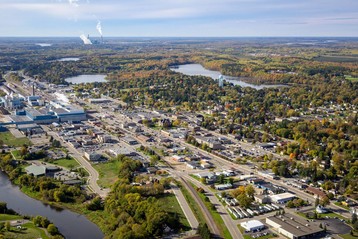
A 2014 Comprehensive Housing Needs Analysis for the city of Grand Rapids concluded a potential demand for approximately 150 new single-family and 100 new multi-family “for sale” housing units through 2025. The analysis made recommendations on the amount and types of housing that should be developed to meet current and future housing needs. According to Mattei the 15 new lots will help reach the suggested range of single-family housing inventory, and there is potential for future multi-family housing development on an adjacent 15-acre land parcel.
“It can be challenging for the private sector to develop housing in rural areas due to the heavy investments required for infrastructure,” said Mattei. “With the Great River project, our local government is doing the needed upfront work to prepare and sell the lots to individual families, who in turn contract with the local private construction contractors to build the homes."
According to Mattei, the direct financial impact of this project to Grand Rapids can be very positive because it grows the future tax base, helps to fill a void in the housing market and creates work for private construction companies.
The cost to develop the project was just over $1.4 million. Iron Range Resources & Rehabilitation provided a $250,000 Development Infrastructure grant. For grant information email Chris Ismil or call him at 218-735-3010.
Aerial photo courtesty of Weisguy Images.
|
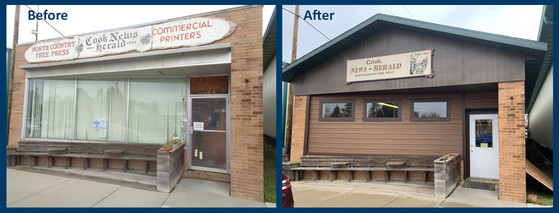 Cook News Herald Publisher owners Gary and Edna Albertson utilized a BER grant to help renovate the roof, insulation, windows, door and flooring in their downtown Cook building.
Located just off of the main street, the 3,100-square-foot building was constructed in the early 1950’s as a grocery store. It eventually became home to the local newspaper, and in 1978 the Albertsons purchased the paper and building. They grew the business into a multi-paper publisher and the most complete print shop north of Duluth. In addition to the Cook News Herald, the Albertsons own Tower News and North Country Free Press. They are also part-owners of Floodwood Forum and Timberjay.
Through BER grants and their own private investment, the Albertsons made the needed improvements to create a more energy efficient and attractive work space for their employees and customers. The flat roof was replaced with a gable roof. The storefront windows and door were replaced with energy efficient modern versions. Blown insulation was added to the attic, the walls were insulated, and the flooring system was leveled with foam injection to prevent water seepage and cold air drafts.
“The BER grants made it financially viable for me to renovate our building and make it more energy efficient which will reduce utility bills and ultimately our operating expenses,” said Gary. “The work was completed by Aune & Keister Construction, and the materials were purchased from Cook Building Center. I was very pleased to keep the project 100% local.”
Since BER’s inception in 2013, 285 grants have been awarded to help small businesses with energy efficiency upgrades that can result in reduced utility bills, improved building aesthetics and increased building life. The program is funded by Iron Range Resources & Rehabilitation and administered through a partnership with Arrowhead Economic Opportunity Agency (AEOA).
“Using the BER grant was a brilliant move by the Albertsons,” said Cook Administrator-Clerk/Treasurer Theresa Martinson. “Downtown beautification projects like this often spur other businesses to follow suit. The building improvements are impressive and enhanced the city’s overall image.”
To learn more email Vince Meyer at AEOA or call him at 218-735-6828.
|