March 20, 2019
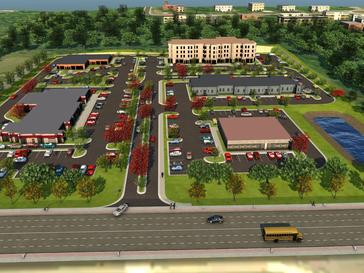
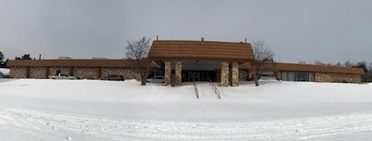
Minnesota-based Rebound Hospitality recently purchased the former Sawmill Inn site in Grand Rapids with plans to demolish the vacant hotel and build a new 82-room lodging facility branded as a Best Western Plus. Rebound is subdividing the 9-acre property into six commercial parcels. The new hotel will be located on one parcel, and the remaining five parcels will be marketed for independent commercial developments. Rebound also purchased an adjacent 15-acre property.
Demolition began in February, and hotel construction will begin late summer and be completed in the fall of 2020. Rebound is investing approximately $15 million into the new hotel plus additional funds into development of the remaining lots. The firm owns and operates lodging properties in Northfield and St. Paul, Minnesota as well as Decorah and Des Moines, Iowa.
Since 1973 the 124-room Sawmill Inn was owned by the Wayne Jacobson family of Grand Rapids. For 44 years the hotel was central to the community’s ability to accommodate business travelers, tourists and youth sports teams for events such as hockey tournaments. It had a $3.4 million annual economic impact to the community and employed 60 people. The family closed the hotel in 2017, and the city began work to fill the hospitality and employment void and prevent the property from sitting vacant.
Grand Rapids Director of Community Development Rob Mattei connected with Rebound through a cold call he made. “I ran an internet search for hotel developers and learned of Rebound’s work in Minnesota,” said Mattei. “Rebound leadership and I began discussions about how the Grand Rapids project could fit their business model.”
|
The area surrounding the former Sawmill was last year officially declared a tax increment financing, or TIF district, which is a public financing method for redevelopment projects. Through the use of TIF, Grand Rapids will forego future property tax revenue increases within the district for a period of time. This helped close the financing gap for Rebound and met the city’s economic development goals. Grand Rapids also received a commercial redevelopment grant from Iron Range Resources & Rehabilitation to demolish the Sawmill and prepare the site for new construction.
According to Brett Reese, Rebound’s managing principal and CEO, his company was drawn to Grand Rapids’ vitality and the city and state’s willingness to be active partners in the redevelopment. In addition, Rebound undertook the project because one of its partners is Jennifer Rajala Sawyer, a fourth-generation family member of Itasca County-based Rajala Companies. For over 100 years the Rajala lumber and logging companies have been dedicated to strengthening communities, creating jobs and enhancing rural economic development.
“Without TIF and the redevelopment grant, we could not have moved the project forward,” said Reese. “Our company is excited to expand into northeastern Minnesota. The project will utilize local banks for financing, employ hundreds of construction workers, create an estimated 19 full time equivalent positions to operate the hotel, and eventually create additional spinoff development such as a restaurant or retailer on the five remaining commercial parcels.”
Iron Range Resources & Rehabilitation’s grants are funded through taxes paid by Minnesota’s mining industry. Email Chris Ismil for grant information or call him at 218-735-3010.
Pictured above right is a preliminary concept drawing of the 9-acre property, and pictured above left is the former Sawmill Inn.
|

The new Downtown Business Rehabilitation (DBR) grant program can help alleviate costs of code compliance construction and remodeling projects for area businesses. Six businesses were recently awarded grants.
-
Green Gate Guest Houses, Biwabik: $22,400 to convert a vacant building on main street Biwabik into a mixed-use property with one apartment hotel, a commercial space for a coffee/sandwich shop, and a retail studio space for wood and metalworking arts.
-
JDAP Holdings, Virginia: $50,000 to convert the former Natural Harvest building into a dual tenant office complex for Stifel Financial and the North St. Louis County Soil and Water Conservation District.
-
Lakehouse Redesign, Crosby: $50,000 to convert a partially blighted building on main street Crosby into a mixed-use property with one retail space and four apartments.
-
Lakeview Place, Virginia: $50,000 to convert the former Hometown Focus building into a dual tenant office complex for Northland Capital Management and Hometown Focus community newspaper.
-
Paul Squared Operations dba Victual, Crosby: $50,000 to convert a vacant building on main street Crosby into a retail store with food manufacturing in a commercial kitchen.
-
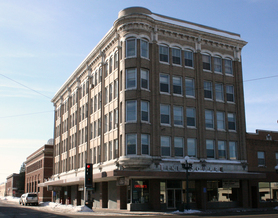
T-Squared, Virginia: $1,469 for improvements to a multi-tenant commercial building. (Pictured)
|
Businesses may be awarded up to one-third of the total project cost, or up to $50,000. Eligible projects are related to code compliance with general construction, electrical, plumbing, elevators, handicap accessibility, lead and asbestos removal, mechanical and sprinklers.
A small business and the communities in which they operate can benefit immensely from code compliance upgrades, benefits such as improved land values, enhanced public image in downtowns that can help spur other economic development, improved safety, and reduced health threats.
Iron Range Resources & Rehabilitation funds DBR through taxes paid by Minnesota’s mining industry, and it is administered through a partnership with Arrowhead Economic Opportunity Agency (AEOA). Click here to learn more or email Vince Meyer at AEOA or call him at 218-735-6828.
|
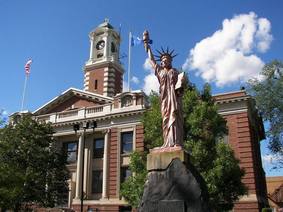
Established in 1893 as a result of the booming iron mining industry in northeastern Minnesota, Hibbing was once called the “Iron Capital of the World.” Iron ore was discovered underneath the town in 1920, and Hibbing moved building by building, home by home two miles south to where it stands today. What remains of historic “Old Hibbing” is now the Hull Rust Mineview which offers views of Hibbing Taconite, the world’s largest active open pit iron ore mine that has often been referred to as the “Grand Canyon of the North.”
Today the city is over 186 square miles with 16,230 residents. Hibbing is home to its own independent school district with four schools, a community college, an airport with daily flights to Minneapolis, an integrated health care system, 36 parks, and 43 nationally registered historic sites. Mining and health care are the top two industries and provide the majority of employment opportunities. However due to Hibbing’s central location, many of its residents are able to conveniently commute to Duluth, Grand Rapids and other cities in the region while still enjoying the town’s quality of life.
Like other small towns in rural Minnesota, Hibbing recently updated its comprehensive plan to identify strategies for land use, economic development, housing, transportation, community facilities and recreation. The process was led by a professional planning firm that guided a steering committee of city officials and volunteer citizens. Input from the community was solicited through public visioning sessions, online engagement and a resident survey.
“The survey garnered a lot of very helpful information, and common themes emerged,” said Hibbing City Councilor Jennifer Hoffman Saccoman, who served on the steering committee. She said it became very clear that the people of Hibbing are extremely interested in maintaining and advancing the city’s quality of life components such as housing, parks, recreation and access to natural resources.
Based on community feedback and technical research, the steering committee identified top priorities for the city. Action steps to be taken in the near future include a major remodeling of the locker rooms at the Memorial Building multi-purpose indoor arena, construction of a new splash pad in Bennett Park, completion of the Hull Rust Mine View, and improvement of the affordable housing inventory for seniors and young families.
“The updated plan was formally adopted by the city council last December, and it provides Hibbing with a flexible roadmap to help navigate future public policy and initiatives,” said Saccoman. “The process was an excellent opportunity to take an inventory of our incredible assets and opportunities.”
Iron Range Resources & Rehabilitation assisted Hibbing with a grant through taxes paid by Minnesota’s mining industry. As part of the agency’s commitment to preparing communities for the future, it has since 2010 supported 47 northeastern Minnesota communities in completing or updating their comprehensive plans. Email Whitney Ridlon or call her at 218-735-3004 for more information.
|
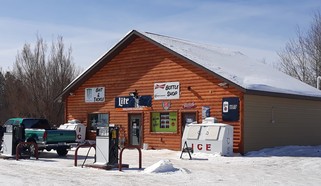
Nashwauk Township received a commercial redevelopment grant to assist KM Corner Store with the removal and replacement of underground gas tanks and pumps. The store installed a more modern above-ground fuel storage system that serves the 69.5 square-mile rural Itasca County township and its population of 1,670 people.
Nashwauk Township and its residents rely on the store for a multitude of goods and services including grocery and household staples, gas and diesel fuel, propane, burning permits, and disposal tickets for the county’s landfill. In addition, the township is surrounded by lakes and trails that attract a significant number of snowmobilers, ATVers, anglers and seasonal residents who frequent the store for fuel, bait and supplies.
“If KM were to close, township residents would endure significant travel to the nearest gas station and convenience store,” said Beth Ann Mackey, Nashwauk Township clerk. “Living in a rural region should not be a barrier to purchasing basic household goods and services.”
Kerry Lallak has owned the store for over 25 years. She and her husband Mark employ five to eight workers throughout the year and have provided many of the area youth with their first job experience. Through the commercial redevelopment grant and their own private investment, the Lallak’s made the needed improvements to comply with the recommendations of the Minnesota Pollution Control Agency which remedied ongoing deterioration to the concrete pads above the underground tanks.
“The commercial redevelopment grant made it financially viable for me to remain in business and provide uninterrupted service to our residents who primarily work in the mining, logging and agriculture industries,” said Kerry. “A larger convenience store franchise may have been able to independently replace the tanks, however our sales volume and rural location likely would not attract a larger chain business model.”
Iron Range Resources & Rehabilitation supported this project with a commercial redevelopment grant which paid for the gas tank removal and demolition. KM also received a loan guaranty. Email Chris Ismil or call him at 218-735-3010 for more information.
|

Propel Nonprofits will present a free Board Boot Camp on Monday, April 1 at the Mineland Reclamation Building in Chisholm from 5 to 8 p.m.
Whether you’re new to a nonprofit board, thinking about joining one, or simply looking for a refresher on board roles and responsibilities, this training was designed for you.
After this workshop, board members will be able to participate in board meetings and other engagements with more confidence and more knowledge about their role.
Participants will take home the Board Boot Camp Participant Guide and Fiduciary
Duties of Directors of Charitable Organizations.
The training will be led by Glyn Northington, senior program director for Propel Nonprofits. Northington has spent his career fostering relationships while working either for or with nonprofit organizations. He began as a marketing college professor before moving to the Twin Cities, where he fed his passion for performing arts by marketing the Guthrie Theater and the Minnesota Opera. Northington then marketed Target’s support of nonprofits across the country before managing Target’s Foundation and its national arts and food philanthropic portfolios.
To register, contact Sara Ferkul at 218-735-3020 or sara.ferkul@state.mn.us. Please include your name, organization, phone number and email.
Space is limited; RSVP by Monday, March 25.
Iron Range Resources & Rehabilitation is sponsoring the Board Boot Camp.
|
 |
Iron Range Resources & Rehabilitation Deputy Commissioner Jason Metsa was "on the move" in Two Harbors yesterday on his first stop in a series of community visits and listening sessions.
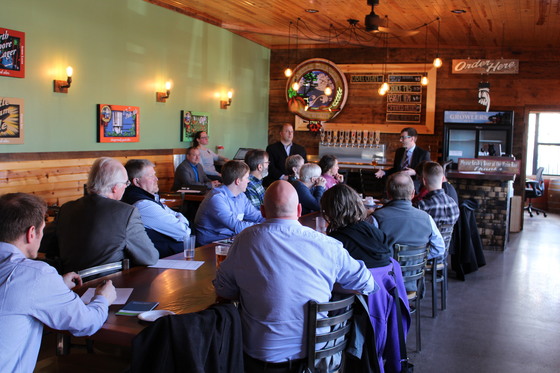
While in Two Harbors, he toured business and community development projects, followed by a listening session at Castle Danger Brewery. (Pictured)
Thank you to the community of Two Harbors for the warm hospitality!
Stay tuned for details on Metsa's next community visit.
|