|
|
Jan. 24, 2019
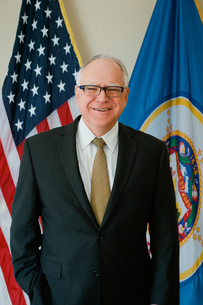
One month before being sworn in, Governor Tim Walz and Lieutenant Governor Peggy Flanagan embarked on a “One Minnesota Listening Tour.” Three of the 23 stops were in the Iron Range Resources & Rehabilitation service area: Hibbing, Silver Bay and Grand Portage. In total the team covered 2,100 miles across the state in five days.
“Northeastern Minnesota is extremely important to our state’s economy, culture, natural resources and future,” said Walz. “Lieutenant Governor Flanagan and I have met a lot of people here, and we want to ensure everyone’s voice is heard, regardless of ZIP code.”
Governor Walz was born in West Point, Nebraska, a small rural town with a population of 3,364. He moved to Mankato, Minnesota after retiring as a Master Sergeant in the Army National Guard. Before moving into the Governor’s residence in St. Paul this month, he, his wife and their two children resided in Mankato where Walz was a high school geography teacher, football coach, and eventually a United States Congressman for southern Minnesota. He is the first governor from outstate Minnesota since 1991, the last year Rudy Perpich served in the office.
“We need input from all geographic regions of the state,” said Walz. “We want to connect the people in rural Minnesota to our work at the Capitol in St. Paul.”
Walz’s priorities also include investing in infrastructure, growing the inventory of quality housing and affordable child care, and protecting the right to collectively bargain.
Governor Walz again visited northeastern Minnesota this past weekend to attend the funeral of former state representative and county commissioner Tom Rukavina. “Representative Rukavina dedicated his life to issues that impacted working families and all people in northeastern Minnesota,” said Walz.
Visit the website of Governor Walz and Lt. Governor Flanagan.
|
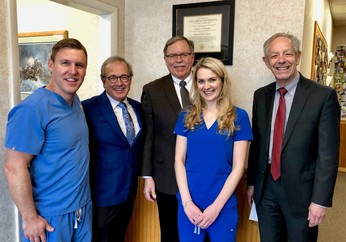
Dr. Brekke Hudelson returned to her hometown of Hibbing this past summer to practice dentistry at North Star Dental, helping to alleviate a designated dental shortage in northeastern Minnesota. She was a recipient of the Martha Mordini Rukavina Loan Forgiveness Program of the Minnesota Dental Foundation (MDF), which is funded by Iron Range Resources & Rehabilitation.
Dr. Hudelson is a graduate of Hibbing High School. She earned a Bachelor’s degree in Molecular and Cellular Biology from Vanderbilt University, a Doctorate of Dental Surgery degree from Columbia University College of Dental Medicine, and a Master of Public Health degree from Columbia University Mailman School of Public Health.
“The dental loan program is an effective economic development tool that our agency uses to grow quality health care and attract young professionals to our region,” said Mark Phillips, Iron Range Resources & Rehabilitation commissioner. “Each new dentist in the program is provided financial incentives to help repay student loans and must commit to practicing five years in a city of their choosing in northeastern Minnesota.”
The recipients are also expected to participate in at least one Minnesota Dental Foundation program that cares for underserved populations such as Give Kids a Smile, Mission of Mercy or Donated Dental Services.
The loan forgiveness program was initiated by the late Tom Rukavina, a former Minnesota state representative and St. Louis County commissioner. It is named in honor of Rukavina’s late mother and began in 2009 to attract new dentists to practice and provide quality dental care in the region.
Learn more about the Martha Mordini Rukavina Loan Forgiveness Program.
Pictured above: Dr. Jacob Smestad, dentist/owner of NorthStar Dental Care; Dr. Michael Zakula, director on the Minnesota Dental Foundation Board; Mark Phillips, commissioner of Iron Range Resources & Rehabilitation; Dr. Brekke Hudelson, recipient of the Rukavina Loan Repayment Funds; and Dr. Steve Litton, president of the Minnesota Dental Foundation.
|
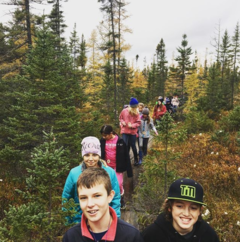
Long Lake Conservation Center (LLCC), a 760-acre environmental learning facility in Palisade, received a new energy efficient GARN wood boiler heating system enabling it to remain open and continue offering nature-based camps to Minnesota school children.
Each year LLCC welcomes about 4,000 kids (grades fourth, fifth and sixth) from 50 schools across the state, September through early June. The school groups may visit for the day or stay overnight in dormitory-style lodges for up to four nights. The lodges sleep up to 220 people. The hands-on learning curriculum occurs outdoors among a variety of ecosystems, including a private lake, acres of bog, large hardwood forest, mature pine stands, ephemeral ponds, kettle holes and wetlands.
“The prior heating system was 35 years old and well surpassed its service life,” said Wendie Carlson, LLCC business manager. “After researching alternative renewable energy options to heat our 43,000-square-foot campus, we chose to remain with a GARN wood-burning system that is efficient and continues our tradition of supporting the local logging industry.”
In addition to hosting school groups, LLCC serves as an emergency management location for Aitkin County and a rental venue for meetings, conferences, retreats and private receptions. Summer camps as well as programs for naturalists, colleges and community education combined attract an additional 1,500 people each year.
|
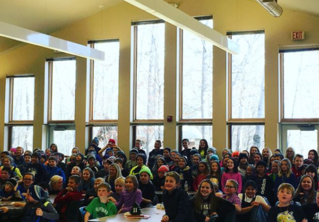
“The facility has a significant impact to the surrounding economy,” said Carlson. “Not only does it attract thousands of people to the region annually, it also educates young people on responsible use of natural resources that are essential to timber and tourism, Aitkin County’s two largest economic engines.”
Aitkin County is a popular winter and summer destination. The area is home to 365 lakes, 95 miles of the Mississippi River, snowmobile and ski trails and bike trails.
LLCC was established in 1963 with a donation of 200 acres to Aitkin County by the Southwest Minneapolis Kiwanis Club. The Kiwanis donated the land for the sole purpose of it being used as a conservation education center. It is estimated that nearly 190,000 students have visited the center since 1965 when youth camps were first offered. LLCC employs five full-time, four part-time and five seasonal workers.
The new heating system was financially assisted by Aitkin County as well as Development Infrastructure and Commercial Redevelopment grants from Iron Range Resources & Rehabilitation through taxes paid by Minnesota’s mining industry. Email Chris Ismil or call him at 218-735-3010 for information.
Visit the LLCC website.
|
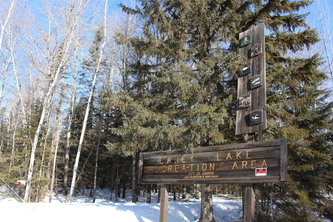
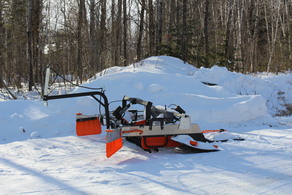
New grooming equipment and a widened Nordic ski trail were recently added to Carey Lake Recreation Area, offering its 2,000 plus annual visitors an enhanced winter recreation experience in the central Iron Range.
The new Nordic grooming system includes a packer/roller, snow gatherers, a Ginzu groomer and a Bearcat snowmobile. The new system can potentially extend the winter ski season by one to two months with the ability to groom in low-snow conditions that are prevalent in December and March. The groomer also provides the versatility needed to groom a dedicated winter fat biking trail.
The widening of a skate ski loop with improved drainage has created a better skiing experience, especially for youth and new skiers because the previous loop was not broad enough to learn the proper skate techniques.
The area is managed by the city of Hibbing with assistance from Range Nordic Gliders (RNG), a nonprofit organization that advances cross country skiing in the region. Carey Lake trails attract skiers from Hibbing, Chisholm, Keewatin and Nashwauk, along with visitors from the Twin Cities, Duluth and Upper Michigan. RNG hosts ski camps and programs for kids ages eight and up. The Hibbing High School Nordic ski team also receives assistance from RNG through coaching support, fundraising and event organization.
|
Carey Lake is a 1,100-acre public park with over 25 kilometers of Nordic ski trails that meander through the wooded low and highlands, and about 2.5 miles are lit for night skiing. The trails are groomed by the Hibbing Parks and Recreation Department with assistance by RNG volunteers for trail planning, clearing and vegetation maintenance. The park also holds a landmark of historic interest to the Hibbing and Iron Range economy, a small remaining concrete corner of the former DuPont plant that produced black powder until its closure in 1918. (Dynamite eventually replaced black powder on the national front because it was deemed safer to manufacture and transport.) The city of Hibbing acquired the property in 1974 and developed it into the Carey Lake Recreation Area. Utilized year round, the area offers a beach, swimming, fishing piers and picnic grounds. During the summer the cross country ski trails are available for hiking and biking.
Carey Lake Nordic Season passes start at $25, day trail passes are $3, and youth 15 and under are free.
This project was supported by a Culture & Tourism grant from Iron Range Resources & Rehabilitation through taxes paid by Minnesota’s mining industry, as well as a Federal Recreational Trail Program grant. Email Danae Beaudette for grant information or call her at 218-735-3022.
|

Strong arts, culture, heritage and recreational activities are essential to the quality of life and economy of our region. Iron Range Resources & Rehabilitation offers the Culture and Tourism grant program that supports those projects, and applications will be accepted March 1-29 for the 2019 funding cycle.
Past grant projects include:
- Billboard advertising campaign for International Wolf Center in Ely.
- Oral history film for Minnesota state photograph, “Grace” in Bovey.
- Video marketing campaign, “Live Like a Local” in Grand Rapids.
- 3D archery range at conservation club in Babbitt.
- Museum exhibit on Gunflint Trail.
- Capital improvements to a historic school and community center in Brimson.
- Art & history event series in Cook County.
- Capital improvements at curling club in Two Harbors.
- Renovated viewing area and observation deck at scenic overlook in Hoyt Lakes.
- Nordic ski trail enhancements in Hibbing and Grand Rapids.
- Outdoor market village in Biwabik.
Does your community have a project that improves the region’s arts, culture or recreation? Learn more about the grant guidelines and application processes by clicking here. Eligible applicants (nonprofit organizations) are encouraged to apply and can access the grant application portal (FLUXX) by clicking here.
Iron Range Resources & Rehabilitation funds its grants programs through taxes paid by Minnesota’s mining industry.
|
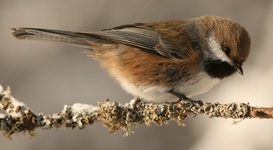
Bird watchers will soon flock to the 12th Annual Sax-Zim Bog Winter Birding Festival in Meadowlands. The festival, sponsored by the Toivola-Meadowlands Development Board, is scheduled for Feb. 15-17.
The festival hosts 150 birders from all over the United States and around the world. Attendees are drawn to the festival to see owls and other boreal species that are hard to find or see in much of the lower 48 states. Birders of all experience and interest levels attend the festival, which includes field trips in the Sax-Zim Bog, the Duluth/Superior area, and the North Shore of Lake Superior. Other festival highlights include presentations and a vendor showcase.
View the complete schedule.
|
|
|
|
|
|
The Ranger is a publication of Iron Range Resources & Rehabilitation. Our mission is to promote and invest in business, community and workforce development for the betterment of northeastern Minnesota.
|
|
|
|