|
|
Jan. 10, 2019
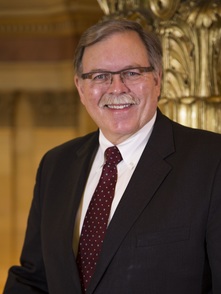 Gov. Tim Walz and Lt. Gov. Peggy Flanagan announced that Mark Phillips will continue on as Iron Range Resources & Rehabilitation commissioner. Previously, Phillips had served as commissioner under Gov. Mark Dayton’s administration.
Walz said, “Commissioner Phillips is dedicated to helping our local communities in northeastern Minnesota not just survive, but thrive.”
According to Flanagan, Phillips embodies the administration's values of One Minnesota. She said, "He is committed to helping Greater Minnesota prosper through business partnerships, educational grants, and workforce development."
Phillips is a native Iron Ranger, growing up in Eveleth. He has more than 35 years of leadership in development and finance, including launching new and creative programs for community and economic development, real estate development and business financing. Previously, he served as commissioner of the Minnesota Department of Employment and Economic Development (DEED) and as the director of business development at Kraus-Anderson Construction Company. He is a recipient of the Economic Development Association of Minnesota’s Career Achievement Award.
Phillips is a graduate of the Minnesota Executive Program within the Carlson School of Management at the University of Minnesota and has a Bachelor’s degree from the University of Minnesota – Duluth. He and his wife Patricia live on Lake Vermilion and have two grown children and two grandchildren.
“I am honored to continue my role as the commissioner of Iron Range Resources & Rehabilitation in the Walz-Flanagan administration,” said Phillips. “Through the integration of business partnerships, public policy, and community and workforce development, I look forward to continuing our work to revitalize and invest in northeastern Minnesota.”
|
A message from Commissioner Mark Phillips and the employees of Iron Range Resources & Rehabilitation
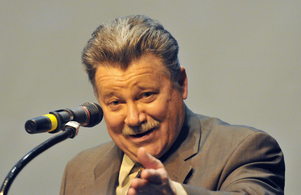 Fiery. Passionate. Iconic.
Following Tom Rukavina’s death on Jan. 7, these words have been used repeatedly to describe him. While these words are certainly accurate, we would add another to the list.
Friend.
Tom, a former Minnesota Representative from District 5A, served on the Iron Range Resources & Rehabilitation Board from 1987-2012. He was a friend to the region, our agency and our employees. It was a treat when “Tommy” would be at our office on meeting days or to stop in to visit. He always checked in to see how we as employees were doing, shared a few jokes and laughs and left us all with a smile.
Even though we are incredibly sad that he is gone, we can’t help but smile when we think of our dear friend.
We will miss you, Tommy.
* * *
View Sen. David Tomassoni's speech and a moment of silence held in Rukavina's honor on the first day of the 2019 legislative session.
|
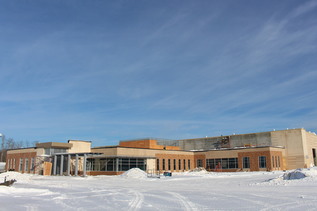
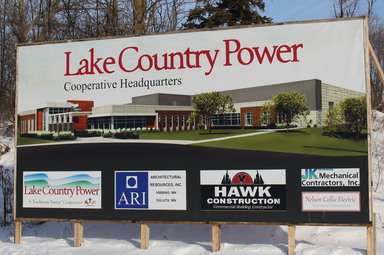 Lake Country Power (LCP) is constructing a new 68,000-square-foot facility in Cohasset’s Industrial Park to complete a relocation from its current Grand Rapids headquarters. The nonprofit, member-owned electric cooperative serves over 43,000 members in rural northern Minnesota.
The relocation was supported with a Development Infrastructure grant from Iron Range Resources & Rehabilitation to the city of Cohasset to prepare 25 acres in the Industrial Park for LCP’s new $12 million service center headquarters scheduled to open later this year.
The new facility will house up to 65 full-time employees, an increase of about 15 people over its Grand Rapids location which was 20,000 square feet. In addition, the building construction is anticipated to create approximately 45 full-time equivalent construction jobs according to Max Peters, Cohasset financial manager.
The Cohasset Industrial Park (CIP) is located 3 miles west of Grand Rapids and one block off U.S. Highway Two. The complex features parcels in size from two and one half acres and larger with appropriate elevation, drainage and utility connectivity including water, sewer, electric, fiber optics and natural gas. Totaling 460 contiguous acres, the CIP currently has eight businesses (LCP will make nine) and suitable space for additional industrial and commercial development.
|
 According to LCP General Manager Greg Randa, the CIP was the greatest competitive advantage that enabled the cooperative to stay in the nearby vicinity because it offered the needed acreage and highway access for utility vehicles and equipment. Additionally, Cohasset is only a few miles from its original headquarters, so LCP is able to retain its employees.
“Infrastructure is absolutely essential to a healthy, prosperous economy and community,” said Mark Phillips, Iron Range Resources & Rehabilitation commissioner. “Our agency invested in the Cohasset Industrial Park which directly supported a business expansion, created jobs and provides space for future industry and companies.”
The agency’s grants are funded through taxes paid by Minnesota’s mining industry. For more information about Development Infrastructure grants email Chris Ismil or call him at 218-735-3010.
LCP is one of over 900 electric cooperatives in the nation that combined provide service to 42 million Americans. Electric cooperatives were created in 1935 under President Franklin D. Roosevelt’s New Deal with the goal of bringing utilities to rural areas where for-profit utility companies were not servicing. View a video on the history of American electric cooperatives.
|
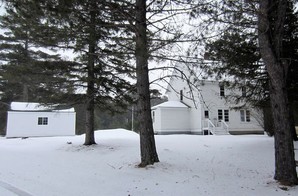 The Nelimark Homestead Museum, a Finnish historical site and gift shop in Embarrass, received a new heating system last fall enabling it to remain open and continue preserving the region’s Finnish immigrant culture. The museum houses artifacts, photos, exhibits and written histories, as well as handmade ethnic crafts, gifts and specialty foods. The building is part of a former farmstead and is open to the public May through September and select weekends in November and December.
The museum is operated by Sisu Heritage, Inc. a local nonprofit and all-volunteer organization committed to preserving the Finnish culture and history of Embarrass, whose residents were nearly 100 percent Finnish from the late 1800s until the 1950s. The group is an affiliate of the St. Louis County Historical Society and manages many of the Embarrass historic sites and hosts several festivals and events including a National Sauna Day celebration.
“The museum’s liquid propane gas furnace had malfunctioned beyond repair,” said Ron Sutton, Sisu Heritage, Inc. board member. “With a new furnace the facility can continue to serve the region’s visitors with historic homestead tours and special events.”
|
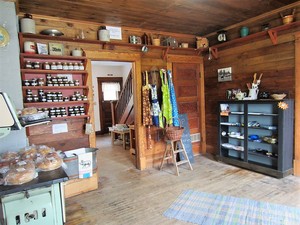 Embarrass has a population of 607 and is home to eight sites on the National Register of Historic Places including three livestock/hay barns, two farmsteads, one housebarn, one sauna and one natural waterway. Most of the manmade structures were built with unique traditional Finnish close-fitted log craftsmanship and architecture, placing them in the company of sites across the nation that have been declared worthy of preservation in order to protect America’s historic and archaeological resources. Historic tours of some of the registered sites and other places of historical interest are provided to the public.
Embarrass is located in the Embarrass River Valley near the Laurentian Divide and is often referred to as “The Cold Spot” in Minnesota because in most years its temperatures reach to -45 degrees Fahrenheit due to the town’s position within natural land and water barriers. The lowest temperature recorded to date was -64 degrees Fahrenheit on Feb. 2, 1996.
The project was supported by a Culture & Tourism grant from Iron Range Resources & Rehabilitation through taxes paid by Minnesota’s mining industry. Email Danae Beaudette for grant information or call her at 218-735-3022.
|
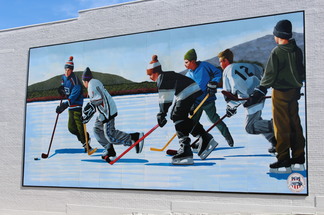 The physical appearance of a downtown is important to its economic vitality. Storefront facades, pedestrian and bicycle pathways, landscaping and public spaces are essential for a downtown to sustain and grow.
The Downtown Streetscapes grant assists with projects that promote safe and attractive environments for residents, shoppers, workers and visitors. Three northeastern Minnesota cities were recently awarded grants:
-
Keewatin - $5,500: Outdoor information kiosk located at the new community center in downtown designed to highlight educational, civic, cultural, recreational and charitable events and activities.
-
Cook County/Grand Marais - $50,000: Downtown lighting and corridor road and sidewalk renovations in partnership with Minnesota Department of Transportation.
-
Ely - $50,000: New pocket park and splash pad in a downtown vacant lot.
“The Downtown Streetscapes program is part of our agency’s commitment to the livelihood and stability of our rural communities,” said Commissioner Mark Phillips. “Business corridors and main streets with attractive public spaces and amenities can play a significant role in attracting private sector investment and patrons.”
Approximately $95,000 is still available in the Downtown Streetscapes grant fund in fiscal year 2019. Communities and nonprofits are encouraged to apply by May 15. The application process is competitive.
Iron Range Resources & Rehabilitation’s grants are funded through taxes paid by Minnesota’s mining industry. For more information email Whitney Ridlon or call her at 218-735-3004. View grant information and guidelines.
Pictured above is an art mural in downtown Eveleth that was supported by an Iron Range Resources & Rehabilitation grant.
|
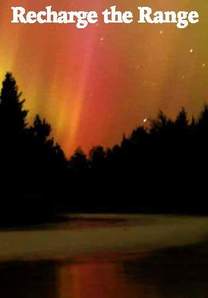 Iron Range Resources & Rehabilitation recently published the “Recharge the Range” final report.
The Recharge the Range initiative was implemented as a global downturn in the iron and steel industries impacted the Iron Range, resulting in the closure of mining operations and the layoff of thousands of miners and vendor employees.
More than 600 Iron Range business, community, tourism, arts, recreation leaders, and members of the public presented ideas at four Recharge the Range forums in early and mid-2016. Hosted by Iron Range Resources & Rehabilitation and its regional economic development partners, the forums generated new ideas for business growth, community improvement, culture, arts, tourism and recreation.
Following the forums, action groups led by area business, community and cultural leaders moved forward with implementing a strategic roadmap for economic development. Targeted areas included: large business expansion and attraction, small business strategies, education and talent development, infrastructure, natural resources, tourism and recreation, and livable communities.
Over 120 action group meetings were held at which hundreds of volunteers participated and brought forward initiatives to Recharge the Range. The agency has committed resources to advance the initiatives that address consensus visions advanced at the forums to revitalize downtowns and business corridors and increase arts, culture, tourism, recreation and quality of life opportunities.
While the Recharge the Range initiative has concluded, Iron Range Resources & Rehabilitation will have several opportunities for civic engagement in the coming months.
Read the Recharge the Range final report.
|
|
|
|
|
|
The Ranger is a publication of Iron Range Resources & Rehabilitation. Our mission is to promote and invest in business, community and workforce development for the betterment of northeastern Minnesota.
|
|
|
|