|
ABOUT GREENNOTES
GreenNotes covers environmental news, programs and events from Hennepin County.
Please take a few moments to read our stories. Share your feedback and ideas for protecting the environment. Please forward this email to interested individuals and encourage them to sign up.
|
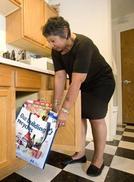 Hennepin County has free resources and assistance available for both property managers and residents interested in establishing or improving recycling programs in apartment buildings, condominiums and townhomes.
Multi-unit dwellings make up one third of Hennepin County’s households, and increasing recycling in these buildings is an important part of meeting the county’s 2015 goal of recycling 45 percent of all the waste generated in the county – a 7 percent increase over the current recycling rate. Since launching the multifamily recycling assistance program in September 2012, 58 properties representing 6,800 units have requested materials.
|
Property owners can take advantage of the following resources to make recycling programs a success:
- Recycling totes – reusable, durable bags that can be distributed to residents for storing and transporting recyclable materials
- Recycling container labels
- Onsite recycling program assistance
- Educational materials including a bilingual recycling guide, apartment recycling brochure, door hanger with recycling information in 8 different languages, newsletter articles and posters
- Trained volunteers to assist with door-to-door outreach
-
Online order form to request free resources and assistance
County staff will deliver the materials and help identify ways to improve recycling in the building. County staff will follow-up with properties about six months after the initial visit to offer further assistance and educational materials. The county also encourages property owners to recruit recycling advocates at each of their buildings to help with education and outreach.
For more information, email Carolyn Collopy or call 612-596-0993.
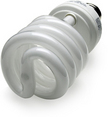 Hennepin County approved an agreement with Xcel Energy to cover the county’s costs of collecting and recycling fluorescent and high intensity discharge (HID) lamps from households. Fluorescent and HID lamps contain mercury and must not be disposed in trash. The county collects approximately 140,000 lamps per year from households at the drop-off facilities in Brooklyn Park and Bloomington, at household hazardous waste collection events and at city cleanup days.
In Minnesota, Xcel Energy is required by law to collect and recycle lamps from its residential and certain small business customers. For more than 10 years, Xcel has fulfilled this obligation by reimbursing entities, such as the county, for their lamp collection and recycling services.
For more information, email Louisa Tallman or call 612-348-9939.
|
Hennepin County was recognized at the first Minnesota Brownfields ReScape Award reception in St. Paul on November 15 for its significant role in the award-winning Como Student Housing Cooperative (Coop) project. The Coop is a popular and low-cost housing option for students with families because it offers playgrounds, daycare and close proximity to the University of Minnesota campuses.
In 2008, the University discovered contaminated soils and demolition debris from previous structures on the Coop property. The project received three Hennepin County Environmental Response Fund grants totaling nearly $1.1 million for assessment and cleanup of approximately 2.5 acres that surround three apartment buildings, two playgrounds, and a ball field. The project also involved installation of permeable pavement to promote drainage and reduce stormwater runoff, and careful planning and excavation to allow maximum retention of existing mature trees on the property.
The ReScape Awards recognize projects that transform abandoned or underutilized sites using innovative solutions to significant environment issues. The Coop project was announced the winner of the Outstanding Environmental Impact Award. In total, four of the nine ReScape Award finalists received funding through the Environmental Response Fund.
For more information, email Dave Jaeger or call 612-348-5714.
Hennepin County and the Solid Waste Management Coordinating Board funded six organizations to implement waste reduction education projects in 2011 and 2012 through the Community POWER (Partners on Waste Education and Reduction) program. The projects reached more than 4,000 residents with waste and toxicity reduction messages and education.
- The Armatage Montessori School engaged students in recycling and waste issues through in-class lessons and field trips. They also formed an Eco Awesomeness Team that worked to raise awareness about recycling through art and at school events.
- The Brooklyn Center School District formed student green teams to create displays and activities for the Brooklyn Center EarthFest and implement a Waste Reduction Challenge.
-
Kaleidoscope Place’s Color Me Green project engaged students in an interactive curriculum that integrated environmental education with visual arts, storytelling, music and performance.
-
Lowry Hill East Neighborhood Association held workshops to educate residents about recycling, composting and reducing waste and coordinated a Neighborhood Swap focused on waste reduction.
-
Nawayee Center School started a composting system at the school, then educated students and the community about composting and reducing food waste.
- The Shiloh Temple International Ministries engaged the community in hands-on activities focused on recycling, reducing waste and reducing toxicity.
For more information, email Patience Caso or call 612-348-9352.
In the News
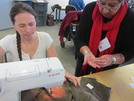 At Hennepin County Fix-It Clinics, residents can bring in broken household items and get free, guided assistance from a volunteer with repair skills who will help you disassemble, troubleshoot and fix your item. Fix-It Clinics have given new life to many items that may have otherwise ended up in the trash or being recycled, including broken electronics, small appliances, sewing machines, lamps, clothing and toys. Learn more on CNN and in the Star Tribune.
|
Many businesses and organizations in the Twin Cities have made efforts to reduce waste by implementing a variety of initiatives, including recycling, composting, reducing food waste and using reusable instead of disposable materials. Recycling helps companies get value out of their waste and creates jobs. Read about what companies are doing in Finance & Commerce, and learn about what businesses can do to reduce waste and recycle more.
Events
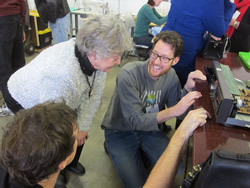 Have broken household goods or clothing in need of repair? Attend an upcoming Fix-It Clinic and get free, guided assistance on disassembling, troubleshooting and fixing your item.
Fix-It Clinics are scheduled for the following dates and locations:
- Saturday, January 12, 2013 from 10 a.m. to 1 p.m. at the Lyndale Farmstead Park Recreation Center in Minneapolis
- Saturday, February 9, 2013, noon to 3 p.m. at the Brookdale Library in Brooklyn Center
- Saturday, March 9, 2013, from noon to 3 p.m. at the TC Maker Hack Factory in Minneapolis
- Saturday, April 13, 2013 from 10 a.m. to 2 p.m. at the South Minneapolis Housing Fair, inside the Minneapolis YWCA
- Saturday, May 11, 2013, from noon - 3 p.m. at the Plymouth Library
- Saturday, June 15, 2013, from noon to 4 p.m. at the Bloomington Center for the Arts
Bring in any carry-in-sized household items in need of repair. Items brought in to previous clinics include DVD players, clothing and fabric items in need of repairs or alterations, fans, hair dryers, laptop computers, radios, toasters, sewing machines and much more.
Volunteer fixers who have skills in soldering, electronics repair, electrical repair, sewing, wood working, and general tinkering are needed to make this initiative a success.
For more information or to volunteer, email Nancy Lo or call 612-348-9195.
Green Tip
When snow and ice start to accumulate on Minnesota roads, parking lots and sidewalks, one of the more common reactions is to apply salt. But salt contains chloride – a water pollutant that can harm aquatic ecosystems. Melting snow and ice washes salt into storm sewers, which drain directly into lakes, rivers and streams. Once in the water, there’s no way to remove chloride. Just one teaspoon of road salt can permanently pollute five gallons of water, according to the Minnesota Pollution Control Agency (MCPA).
There are many ways to reduce salt use while keeping roads, parking lots and sidewalks safe.
- Remove the snow first by shoveling, sweeping or snowblowing. The more snow and ice you remove manually, the less salt you will have to use and the more effective it can be. Break up ice with an ice scraper and decide if application of a deicer or sand is even necessary to maintain traction.
- Use the right amount of salt – more salt does not mean more melting. Use less than four cups of salt per 1,000 square feet (an average parking space needs about half a cup of deicer).
- Most salts stop working at around 15 degrees. At colder temperatures, use sand for traction instead.
- Sweep up extra salt. If salt or sand is visible on dry pavement, it is no longer doing any work and will be washed away. Reuse the salt on other problem areas.
- Identify drainage issues, such as areas where water drains onto your steps or accumulates in low areas in your sidewalk, and fix them during the summer.
- If you hire someone else to do snow removal, look for a contractor that has earned a voluntary Road Salt Education Certification.
To learn more about reducing salt use and protecting our waters, watch the Mississippi Watershed Management Organization’s video on Improving Winter Maintenance or visit the MPCA’s Twin Cities Metro Area Chloride Project webpage.
|