Funding awarded to projects that will provide hands-on, outdoor learning to North Minneapolis youth
Hennepin County has awarded funding to five programs that will focus on engaging youth in North Minneapolis in project direction, implementation and evaluation. The following projects, which will engage more than 450 North Minneapolis youth starting this spring, were awarded:
- Beez Kneez will educate and empower youth through beekeeping at honeybee hives in community gardens.
- Environmental Justice Advocates of Minnesota will empower youth to develop and implement projects to improve the environment in their community.
- Minnesota Internship Center High School will implement student-led agriculture projects on campus.
- Phyllis Wheatley Community Center will engage youth during out-of-school-time in multi-disciplinary, environmental programming and train older youth to lead environmental service projects.
- The Renewables Research and Policy Institute will create an aquaponics-based education program at North High School.
Funding for this program is provided through the Minnesota Environment and Natural Resources Trust Fund as recommended by the Legislative-Citizen Commission on Minnesota Resources.
Volunteer to monitor water quality
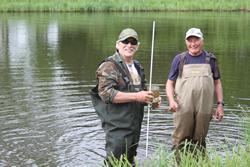 Applications are being accepted for 2012 Wetland Health Evaluation Program (WHEP) volunteers. Volunteers receive training on wetland monitoring, then wade into wetlands to collect and identify plants and insects. Data is used to assess the overall health of the wetland ecosystem.
Throughout April, a photo and educational display that will feature WHEP and highlight the importance of wetlands will be on display at the Hennepin County Government Center.
Join the Great Reuse Race to learn about reuse opportunities in the Twin Cities
By visiting the race stops, participants will learn about opportunities for purchasing quality, used items and where to donate goods in the Twin Cities. Racers will also become eligible for prizes, such as a refurbished Apple iPad or a custom bike build-out. Shopping reuse has many benefits – it saves you money, stimulates the local economy and protects the environment.
Recycle rechargeable batteries
|
Rechargeable batteries are found in many products we use every day, including cell phones, laptop computers, cordless power tools, camcorders, digital cameras and more.
Rechargeable batteries may contain toxic metals such as mercury, lead, and cadmium, which can harm human health and the environment if not properly disposed.
|
|
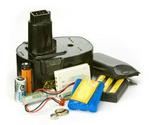 |
In partnership with the Rechargeable Battery Recycling Corporation (RBRC), Hennepin County has recycled more than 280,000 pounds of rechargeable batteries since 1996. Hennepin County has an agreement with RBRC in which RBRC offsets the collection and recycling costs of rechargeable batteries collected through Hennepin County’s battery recycling program.
Proposals for environmental education project support and funding due April 9
Funding, project support and free resources are available through the Green Partners Environmental Education Program for organizations to implement projects that empower residents to reduce waste, increase recycling, reduce toxicity, conserve energy and protect water quality. |
|
 |
The program offers flexible options for support and funding, as well as networking opportunities with other community organizations. Eligible organizations include youth groups, congregations, neighborhood groups, multicultural organizations, private and public schools and park districts.
Minnesota Master Naturalist Explorers pilot program for youth offered in Minneapolis
The Minnesota Master Naturalist Program and Hennepin County are organizing a pilot Master Naturalist Explorers program at Lake Harriet Elementary School in April. The Explorers Program will be a fun, outdoor, science-based, after-school opportunity for 4th and 5th grade students to learn about the ecology and natural history of their schoolyard, neighborhood and nearby natural areas. The lessons will focus on the physical changes in the seasons and their effects on plant and animal life.
Pilot program will be implemented at three elementary schools in the spring. The program aims to eventually include more than 50 locations across the state.
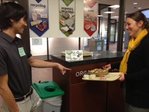
Organics recycling begins at the Park Café in the Hennepin County Government Center
In order to implement the program, most of the food service items, including plates, cups, bowls and forks, spoons and knives were switched to compostable products. The organics are recycled into rich compost, a valuable soil amendment.
Reminder: Trash is not accepted from residents at Hennepin County Drop-off Facilities
Residents can drop off a variety of household items, including appliances, electronics, recycling and household hazardous wastes, for recycling or proper disposal. Find out more about the materials that are and are not accepted at the drop-off facilities.
Solid Waste Management Master Plan available for public comment
Hennepin County is a national leader in waste reduction, recycling and composting, and the plan's top priority is to help residents and businesses reduce, reuse and recycle even more than they already do. Key strategies to meeting the goals include the following:
- Standardizing collection methods and recyclables collected as well as expanding recycling opportunities at transfer stations and landfills.
- Focusing on organics recycling and recycling at apartments, events and away-from-home venues.
- Expanding the county's already extensive education and outreach efforts.
- Offering technical assistance to businesses and encouraging product stewardship.
- Supporting market development for recyclable materials.
In the News
Get rid of your medicines at drop boxes
 |
|
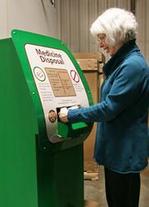
Hennepin County residents can dispose of unwanted medicines at drop boxes at three Sheriff’s Office locations. The drop boxes are free and no ID is required. Medicines from households, including prescription medicines, over-the-counter medicines, vitamins, supplements and pet medicines, are accepted. Find out more on Kare11, MPR and Channel 12.
|
Properly dispose of batteries, fluorescent light bulbs and household hazardous wastes during spring cleaning
If you're cleaning out your home or garage this spring, remember a lot of products you use at home shouldn't be put in the trash. Bring them to a Hennepin County drop-off facility in Brooklyn Park or Bloomington instead. Learn disposal tips for batteries, fluorescent light bulbs, household, lawn and garden products and more on Kare 11.
Events
Household hazardous waste collections scheduled in Independence, Minneapolis, Minnetonka and St. Louis Park
Hennepin County residents can safely and properly dispose of unwanted garden and household hazardous wastes at upcoming community collection events. |
|
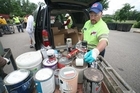 |
Events will be held Thursday through Saturday from 9 a.m. to 4 p.m. at the following locations:
- May 3 - 5, Independence City Hall parking lot, 1920 County Road 90
- May 17 - 19, City of Minnetonka Public Works Department, 11522 Minnetonka Blvd.
- June 7 - 9, Parking lot at the corner of Hwy 7 and Louisiana Ave. S in St. Louis Park
Green Tip
Consider the environment before sealcoating your driveway
During the spring and summer, many people decide to sealcoat their asphalt driveways. Sealcoating makes old asphalt look new and protects its surface, but there are serious environmental and health concerns with its use.
Sealcoat comes in two basic varieties: coal tar-based and asphalt-based. The coal tar-based contains much higher levels of a class of chemicals called PAHs (polycyclic aromatic hydrocarbons) that harm fish, and with prolonged exposure, pose a risk of cancer in humans.
|