Environmental Response Fund grants awarded
On January 24, the Hennepin County Board awarded 10 grants totaling $1.4 million for the evaluation and cleanup of contaminated sites through the Environmental Response Fund (ERF).
Grants were awarded to projects in Osseo, St. Louis Park, eight sites in Minneapolis and a lead-paint abatement project for residential properties throughout the county.
The ERF program, funded by a county mortgage registry and deed tax, provides grants for environmental assessment and cleanup of sites where such activities have been hampered because of insufficient funding. Priority is placed on projects intended for public space including green spaces, establishing affordable and moderately priced housing, and economic development.
University of Minnesota study will identify opportunities to increase plastics recycling
The study will assess the current regional system for recycling post-consumer plastics and then apply that knowledge to identify key risks and opportunities for recycling more types of plastics. The study will result in a region-specific model for recycling and manufacturing plastics. The Minnesota Pollution Control Agency and Aspen Research are also partners in this study.
Hennepin to participate in study of daylighting systems
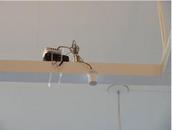
Data logging equipment, such as the one pictured, was installed in three Hennepin County libraries: Maple Grove, Minneapolis Central and Plymouth. The six month study will gather data on the energy savings of daylighting systems and identify ways to make daylighting systems run more efficiently.
|
|
 |
Watch Hennepin County videos on YouTube
In the News
Milk carton recycling means big savings for Anoka-Hennepin School District
A Hennepin County Master Recycler/Composter recently started a program to recycle paper milk cartons in the Anoka-Hennepin School District. More than 5 million milk cartons are generated in the schools every year. By recycling milk cartons, the school district expects to save $20,000 to $30,000 in reduced garbage hauling costs. See more on Channel 12 (see the clip at 22:22). Green Tip
Protect Minnesota’s waters by reducing salt use on sidewalks, roads and parking lots
When snow and ice start to accumulate on Minnesota roads, parking lots and sidewalks, one of the more common reactions is to apply salt. But salt contains chloride – a water pollutant that can harm aquatic ecosystems. Melting snow and ice washes salt into storm sewers, which drain directly into lakes, rivers and streams. Once in the water, there’s no way to remove chloride. Just one teaspoon of road salt can permanently pollute five gallons of water, according to the Minnesota Pollution Control Agency (MCPA).
There are many ways to reduce salt use while keeping roads, parking lots and sidewalks safe.
-
Remove the snow first by shoveling, sweeping or snowblowing. The more snow and ice you remove manually, the less salt you will have to use and the more effective it can be. Break up ice with an ice scraper and decide if application of a de-icer or sand is even necessary to maintain traction.
-
Use the right amount of salt – more salt does not mean more melting. Use less than four cups of salt per 1,000 square feet (an average parking space needs about half a cup of de-icer).
|
|
 |
-
Most salts stop working at around 15 degrees. At colder temperatures, use sand for traction instead.
-
Sweep up extra salt. If salt or sand is visible on dry pavement, it is no longer doing any work and will be washed away. Place the salt in the trash or reuse it on other problem areas.
-
Identify drainage issues, such as areas where water drains onto your steps or accumulates in low areas in your sidewalk, and fix them during the summer.
-
If you hire someone else to do snow removal, look for a contractor that has earned a voluntary Road Salt Education certification.
|