|
Pioneer Press | October 9, 2018
Minnesota is getting nearly $18 million over the next two years to address the state’s growing opioid crisis.
The two-year federal grant, announced Tuesday by the state Department of Human Services, will be used to support treatment, emergency overdose antidotes like naloxone and the training and recruitment of more medical and mental health staff.
“This federal funding is critical in Minnesota’s efforts to fight a growing opioid epidemic all across our state,” Human Services Commissioner Emily Piper said in a statement. “This funding will support the implementation and expansion of proven strategies to offer treatment, improved emergency services and workforce development.”
[Read More]
Star Tribune | October 5, 2018
Gov. Mark Dayton filled two vacancies in the state’s 10th Judicial District Wednesday, including one that will make history: Juanita Freeman, a senior prosecutor in the Hennepin County Attorney’s Office, will become the first black district judge to serve in Washington County.
“This means the world to me,” said Freeman, who lives in Washington County. “The bench is becoming more reflective of the county. I’m honored to be breaking down that barrier.”
[Read More]
MinnPost | October 9, 2018
Urban farming in Minnesota reached a milestone this summer, when the state announced the first round of grants for agriculture education and development projects in cities.
It’s the first time the state has allocated money specifically for urban agriculture, and it took several tries to get the legislation passed. Michael Chaney, a long-time advocate from north Minneapolis who founded Project Sweetie Pie, a grant recipient, said he approached lawmakers with the idea about four years ago. At the time, he saw plenty of interest in urban agriculture — but not the kind of financial support that exists for rural farmers. “I was disenchanted and discouraged,” Chaney said.
Advocates said state investment is crucial because it lends credibility to what Chaney calls the “changing face of agriculture.” Such state funding, even a small amount, can usher in a shift toward seeing urban areas as potential farms and their residents as fellow food producers.
[Read More]
MPR | September 3, 2018
Scores of Minnesota manufacturers are hosting students this week during Minnesota Manufacturing Week to stimulate interest in critical industries that also pay above average.
They included two growing North Minneapolis makers located within a couple blocks of each other: Unison Comfort Technologies, a builder of heating-and-cooling systems that can be as big as a small house for commercial installations; and H&B Elevators, a maker of passenger elevators, from U.S. Bank Stadium to a skyscraper in Dubai.
[Read More]
Austin Daily Herald | October 5, 2018
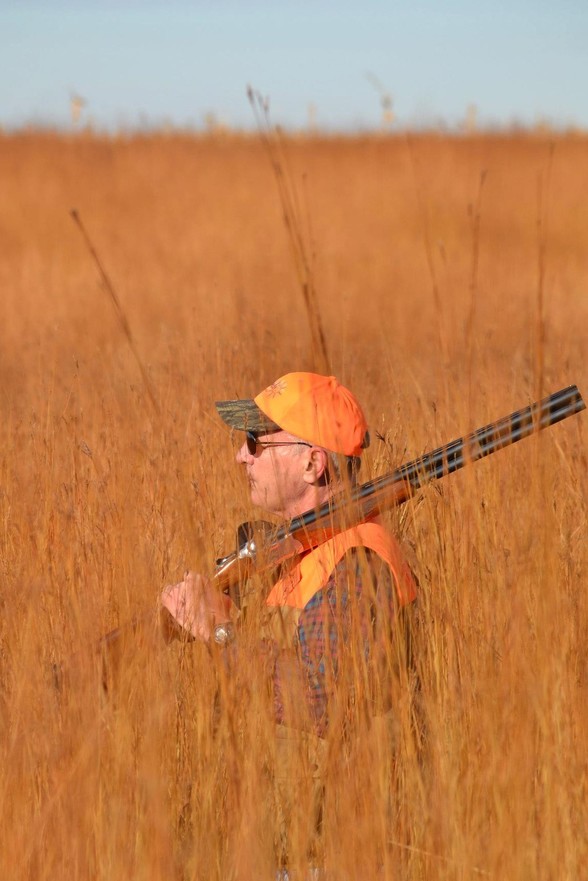
With conservation partners like Pheasants Forever, Ducks Unlimited, the Minnesota Deer Hunters Association, The Nature Conservancy and the U.S. Fish and Wildlife Service, many thousands of additional acres of permanent cover have been created, and are now open to public hunting.
Other programs administered by soil and water conservation districts, watershed districts, counties and non-profit organizations will also increase habitat over the long term. Especially with the significant contributions from the Outdoor Heritage Fund (of the Legacy Amendment), the future will be brighter for Minnesota pheasants and hunters.
This kind of work takes time and patience, but when Mother Nature cooperates, the long-term prospects for pheasants, hunters, and all prairie wildlife look good in Minnesota.
[Read More] |
 WCCO | October 9, 2018
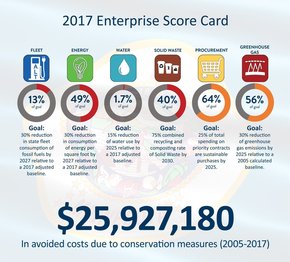
A new Enterprise Sustainability report shows Minnesota is more than halfway to reaching its goal toward reducing 30 percent of its greenhouse gas emissions from state buildings and fleets by 2027.
The sustainability goals were set by Gov. Mark Dayton in 2017.
“This report demonstrates that our smart, sustained commitment to conservation is paying off,” Dayton said in a statement. “Reducing waste, increasing our reliance on renewable energy and using less energy overall, is saving money and contributing to the betterment of our environment.”
[Read More]
International Falls Journal | October 11, 2018
The Minnesota Office of Higher Education, or OHE, and Minnesota State are launching a new program to help adult learners re-enroll and finish their postsecondary education: MN Reconnect.
Through MN Reconnect, adult learners who started but did not complete their postsecondary studies will receive personalized support to re-enroll in higher education, stay engaged in their studies, and complete their college degree. Four Minnesota State colleges have been selected to participate in the launching phase of MN Reconnect: Inver Hills Community College, Lake Superior College, Riverland Community College and South Central College.
[Read More]
Free Press | October 11, 2018
A Mankato startup looking at ways to make safer football equipment received an interest-free loan from the Minnesota Department of Employment and Economic Development.
Guardian Athletics is getting a $50,000 loan to help it in researching and developing personal safety protection equipment for football players.
The business was started by former athletic trainer Jeff Chambers. He developed the Kato Collar for players that uses air padding to reduce the risk of concussions, as well as stingers and burners.
[Read More]
Albert Lea Tribune | October 5, 2018
The Minnesota Public Facilities Authority approved $7.3 million in grants and loans for water and sewer projects. Funding for projects in Alden, Two Harbors, Hoyt Lakes, Erskine and Willmar was approved.
“Communities across Minnesota face serious water-quality challenges,” said Gov. Mark Dayton. “This funding supports improvements that will give residents of Alden, Two Harbors, Hoyt Lakes, Erskine and Willmar access to the clean drinking water they deserve.”
[Read More]
Star Tribune | October 5, 2018
It’s hard to overstate just how important Discovery Square is to the future success of the Mayo Clinic and its massive expansion known as Destination Medical Center, a project that blends $5.6 billion in private investment with $585 million in public money to fuel growth over 20 years.
Billed as a needed step to keep Mayo competitive, the DMC plan was approved by the state Legislature in 2013. The plan promises to add some 30,000 jobs in Rochester, dramatically increasing the city’s population and adding billions in tax revenue.”
[Read More] |