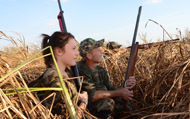
The Minnesota State Fair is just over two weeks away, and this year’s theme is “Celebrate Outdoor Traditions” as we mark the 80th anniversary of the historic DNR building. The fair runs Aug. 21 through Labor Day, Sept. 1.
Featured attractions include a new Call of the Moose exhibit, five large indoor aquariums (new at last year’s fair), invasive species exhibit and longtime favorites like the Adopt-a-River sculpture, Volunteer Outdoor Stage and DNR fish pond.
 The DNR State Fair building opened in 1934 and cost $73,000 to build, which was almost 10 times the net profit of that year's fair.
If you plan to work at the fair:
- You must take the online safety training course, “DNR State Fair Safety Plan Check for Understanding.” Using Internet Explorer, log in to SWIFT Self Service, select “Learning” and search for “State Fair.” Training takes only 15 minutes and must be completed before you work at the fair. Further instructions are available on the intranet.
- Be aware that admission tickets cannot be used to pay for parking this year. You may use a parking voucher or pay at the gate and ask for a receipt in order to get reimbursed.
- For questions on expense accounts, please contact your respective regional business office or Central Office accounts payable staff.
- Deliveries made during the fair will require an admission ticket for each person and paid parking for the vehicle (even if you don’t plan to stay). Try to make your deliveries before the fair, if at all possible.
- The DNR building will be open for setup on August 5, 6, 7, 12, 13, 14, and 19 from 9 a.m. to 3 p.m. Feel free to come out on any of these days to work on your exhibits or drop off supplies.
Using 500 pounds of trash collected from the Mississippi River bottoms, artist Tristan Kyrsta is busy crafting a larger-than-life jackrabbit for this year’s Adopt-a-River sculpture to be displayed near the DNR building at the State Fair.
Kyrsta participated in last month’s riverboat cleanup near St. Paul and found a wealth of items that were deposited by historic floodwaters that had finally begun to recede. “There were so many interesting things that we pulled out of the river,” said Kyrsta. “The most unique items that I have are probably the interior lining of a fridge, a shopping cart and some barge cables.”
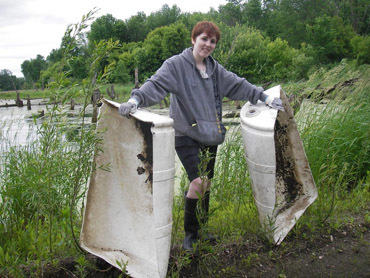 Artist Tristan Kyrsta selected potential items to use in her Adopt-a-River sculpture last month at the Mississippi riverboat cleanup near St. Paul. In all, volunteers collected 4,825 pounds of trash at the event.
Working with large found objects presents some unique challenges, and Kyrsta is thankful for access to the sculpture facilities at Bethel University, where she recently graduated with a bachelor’s degree in fine arts. “Due to the type of materials I’ve pulled in, I’ll be doing a lot of welding,” said Kyrsta.
As for her creative concept, Kyrsta said, “I’ve tried to play up the relationship between different ecosystems and how they are connected. I used the white-tailed jackrabbit as a basis for bringing this about in the work.”
The DNR has commissioned an artist to build the Adopt-a-River sculpture each year since 1994. See photo of past sculptures on the DNR website.
If you haven't already, please complete the employee climate survey by 5 p.m. on Friday, Aug. 8. The survey was emailed to all staff last week Thursday and mailed to those without a DNR email address.
The purpose of this confidential survey is to spot trends and opportunities that help make the DNR a great place to work.
If you have questions about the survey, please contact Marcia Honold or Colleen Schmitz.
 Electronic versions of the new MNDNR logo are now available for download on the DNR intranet logos page.
Detailed guidelines for print and web use are also posted on the site. The new logo will be incorporated into DNR materials over the next several months.
|
Archery, fish printing, nest box building and appearances by Smokey Bear are among the free activities in the DNR tent at Minnesota Farmfest, today through Thursday, near the town of Morton in Redwood County.
“Our 60 by 90 foot tent is filled with ideas and activities to help visitors make the most of our great natural resources and enjoy the outdoors,” said Scott Roemhildt, DNR information officer. “It’s a fun and educational stop all families should make while visiting Farmfest.”
In addition to hands-on activities for kids, adults can find resources and experts on topics like water quality, aquatic invasive species, habitat development and restoration, state parks, wildlife management areas and the Walk-In Access program. Conservation officers are also on-hand to answer questions about DNR rules and regulations.
For more information, visit the Farmfest website.
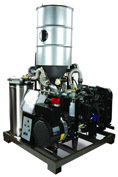 The Legislative Citizen-Commission on Minnesota Resources recently included a unique wood-to-electricity project in its recommendations for 2015 funding from the Environmental and Natural Resources Trust Fund. The project is a collaboration between the DNR and Will Northrup, assistant professor of mechanical engineering at the U of M, to test out a micro-combined heat and power system at the New Ulm regional office.
The team would install an All-Power Labs wood gasifier and generator (pictured above) that converts wood chips into an inflammable gas, which is then used to fuel a 10-kilowatt electric generator.
The system would be integrated with an existing 70-kilowatt solar photovoltaic system at the New Ulm office. In order to boost efficiency, the engine radiator would be plumbed into the regional shop to augment heating. The project would offset both electrical power consumption and propane use.
The U of M would provide key technical resources to modify the equipment, measure air emissions, and evaluate overall lifecycle performance. The DNR would provide the site, day-to-day operations and fuel.
The project is small, but is a step toward finding a beneficial alternative to open burning of woody debris. Goals include reduced greenhouse gas emissions, cleaner air and reduced wildfire risk.
Pending approval from the Minnesota Legislature, the project will begin next July.
|
Mike Kallok’s 2013 Minnesota Conservation Volunteer article, “The Case for Copper,” recently earned a second place award from the Association for Conservation Information. Earlier this year, the article received top honors from the Outdoor Writer’s Association of America.
“The Case for Copper” details the risk of lead poisoning caused by traditional lead ammunition used by many Minnesota deer hunters. Unlike copper bullets, lead tends to shatter on impact and can leave tiny poisonous shards in the deer’s entrails, which are ingested by bald eagles and other animals.
Read the article on the Minnesota Conservation Volunteer website.
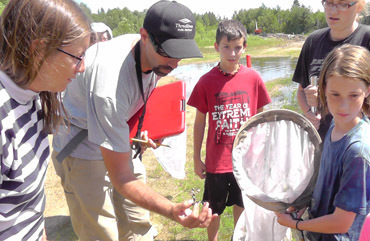 The Minnesota Odonata Survey held its annual dragonfly gathering July 24-27 at Red Lake Wildlife Management Area. As part of the event, a surveyors showed young volunteers how to identify dragonflies and damselflies. “The volunteers found eight new dragonfly species that had never been recorded in the county,” said Gretchen Mehmel, DNR area manager.
|