Staff Highlight: Ryan Weigel
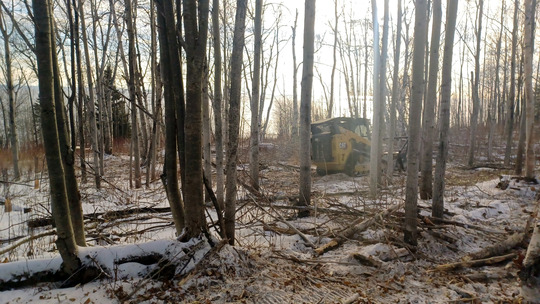
Ryan Weigel is a Natural Resources Technician with the Scientific and Natural Areas Unit in Region 4. He helps monitor and maintain Native Prairie Bank sites through prescribed burns, invasive species removal, and species surveys. Ryan has been working with the SNA program for just over a year and enjoys helping protect and restore Minnesota’s native prairies.
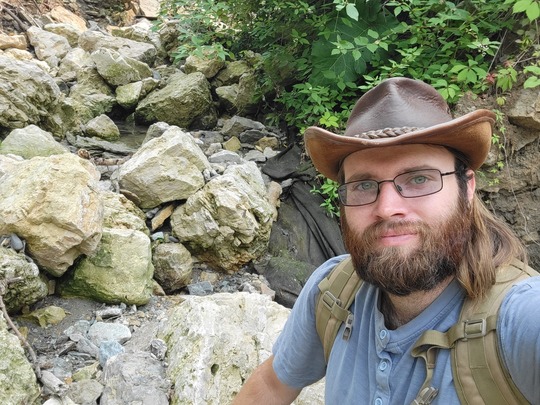 Ryan Weigel.
What gets you excited about your work (and why)?
I really enjoy seeing the rare and interesting landscapes and helping preserve them. Only 1% of Minnesota’s native prairie is left, and I feel it’s a great honor to help preserve and restore these important landscapes.
What is your favorite way to spend time outdoors (and why)?
I really enjoy rock collecting. Whether it’s looking for agates (Lake Superior, Cold Water, or Montana Moss), fossils, or simply an interesting-looking rock. Minnesota has a very interesting geological history and, as a result, has a wide range of interesting rocks.
What is your favorite native Minnesota plant or animal (and why)?
The Purple Pitcher Plant (Sarracenia purpurea). Carnivorous plants started my interest in botany, and learning that they can be found in Minnesota added a lot of fuel to that fire. Thirteen species can be found in Minnesota. So far, I have only found seven, but my goal is to find all thirteen.
What is your favorite SNA (and why)?
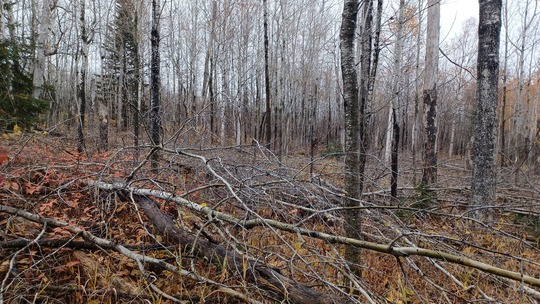
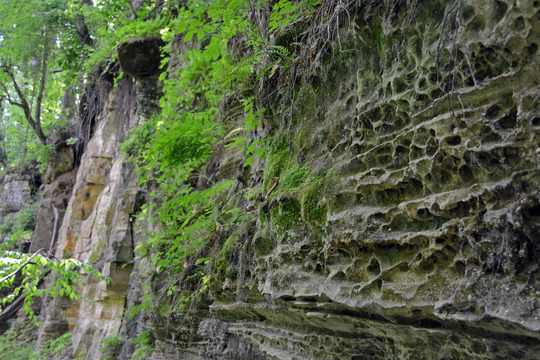
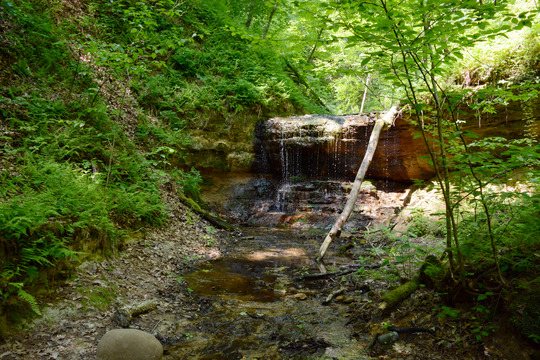
Swedes Forest SNA. I’ve spent a lot of time helping manage and restore this site, and there’s still a lot of work to do. But beneath the buckthorn, it has some of the best rocky outcrops I’ve ever seen. There are so many fantastic features that were carved out by Glacial River Warren, such as 20-foot boulders tumbled in the current, potholes in the rock, the exposed rocky outcrops, and the Minnesota River Valley itself.
Back to top

Research Roundup
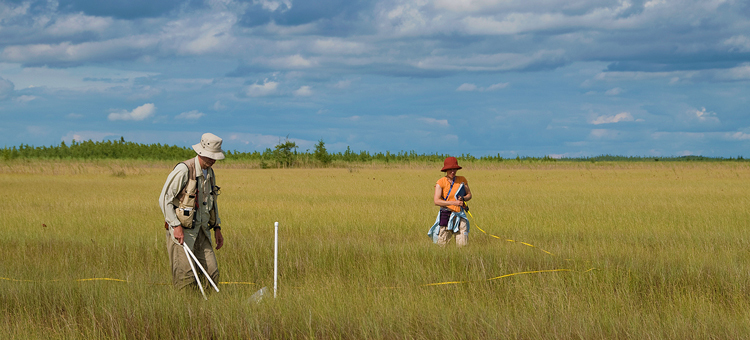
Scientific and Natural Areas play an important role in expanding our understanding of Minnesota’s ecosystems, and research is supported through a permit system. So far in 2026, the DNR has approved 33 research projects that advance knowledge of the state’s plants, animals, fungi, and waters, which help the SNA Program manage and protect these natural resources more effectively. Some projects that have been issued a permit this year include:
- Researchers at St. Cloud State University are surveying Eastern Newts and amphibian chytrid fungi at Wood-Rill, Uncas Dunes, and Quarry Park SNAs to detect the pathogens Batrachochytrium dendrobatidis (Bd) and B. salamandrivorans (Bsal) using swabs and environmental DNA.
- Researchers at the University of Minnesota, working with the DNR’s Minnesota Biological Survey, are surveying Rubus (raspberry) populations at the Blaine Airport Rich Fen, Blaine Preserve, and Kettle River SNAs. The study focuses on genetic diversity and hybridization in three rare Rubus species to guide future conservation efforts.
- A Collections Manager at the UMN Bell Museum Herbarium will be documenting plant diversity at Chimney Rock SNA this year by collecting samples and photographing rare species. All specimens will be archived in the Bell Museum plant herbarium collections for future research and education.
New research proposals are welcomed year-round, and the SNA Program encourages researchers, including university professors and independent scientists, as well as undergraduate and graduate students, to apply early. All researchers must submit a completed research application. Please note review of application may take 30 days or more.
Back to top
Site Steward Notes
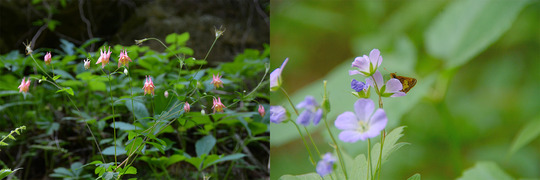
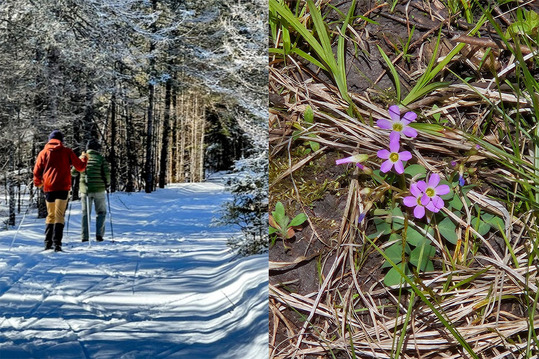 Cross-country skiing at Lutsen SNA (left). Photo by Jon Anderson. Wood sorel (Oxalis montana) at Swedes Forest SNA (right). Photo by Jake Wells.
Site stewards monitor SNAs across Minnesota. Their observations provide valuable information to the SNA Program. Spring visits were regularly reported, with a variety of observations and tasks completed.
- During a May visit to Greenwater Lake SNA, site steward Bill Bergquist ran into a University of Minnesota researcher doing a bird song study and walked with him to a quieter part of the SNA away from road noise. Learn about research on SNAs.
-
Oronoco Prairie SNA site steward Audrey Meyer-Mack made multiple visits to the SNA this spring. She noted numerous fungi species, like milk-white toothed polypore and turkey tails, and common early season invasive species like garlic mustard. On May 16th, Audrey led a wildflower walk at Oronoco Prairie. The eight attendees enjoyed spring blooms like wood betony, smooth yellow violet, prairie alumroot, and prairie smoke.
- In March, Lutsen SNA site steward Jon Anderson ventured out into the snowy SNA. He noted that despite a very icy weekend, the cross-country ski trail that cuts through the site was still in great shape. He also alerted SNA staff to a damaged sign on the western entrance to Lutsen.
- New site steward Jake Wells visited Swedes Forest SNA in early May and was greeted by the chorus of numerous frogs and a belted kingfisher. Jake encountered a family out enjoying a walk around the SNA and saw lots of coyote scat in the southwestern section. He also saw some early season blooms like wild blue phlox and wood sorrel.
Back to top
SNA Events
Looking for a fun way to get outdoors and give back this summer? Join us for adventures and stewardship activities at SNAs! See the complete list on the SNA events calendar.
Back to top
Large Donation Leaves Lasting Legacy
Kelly Randall, SNA Statewide Outreach Consultant
and Shannon Kearney, SNA Outreach Communications Student Worker
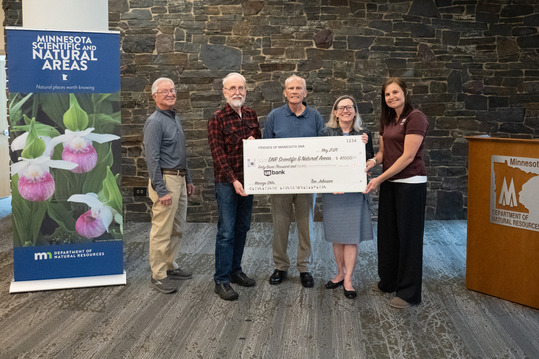 Friends of Minnesota Scientific and Natural Areas present check to DNR. Left to right: Bob Djupstrom, Tim Johnson, Craig Andresen, DNR Commissioner, Sarah Strommen and Scientific and Natural Area Supervisor, Judy Elbert.
In May, the Friends of Minnesota Scientific and Natural Areas (FMSNA) proudly presented a $47,000 donation to Commissioner Sarah Strommen and SNA Unit Supervisor Judy Elbert.
We are incredibly grateful for the Friends’ ongoing support and commitment to protecting Minnesota’s native plants, wildlife, and ecosystems that make Scientific and Natural Areas so special. This donation will have a lasting impact, helping ensure that these exceptional places continue to be protected, studied, and enjoyed by current and future generations of Minnesotans.
The Friends state, "Friends of Minnesota Scientific and Natural Areas values the importance of protecting and managing Minnesota's natural heritage found in the system of SNAs and Native Prairie Bank sites for present and future generations.
Recognizing the significant growth in the SNA Program in the last few years, we wanted to be a part of it.”
They added that donations were “above our expectations to ensure the growth and success of the SNA Unit continues. It is hoped that even more Minnesotans will seek out and visit sites in the SNA system."
Back to top
Donate to the Minnesota Scientific and Natural Areas Unit!
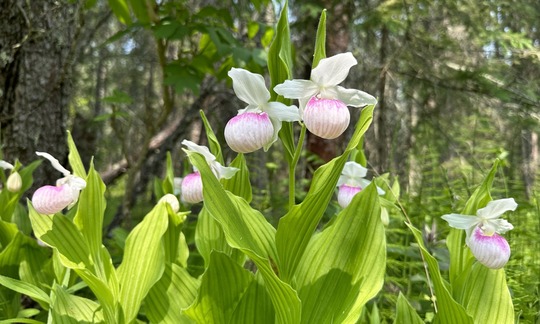 Showy Lady's-Slippers (Cypripedium reginae) at Iron Springs Bog SNA.
You can support the preservation of natural places for future generations by donating to Minnesota Scientific and Natural Areas. Your donation supports management and stewardship of natural areas, research to better understand Minnesota’s natural heritage, and the expansion of natural areas and designation of new sites.
Minnesota Native Plant Highlight: Culver’s Root
Mike Perry, Former SNA Volunteer and Writer
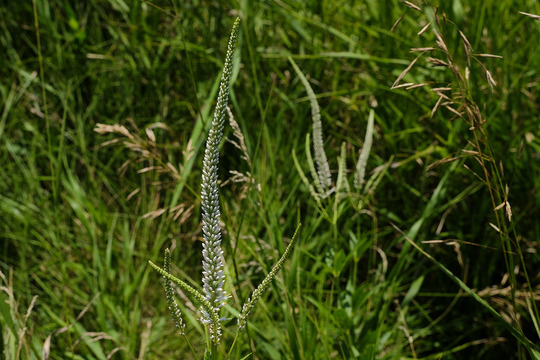 Culver’s root (Veronicastrum virginicum).
Culver’s root (Veronicastrum virginicum) is a member of the Plantaginaceae or plantain family. Some other members of the plantain family are kittentails (Besseya bullii), and beard-tongues (Penstemon spp.) The genus name Veronicastrum was given to this plant in honor of the first-century Saint Veronica. The species name virginicum means "of Virginia." Other common names for this plant are Culver's physic, blackroot, high veronica, and tall speedwell. The genus Veronicastrum consists of only two species, our native Culver's root and a second closely related species in eastern Asia.
Veronicastrum virginicum is a native perennial that grows in wet to mesic soils throughout Minnesota. Culver's root is a tall plant growing up to six feet high. The root is mostly horizontal. Three to seven leaves appear in a whorled fashion, spaced at wide intervals along the stem. The leaves are up to six inches long and one inch wide with toothed edges. The flowers appear from July through August. The flowerheads form a slender spike up to nine inches long with multiple spikes branching upward from the main stem. Each quarter-inch-long tubelike flower projects perpendicular from the main flower head stalk. The fruit is an oval capsule.
Much has been written about the medicinal uses of Culver's root. The fresh root is a violent cathartic and may also cause vomiting. The dried root is somewhat milder and has been used in infusion form to treat a sluggish liver and other ailments. The plant was used by the Cherokee, Iroquois, Menominee, and Ojibwe. Some herbal medicine stores sell the plant in various processed forms.
These native plant stories were written by Mike Perry in the late 1990s and early 2000s for a former iteration of the SNA newsletter. That newsletter was printed and sent to SNA volunteers to keep them updated on volunteer events and stories about the goings-on with SNAs. We hope you find these “re-printed” stories with added photographs of the plants interesting and informative!
Back to top
|