SNA Nature Notes - Spring 2026

minnesota department of natural resources

Spring 2026

SNA lady's-slipper graphic

NATURE NOTES

Nature Notes is the Minnesota Scientific and Natural Areas Unit's quarterly newsletter.


In this issue:


Minnesota PlantWatch: Rooted in Conservation, Growing Through Community

Anna Schacher, Conservation Corps MN and IA, Minnesota PlantWatch Assistant

PlantWatch volunteers

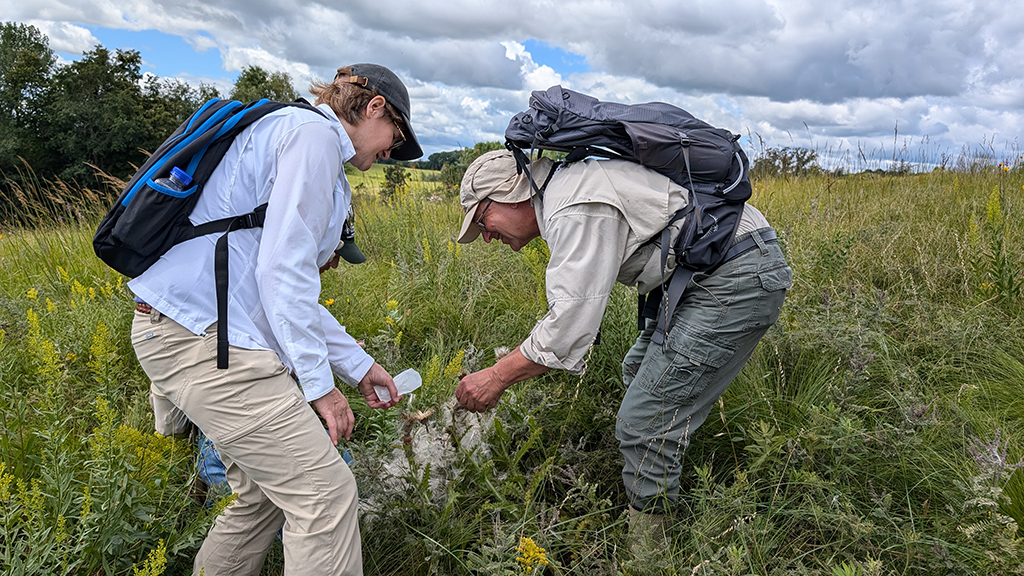
MN PlantWatch volunteers Andrea Nistler and Brian Johnson working together to collect seed on a survey. Photo by Angie Miner, UMLA.

Minnesota is home to more than 1,700 vascular plant species, of which over 300 are listed as endangered, threatened, or of special concern. Many of these species’ subpopulations need a revisit due to outdated or incomplete records of population distribution and health.

When rare plants are hiding under our noses in a sea of lush green, we turn to passionate volunteers to aid in the search. The Minnesota Department of Natural Resources (MNDNR) and the University of Minnesota Landscape Arboretum (UMLA) partnered together to launch the MN PlantWatch program in 2023. This community science initiative uses the power of volunteers across the state to collect survey data and seeds from rare plant populations. MN PlantWatch volunteers take on a role of plant detectives to search for Minnesota’s rare plants in their natural and historic habitats, collecting information on population distribution, health, habitat, and threats. The information gathered on MN PlantWatch surveys is used to update the state’s rare features database known as the Natural Heritage Information System. Updated information better informs and supports conservation and management needs, education, and research of our rare species.

Survey efforts take us far and wide across this ecologically rich and diverse state, from the northern peatlands in search of delicate orchids in deep sphagnum moss hummocks to the bluffs of the southeast in search of cliffside specialists. On a pleasant morning this past August, we found ourselves at Pembina Trail SNA in Polk County, a beautiful mosaic of prairie. Gentiana affinis var. affinis (pleated gentian) is the target of our search efforts, a special concern species that was last recorded on this site over forty years ago. It is predominately a western species but the toe of its range dips into northwest Minnesota, in the footprint of historic Lake Agassiz. In Minnesota, this beautiful gentian enjoys lowlands in native prairies and saline wetlands. The MN PlantWatch team of staff and volunteers set off in search of suitable habitat, equipped with species ID guides and optimism. Our eyes scan the sprawling prairie of waving grasses and vibrant flowering forbs speckling the landscape. We move across dozens of acres, forming a systematic grid as we search high and low for our target species. Its short stature challenges our keen eyes, but not for long! A volunteer spots a tiny bright blue cluster of flowers nested low amongst the densely packed tall prairie grasses. The team gathers around the newly located pleated gentian and examines its distinguishing features; petals joined together at the base of the flower with small pale “freckles” on the upper surface. Giddy with excitement, we search the remaining survey area and document the population’s extent.

pleated gentian

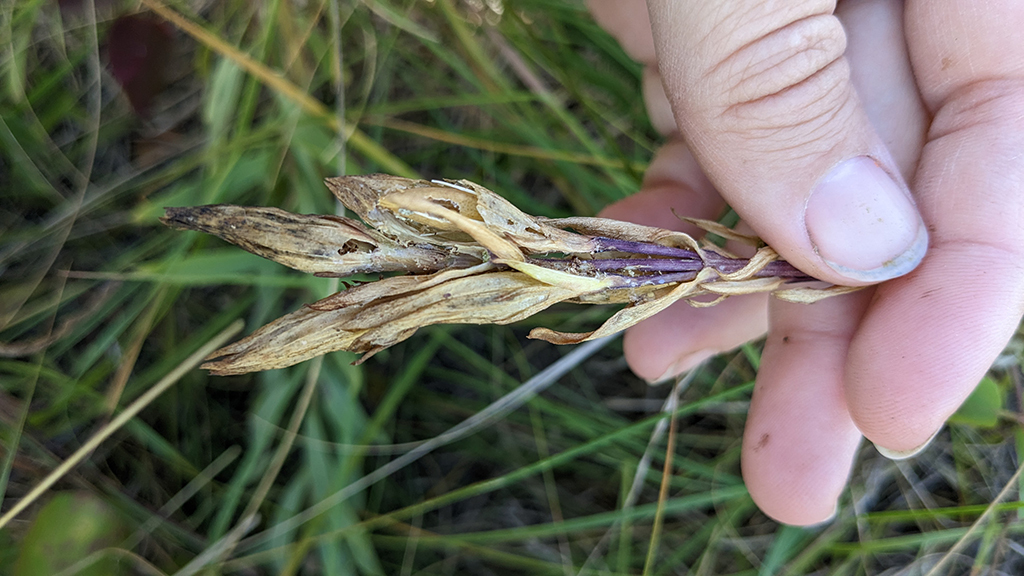
Holes in pleated gentian seed pods left by unknown larvae. Photo by Angie Miner, UMLA.

Fast forward to September, we return to Pembina Trail SNA to collect a small percentage of seed from the pleated gentian population. We follow our previously recorded GPS points to the general area, but it is up to our keen eyes to relocate each plant. This time we train our eyes with a new mental search image, one that is far less colorful. Staff and volunteers sift through brown withering grasses to relocate our target only to find that something found our hidden plants before we did. Larvae claimed the pleated gentian pods as their temporary home and feasted on most of the seed! We carefully inspect every seed pod picked for collection to avoid bringing back any hungry hitchhikers. Following our adventure at Pembina Trail SNA we collect seed from two additional pleated gentian populations in the region. Collecting from multiple locations preserves a greater genetic diversity that is found in populations across a species’ geographic range. We aim to collect seed from at least 50 individual plants within a population to better capture a representative range of local genetic variability, while limiting impact to natural reproduction. Seeds collected by MN PlantWatch are taken to the UMLA’s Rare Plant Seed Bank. A team of staff and volunteers carefully clean, count, and test the seeds for viability. Seeds are then stored in the long-term seed bank or used for purposes such as propagation or outplanting research. The Plant Conservation Program often conducts this research to better understand conditions needed to grow plants from the collected seed and how to reintroduce plants into natural habitats. Native plant reintroductions can help strengthen existing populations or possibly restore populations that were lost in the wild.

In 2025 MN PlantWatch volunteers and staff updated records of 92 plant populations and banked seed from over 42 populations! To date, MN PlantWatch staff have trained in 120 volunteers.

Learn more about MN PlantWatch.


Please note that plant or seed collection is only allowed on SNAs by applying for a research permit.

Back to top


Chamberlain Woods

Site Highlight: Chamberlain Woods SNA, 

An Incredible Asset to Gustavus Adolphus College’s Courses and Students

By Amy Kochsiek, Senior Continuing Assistant Professor, Biology Department, Gustavus Adolphus College.

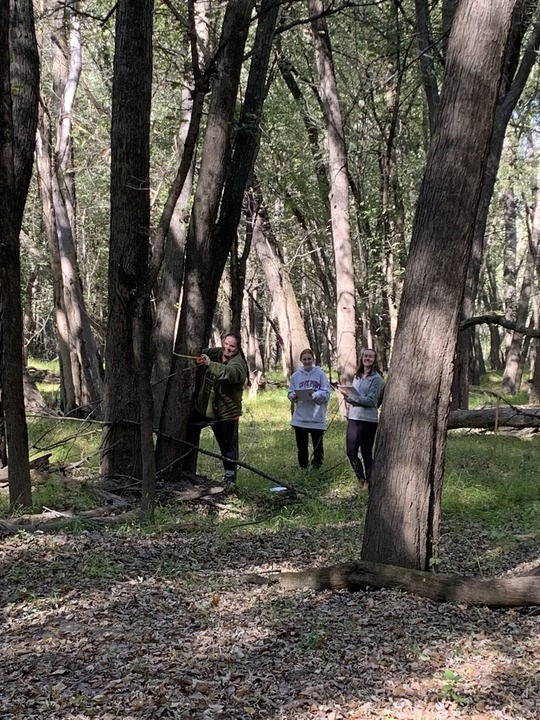
Near active sand mines and nestled between the Union Pacific railroad tracks to the east and the Minnesota River to the west lies Chamberlain Woods SNA, a 302-acre natural area consisting of a small oak woodland, which then descends toward the river into an approximately 285-acre floodplain forest. Gustavus Adolphus College field courses regularly visit the site and the SNA is a student favorite for field excursions in our biology and environmental studies programs. This site is only about 9.5 miles from the campus and so it is easily accessible to a course with a 3-hour afternoon lab experience. It has been utilized as a site for numerous courses such as conservation biology, vertebrate biology, ecology, and plant systematics.

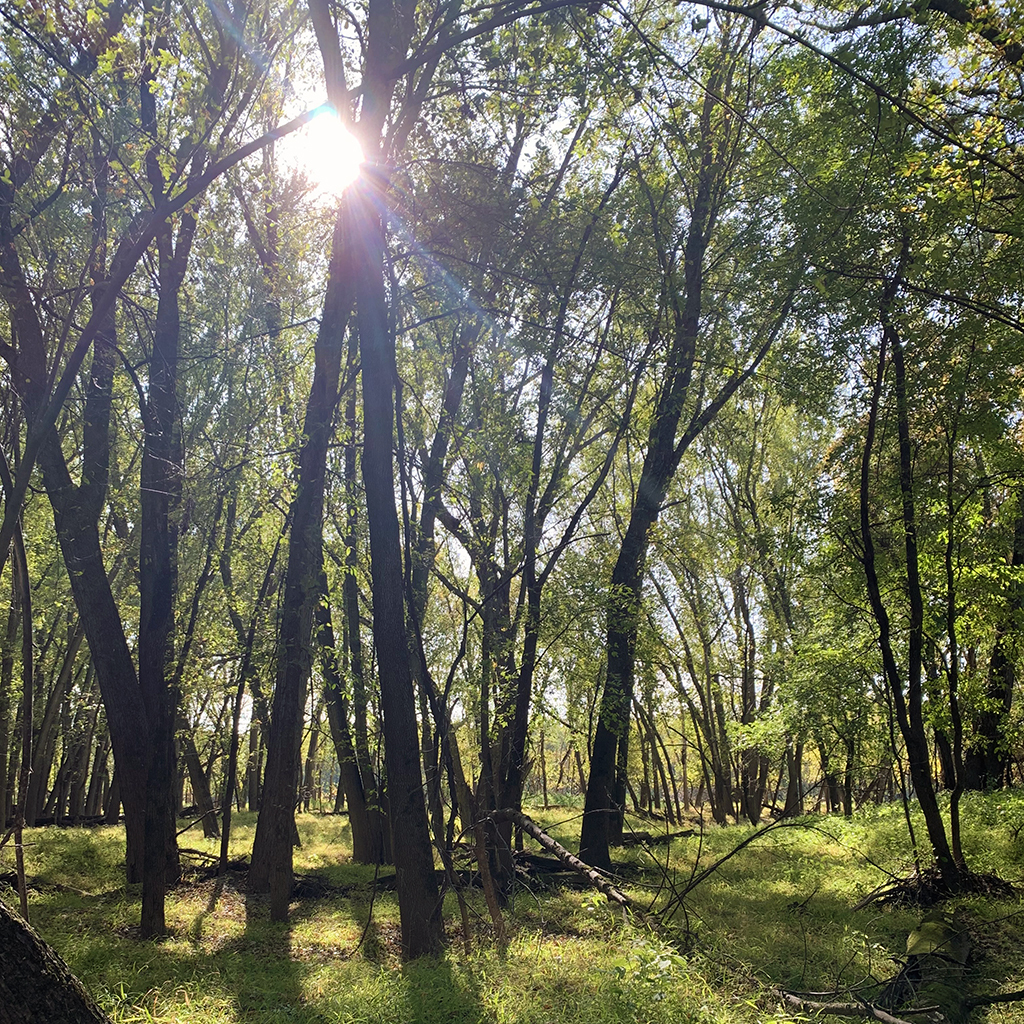
We always start our excursions in the southeast corner of the site near the parking lot, and as with many SNAs, there are no maintained paths, which is not something that students are used to. As we traverse slowly through the oak woodland habitat toward the Minnesota River, the oak trees are easily identifiable with smaller trees of American hophornbeam and American elm. In the fall, the forest floor tends to be dominated by stinging nettle, but in the spring, there is a lovely spring ephemeral community with Dutchman’s breeches, wild ginger, bloodroot, Eastern false rue anemone and beautiful sedge species. Traveling either west or north towards the river, the site eventually descends down to an amazing floodplain forest. The students in our courses become absolutely captivated by the immense trees (primarily silver maple and cottonwood, but also box elder, green ash and American elm). Downy woodpeckers and white breasted nuthatches can be spotted flitting amongst the trees. The site feels like a cathedral as the light filters through the dense upper canopy to the forest floor. The ground is sparsely vegetated because of regular flooding and the movement of the silty, alluvial soils that are shaped and reshaped by the river’s flow. The power of the river can be felt by noticing the ways in which the soil has been scoured during the last inundation.

Students at Chamberlain Woods SNA

Gustavus Adolphus College students taking tree measurements at Chamberlain Woods SNA. Photo courtesy Amy Kochsiek.

While floodplain forests may not seem important, and human visits to these sites are limited during times of water inundation, they are incredibly important habitat. Their dense canopy and the variation of habitat during the year due to flooding make them ideal habitat for resident and migratory birds, especially birds that rely upon tree cavities for nesting. If you can imagine the river systems in the United States before large-scale human development, these rivers with their large and contiguous floodplain forests acted as highways for neotropical birds flying north to reproduce. Because of human development, remaining floodplain forests are more important than ever to sustain bird populations.

Floodplain forests are at risk for many reasons. Climate change has made Minnesota warmer and wetter. Altered precipitation patterns lead to longer periods of flooding which can kill less flood-tolerant species and impact the ability of the forest to regenerate by killing seedlings in the understory. Invasive species such as reed canary grass can outcompete native species for critical resources, especially when the older, larger trees die, and the loss of these trees increases light availability on the forest floor. The invasive emerald ash borer is killing many green ash trees which tend to be an important part of the tree community in floodplain forests. While the future is uncertain for these habitats and human intervention may be necessary to help them persist, I find these forests to be excellent examples of resilience. These forests are formed around the intense disturbance of flooding. Standing at the base of a huge silver maple that has endured numerous floods and is still thriving shows us that resilience in the face of hardship is possible.

Chamberlain Woods SNA floodplain forest

The floodplain forest at Chamberlain Woods SNA. Photo courtesy Amy Kochsiek.

I oftentimes allow students some time to reflect at this site because it is so breathtaking. Not many students have ever visited a floodplain forest, and this habitat is a major departure from the corn-soybean dominated landscape of the surrounding area. It is rare to see enormous trees that have stood the test of time against years of periodic flooding. The students in our field classes care deeply about the natural world and have grown up with the impacts of climate change all around them, leading to anxiety about the future. Taking students to SNAs, like Chamberlain Woods, demonstrate that there are local areas that have been set aside for nature. These areas have low human impact and prioritize the wellbeing of the organisms living or moving through these places. Knowing that these places exist is important. Students oftentimes feel rejuvenated and a deep gratitude after spending time off-campus and connecting with nature. I’ve had several students subsequently volunteer at Chamberlain Woods SNA workdays because they want to help maintain and give back to this amazing location. It truly is a gift to be able to take students to this site, and we are so grateful to the Chamberlain family for setting this land aside and donating it to the DNR.

Back to top

Staff Highlight: Hayley Larson
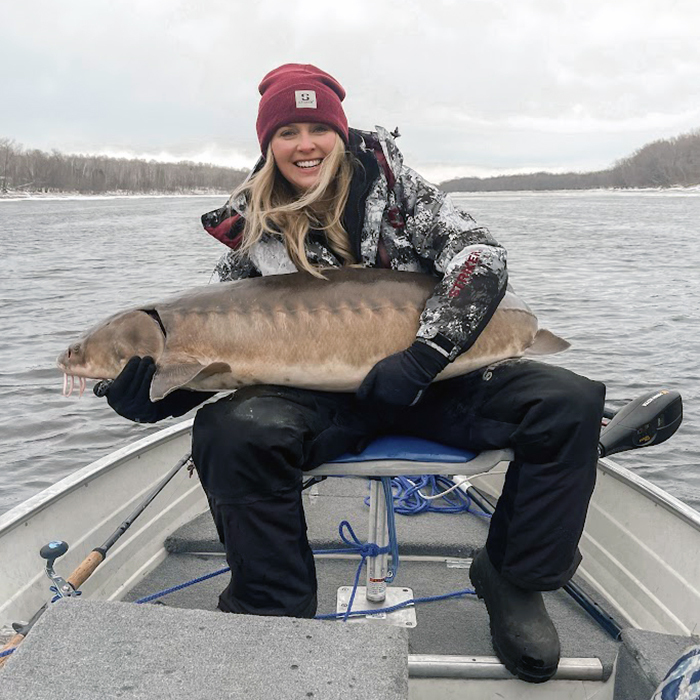
 

Hayley Larson

Hayley Larson making friends with a lake sturgeon.

Why do you do this work?

Growing up, I often accompanied my grandfather to the Cloquet Forestry Center, where he worked. It was there that I was introduced to the field of Natural Resources. Like many, I care deeply about protecting Minnesota’s natural heritage and ensuring these landscapes remain healthy, wild, and resilient for future generations. The work lets me combine my love for science, stewardship, and the outdoors in a way that makes a real, lasting impact that can be enjoyed by everyone.

What gets you excited about your work (and why)?

I get to see real, tangible change on the ground. Watching a prairie come back to life after a prescribed burn, seeing wildlife return to a site I had the opportunity to help restore, or finding a rare plant thriving because the habitat is thriving. Every day and every season brings something different, and I find that energizing and challenging. I love the relationships I get to build with landowners, partners, and volunteers – hearing their backgrounds and stories and what draws them to these beautiful natural spaces.

What are the challenges of this line of work?

One of the biggest challenges in this line of work comes from balancing ecological needs with real-world constraints. Each season brings something new and challenging; how do you plan when you have no idea what the next season will bring? Weather and tight seasonal windows can make it challenging to implement meaningful enhancement projects, thereby limiting the maximum phenological benefit to the community type.

What is your favorite way to spend time outdoors (and why)?

This has evolved over the last year. I used to enjoy running wild across the county in the pursuit of new game species and exploring to my heart's content, but since welcoming our daughter, I’ve slowed down. Wandering a wide-open prairie or traipsing quietly through the woods with my family and dogs — moving at a slow, intentional pace where my daughter can really take in the sounds, the wildlife, and the small details most walk past. Capturing the beauty of these moments through photography and writing. Whether we are exploring, hunting, fishing, foraging or just letting our daughter take in the world around her, these unhurried moments outdoors are where I feel the most grounded and connected.

What is your favorite native Minnesota plant or animal (and why)?

Tied to some of my earliest and most magical memories in the woods. I was always drawn to the Princess pines (Dendrolycopodium obscurum), perhaps it was the fact that it has princess in the name. Princess pine is a common, circumpolar, tree-like species that dapples the forest floor on our property in northeastern Minnesota. Their tiny frame, standing no more than 12”, more often less. Walking the woods after a light snowfall, their evergreen branches stood out against the fresh white backdrop and would catch my eye. Contrary to how I prefer to admire them now, when I was young, I’d often pick small bouquets and proudly leave them scattered around our home.

What is your favorite SNA (and why)?

Pembina Trail SNA – Foxboro Prairie Unit comes to mind because it feels like a picture-perfect prairie comes to life — a place where waves of liatris, sunflowers, and bee balm paint the grasslands in colors all summer long. Every visit holds a little magic, whether it’s a sudden eruption of prairie chickens bursting from the grasses or the quiet thrill of spotting fresh moose tracks. It is also home to some truly stunning orchids, which make wandering the site feel like a treasure hunt. It is the kind of prairie that stays with you — wild, vibrant, and endlessly full of surprises.

Back to top


Donate to the Minnesota Scientific and Natural Areas Unit!
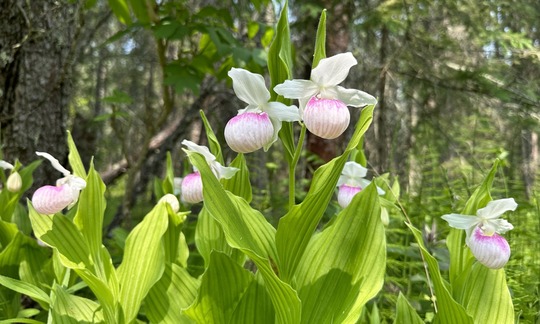
 

Showy lady's slipper

Showy Lady's-Slippers (Cypripedium reginae) at Iron Springs Bog SNA

You can support the preservation of natural places for future generations by donating to Minnesota Scientific and Natural Areas. Your donation supports management and stewardship of natural areas, research to better understand Minnesota’s natural heritage, and the expansion of natural areas and designation of new sites.


Visit the SNA Facebook page!

Notes from Site Stewards

Stephanie Hummel, Statewide Volunteer Outreach Specialist
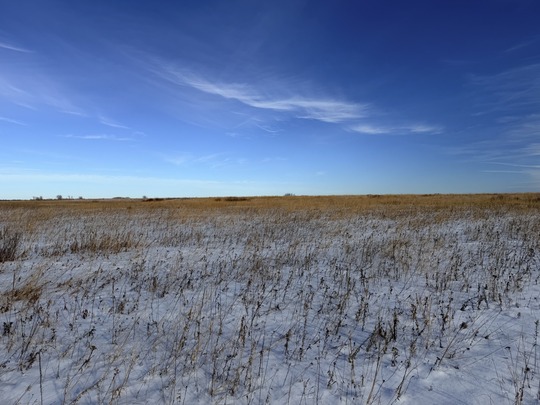
Twin Valley Prairie SNA

Twin Valley Prairie SNA. Photo by Chase Schmidt.
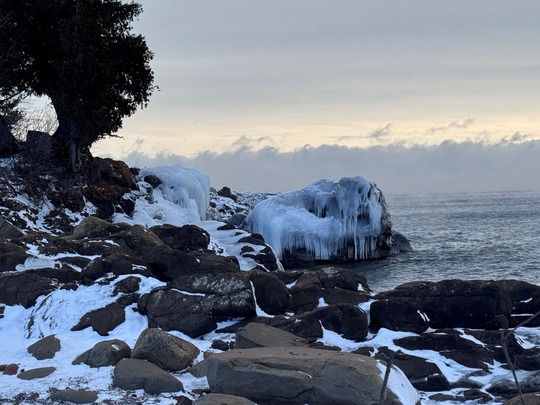
Sugarloaf Point SNA

Sugarloaf Point SNA. Photo by Alexis Donath.

Site stewards monitor SNAs across Minnesota. Their observations provide valuable information to the SNA Program. Fall visits were regularly reported, with a variety of observations and tasks completed.

  • Chase Schmidt site steward at Twin Valley Prairie SNA spent an early January afternoon walking around the SNA. During his visit, he encountered a coyote, sharp-tailed grouse, and a few dark eyed juncos enjoying the quiet winter day.
  • On a blustery January day, Ty Samuels, site steward at St. Croix Savanna SNA, joined SNA staff on a winter birding walk through the SNA. Ty and five other volunteers helped update the SNA’s Bird Checklist by recording all bird observations in eBird. While not many birds were found, the view overlooking the St. Croix River was well worth the chilly walk across the SNA. Another winter birding walk was held at Blaine Preserve SNA on a sunny February day, where site steward Jessica Scott joined 12 other volunteers for the event.
  • Sugarloaf Point SNA site steward Alexis Donath experienced a winter wonderland along Lake Superior’s shoreline during her January visit to the SNA. While walking out toward the tombolo, she noticed pocket mice and snowshoe hare tracks and was treated to shoreline rocks covered in ice and snow drifts that had the texture of frosting.
  • In early winter, Joseph A. Tauer Prairie SNA site steward Ellen Thomas visited the SNA to check in on past management work focused on girdling aspen. She noted that the aspen that were girdled back in 2023 have started to fall down. Girdling, removing a ring of bark and cambium from a tree, stopping the movement of water and sugars throughout the tree, is just one of a handful of techniques SNA staff and volunteers use to remove trees that are encroaching in prairie habitats.

Back to top


SNA Events


Looking for a fun way to get outdoors and give back this winter? Join us for adventures and stewardship activities at SNAs! Keep an eye on the SNA events calendar for more opportunities.

Back to top


Minnesota Native Plant Highlight: Sullivant's Milkweed

By Mike Perry, former SNA volunteer and writer

Asclepias sullivantii or Sullivant's milkweed is a member of the Asclepiadaceae or Milkweed family. The genus name Asclepias commemorates Asklepios the Greek god of medicine. The species name sullivanlii was given the plant to honor William Starling Sullivant (1803-1873). Sullivant was the leading American bryologist (specialist in mosses) of his time. In addition to Sullivant's milkweed other common names for this plant are prairie milkweed and smooth milkweed.
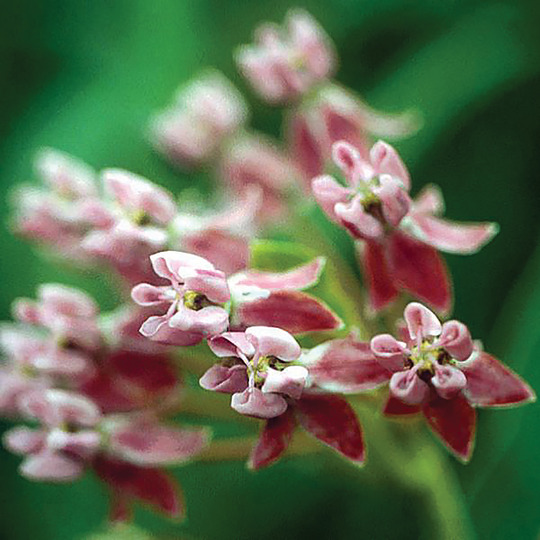
Sullivant's milkweed

Sullivant's Milkweed (Asclepias sullivantii). Photo by Fred Harris, MN DNR.

Asclepias sullivantii is a native perennial plant that is similar in appearance to Asclepias syriaca or common milkweed. Sullivant's milkweed grows in moist prairies and can be found in the south central area of Minnesota. The late Dennis Hageman was responsible for locating 40% of the Minnesota populations. This plant is classified as threatened in Michigan, Minnesota, and Wisconsin.

This plant has a thick unbranched, smooth stem and grows to a height of 3 feet. It can spread by sending up new shoots from underground rhizomes but does not spread as aggressive1y as common milkweed. Broad ovate (egg shaped) leaves up to 6 inches long and 3.5 inches wide grow in opposite locations along the stem. The hairless leaves have reddish mid-veins and are usually strongly upswept. Milkweeds have milky sap that is bitter tasting and toxic. This prevents many herbivores from browsing on these plants.
Monarch butterfly caterpillars feed on these plants and accumulate the cardiac glycosides in the sap that make them a distasteful morsel to predators. The sap has been investigated for use as a rubber substitute.

One or more short stalked umbels (equal length stalks growing from a single point) of pinkish flowers grow from the axils of the upper leaves and bloom in June and July. Each umbel can have twenty or more individually stalked flowers that are almost 0.5 inch wide. Each flower has five deeply reflexed pink petals and five erect pink hoods.

The hoods contain nectar that attracts insects. When the insect lands on the flower their leg slides into a groove that guides their leg to waxy sacks of pollen. The insect becomes stuck to the pollen and must pull out the pollen sack to gain its freedom. When the insect lands on another milkweed it pollinates the flower with the pollen it has attached to its leg. Flowers that are pollinated produce green seed pods called follicles. The follicles of Asclepias sullivantii are up 4 inches long and 1.5 inches wide. These seed pods contain silky-tailed seeds that are dispersed by the wind when the ripe pod splits open.

Native Americans used the milkweed silk to line children's cradles. Early settlers used the silk to line mattresses and pillows and wove it into candle wicks. During World War II milkweed silk was used in place of kapok to stuff life preservers and aviators flying suits. Milkweeds are also edible. Young shoots, flower buds, and seed pods can be added to water then boiled and drained three times before eaten. Blooming flowers can be boiled down to sweet syrup or further processed into jelly.

These native plant stories were written by Mike Perry in the late 1990s and early 2000s for a former iteration of the SNA newsletter. That newsletter was printed and sent to SNA volunteers to keep them updated on volunteer events and stories about the goings-on with SNAs. We hope you find these “re-printed” stories with added photographs of the plants interesting and informative!

Back to top


Nature Notes is the Minnesota Scientific and Natural Areas quarterly newsletter (archive online). It seeks to increase interest, understanding and support of natural areas while promoting involvement in the protection of these special places. Contact us directly at sna.dnr@state.mn.us.


ENRTF LCCMR logo

Funding for this project was provided by the Minnesota Environment and Natural Resources Trust Fund as recommended by the Legislative-Citizen Commission on Minnesota Resources (LCCMR).