|
|
|
June 12, 2025
Elk, also called wapiti in Shawnee and Cree, heȟáka in Lakota, and omashkooz in Ojibwe, roam in three herds in Minnesota. This newsletter is all about Minnesota elk!
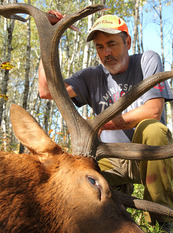
Elk hunt license applications open
Hunters have through Thursday, July 3, to apply for one of four elk licenses offered this year by the Minnesota DNR. Hunters can apply for one of two seasons:
- Two licenses are available to harvest either a bull or antlerless elk in the Caribou-Vita (Zone 30) during the A season, Saturday, Sept. 13, through Sunday, Sept. 21.
- Two licenses are available to harvest an antlerless elk in the Caribou-Vita (Zone 30) B season, Saturday, Sept. 27, through Sunday, Oct. 5.
This is a once-in-a-lifetime hunt for Minnesota residents. Given the reduction in available state permits this year, no tags will be available for the 10-year application history pool or for eligible agricultural landowners who reside within elk range.
There are currently three recognized herds in northwest Minnesota: Grygla, Kittson Central and Caribou-Vita. The Grygla area zone remains closed to state-licensed elk hunters, and this year the Kittson Central zone will also be closed to state-licensed hunters.
|
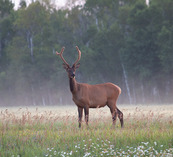
Why fewer elk permits this year?
The Minnesota DNR reduced opportunities for elk harvest this year to make sure Minnesota’s elk populations continue to thrive. The number of permits available is based on the lower-than-expected number of elk counted during the 2025 aerial flights and recent trends in population growth. We’ll continue to work with Tribal nations, local landowners, agricultural producers, legislators, local government officials and state agencies to manage Minnesota’s elk sustainably.
For more background on elk management in Minnesota, check out the DNR’s elk management webpage.
|
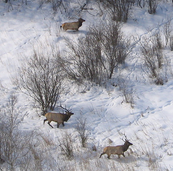
DNR aerial elk survey report posted
The Minnesota DNR completed its annual aerial elk population survey over the winter in northwest Minnesota, in Kittson, Marshall, Roseau and Beltrami counties where elk are found in three distinct herds, or groups. The survey report and reports from past years are posted on the DNR’s elk management webpage.
The DNR conducted the survey Jan. 5-7 when weather and snow conditions allowed managers the best opportunity to effectively see and count individuals and groups of elk. A total of 233 elk were counted in the Grygla, Kittson Central and Caribou-Vita herds in the 2025 elk survey.
Aerial surveys are vital to elk management in Minnesota. Survey data are used to monitor long-term trends, document changes in elk spatial distribution and sex ratios and help set harvest quotas for potential hunting seasons.
|
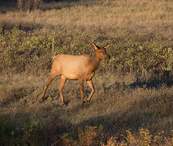
Elk facts: What do elk eat?
Elk food preferences vary with the time of year. Among natural foods, grasses and forbs comprise the bulk of the diet during the snow-free period. Woody browse is consumed during late fall and winter when herbaceous forage is less abundant or covered by deep snow.
Elk also use agricultural crops, particularly those adjacent to wild land where they can feed without venturing far from cover. Sunflowers, soybeans and oats are favored crops. Corn, wheat and barley also are eaten. Alfalfa is used during spring green-up and late in the fall. Baled alfalfa and grain are highly preferred winter foods where available, especially during winters with deep snow.
Photo courtesy of the USFWS
|
|
|
|
|
Learn about elk
Find more information about elk natural history, recreation, research and management on the Minnesota DNR elk webpage at mndnr.gov/elk. You can report elk you see by using our elk sightings tool. We also welcome photos you may have of Minnesota elk and you can send them our way with our photo uploader.
Hunters, trappers and wildlife watchers benefit from the management, habitat and oversight work of the Minnesota DNR’s area wildlife office staff. Have question, comment or concern? Area wildlife staff are happy to talk with you!
|
|