|
Staff Newsletter | Minnesota Department of Natural Resources |
|
|
March 17, 2023
In This Issue
|
|
Looking to the future of public lands with the DNR's Heritage Forest project
 By Cheri Zeppelin, regional information officer
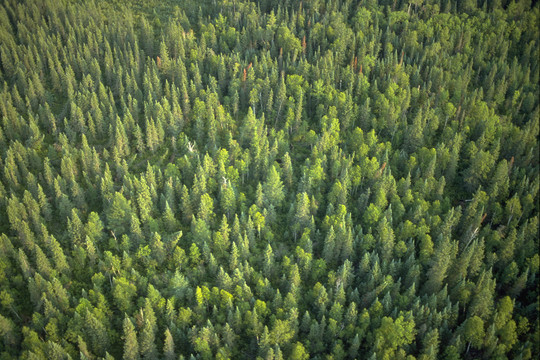
When large tracts of forest lands are sold, there are often concerns about habitat loss or fragmentation, loss of public access for recreation, and loss of resources that provide ecosystem services and support natural resource economies. The DNR's Heritage Forest Team is working to avoid those scenarios on a current project in northern and north-central Minnesota.
The team was formed when wood products company PotlatchDeltic sold 74,000 plus acres of Minnesota industrial forestland to The Conservation Fund in 2020. Since that time, TCF has been working with DNR, Tribal Nations, and conservation partners to find permanent conservation homes for those lands.
As part of that work, the DNR stood up the multi-discipline Heritage Forest Team to assess available lands against established Strategic Land Asset Management (SLAM) goals and make a recommendation for acquisition. County-based teams were employed to tap local staff expertise to identify local needs and opportunities, and they have been instrumental in early coordination with local governments. The team did not consider purchasing lands located within Tribal boundaries and consulted Tribes on lands in ceded territory. TCF is working directly with Tribes on lands within Tribal boundaries.
The teams are nearing the completion of assessment work on lands scattered in 14 counties and have identified about 15,000 acres of high-value priority parcels across nine of those counties. Support from local governments has been encouraging of the DNR’s goals to maintain public access, conserve working forests and wildlife habitat, and protect water quality with this acquisition. The Northern Waters Land Trust is working on behalf of counties interested in acquiring lands that are a priority for counties to acquire and manage.
The team is beginning to piece together a funding package and hopes to submit a proposal to the Lessard-Sams Outdoor Heritage Fund Council later in 2023 for DNR acquisition. None of that can happen until appraisals are completed and the DNR and TCF agree on a selling price, but Minnesota could have a new state forest, SNA, and WMAs in its future.
Correction: A previous version of this newsletter said the land was sold to The Nature Conservancy. The PotlatchDeltic lands were sold to The Conservation Fund.
|
|
Prospective conservation officers flock
to open house
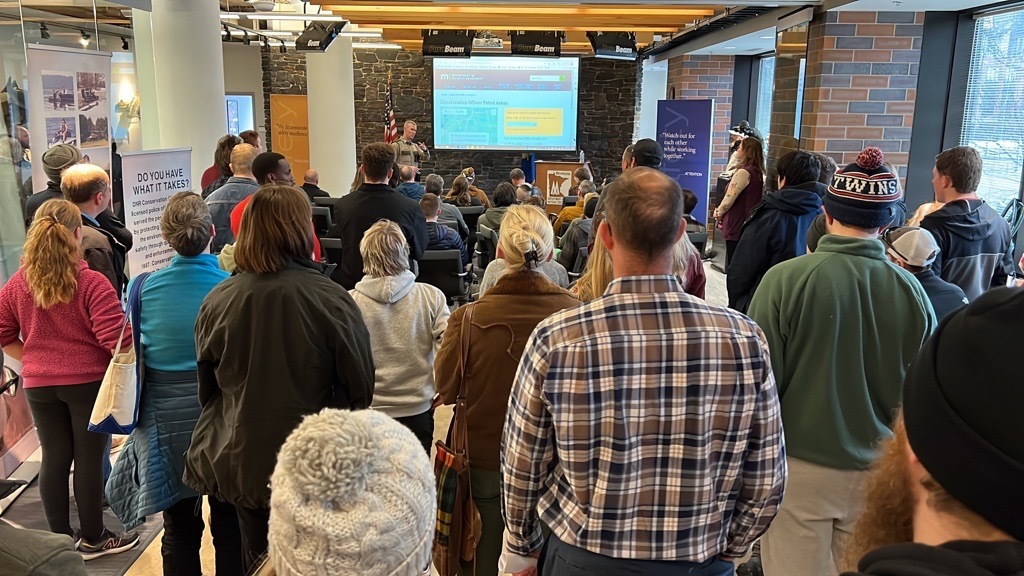 Top: Capt. Jeff Johanson, the Enforcement Division’s training and recruitment manager, kicked off the career fair with a presentation. Below: Conservation Officer Mike Lerchen appears on Fox 9 to talk about the CO Prep program.
As part of the recruitment effort for its CO Prep program, the Enforcement Division held a career fair at the Central Office on the afternoon/evening of March 15 to provide people an opportunity to learn more about the program and ask questions of current conservation officers. An estimated 250-300 people attended the open house-style event, which ran from 4 to 7 p.m.
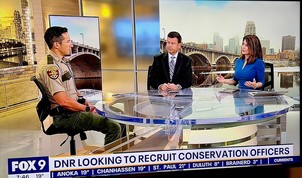
The CO Prep program was created in 2015 to help create a conservation officer workforce that more closely reflects the people of Minnesota. Applicants need at least a two-year degree in any discipline and a love for the outdoors. The current application period runs through March 31. Those accepted into the program will receive their law enforcement training later this year and early next year at Hennepin Technical College, then attend the CO Academy in 2024.
In addition to the event in St. Paul, Enforcement is holding a second career fair on Monday, March 20 from 4 to 7 p.m. at the Fond du Lac Tribal and Community College in Cloquet.
|
|
|

Set the example and join our weather team
Easy volunteer opportunity available for DNR employees, alumni
By Luigi Romolo, State Climatology Office
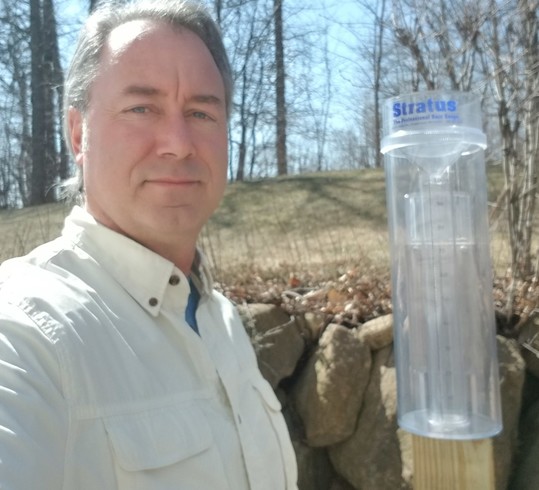 The Minnesota State Climatology Office and the National Weather Service would love for you to join our weather team by volunteering to be a rainfall monitor for the Community Collaborative Rain, Hail and Snow Network, or CoCoRaHS.
CoCoRaHS is a nationwide grassroots effort of volunteers who measure precipitation in their backyard using a standard 4-inch rain gauge. Volunteers can measure rainfall, snow and (with the use of a Styrofoam pad) hail size. In addition to this, our volunteers can submit condition monitoring reports which provides us with the type of qualitative information that we just cannot get from weather instruments. For example: “my grass is turning yellow because it has been very dry lately” or “the leaves on my trees are starting to wilt."
Why do we need your help?
Data from our volunteers has proven to be invaluable in helping us:
- Monitor drought and improve flood monitoring efforts
- Improve the accuracy of precipitation maps
- Verify extreme events
- Flag automated rain gauges for potential calibration
- Fill in gaps where there is little to no coverage in precipitation measurement
- Provide measured values in areas where there are gaps in radar coverage
- Provide guidance on Minnesota’s changing climate
How do you join CoCoRaHS?
All you need to do is sign up at CoCoRaHS.org, and purchase or provide a 4-inch rain gauge. Rain gauges cost $35 and can be purchased here.
If I don't want to purchase a rain gauge, can I still sign up?
Yes, you can still join CoCoRaHS and are welcome to report snowfall, snow depth, significant weather reports and condition monitoring reports.
Why should DNR employees and alumni volunteer?
As of March 15, we have recruited more than 400 volunteers. This is a tremendous opportunity for you to set the example and show our state that we are committed to citizen science. We have already had many DNR employees join CoCoRaHS, but we would like to issue a challenge of getting 50 more signed up before the end of the month. Because our employees are spread across this great state of ours, it is also an opportunity for us to diversify our network and fill in gaps in coverage. It's also a great way to get children more involved in science!
For more information about being a CoCoRaHS volunteer, please contact Minnesota State Climatologist Luigi Romolo at luigi.romolo@state.mn.us
|
|
Auto-alt text to be turned off in Microsoft Office
Sometimes something sounds great but doesn't quite work. In our case, it's the automatic alternative text (alt text) feature in Microsoft Office. Auto-alt text is a computer-generated description of an image or graphic. While a promising technology, it has not evolved enough to be a replacement for human-created alt text.
Here are few of examples of poor auto alt text in DNR documents:
|
|
Auto-alt text: A picture containing person, person, headdress, wearing |
|
Auto-alt text: A large waterfall with trees in the background. |
|
Auto-alt text: A picture containing text |
|
|
The DNR is turning off the auto-alt text feature for all DNR and MNIT DNR staff to prevent unhelpful image descriptions.
Change details
- Auto-alt text will be turned off for Microsoft Word, PowerPoint and Outlook.
- Please connect to VPN to trigger the change.
- It might take a couple days for the changes to take effect.
- The changes will only affect the desktop version of Office 365.
- DNR and MNIT DNR are affected.
- It will only apply to Windows machines, not Macs.
|
|

The wild turkey's big comeback
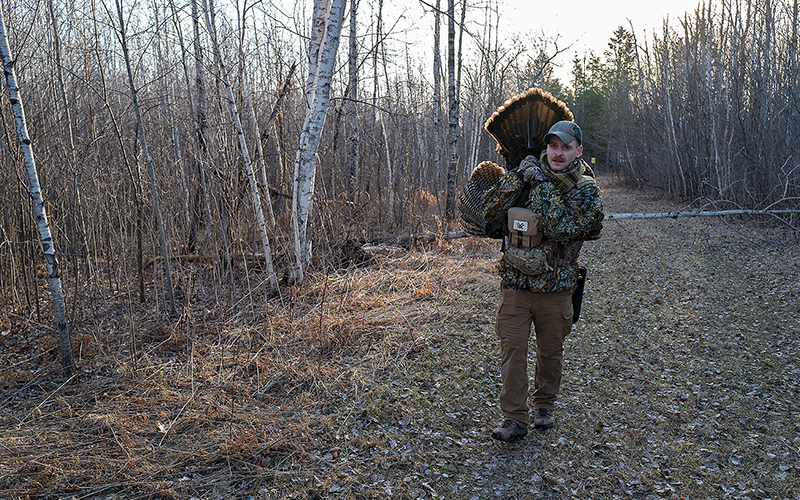 Photo credit: Mike Dvorak
Wild turkeys, native to southern Minnesota, were once wiped out from the state’s landscape. However, thanks to a decades-long restoration that began in the 1970s, they’re back in a big way and have even expanded well north of their original range. Now turkey hunters can bag a bird in places as far north as the Mille Lacs Lake area and beyond.
The bird’s wildly successful restoration was a partnership between the Minnesota Department of Natural Resources and the National Wild Turkey Foundation, which was founded in 1973 and worked with state agencies across the country to bring turkeys back. The first turkeys in Minnesota’s restoration were released near Caledonia in the southeastern Driftless region in the winter of 1972-73. By 1978, there were already enough turkeys in the state for a spring hunting season, with more than 5,000 hunters applying for 420 licenses. By 2021, more than 58,000 licenses were sold and more than 12,000 birds were taken annually. Licenses for the 2023 spring season are now on sale.
Last spring, Minnesota Conservation Volunteer freelance writer Tom Hazelton stalked turkeys on public land in north-central Minnesota with his cousin and hunting partner Hazen Elmgren. Hazelton’s story for the March–April issue of MCV takes readers along as these determined hunters seek the spring gobblers of their dreams on opening day.
Minnesota Conservation Volunteer is the magazine of the DNR. Supported by reader donations, its mission is to encourage conservation and sustainable use of Minnesota’s natural resources. For more info, visit mndnr.gov/MCV or subscribe.
|
|

Building Maintenance Lead Worker
LaDonne Edelman
|
|
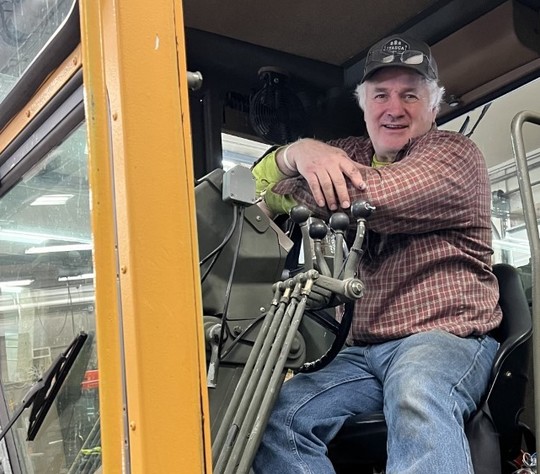
A LaDonne of all trades
By Deborah Locke, Parks and Trails information officer and Sara Berhow, Parks and Trails integrated public relations supervisor
After working at Itasca State Park since his teenage years, LaDonne Edelman is part of the fabric of the park. You will see the impact of his work, but it’s likely you wouldn’t actually see Edelman on a visit to Minnesota’s oldest state park. He has worked in a variety of roles over his 43-year state parks career, all in behind-the-scenes positions. Before moving to his current job in 2008, Edelman was a dishwasher at Douglas Lodge, a parks associate, and a buildings and grounds seasonal staffer.
“I climbed the job ladder,” Edelman said. “Some of the rungs were long, but I climbed.”
In his four-plus decades working at Itasca, Edelman has done a lot of different things, sometimes tasks he never expected to do. An example is the time he used a snowmobile to rescue a cross country skier who was injured and needed assistance to get off the trail and to medical attention. He has used a variety of equipment and tools from the small and simple, such as a Scotch pad, to the big and complicated, like a hoist that picks up vehicles.
|
 Work Location: Itasca State Park
Job title: Building maintenance lead worker
Years at DNR: 43
Hobbies: Tinkering with cars, tractors and more. Edelman is essentially a mechanic at home, too.
Words of wisdom: "Work hard. You get back what you give."
|
|
|
There is no such thing as a typical day for Edelman. He claims the best part of his job is that every day is different. His days at work bring variety and use the vast array of skills he’s developed over his career. New tools and technology make his job easier, and he has learned to make use of resources like YouTube to find solutions, tips and tricks to fix the things that need fixing within the park. Edelman is a team player who jumps in to help on whatever task is needed. He has cut trees, plowed snow and repaired many kinds of vehicles and equipment. He isn’t usually interacting with the public, but Edelman might get called to assist a visitor with a flat tire or a problem with a camper hitch. He spends much of his work hours in the park’s shop, but is ready to head out to any spot in the park where he may be needed.
Working at Itasca State Park has provided much more than a paycheck to Edelman. He met his wife, Donna, at the park in 1997 when she worked as a guest services representative. Donna no longer works at the park, but she’s still with the DNR. Donna works at the forestry office in Park Rapids as an office administration specialist.
“I have spent my entire 43 years of work in this park and played in all of its 36,000 acres,” Edelman said. “It’s like a big playground. My favorite place is the shop. I wouldn’t trade my job for any other position.”
|
|

Coming soon to an access near you
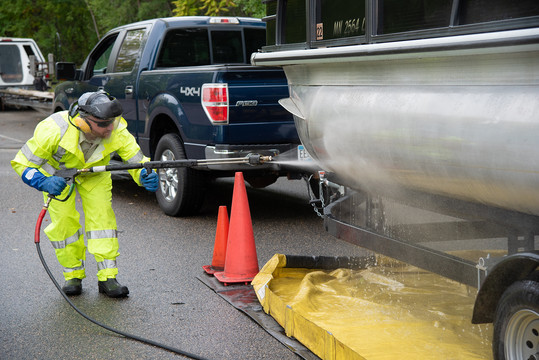 Photo credit: Deb Rose
A DNR watercraft inspector is decontaminating a pontoon boat with hot water to help prevent the spread of aquatic invasive species. With the help of our partners, nearly 1,000 watercraft inspectors are working at lakes and rivers across Minnesota to help teach boaters how to thoroughly inspect their watercraft. If you would like your watercraft decontaminated, please visit mndnr.gov/decon to find locations near you.
|
|
Submit to Spotlight
Send Spotlight articles and photos to newsletter.dnr@state.mn.us.
Next Spotlight is scheduled for April 7. Deadline for content is April 5.
|
|
|
|
|