|
Staff Newsletter | Minnesota Department of Natural Resources |
|
|
Dec. 16, 2022
In This Issue
|
|
Safety Standup kickoff event scheduled
 Safety is a core value at the DNR and an integral part of our Culture of Respect. When you work safely, it shows your colleagues how much you value them.
The DNR is embarking on a Safety Standup campaign to reinvigorate our safety culture and enhance our safety practices. The campaign starts with the Safety Standup Kickoff event. It is an opportunity to hear an overview of safety at our department, personal safety stories from staff, and how we can better live out our commitment to safety.
The Safety Standup Kickoff is a required event for all DNR employees, so please plan to attend one of the virtual sessions:
- Wednesday, Jan. 4, 9:30-11 a.m.
- Tuesday, Jan. 10, 9:30-11 a.m.
- Wednesday, Jan. 11, 1-2:30 p.m.
Calendar invites and WebEx information were provided in a recent email from Commissioner Sarah Strommen on Monday, Dec. 12.
|
|
Information session on upcoming Continuous Improvement training to be held Dec. 20
 Enrollment is opening soon for a Green Belt training cohort. The training will start at the end of January and finish in early May.
|
|
|
Who?
This training is for employees at any level.
Why?
We can all help to make our work and processes more efficient and effective. Employees who have a passion for making things better and improving morale seem to particularly enjoy this training.
Employees will learn the DMAIC method, a structured approach to process improvement and problem solving that can be applied to simple or complex process challenges throughout a career.
What?
Green Belt training prepares employees to lead process improvement projects. Trainees apply the training concepts to a project by creating a process map, measuring a process and analyzing it to identify challenges, facilitate root cause analysis discussion, and lead a team through identifying and implementing solutions.
|
|
When?
The 10 training days (about 40 hours total) will be on Thursday and Friday mornings for five weeks between January and May, with another day for the certification exam and presentations in early May. Specific dates will be available soon.
Where?
Training will be delivered live, through interactive sessions on Microsoft Teams led by Tom Moore, an instructor with St. Cloud State University.
How?
Supervisor support and financial approval is needed to enroll.
Join us at 11:30 a.m. Tuesday, Dec. 20 for a no-obligation info session to learn more about the training and tips on identifying a project.
Questions?
Contact Laura Grunloh. You can also read a summary about one of the 2022 cohorts on the Intranet.
|
|
DNR icons available for Microsoft users
|
|
|
The Creative Services Unit has created a set of 80 icons for DNR employees to use. These transparent and scale-able icons are available in the State of Minnesota brand colors and with or without a background circle.
To use the icons in Microsoft Office programs:
- Open a file
- On the tool bar, select "Insert"
- Select "Pictures" then "This Device..."
- Open the "DNR-CSU-ICONS" folder
- Depending on the icon you're looking for, open the folders to choose a color and then to choose if you want a background
- Insert the icon
|
|

Give the gift of MCV
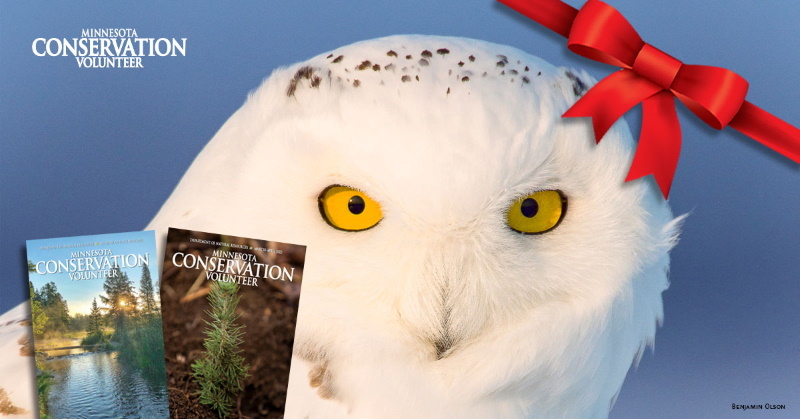 The MCV magazine is packed with beautiful nature photography and compelling stories about Minnesota’s outdoors, making a subscription the ideal gift for nature lovers. Recipients receive a one-year subscription to the magazine and a card announcing the gift. Purchasers can contribute any amount to gift an annual subscription. The suggested donation for an annual subscription is $25. The gift can be purchased on the gift subscription page of the MCV website.
Minnesota Conservation Volunteer is the magazine of the DNR. Supported by reader donations, its mission is to encourage conservation and sustainable use of Minnesota’s natural resources. For more info, visit mndnr.gov/MCV or subscribe.
|
|
Kudos from Minnesotans
A Passport Club story
"We started our Passport adventure when our son was three, with a goal to finish it by the time he left for college — which we did, just barely, this August. We spent several MEA weekends staying in small towns (Willmar, Biwabic, Grand Rapids, Pipestone, and one year it was warm enough to camp at Minneopa) and exploring the parks in the vicinity over the four-day weekend.
Our adventure began because my husband had visited many of the parks with his family as a child, in the 1970s and 80s, and later as a college student. We wanted our son to have the same appreciation for our state and nature that these trips had instilled in my husband. On our visits, we always stopped in visitor’s centers if they were open, or chose interpretive hikes if we could, and we thought the DNR did a good job of balancing the history of (Native American tribes)
with settlers, and mixing in information about the natural world.
Thanks to the Passport program, we had a fun hook to get our son excited about these park visits. After awhile, he just loved going to the parks for the visits themselves. On one of our last park visits, he told us that he hopes he finds a partner who will visit all of the parks with him someday. Who knows where life will take him — but the parks managed to create one more generation of nature lover in my family.
Thank you for everything you and others at the DNR do to preserve and promote the history and natural beauty of our state."
— Submission from a Passport Club member
|
|
Get started on your own adventure by joining the DNR's Hiking and Passport clubs, or gift the books to someone else for the holidays!
The Hiking Club will take you to 68 trails at state parks and recreation areas, while the goal of the Passport Club is to visit each one of Minnesota's state parks and recreation areas — from A to Z, Afton State Park to Zippel Bay State Park.
The books are available for $14.95 each and can be purchased in Nature Stores or online.
|
|
Dealing with grief, depression during the holidays
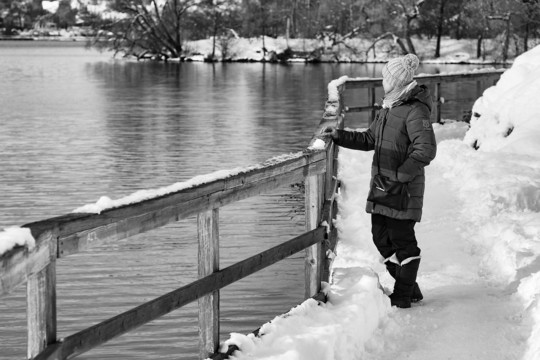
Holidays can be a very difficult time for people who have experienced the death of a loved one. Memories of good times and togetherness can bring forward heavy feelings of loss.
Everyone experiences grief differently. You might feel or witness someone going through any of the five stages of grief: denial, anger, bargaining, depression and acceptance. Everyone has their own unique grief experience and may have different needs related to celebrating holidays. No one way is right or wrong — even experiencing joy and laughter does not mean you have forgotten a loved one.
When you are experiencing grief or depression:
-
Try to avoid isolation. It may be supportive to avoid some circumstances you don’t feel ready for, but try not to isolate yourself. It’s healthy to allow yourself to feel joy, sadness, anger and grief. Seek to balance the time you need for solitude with time spent with others.
-
Experiment with different ways to support yourself. Physical exercise or writing in a journal can be good outlets for grief. Some people find comfort in the old traditions, but creating new traditions can also help with adjusting to holidays without loved ones.
-
Express yourself. It’s normal to have a hard time with loss. If you need an afternoon to cry or laugh, or both, that’s OK.
-
Share memories. If you are ready, talking about missing a loved one can be therapeutic and often can lead to more comfortable and warm conversations with loved ones.
Helping a loved one:
In general, the best way to support others grieving during holidays is to simply let them know you care. Simply listening if they want to talk can also go a long way. Here are some things you could say:
- “I don’t know how you feel, but I would love to listen if you want to talk about it.”
- “I wish I knew the right words to say, I am just so sorry for your loss.”
- “My favorite memory of your loved one is…”
Talking about it:
Share how you are feeling or contact our Employee Assistance Program for support in navigating grief and depression or helping a loved one. You can speak with a counselor or browse resources any time, day or night, even on holidays:
-
Call: talk to a counselor any time who can assist you right away by calling 1-800-657-3719 or 651-259-3840.
-
Click: browse a comprehensive online library of resources or connect by email. Visit the LifeMatters website and use “stmn1” to sign in.
-
Text: text “Hello” to 61295 to chat with a counselor.
For more information about EAP services, head to the MMB EAP Work/Life Counseling website. For more information about employee wellbeing resources, visit the wellbeing page on the Intranet.
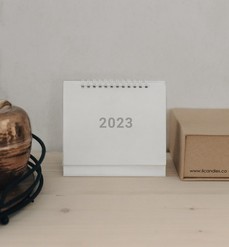
2023 Spotlight schedule
Spotlight is the employee newsletter for the Minnesota Department of Natural Resources. It is distributed on the first and third Fridays of the month to current DNR employees and alumni.
Submissions are due the Wednesday before distribution. Send Spotlight articles and photos to newsletter.dnr@state.mn.us.
 |
|
- Jan. 6, 20
- Feb. 3, 17
- March 3, 17
- April 7, 21
- May 5, 19
- June 2, 16
- July 7, 21
- Aug. 4, 18
- Sept. 1, 15
- Oct. 6, 20
- Nov. 3, 17
- Dec. 1, 15
|

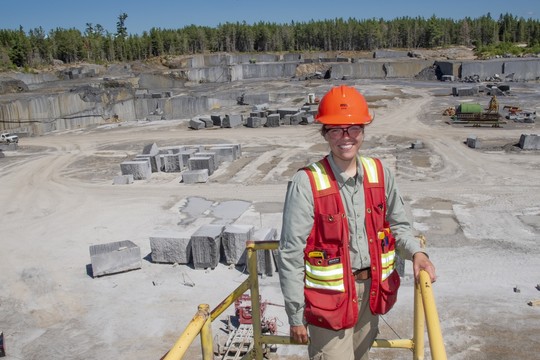
Geologist Cheyanne Dusek
|
|
An introverted geologist’s dream job
By Mollie Gudim,
Lands and Minerals information officer
Cheyanne Dusek has great memories of exploring her family’s forested farmland and hunting for the perfect rocks to add to her collection. Studying rock formations might have only been a hobby back then, but young Dusek made a prophetic declaration.
“I told my family that one day, my job would be to run around the woods and look for rocks all day,” she said.
The moment she caught her first fish or hunted on family land, Dusek felt drawn to the outdoors. Still, she was most curious about the rocks underneath her feet. She quenched her curiosity by studying the earth as told by rocks, and three days after graduating with a geology degree from North Dakota State University in 2015, Dusek became a chemist aid in the chemistry lab at DNR’s Hibbing Office. One year later, she became a research scientist in charge of the state’s dimension stone inventory, dating back to 1989. The dataset identifies areas of northern Minnesota’s geologic landscape with the greatest potential for developing dimension stone quarries. She inherited the inventory from Matt Oberhelman, who was retiring.
“Matt’s previous exploration work is the reason why there are four operating dimension stone quarries in northern Minnesota,” she said. “I was intimidated by the responsibility of continuing the inventory, but Matt was a great mentor and I was excited to do the work.”
|
 Title: Exploration Compliance Administrator
Work location: Hibbing
Been at the DNR: Seven years, since 2015
Education: North Dakota State University
Hobbies: “We spend a lot of time at our cabin near Lake Vermillion, we love hunting, hiking, and gardening. When I can’t be outside, I’m crocheting.”
Family: Husband, Austin, who worked for DNR as a mining aid from 2016 to 2017.
|
|
|
Dusek studied high-resolution LiDAR maps, aerial photography and GIS data to find large deposits of granite, gabbro and anorthositic rocks.
“I love to wander in the woods, but without technology to assist the search, it would take decades of boots-on-the-ground work to find the right intersection of exposed rock and state lands,” she said.
After narrowing down areas to conduct in-person surface evaluations, it was time for Dusek’s favorite part of the research process.
"In the wilderness looking at outcrops is an introverted geologist’s dream job,” she said.
|
|
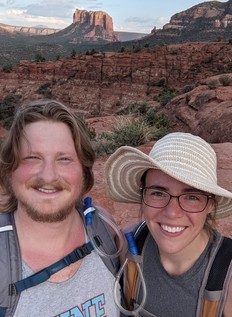
Back in the office, Dusek spent time managing the inventory database and working closely with companies to promote Minnesota’s dimension stone prospects on school trust lands.
“The most striking part about stone quarries is the location. I’d drive along forest roads to the middle of nowhere until I reach a huge rock face and piles of stones surrounded by deep woods,” Dusek said.
These days, Dusek dons personal protective equipment at active drilling sites more often than at stone quarries. As exploration compliance administrator, Dusek conducts field visits to make sure that exploration companies comply with state laws for investigations below the earth’s surface to locate undiscovered mineral deposits in Minnesota, such as copper and nickel.
Once a company has a mineral lease to explore on state mineral lands, Dusek works closely with explorers to help develop and approve an effective exploration plan that can include rotosonic drilling, ground or downhole geophysics, and sampling earthen materials through diamond core drilling.
“My work with DNR has been supported by multiple mentors,” she said. “I learned everything I know about drill site inspections and exploration plans from (retired DNR Exploration Compliance Administrator Glenn Melchert).”
If a plan includes drilling, it is important for Dusek to make sure that the natural elements of the area being drilled stay clean and protected. Additionally, Dusek ensures that every aspect of drilling activity, including sealing drill holes, follows the state’s regulations.
|
|
|

A blanket of snow
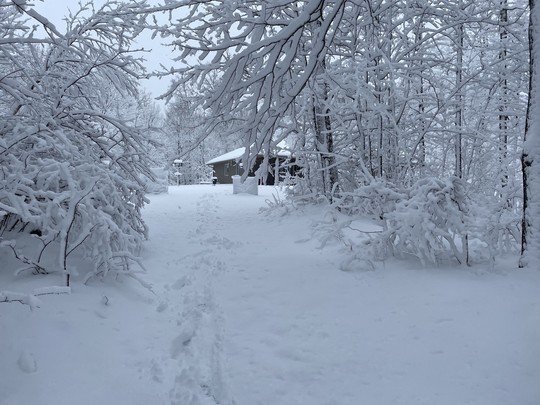 Photo credit: Cheri Zeppelin
The recent snowstorms made a walk to the mailbox more of a trek
in northern Minnesota.
|
|
Submit to Spotlight
Send Spotlight articles and photos to newsletter.dnr@state.mn.us.
Next Spotlight is scheduled for Jan. 6. Deadline for content is Jan. 4.
|
|
|
|
|