November is National Veterans
and Military Families Month
 Cards of appreciation for DNR veterans.
This month, our nation honors the strength and sacrifices of our service members, their families, caregivers, and survivors. It’s a time to pay respect for the bravery and dedication of all who have worn the uniform, and to the unwavering support of those who stand alongside them.
In honor of Veterans Day, DNR staff composed 425 heartfelt notes of gratitude, which were forwarded to our veteran colleagues.
“The work ethic, discipline, teamwork, and reliability they displayed during their military service are the same qualities that benefit DNR’s work and workplace,” Commissioner Sarah Strommen said in an email to DNR staff.
The Beyond the Yellow Ribbon team is currently updating the strategic plan for how DNR intends to continue our military support and recruitment efforts. This month, and always, we salute our veterans and those who have served alongside them.
If you are connected to the military, you can voluntarily self-identify to the Beyond the Yellow Ribbon team through a short survey.
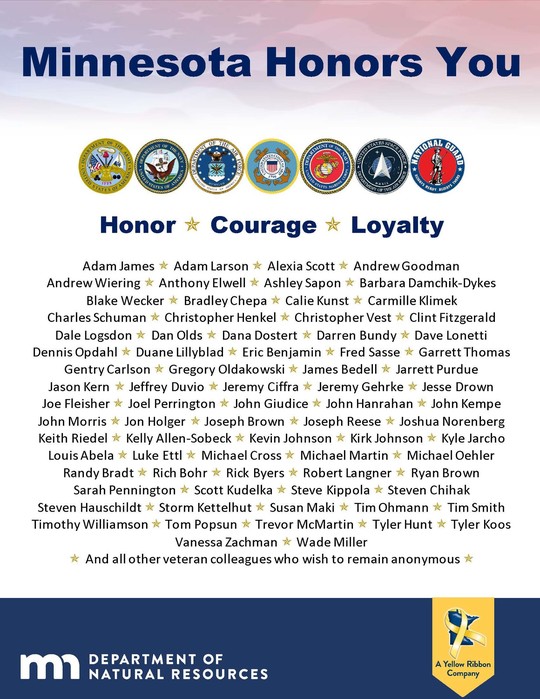 Adam James, Adam Larson, Alexia Scott, Andrew Goodman, Andrew Wiering, Anthony Elwell, Ashley Sapon, Barbara Damchik-Dykes, Blake Wecker, Bradley Chepa, Calie Kunst, Carmille Klimek, Charles Schuman, Christopher Henkel, Christopher Vest, Clint Fitzgerald, Dale Logsdon, Dan Olds, Dana Dostert, Darren Bundy, Dave Lonetti, Dennis Opdahl, Duane Lillyblad, Eric Benjamin, Fred Sasse, Garrett Thomas, Gentry Carlson, Gregory Oldakowski, James Bedell, Jarrett Purdue, Jason Kern, Jeffrey Duvio, Jeremy Ciffra, Jeremy Gehrke, Jesse Drown, Joe Fleisher, Joel Perrington, John Giudice, John Hanrahan, John Kempe, John Morris, Jon Holger, Joseph Brown, Joseph Reese, Joshua Norenberg, Keith Riedel, Kelly Allen-Sobeck, Kevin Johnson, Kirk Johnson, Kyle Jarcho, Louis Abela, Luke Ettl, Michael Cross, Michael Martin, Michael Oehler, Randy Bradt, Rich Bohr, Rick Byers, Robert Langner, Ryan Brown, Sarah Pennington, Scott Kudelka, Steve Kippola, Steve Chihak, Steven Hauschildt, Storm Kettelhut, Susan Maki, Tim Ohmann, Tim Smith, Timothy Williamson, Tom Popsun, Trevor McMartin, Tyler Hunt, Tyler Koos, Vanessa Zachman, Wade Miller and all other veteran colleagues who wish to remain anonymous.
Firearms deer season opened Nov. 5
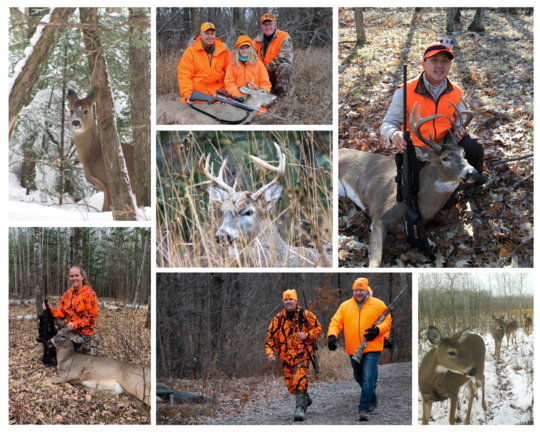
The 2022 Minnesota Governor's Deer Hunting Opener was held Nov. 3-5 at Elm Creek Park Reserve. The Governor's event was established in 2002 to highlight and celebrate Minnesota’s white-tailed deer hunting tradition.
As part of the Governor's opener, the DNR hosted a deer management listening session and hunters' reception. At the listening session, there was a small group discussion about supporting healthy deer populations, and deer hunting and deer observation in ways that benefit individuals and communities. At the reception, officials from the DNR and other organizations talked about the importance of deer management, deer hunting and tourism to the state's economy, how to make hunting and outdoor recreation welcoming to all Minnesotans, and more.
The firearms deer hunting season opened Nov. 5. Some 400,000 people look forward to and participate in the firearms deer hunting season annually in Minnesota — and 125 of them participated by hunting at Elm Creek Park Reserve. Successful harvests were weighed, aged and sampled for chronic wasting disease. Overall, 51,329 deer were harvested during opening weekend.
Give thanks to your colleagues by nominating them for a Commissioner's Award
 Deadline for nominations is Friday, Dec. 9
As we head into the Thanksgiving holiday, it's a great time to reflect on the outstanding work your coworkers did in 2022 — and recognize that work by nominating them for the annual Commissioner's Awards!
The Commissioner’s Awards provide an opportunity to honor individuals and teams across the DNR who have gone “above and beyond” in their work during 2022 and who exemplify the DNR's mission and values. Over the next few weeks, reflect on the many achievements of the past year and nominate colleagues who have been most critical to those successes.
The nomination categories for 2022 are:
-
Natural Resources Conservation: The work meaningfully contributed to our efforts to conserve and enhance the state's waters, natural lands, and diverse fish and wildlife habitats.
-
Natural Resources Economy: The work significantly contributed to our efforts to develop and sustain strong job markets, economies and communities across the state.
-
Outdoor Recreation: The work greatly supported and promoted Minnesota's outdoor recreation opportunities in order to meet the needs of new and existing participants.
-
Operational Excellence: The work demonstrated operational excellence and continuous improvement in service to internal and external customers. This may include achievements in promoting a culture of safety at DNR.
The awards are intended to acknowledge work that occurred during 2022, or the final result of multi-year efforts that concluded in 2022.
See the Commissioner's Awards Intranet page for more information and to access the links for the online nomination forms.

Give the gift of MCV
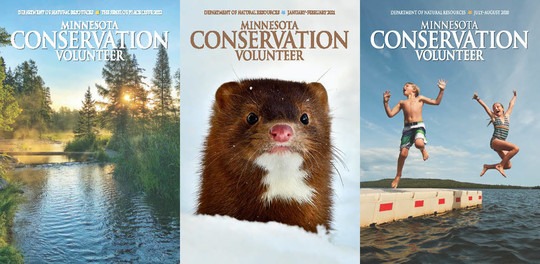
By Chris Clayton, editor-in-chief
Happy November, DNR peeps! Anyone else feeling strong holiday vibes after this recent snowy stretch? Speaking of which, if you’re stumped about what to give the nature lovers in your life this holiday season, consider a gift subscription to the Minnesota Conservation Volunteer. Donate to the magazine (the amount is up to you) and your subscription recipient will get six issues of MCV, each packed with gorgeously-rendered stories about Minnesota’s outdoors.
Here are a few examples of the types of articles the recipient will enjoy:
November–December 2022
Through Huellas Latinas Hiking Club, Luisana Mendez Escalante shares the healing power of outdoor activity.
November–December 2022
Family members bond during a memorable morning on a hallowed hunting ground.
March–April 2022
All-terrain wheelchairs are changing lives at Minnesota state parks.
March–April 2022
At North Shore state parks and elsewhere, ideas about replanting for climate resilience are taking root.
Minnesota Conservation Volunteer is the magazine of the DNR. Supported by reader donations, its mission is to encourage conservation and sustainable use of Minnesota’s natural resources. For more info, visit mndnr.gov/MCV or subscribe.
Create a culture of fraud prevention

Though Fraud Awareness Week (Nov. 14-18) is wrapping up, learning how to prevent fraud, waste and abuse of state assets and resources will continue to be vital for the DNR and its employees. About 18% of occupational fraud happens in a government setting, averaging $138,000 in loss per incident.
Fraud results in a loss of public funds and resources, increased cost of government services, reputational harm, fewer funds for operations and technology, and more. The significant repercussions of fraud make it important for all employees to learn how to prevent, detect and report fraud.
Prevent fraud
The first step in combatting fraud is trying to make sure it never happens in the first place. You can do this by identifying risks and putting in controls to address those risks. Common fraud risks include lack of documentation, changes to the control environment such as new personnel or programs, employee access to agency systems, avoidance of internal controls, and weak cybersecurity and physical security.
You can use the risk mitigation checklist from Minnesota Management and Budget to help you proactively identify risks and respond appropriately.
Detect fraud
The median duration of a fraud scheme is about a year and causes a loss of $8,300 per month. You can help detect fraud by being on the lookout for the fraud triangle, or the three things needed for prime fraud conditions – pressure or incentive driving someone to commit fraud, rationalization as a justification for fraudulent actions, and opportunity through weak or absent controls.
To be more fraud aware:
- Promote discussions about fraud and attend trainings to increase perception around the issue.
- Follow time-reporting policies and procedures.
- Communicate fraud policies, reporting mechanisms and consequences.
- Implement and follow specific fraud-reporting processes.
Report fraud
If you find evidence of fraud, you might wonder what to do next. Tips are the most common way fraud is detected, and half of all fraud tips come from employees. Become familiar with the DNR’s channels for reporting fraud. At the DNR, you can submit complaints to the Internal Audit unit or human resources. For more information, refer to operational orders 11, 24 and 112.
For more information, head to the Internal Audit Unit page of the Intranet.
There's still time to help Minnesota
residents, charities in 2023

October was the Combined Charities campaign, an annual drive asking state of Minnesota employees to make a recurring payroll deduction to support charities throughout the state.
Though the drive is over, there is still time to make a deduction and support vital health, education, environmental, arts, and social service programs in 2023. These payroll deductions are a convenient way to directly donate to charitable federations, affiliated charities and 501(c) (3) charities of your choice, and support causes you care about.
Even if you made a deduction last year, these deductions are only valid for a single calendar year. Any payroll deduction will begin in January and run through December.
To set up new or edit existing deductions:
- Go to the Self-Service portal (state.mn.us/employee.) and log in
- Select “My Pay"
- Select “Charitable Deductions.” From this page, you can review, add, or update voluntary deduction information
For more information and to learn more about participating federations, head to the state of Minnesota Combined Charities website.

There's something about... Nov. 11?
By Kenny Blumenfeld, State Climatology Office
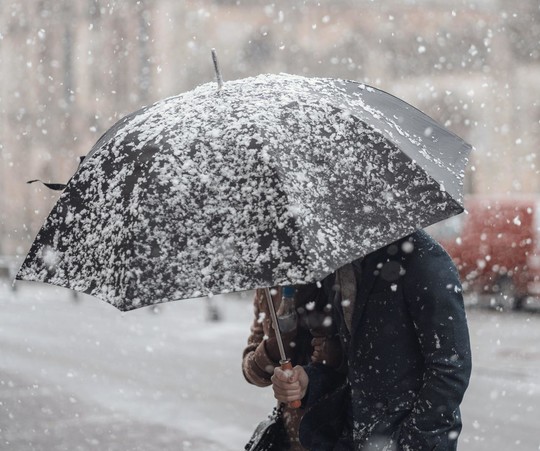
Between Nov. 8-12 this year, a strong low-pressure system produced rains that were unusually intense for November in Minnesota, shattering all-time monthly records for moisture content, and giving the southern half of the state a memorable temperature drop while the first blizzard of the season raged in northwestern areas.
Oddly, this storm has historical company from other, often worse storms which have affected the region at almost the exact same time of year!
- Nov. 10-11, 1998: A ferocious system hooked northeastward through Minnesota from the Central Plains, bringing howling winds, record rainfall in Duluth, and blizzard conditions throughout western Minnesota. The six deaths in Wisconsin and two dozen injuries in the region were all from violent winds (not related to thunderstorms or tornadoes) which approached 100 mph at times.
- Nov. 9-11, 1975: A powerful fall storm of wind, rain, and snow became legendary when its circulation moved across Lake Superior, with intense winds creating house-sized waves that likely wrecked the S.S. Edmund Fitzgerald and killed its 29 crew members.
- Nov. 11-12, 1940: A ruthless storm killed 154 Midwesterners, including 49 Minnesotans. It was the Armistice Day holiday (now called Veterans Day), and mild weather had encouraged many hunters and travelers to head out with only lightweight clothing. As the storm approached and intensified, however, temperatures fell 40 degrees in a matter of hours, as waves of intense, wind-driven rain, snow, and ice spread throughout the region, burying much of the state in enormous snow drifts.
- Nov. 11-12, 1911: Although it did not affect Minnesota directly, the “11/11/11 storm” may be the most wicked weather event on record in the middle of the country. The major feature with this system was an incredible cold front that gave many areas a year’s worth of weather extremes in 24 hours. An outbreak of killer tornadoes from Wisconsin into the Ohio River valley was followed within two to three hours by extreme blizzard conditions across a huge area. Many Plains and Midwestern states set their highest and lowest temperature records for November during this storm.
So, while climatologists marvel at least week’s impressive weather system, we also marvel at the climatological history for this time of year and are thankful the storm wasn’t even worse!
Minnesota boasts highest voter turnout
in nation for general election

According to preliminary data from the U.S. Elections Project, Minnesota had the highest voter turnout in the nation for the Nov. 8 general election. We had 61% turnout while Maine had 60.9% and Wisconsin had 60.2%. Minnesota traditionally has the highest voter turnout, according to the Minnesota Reformer. This year wasn't even our record — that was 64.3% in 2018.
Results still need to be certified, but for statewide roles, Minnesotans elected:
- Gov. Tim Walz and Lt. Gov. Peggy Flanagan
- Secretary of State Steve Simon
- State Auditor Julie Blaha
- Attorney General Keith Ellison
In an email to DNR staff, Commissioner Sarah Strommen said the Commissioner's Office looked forward to working with staff under the continued leadership of Gov. Tim Walz and Lt. Gov. Peggy Flanagan.
"We have the opportunity to build on our successes and move important initiatives forward such as 4 The Outdoors; mitigating and adapting to climate change; enhancing Minnesota’s lands, waters, fish and wildlife; connecting people to the outdoors; and contributing to the state’s vibrant economy," Strommen wrote. "Each of you has your own important connections to the work you and your colleagues do to manage and conserve the amazing natural resources that are so central to Minnesotans’ quality of life and identity. Together, we will create powerful new connections as we work with Minnesotans to advance our mission."
For full election results, head to the election results page of the Secretary of State website or find election results by address using the Star Tribune's tool.
Get free COVID tests ahead of the holiday

Four additional at-home rapid tests are available for free to all Minnesota households in advance of the Thanksgiving holiday through the state's online ordering program.
“Each of us can do our part to protect the health of our loved ones this Thanksgiving – taking a COVID test is one of the best ways to do that,” said Gov. Tim Walz in a news release. “Thanks to this program, all Minnesota households have the option to test before gathering with friends and family for the holiday.”
This time of year, many illnesses are spread that share the same symptoms – including COVID. Symptoms include cough, runny nose, sore throat, headache and fatigue.
“These additional tests are free, easy to order, and will be delivered to your doorstep. Testing for COVID is one simple way to stay healthy around the holidays," said Lt. Gov. Peggy Flanagan in a news release.
According to the Minnesota Department of Health, you should:
- Test on the day of an indoor gathering or event, as close to the time of the event as possible – especially if you will be around people who are immunocompromised, at a higher risk for severe disease, or older adults.
- Not attend gatherings if you are sick, regardless of the test result.
- Test immediately following any event if you develop symptoms. If you had close contact with someone with COVID, test five full days later.
Minnesota considering adding new accessibility criteria to state standard

The Office of Accessibility wants your feedback as the state of Minnesota considers adding 12 new success criteria from WCAG 2.1 (Web Content Accessibility Guidelines) to the State Accessibility Standard.
You can attend informational sessions to help you learn about WCAG 2.1 and how proposed changes in accessibility can benefit content users and impact your programs and services. The office will ask for your feedback about what you will need to prepare for the proposed changes.
Learn more about the meetings and how to attend on the WCAG 2.1 SharePoint site.
Meeting dates and times
Tuesday, Nov. 29, 10-11:30 a.m.
- Topic: Deep Dive into WCAG 2.1
- Presented by WebAIM. For project managers, product owners, and technology creators such as web and app developers and document remediators. Anyone planning a mobile app should also attend.
Tuesday, Dec. 6, 10-11:30 a.m.
- Topic: CapTech Case Study
- CapTech presents a case study of how they adopted 2.1 internally, lessons learned, and experiences implementing 2.1 in projects for clients. For all audiences.

Forester Alex Gehrig
 Finding fulfillment through service to others
By Maggie Snyder, news release and media specialist
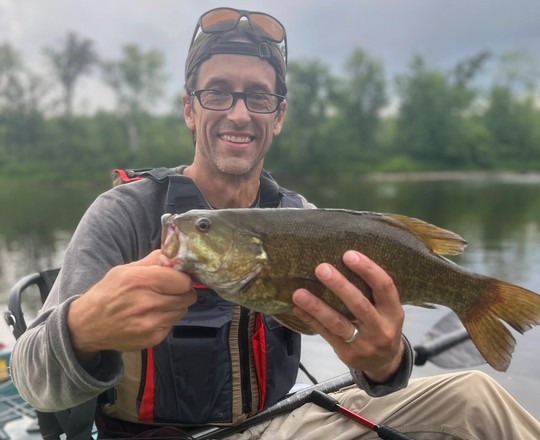
If there was a theme for Alex Gehrig’s professional life, it would be “public service.” Gehrig has served twice in the Peace Corps, worked and volunteered for nonprofit organizations, and now serves as a forester for the DNR.
“I’ve never been someone who prioritized making a ton of money,” Gehrig said. “Obviously, I like making money, but first and foremost came a sense of fulfillment in what I’m doing. That came out of service, out of doing something on behalf of the greater good.”
Gehrig grew up in Eagan, spending the summers camping with his parents. He said his parents cultivated his love for the outdoors, which he tries to do with his own family.
“My parents showing me the benefits and the fun to be had outside is directly correlated to my appreciation for the outdoors and wanting to pass that on to my kids,” Gehrig said.
Gehrig took this appreciation to Hamline University to get a bachelor’s in environmental studies. After he graduated, he worked briefly in a warehouse before leaving for his first term in the Peace Corps. The Peace Corps is an agency that trains and deploys volunteers to provide international development assistance. Each term is about two-and-a-half years. His first experience was in West Africa, where he worked with farmers to plant trees and reverse desertification.
“The technical work I did was an important part of it, but it was a cultural exchange more than anything,” Gehrig said. “I learned that despite all the differences, we had more in common than (not).”
When he got back, Gehrig worked as a carpenter and on graduate school coursework. He thought he might want to work internationally, so he looked into the Master’s International program where Peace Corps service can be used as a capstone to get a master’s degree.
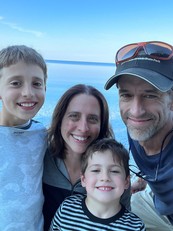
“My wife jokes that I proposed to her when I asked her if she wanted to go in the Peace Corps, because you have to be married to go together,” Gehrig said. “We got married so we could go together… and because we like each other quite a bit! I went to Ecuador with my wife for two years and worked with chocolate growers.”
They returned in 2008, a “horrible time to look for a job,” Gehrig said. He volunteered with a couple organizations to get some grant writing experience and then was able to get a job with nonprofits helping community organizers focus on the water resources they cared about. At those organizations, he did a lot of grant writing – an indoors activity.
He began looking at forestry jobs with the DNR. He wanted to get outside and have some variety with his job. He was hired in 2015 in Big Falls, and then moved to Preston in 2016. His job pulls together his experience with community-based organizing, and the variety and outdoor experience he was looking for. He works with landowners, plants trees, fights wildfire, monitors seedling growth, and more.
“I like the variety of people I see and work with all the time,” Gehrig said. “I also like seeing the direct impact of the decisions I make to manage the resources. We had to decide what to do with an (old agricultural field) and we’re turning it into trees by doing hardwood seeding. I get to see them go in, watch them grow. It’s fulfilling to see that direct impact of what you’re doing.”
In his free time, Gehrig spends time with his family fishing, camping and traveling – when he’s not being a chauffeur for basketball games and 4H, of course.
|
 Name: Alex Gehrig
Title: Forestry specialist
Work location: Preston
Been at the DNR: Seven years, since 2015
Prior experience: Two stints in the Peace Corps as a natural resources volunteer, resource work for nonprofits in the Twin Cities, carpenter for several years.
Education: Bachelor’s in environmental studies from Hamline University, master’s in forestry from the University of Minnesota.
Family: Wife, 12-year-old son and 6-year-old son
Something coworkers might not know about you: “I owned a camel during my first stint in the Peace Corps in West Africa. They’re not really comfortable to ride.”

Hello winter, my old friend
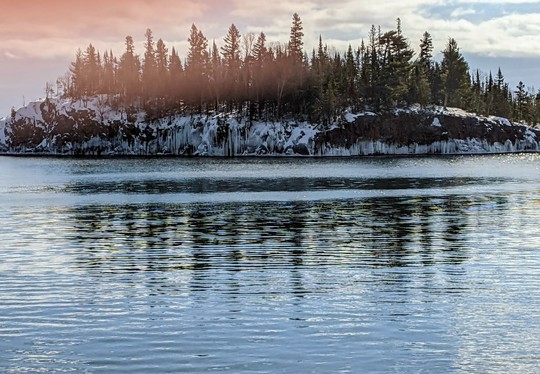 A wintry scene at Gooseberry Falls State Park in February 2021. Photo credit: Monica Weber
|