Thank a DNR volunteer with recognition items
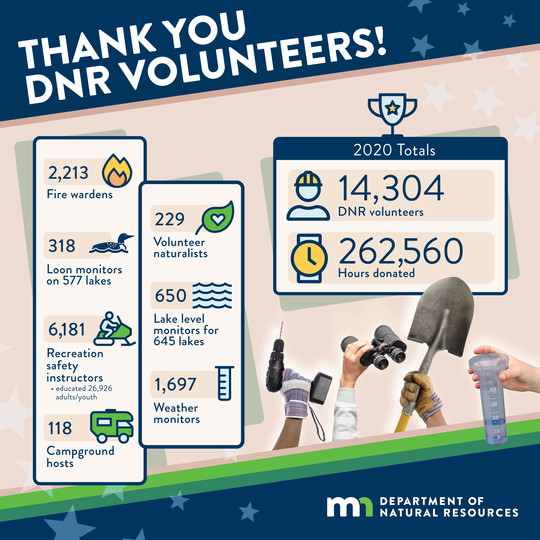
National Volunteer Week is April 18-24, when we recognize the contributions of those who freely give of their time and expertise to help the DNR achieve its goals.
Although volunteer numbers were down in 2020 due to the pandemic, many still volunteered remotely or in carefully monitored situations on a variety of projects...
In fact, more than 14,000 Minnesotans volunteered for the DNR last year. Their volunteer hours were equivalent to adding an extra 126 full-time people to the department’s work force with added value to the agency of $7.4 million.
Let them know that you appreciate their efforts by sending a simple note or email of thanks -- or consider taking that thank-you to the next level with the new volunteer recognition items available in the DNR warehouse.
Go to the Online DNR Warehouse to order the following volunteer merchandise:
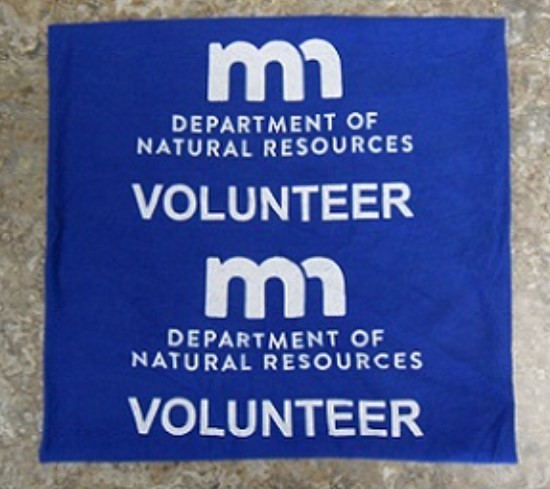
- Multi-functional head and neck wear (pictured – note that these neck gaiters are not to be used in place of masks)
- Stainless steel insulated tumbler
- Insulated water bottle
- Wristband key tag – loon or frog
- Volunteer lapel pin
- Volunteer appreciation coin
Prices range from inexpensive ($1.50 for lapel pins, coins or key tags) to moderate ($2.50 for a neck gaiter, $9 for the tumbler or $18 for the insulated water bottle). Volunteer certificates of appreciation can also be customized and printed for free from the Volunteer Programs intranet page.
Many DNR projects would not be possible without the community support of our volunteers, or the work of our approximately 250 staff in the agency who oversee these individuals. Learn more about our Volunteer Program by checking out our
2020 Annual DNR Volunteer Report .
|
LifeMatters is new EAP provider
The state has moved to LifeMatters to provide the resources, experts and support needed for the Employee Assistance Program (EAP) available to state employees.

The EAP provides services that can help you find balance at work and at home, whether it’s assisting you with practical tasks or connecting you to counselors or consultative services. All services are free and confidential. These services include:
- Six free sessions a year for you and your family per person, per topic.
- Culturally sensitive counselors.
- Adoption and childcare assistance.
- Legal and financial consultations.
- Wellbeing webinars. Registration links and dates can be found on the webinar schedule website.
- Services research to find professional and available services in your area.
|
Get in touch with counselors or resources any time, day or night:
-
Call: talk to a counselor any time who can assist you right away by calling
800-657-3719 or 651-259-3840.
-
Click: browse a comprehensive online library of resources or connect by email. Visit the LifeMatters website and use “stmn1” for the username and password.
-
Chat: text “Hello” to 61295 to chat with a counselor. Standard text messaging rates apply.
The EAP phone line has automatically switched to LifeMatters. If you or a family member is currently meeting with a counselor through the previous provider (Deer Oaks) you can continue to do so without interruption.
Once your remaining counseling sessions are over, re-establish your services by contacting LifeMatters at 800-657-3719. To support you through this transition, you will have access to six free counseling sessions, even if you used these services earlier this year.
For more information about the EAP services, head to the MMB EAP Work/Life Counseling website. Contact Laura Grunloh or Chrissy Eck with questions. For more information about employee wellbeing resources, visit the wellbeing page on the intranet.
April is Records Management Month
Several learning seminars planned
Learn how to take advantage of technological advances and still align with records management and data practice policies during Records Management Month.
In recognition of the month, the DNR will have special learning seminars during the week of April 19 for employees. These seminars include:
-
April 19, 10 to 11 a.m.
- What’s New with DNR Retention Schedules: Fast Track Retention Schedule Project Update
-
April 20, 10:30 to 11:30 a.m.
- Recordings: Ephemeral, Permanent, or Somewhere in Between?
-
April 21, 9:30 to 10:30 a.m.
- Virtual Coffee Hour with records management, information governance, data practices and technical gurus
- Tips and Tricks for using TEAMS, Outlook, and other platforms
-
April 21, 2 to 3 p.m.
- Case Studies on “How to use new technology while still aligning with records management and data practice rules”
Take the time this month to do some digital records management, as well as learn new tips and tricks to make your life easier. If you have any questions about records management or Records Management Month, reach out to your records management officer.
For more information, head to the Records Management page of the Intranet.
New backgrounds available for Teams meetings
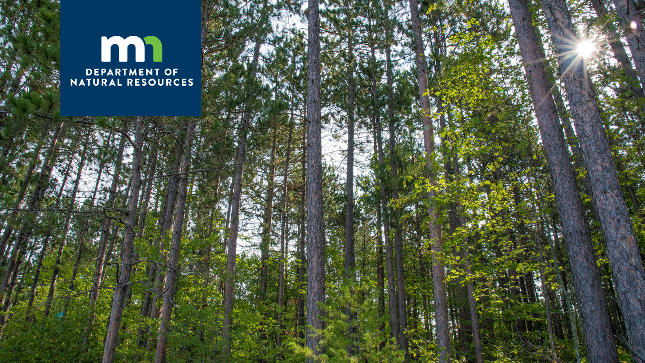
The Office of Communications and Outreach has received multiple requests for Teams backgrounds that are DNR-branded and offer a selection of images highlighting some of Minnesota’s unique outdoor places.
Thanks to the work of our Creative Services Unit and our great partners at MNIT.DNR, an initial sampling of specifically curated images will be available this month, if you wish to use them. Some of you may already have access to the backgrounds in Teams, but it may take a week for them to become widely available across the agency.
To populate the backgrounds you will need to restart Teams and be connected to the VPN. Then, just follow the normal steps to change your background and you’ll see the images there alongside (or below) the other options available within Teams.
We’ve intentionally included images that are tested for visual accessibility, strong branding, a range of seasons and settings, and a varied collection of interests.
Using these images is not mandatory – this is simply a courtesy to our colleagues and to answer a request for high-quality DNR images.
Feel free to experiment with these – depending on what is physically behind you as you sit at your computer, different images may come through more or less well. For best results, keep the space behind you as close to fully white or monochromatic as you can. The more patterns or different items you have (e.g., busy wallpaper or a full bookcase), the harder it can be for the Teams software to read your outline properly and render any background consistently.
If none of these images appeal to you, that’s okay. Use of the images is voluntary and we’ll add to and swap out selections over time, as opportunity allows.
If you choose to use other backgrounds on Teams, please keep in mind some best practices to ensure the photo:
- Is not too busy or distracting
- Provides good contrast between you and the background
- Is respectful and professional. The background is much like
your cubicle, office, or other on-site work location.
As always, if you have questions or need technical assistance with Microsoft Teams, please use MNIT.DNR’s ticketing system to put in a request for help.
NOTE
The DNR logo will look reversed/backwards to the user but not to the viewer.
New agency membership: learning opportunities with Performance Excellence Network

New learning and networking opportunities are now available to all DNR and
MNIT@DNR staff through an agency membership with the Performance Excellence Network (PEN).
Our membership includes bi-weekly online professional development seminars to support staff development in improvement methods and innovation (at no cost). DNR Continuous Improvement staff host a debrief session after seminars for DNR employees to connect, network, and discuss application to our work.
A sample of past seminars have focused on the following topics: managing change, best practices in managing a team, increasing resiliency under stress, the neuroscience of leadership, and mitigating unconscious bias.
A small group of employees have piloted this membership and we are now excited to expand the opportunity to all employees. We have joined a collection of state agencies (including ADM, DHS, MDH and MPCA) in providing this learning opportunity.
Contact Laura Grunloh or Yengmy Thao to be added to the distribution list for updates on upcoming seminars. Future updates, including development of a Teams page, will be shared through the distribution list, on the Continuous Improvement intranet page, future Spotlight articles and the Learning and Development newsletters.
CO Eugene Wynn anniversary approaching
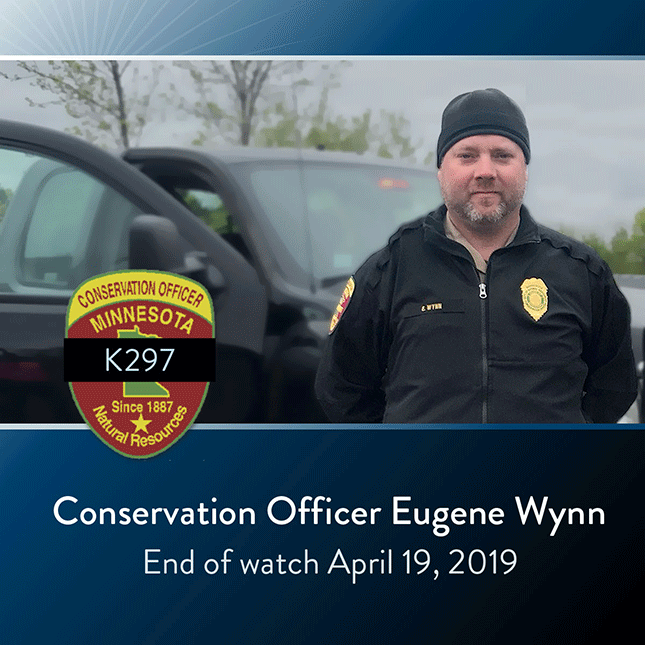
On April 19, 2019, DNR Conservation Officer Eugene Wynn lost his life in the line of duty while responding to a call about a possible emergency in the water.
The memory of CO Wynn remains strong today, and we’ll never forget how he made the ultimate sacrifice in the service of others. mndnr.gov/enforcement/line-duty.html
Regulatory status change for the nonnative subspecies of Phragmites australis (common reed)
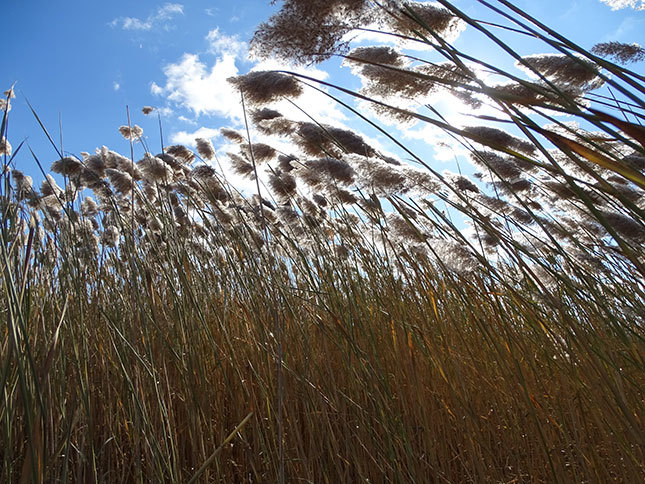 The nonnative subspecies of Phragmites can form dense stands. Photo credit: Minnesota Aquatic Invasive Species Research Center.
Phragmites is a tall grass that grows in wet areas. Minnesota has both the nonnative subspecies of Phragmites (Phragmites australis subsp. australis) as well as the native subspecies (Phragmites australis subsp. americanus). The nonnative subspecies can form dense monocultures in wetlands causing changes in hydrology, nutrient cycles and species diversity.
DNR staff who manage state lands and waters should be aware of a new rule change that affects them.
The Minnesota Department of Agriculture has changed the classification of the
nonnative subspecies of Phragmites to a Prohibited Noxious Weed on the Control List.
This means that efforts must be made to prevent seed maturation and dispersal of plants into new areas (this generally means actions such as mowing, pulling or herbicide application before seeds can mature).
Additionally, no transportation, propagation or sale of these plants is allowed.
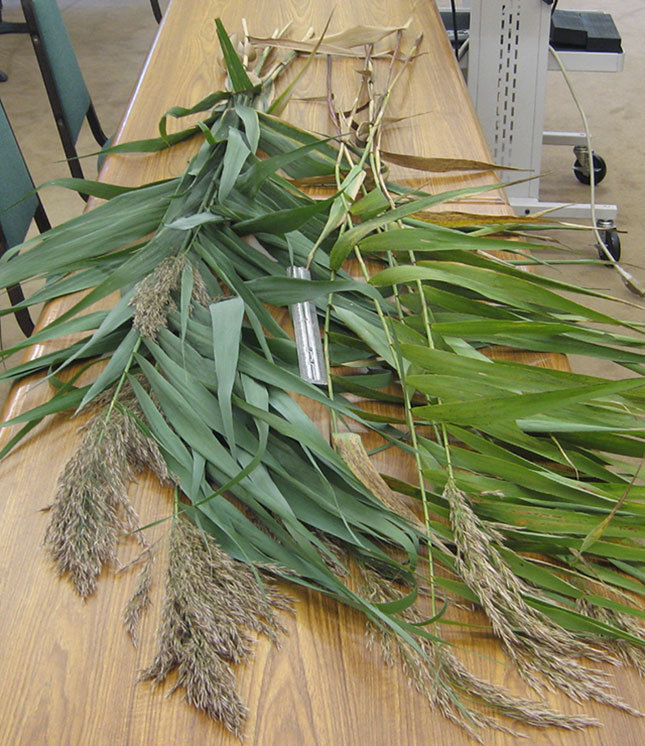 Minnesota has both a nonnative subspecies of Phragmites (on the left) and a native subspecies (on the right). Photo credit: Mary Hockenberry Meyer, University of Minnesota.
How does this affect DNR staff?
DNR staff should report the nonnative subspecies of Phragmites using EDDMapS.org or the associated app. If you have photos, attach the photos to your report. The University of Minnesota Identifying Phragmites webpage highlights the key identifying characteristics you should include in your photos.
Plan for Management
Since the nonnative subspecies of Phragmites can grow in public waters, the listing has specific guidance for the DNR. The DNR will comply with this law by prioritizing the populations we can manage in a given year. The MDA understands that the DNR will not have the resources to manage every population of the non-native subspecies of Phragmites in public waters and on DNR-managed lands in a given year.
The DNR’s Invasive Species Program is coordinating a statewide control effort and prioritizing sites for management with the aim of reversing spread.
Invasive Aquatic Plant Management Permits (IAPM) are required for managing the
nonnative subspecies of Phragmites below the ordinary high water mark. These permits are issued by Invasive Species Specialists in the Ecological and Water Resources division.
How can I learn more?
Researchers with the University of Minnesota Aquatic Invasive Species Research Center have been extensively studying the nonnative subspecies of Phragmites. The MAISRC Phragmites webpage has detailed information including an identification guide, management information and a statewide assessment.
Happy Earth Day!

Next Wednesday will mark the 51st Earth Day, a day dedicated to ensuring a healthy and sustainable environment for generations to come.
Earth Day began on April 22, 1970 when more than 20 million Americans demonstrated to call for greater protections for the environment. Since then, Earth Days have focused on recycling, global warming, clean energy, planting trees, and more.
The 2021 theme is to Restore our Earth to prevent the coming disasters of climate change and environmental destruction.
The conservation movement led to federal legislation like the Clean Air, Clean Water and Endangered Species acts as well as the creation of the Environmental Protection Agency. States also passed their own environmental protection laws, which in Minnesota included the Environmental Quality Act, the mine reclamation law, the Wild and Scenic Rivers Act and more.
The history of Earth Day and the conservation movement has gone hand in hand with the history of the Minnesota Department of Natural Resources. It even prompted a name change for our agency, which had been called the Department of Conservation since it was founded in 1931 but was changed to the DNR in 1971 to “reflect its broadening responsibilities,” according to the “DNR’s First 50 Years” publication.
Since its creation, the DNR has dealt with a number of issues, priorities and projects it deals with today, including mining, planting state forests, acquiring and developing state land for outdoor recreation, researching and developing policies, dealing with droughts and wildfires, protecting wetlands, responsibly using taxpayer dollars and more.
Like Earth Day, the DNR has changed and grown throughout the years — but the goal has always been to ensure healthy and sustainable natural resources for future generations.
As a conservationist in the early 1930s said (according to the “DNR’s First 50 Years" publication) in a quote which is as true then as it is now: “We are … planning with an eye to permanency so that future generations will inherit an empire of wealth rather than a land shorn of the blessings which nature bestowed upon it.”
To learn more, check out the Earth Day website.
Maggie Snyder, information officer, Operations Services Division
 Lisa Dugan, recreation safety outreach coordinator
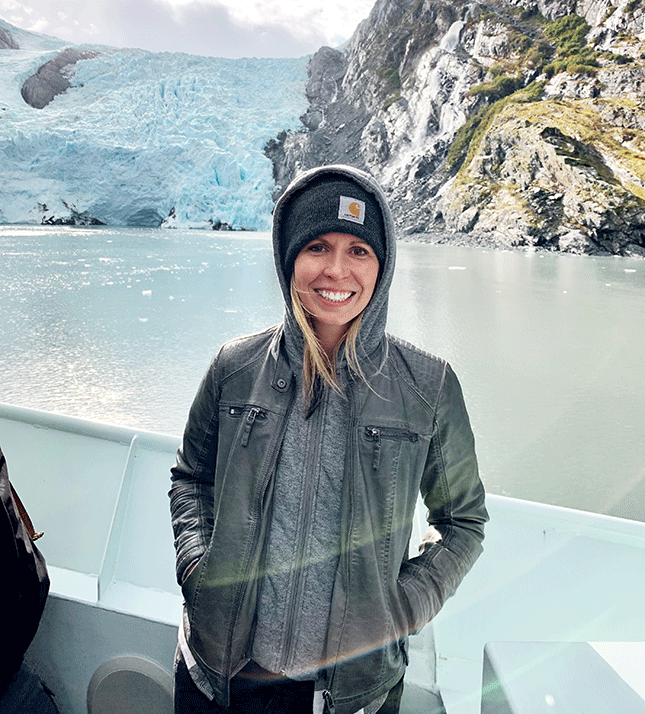 Lisa Dugan
By Joe Albert, Enforcement Division communications coordinator
You could be forgiven if you assume Lisa Dugan would be afraid of the water. After all, she’s on an extraordinarily short list of people who’ve been bitten by a muskie while swimming.
But that assumption would be wrong. In fact, she loved the water before that, and does just as much today – so much so that it’s a main part of her job as the recreation safety outreach coordinator for the DNR Enforcement Division.
“It’s always been the base of my family and recreation time,” Dugan said.
Her work portfolio goes beyond the water, too, encompassing all aspects of helping people stay safe while enjoying Minnesota’s natural resources. Her personal familiarity with what she’s talking about – whether it’s boating, riding off-highway vehicles and snowmobiles or safe firearms handling – lends an unmistakable authenticity to her work. She understands the things that resonate with people, and knows what simply is an unrealistic ask that would turn people off to her message.
Path to the DNR
Dugan grew up in an outdoors family in New Prague, where, looking back on it, she “appreciated the freedom of being a kid outside.” Her grandfather was instrumental in laying not only the groundwork for a life in the outdoors – they’d do things like pick berries and catch smelt together – but a broad appreciation for the environment and natural resources and humans’ relationship with them.
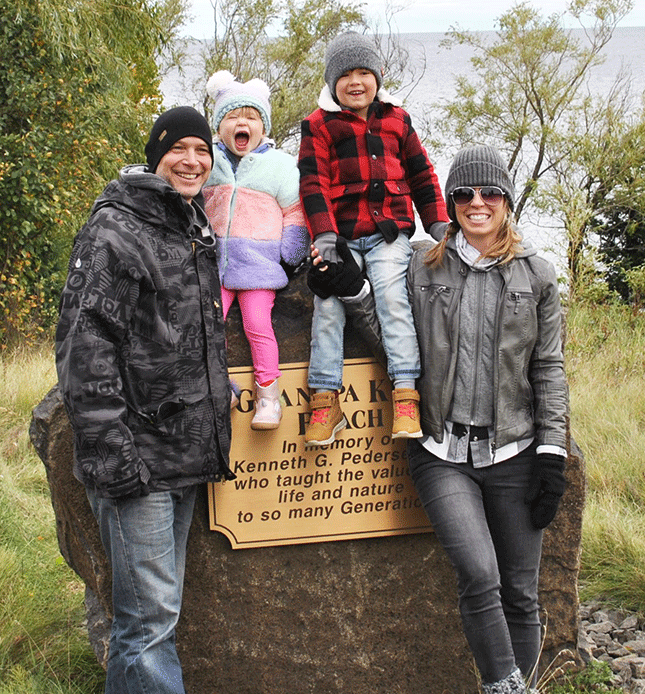
There’s an inscribed rock on the land her grandfather once owned next to the North Shore’s Tettegouche State Park. Dugan often visits and can recite the words – not so much from memory, but more from experience. Her grandfather “taught the values of life and nature to so many generations.”
Her father was instrumental in molding her, too, like his father was before him. Dugan first hunted with her dad, who taught her about “the give and take of nature,” and laid the foundation for her to appreciate the balance of it all. She didn’t know it at the time, but those lessons would be the impetus that brought her to the DNR.
In the decade before she began at the agency in 2016, she worked at golf courses – most recently as the marketing and membership director at Hazeltine National Golf Club.
“For people who love golfing, it was an opportunity for them to get on the golf course and have four hours of uninterrupted time as a family,” she said.
At the DNR
The parallels between her previous and current job are striking.
“It’s still about helping people enjoy the outdoors with the friends and family,” Dugan said. “It’s about marketing safety, and there’s the added dimension of helping to ensure they’re safe while doing it so they can enjoy a lifetime of fun and memories.”
Dugan, who serves on the board of the National Safe Boating Council, has been instrumental in helping make Minnesota a national leader in the realm of boating safety.
She works directly with manufacturers to help them understand why it’s vital for them to market safety to their customers, and is constantly thinking about ways to ensure all people in Minnesota have the life jackets and other tools they need to be safe on the water. She’s also a key part of the Division’s Boat School, which is an annual event at Camp Ripley were Dugan and conservation officer instructors teach county boat and water deputies what they need to be safer and more effective at their jobs.
“From the passionate people I work with who are so committed to what they do, to seeing the smiles of people while they’re enjoying Minnesota’s resources, to knowing the work I do makes a difference in people’s lives – it just really is an incredibly rewarding job,” she said.
|
 Work location: Central Office, Enforcement Division
Job title: Recreation safety outreach coordinator
Joined DNR: September 2016
Education: University of Minnesota Duluth
Hobbies: A delicate balance of activities rooted in stillness – foraging, herbalism, hiking, and camping. And things that go – snowboarding and riding her Ducati scrambler, snowmobiles and dirt bikes. Even better when it’s with her go-with-the-flow husband and eager-to-explore kiddos.
Something that might surprise your colleagues: “I’ve never broken a bone, but I’ve somehow found myself in several precarious emergency room scenarios. Among the more memorable was the result of a Friday the 13th muskie bite, which required seven stiches on my hand. Despite that, I still love swimming in every body of water I can.”

MUM operation
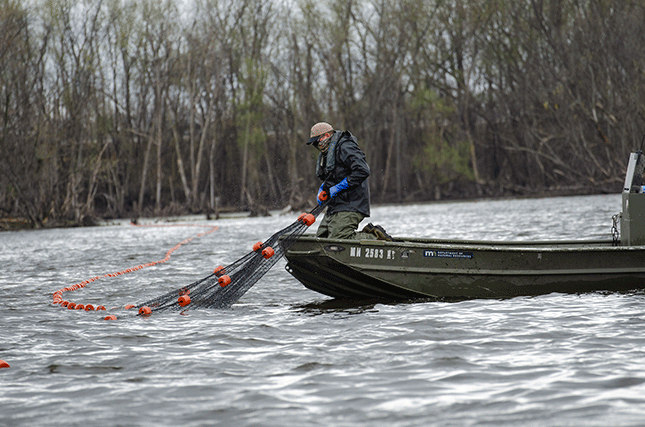
In one moment of an eight-day operation, Kevin Cook, DNR fisheries specialist, pulls up on a fully deployed block net to clear an obstruction and allow the net to fish efficiently.
This 1,000-foot net was part of an intense invasive carp removal effort in Pool 8 of the Mississippi River in southeastern Minnesota, called the Modified Unified Method, or MUM.
DNR led the innovative operation last week in partnership with Wisconsin DNR, USGS and USFWS in response to the capture of 51 invasive carp in the area a year ago. During the MUM operation, 31 silver carp were captured.
More information about the MUM operation can be found here DNR MUM and an MPR News story can be found here MPR News Invasive Carp.
- Deb Rose, DNR photographer
|