|
|
|
July 3, 2019
 In this edition of Inside Safety and Health:
Join a safety committee

As a regulatory agency, staff at the Department of Natural Resources often deal with compliance. Laws, rules and regulations guide our natural resources work.
There are also laws, rules and regulations which guide how to keep ourselves and others safe while at work — the federal and state Occupational Health and Safety Administration requirements. Occupational Health, Safety and Environmental Management staff here at the department work to meet those requirements, and they need your help.
Recently, regional safety committees were phased out and replaced with divisional safety committees in order for divisions to be able to better direct work planning and budgeting for safety priorities. If you are interested in helping shape this work and lead the department forward on safety efforts, join your divisional safety committee. Participation from union representation is also encouraged.
Committees, members, charters and work plans can be found on the Safety Committee page of the Intranet.
- Suzann Willhite, Safety and Risk Manager
|
Be a leader in tick bite prevention
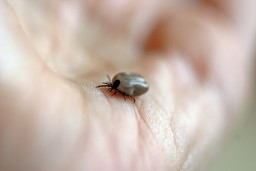
I know what you might be thinking — "what does leadership have to do with tick bite prevention?" On two recent field tours at the department, I noticed a wide disparity in the approach between two leaders to ensure no participants received tick bites.
The leader of the first tour not only sent out a reminder note ahead of time to ask participants to bring tick protection, but also offered additional gaiters and repellents prior to the tour if anybody forgot. The leader then checked before the tour to ensure participants were properly protected.
The leader of the second tour did not discuss tick bite prevention prior to the tour and did not exhibit good tick protection measures.
If you are a leader, take the time to ensure the people around you are safe from tick bites. Make sure they know to wear sealed outfits, use repellents and check for bites as soon as possible when they get home. A little leadership goes a long way in preventing tick bites.
Leadership starts with caring enough to guide participants into using proper tick protection methods. When you show that kind of leadership, we make the outdoor workplace a safer place.
- Dave Palet, safety administrator
|
Keep an eye out for poison ivy
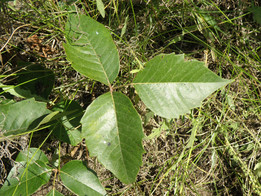
Poison ivy is an extremely common plant in the United States and is one of the most common culprits for rashes on people who spend time outdoors.
While poison ivy does not affect some people, others are extremely allergic and can even be hospitalized. It's important to recognize what poison ivy looks like and what to do if you come into contact with it.
According to webmd.com, poison ivy has:
- Three-pointed leaves
- Shiny leaves
- The ability to grow as a vine or a bush
- Different colored leaves, depending on the time of year — reddish in the spring, green in the summer and yellow or red in the fall
It can be difficult to identify poison ivy. If you are unsure, remember: "leaves of three, let it be."
To avoid poison ivy:
- Stay out of areas where you know poison ivy might be
- Wear long pants, a long-sleeve shirt, boots and gloves in areas with poison ivy
- If exposed, wash the skin as soon as possible and any items which might have been in contact with the plant
- Never burn poison ivy. The burning plant can release the oils into the air that could result in a rash for anyone near the fire
If you are exposed to poison ivy, use a cold compress, calamine lotion, non-prescription hydro cortisone cream, or an antihistamine to ease itching. Call your doctor if the rash is near your eyes, or covers a large part of your body. Get emergency medical help or call 911 if you have a severe reaction.
- Joni Akerson, safety administrator
|
Extreme heat: stay cool, stay alive

When it gets too hot, your body is unable to lower its temperature as it normally does through sweating and circulation. As a result, your core temperature will begin to rise, leaving you at risk for hyperthermia.
In Minnesota, 35 people died as a result of extreme heat from 2000 to 2010.
Remain indoors and if possible, in an air-conditioned building. Fans will not prevent heat-related illnesses. If you don't have air conditioning, go to a public building which does, such as a mall or library. Drink more fluids which are nonalcoholic and don't have large amounts of sugar. Wear lightweight, loose-fitting clothing.
Don't leave children, pets, seniors or at-risk adults in parked vehicles with the windows up for any amount of time.
If you have to be outside, try to rest often and wear hats, sunglasses and sunscreen. Limit exercise. If at all possible, limit your time outside to the morning and evening.
- John Peterson, emergency planner
|
Put on the sunscreen

Though you might not be able to see all the effects of the sun on your skin, there might be more damage than you think.
Artist Thomas Leveritt created a video which shows the hidden effects of this damage. While sunscreen appears as a regular lotion in visible light, the protection sunscreen provides your skin can be seen under a UV light.
The more our skin is exposed to the sun without that protection, the greater the risk we have for skin cancer and prematurely aged skin. Skin cancer is the most common form of cancer in the United States.
According to the University of Texas MD Anderson Cancer Center, you should:
- Get a sunscreen with an SPF of at least 30
- Reapply every two hours, regardless of the SPF
- Get UVA and UVB protection
- Not rely on sunscreen alone
- Laura Grunloh, continuous improvement coordinator
|
Check your tires and replace as needed
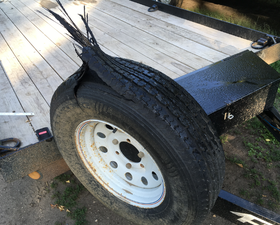
Tires are the only part of vehicles which come into contact with the road and are therefore one of the most important safety features of your car, truck, or trailer.
Tires degrade with time and exposure to sunlight. We have had spare tires fail here at the department without ever touching the road.
The fleet program recommends having a qualified technician thoroughly check tires during an annual preventative maintenance inspection which are more than five years old and have been exposed to the sun. This inspection can be done at a DNR shop, tire shop, or local repair facility. Tires must be purchased from a contract tire vendor, if available.
If the tire is more than five years old and shows any sign of defect or questionable integrity, it should be replaced. The age is printed on the tire — look for a number that starts with the letters "DOT," followed by a series of 10 to 12 characters. The last four digits of this code are the week and month of manufacture. For instance, "4309" was made in the 43rd week of 2009.
Diligence in checking your tires and following maintenance and inspection standards will ensure the DNR keeps safe and reliable equipment on the roads.
- Aaron Cisewski, fleet supervisor
|
Use your respirators, and use them properly
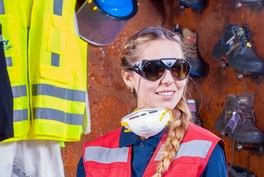
Each year, OSHA reports on the most common citations and respiratory protection continues to be on the top 10 list. The most common issues cited include providing medical evaluations, having a written respirator program, and having voluntary use of the respirators.
The DNR provides employees with a medical evaluation prior to being able to use the respirator in the workplace in order to determine the person's ability to use and wear the equipment. These evaluations are required for air-purifying and powered air-purifying respirators. Medical evaluations are not required for filtering face pieces, such as dust masks.
Using respirators can place a physiological burden on employees which varies with the type of respirator, the job and workplace conditions in which the equipment is used, and the health of the employee.
Before you arrange a medical evaluation for an employee, you will need to know the following:
- The type and weight of the respirator to be worn by each employee in your program
- How long and how often the respirator will be worn
- How hard the work will be and how much physical effort will be involved
- What other protective clothing or equipment will be worn
- The temperature and humidity extremes of the work
- The requirements outlined in the OSHA Respiratory Protection Standard and the DNR Respirator Program
Medical evaluations are conducted by a physical or licensed health care professional through MedCompass. The evaluation begins with the Respiratory Questionnaire. The evaluation can be conducted through mail or online, or at a clinic.
A written recommendation will then be provided on whether the individual can safely wear the designated respirator, or if a follow-up evaluation is needed. Employees need to be reevaluated if they show signs or symptoms that are related to their ability to wear a respirator, or if there is a change in the workplace conditions surrounding the employee. The physician might also prescribe annual tests.
For more information, visit the Respirator Use page of the Intranet or contact a member of the Safety Program.
- Sarah Schumacher, risk claims coordinator
|
Take your Employee Right To Know training

Annually required safety training for the upcoming fiscal year will be available mid-July 2019. All current employees will automatically be enrolled through ELM in the fundamental all staff annual safety training.
For questions related to safety training, enrolling in training or what training you might need to take, please email the DNR Safety Training inbox.
Thank you.
- Joni Akerson, safety administrator
|
Do the severe weather drill

The 2019 statewide tornado drill during Severe Weather Awareness Week was canceled and will not be rescheduled.
All DNR work sites are still expected to conduct a severe weather drill. The sites could do so in conjunction with the test of the outdoor warning siren system on Wednesday, or at the discretion of the site.
Sites are required to conduct the drills by August 1.
- John Peterson, emergency planner
|
Updated chainsaw training underway
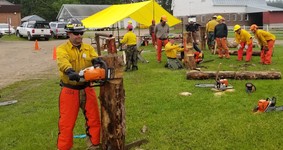
Two chainsaw training sessions were held in June for the S212 class. S212 is the 24-hour power saw training course.
One of the sessions was held at the Wildfire Academy, and the other at the La Salle Recreation Center. During the La Salle session, a power saw re-certification was held. About 60 employees from Parks and Trails and Forestry trained to safely operate a chain saw during these sessions.
Following the La Salle S121 session, a faller two re-certification session was held. The one day session checked and maintained the tree cutting skills of the more advanced fallers. This qualifies the power saw operators to work with more hazardous trees and situations involving hazardous trees.
The training was done to get DNR employees up to speed with the power saw training policy update. These S212 sessions replace the one day session of the previous policy. Planning is in place to offer another S212 session in the northeast portion of the state in September. Faller re-certification sessions are also planned for later this fall.
If you have questions on saw training or wish to host a session contact Brian Pisarek at brian.pisarek@state.mn.us.
- Brian Pisarek, Forestry regional specialist
|
Reduce work-related injuries or illnesses
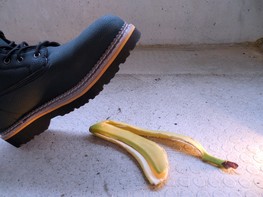
OSHA recordable injuries are one of the primary measurements to assess whether our collective safety efforts are leading to fewer staff members being injured at work.
By definition, an OSHA recordable injury is a work-related injury or illness that resulted in death, loss of consciousness, days away from work, restricted work activity or job transfer, or medical treatment beyond first aid. All industries, including government, use this definition.
Unfortunately, the department has seen a steady increase in OSHA recordable injuries over the past five years. To encourage performance transparency and provide leaders with the information they need to discuss this performance, the DNR provides monthly injury and illness reports.
The reports break down the injuries or illnesses by department, region, division and divisional performance within regions. Our goal is to reduce these incidents by 20 percent in each region and division over the next five years — a goal that was established by MnSAFE.
Keep tabs on how your work unit is performing on the Monthly Injury Reports page of the Intranet and start the conversation of how we can better keep ourselves and each other safe.
- Dave Palet, safety administrator
|
Thank you for your Safety Perception Survey responses
 Thank you to the employees who took the time to complete the Safety Perception Survey. The department had a 59 percent response rate.
In 2017, the Department of Administration and the Interagency Safety & Health Committee began a five-year project to capture and understand state employee perceptions about workplace safety with a survey.
An outside vendor will collect and analyze the data received to provide a report to the Department of Natural Resources identifying the state's safety perception strengths, weaknesses and gaps. The DNR will also participate in an online presentation with the vendor highlighting priority safety issues for improvement.
Thank you for helping us create a safe workplace!
- Margaret Stanwood, information officer
|
|
|
|
Safety and Risk Program Staff
If you have questions or would like more information, contact:
-
Suzann Willhite, safety and risk manager: 651-259-5808
-
Joni Akerson, safety administrator, R3, R4 and CO: 651-259-5739
-
Dave Palet, safety administrator, R1 and R2: 218-328-8964
-
Sarah Schumacher, risk claims coordinator: 763-284-7238
-
John Peterson, emergency planner: 651-259-5518
-
Jenifer Benes, planner: 218-322-2748
-
Maelene Rhodes, office and administrative specialist sr.: 651-259-5471
-
Margaret Stanwood, information officer: 651-259-5446
|
|
|
|