Workplace rights for women in Minnesota

As we observe Women's History Month, we recognize the vital role women play across Minnesota's economy, from hospitals and classrooms to farms, factories, offices, restaurants, construction sites and more. Protecting workplace rights for women is essential to building fair, safe and productive workplaces.
The Department of Labor and Industry (DLI) is committed to protecting women workers across industries by enforcing laws that address wage theft, earned sick and safe time and paid leave, retaliation related to pregnancy and parental responsibilities, and other working conditions.
This month, we highlight key protections every worker should know, including female workers.
|

Understanding the law: the Women’s Economic Security Act (WESA)
A recent case shows why WESA protections matter. A pregnant employee, who was an experienced registered nurse, requested pregnancy accommodations from her employer, including extra breaks, seating and lifting restrictions. Instead of providing these accommodations required under Minnesota law for pregnant employees, the employer forced her into an unpaid pregnancy leave without her consent.
After the employee contacted DLI, the Labor Standards Division quickly intervened and the employee was reinstated with full pay for the time she was improperly removed from work. This case highlights how WESA addresses Minnesota employees being pushed out of the workplace for needing pregnancy accommodations and how DLI's quick response to these complaints can make a difference.
|
Attend our next WESA webinar
Supporting women in the workplace: Understanding Minnesota's economic security protections
DLI reports highest WESA complaint levels since law passed in 2014
In 2025, DLI received 123 complaints under WESA -- a 59.7% increase from the previous year and the highest total since the law took effect in 2014. DLI resolved 94.3% of complaints informally, securing $81,574.10 in back wages and damages for 21 employees.
WESA protects Minnesota workers
WESA provides workers with:
- wage disclosure protections;
- access to pregnancy and parental leave;
- pregnancy accommodations, including additional breaks and seating; and
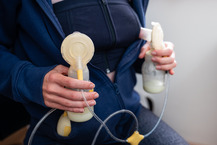
- private spaces for nursing employees.
Who can employees contact if they believe they are being discriminated against because they are pregnant?
An employee who believes their employer has discriminated against them because they are pregnant may contact the Minnesota Department of Human Rights to report possible pregnancy or sex discrimination by visiting mn.gov/mdhr or calling 651-539-1100 or 800-657-3704.
For more information, see our WESA FAQs webpage or contact us at dli.laborstandards@state.mn.us or 651-284-5075.
|
Breaks for pregnant and nursing workers
All employees in Minnesota must be allowed certain rest and meal breaks. For more information, visit mn.gov/breaks. Additionally, pregnant and nursing workers have specific breaks rights.
- Nursing workers: Employers must provide reasonable break time to express breast milk and a clean, private, non‑bathroom space with an outlet in which to do so. Pump breaks may overlap with regular breaks. Employers may not reduce pay or require employees to make up time.
- Pregnant workers: Required reasonable accommodations include more frequent or longer restroom, food and water breaks.
For more information, visit dli.mn.gov/newparents.
Register to attend other webinars
Employee or independent contractor? Understanding worker misclassification
Misclassifying employees as independent contractors can lead to serious legal and financial consequences. This webinar explains how classification affects wages, benefits and protections -- and what to do if you believe a worker is misclassified.
Prevailing wage on public projects: What workers and employers need to know
Learn the essentials of Minnesota's prevailing-wage laws for public projects, including compliance responsibilities and common mistakes to avoid.
Annual earned sick and safe time (ESST) report available
DLI has released its ESST annual report, highlighting education, outreach and enforcement work in 2025, including nearly 41,000 employers, employees and others reached through events, more than 1,700 business visits, expanded multilingual resources and continued partnerships with community organizations. Additionally, through enforcement tools, DLI restored approximately 49,272.51 hours of ESST to employees and approximately $432,445.64 in back wages in 2025.
Avoiding illegal deductions on pay stubs
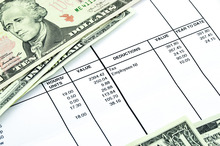
Employers may deduct from an employee's paycheck only if:
- the deduction is required by law (for example, taxes, court‑ordered garnishments); or
- the employee provides voluntary written authorization.
Illegal deductions may include deductions for:
- cash register shortages;
- broken equipment; and
- uniforms (in certain situations).
Employees have the right to receive:
- a wage notice at the start of employment with a list of deductions that may be made; and
- an earnings statement each pay period with a clear itemization of deductions.
If you suspect illegal deductions, keep copies of your pay stubs and contact DLI.
|
March featured case
An employee reported to DLI that no proper space was available at their workplace to express milk. The employer said the only space available was a small closet inside a shared bathroom, which violates Minnesota law requiring a clean, private, non‑bathroom space with an outlet in which to express milk.
The employer agreed to provide a guest office as a temporary solution until creating a fully compliant lactation space for the benefit of the impacted employee and future employees.
Questions of the month
Are Minnesota employers required to include notice of the Wage Disclosure Protection law in their employee handbook?
Yes, all Minnesota employers that provide an employee handbook must include a notice of employee rights and remedies under the Wage Disclosure Protection law (Minnesota Statutes 181.172).
- Sample notice: “Under the Minnesota Wage Disclosure Protection law, you have the right to tell any person the amount of your own wages. Your employer cannot retaliate against you for disclosing your own wages. Your remedies under the Wage Disclosure Protection law are to bring a civil action against your employer and/or file a complaint with the Minnesota Department of Labor and Industry at 651‑284‑5075 or 800‑342‑5354.”
Are employers required to give notice of rights under the Nursing Mothers, Lactating Employees and Pregnancy Accommodations law?
Yes, employers must provide this notice at the time of hiring and when an employee inquires about or requests parental leave. The notice must include information about the right to reasonable pregnancy accommodations.
To learn more about workplace notices and posters, visit dli.mn.gov/posters.
Wage and Hour Bulletin archive
Access past editions of the Wage and Hour Bulletin.
Questions?
Labor Standards serves the people of Minnesota by providing
information about the state's wage, hour and employment laws.
Phone: 651-284-5075 or 800-342-5354
Email: dli.laborstandards@state.mn.us
Website: dli.mn.gov
|