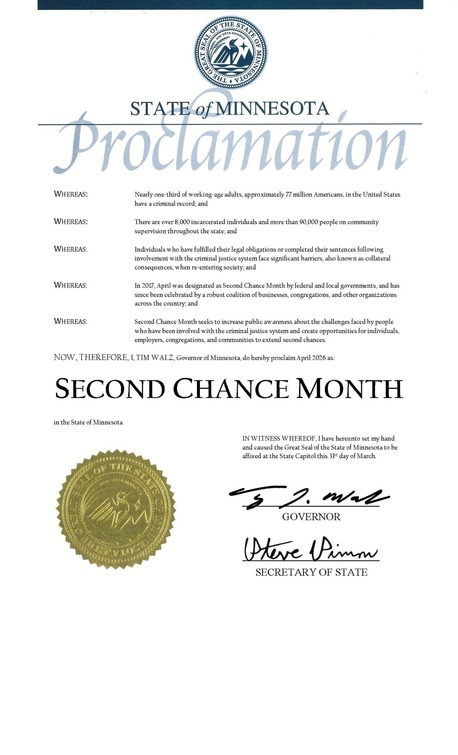
State of Minnesota proclamation declaring April 2026 as Second Chance Month, signed by the governor and secretary of state.
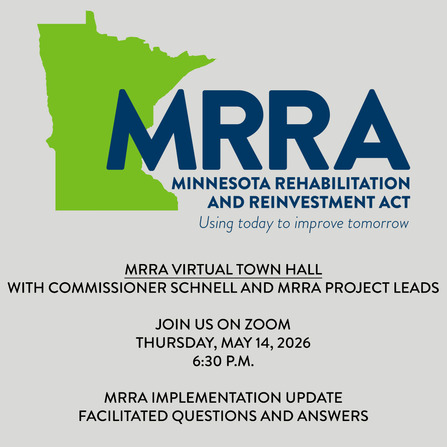
Save the date! Join Commissioner Paul Schnell and members of the MRRA Team for an update on the implementation of the Minnesota Rehabilitation and Reinvestment Act.
The virtual town hall will be held May 14 at 6:30 p.m. on Zoom.
Registration is encouraged but not required. Register at the following link: https://doc-mn-us.zoomgov.com/webinar/register/WN_zIZY6RO5QNmGj_u9rHOuDw#/registration
The Zoom link will be posted on all the DOC’s social media platforms, including Facebook, X, and LinkedIn on May 14.
To stay informed about MRRA, sign up for updates on the MRRA page of the DOC public website. Here’s the link: https://mn.gov/doc/mrra/
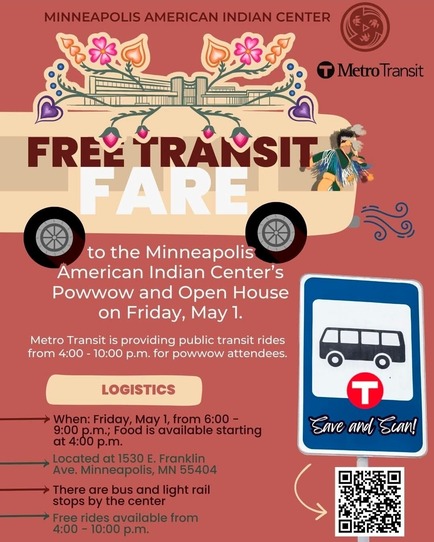
Free transit fare flyer for Minneapolis American Indian Center powwow and open house. Friday, May 1. Free rides from 4:00–10:00 PM. Event at 1530 E. Franklin Ave, Minneapolis. QR code for details.
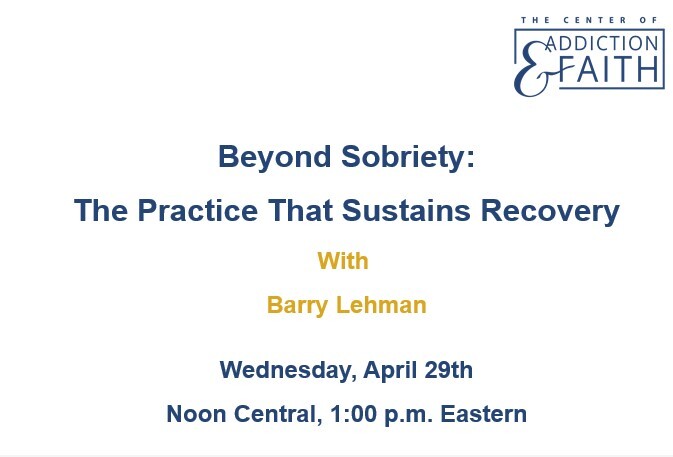
Flyer for a webinar called “Beyond Sobriety: The Practice That Sustains Recovery” on April 29 at noon Central, featuring Barry Lehman.
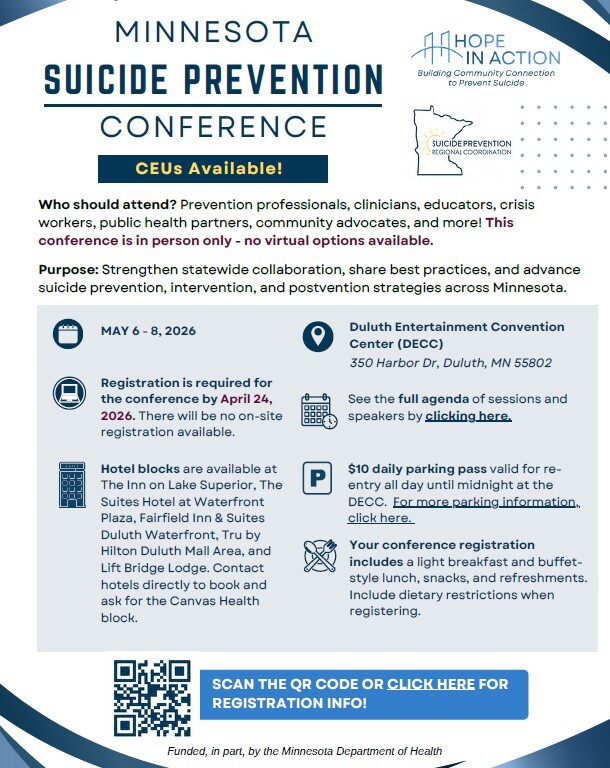
Minnesota Suicide Prevention Conference flyer. May 6–8, 2026, in Duluth, MN. In-person event; register by April 24. QR code for details.
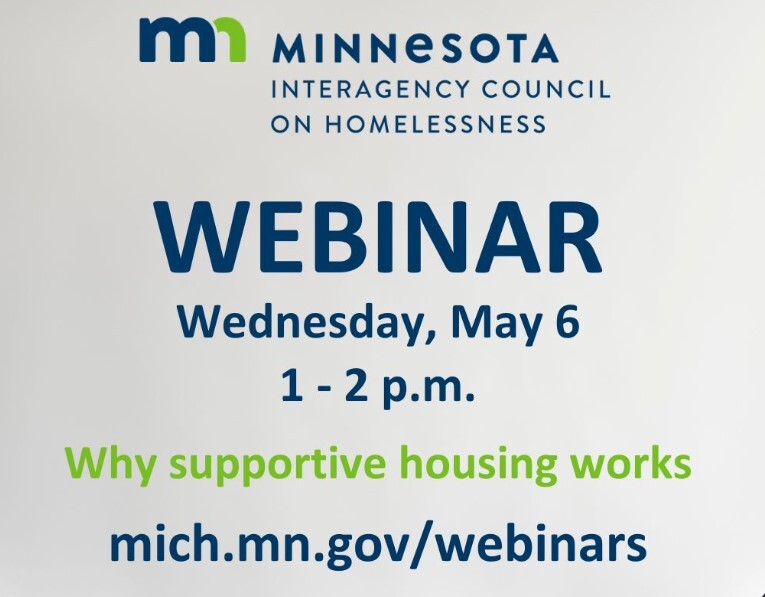
Flyer for a webinar on May 6 from 1–2 PM about why supportive housing works, hosted by the Minnesota Interagency Council on Homelessness.
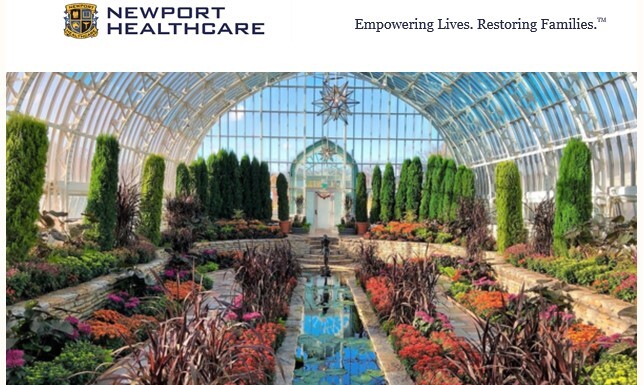
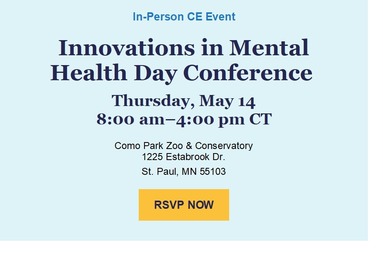
Flyer for an in-person mental health conference on May 14 from 8 AM–4 PM at Como Park Zoo & Conservatory in St. Paul, MN, with RSVP information.
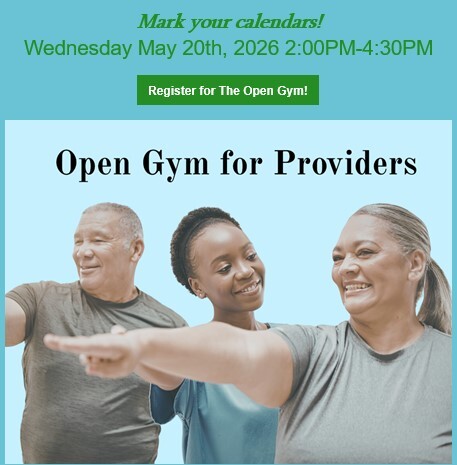
Open Gym for Providers event flyer. Wednesday, May 20, 2026, from 2:00–4:30 PM. Button to register. Image shows three adults smiling and exercising together.
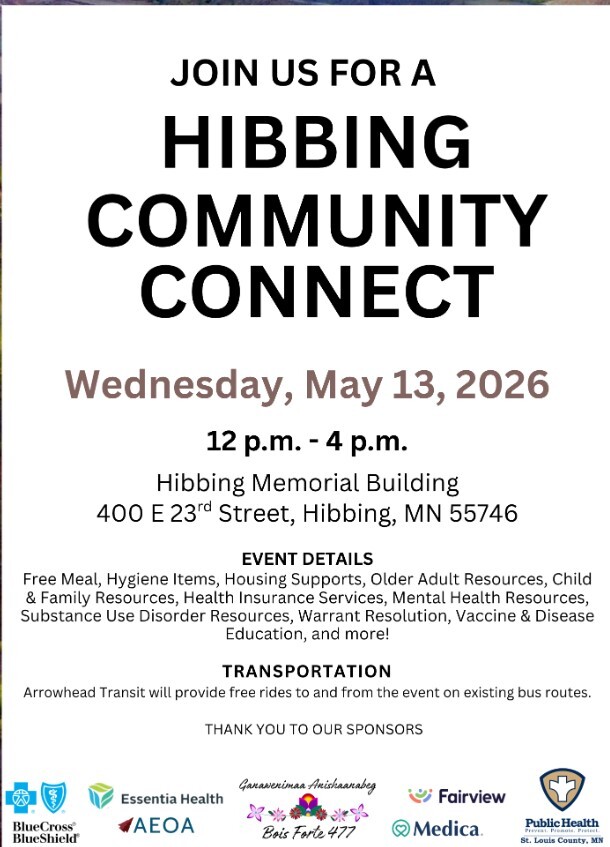
Flyer for Hibbing Community Connect event on May 13, 2026, from 12–4 PM at Hibbing Memorial Building, offering free resources, services, and transportation.

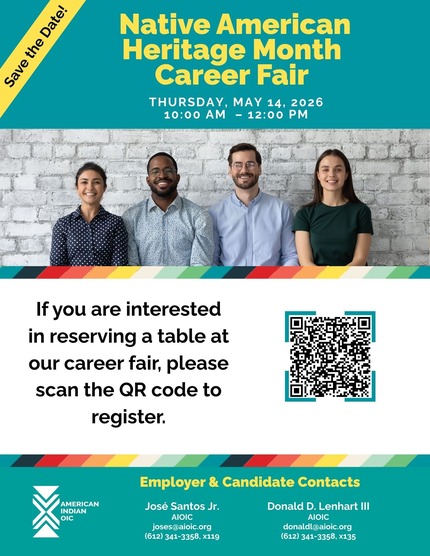
Native American Heritage Month Career Fair flyer. Thursday, May 14, 2026, 10 AM–12 PM. Scan QR code to register for a table. Contact info listed at bottom.
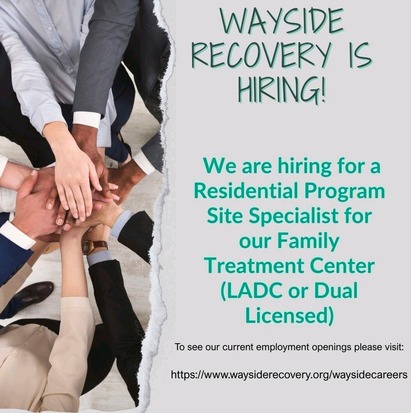
Wayside Recovery hiring flyer. Residential Program Site Specialist role for a family treatment center (LADC or dual licensed). Link provided to apply.
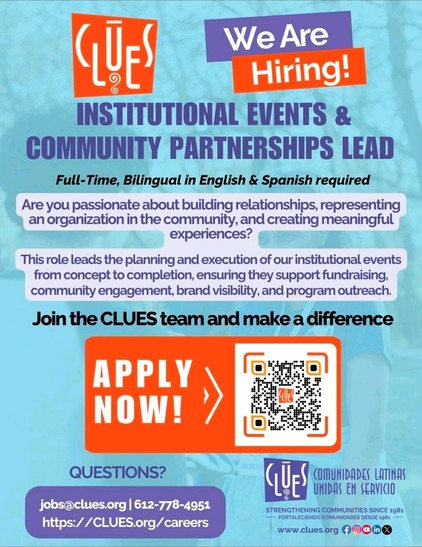
CLUES hiring flyer. Full-time Institutional Events and Community Partnerships Lead. Bilingual English and Spanish required. Apply with QR code or website; contact info listed.
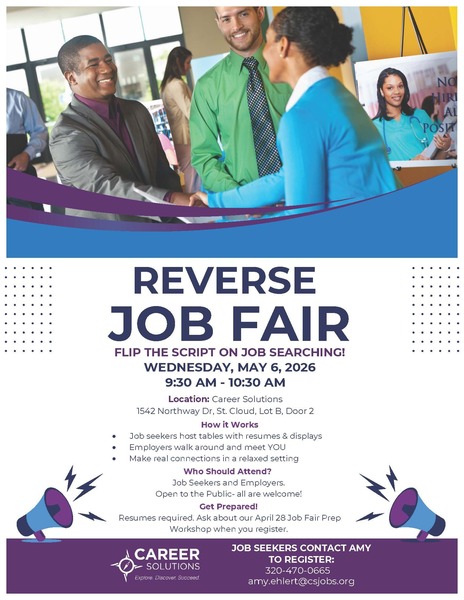
Flyer for a “Reverse Job Fair.” Job seekers set up tables and employers come to meet them. It lists the date, time, location in St. Cloud, and contact info to register.
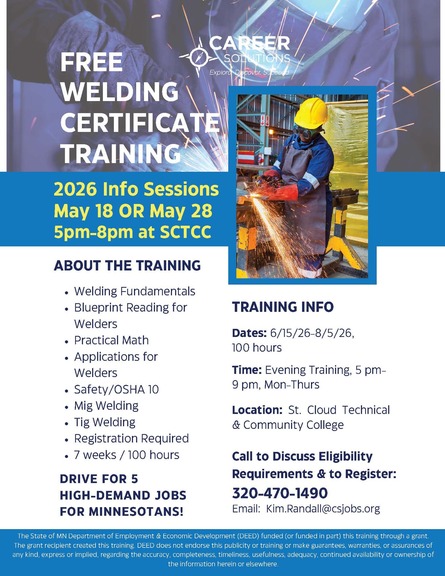
Flyer for free welding training. Includes info session dates, class details, location in St. Cloud, and a phone number and email to sign up.
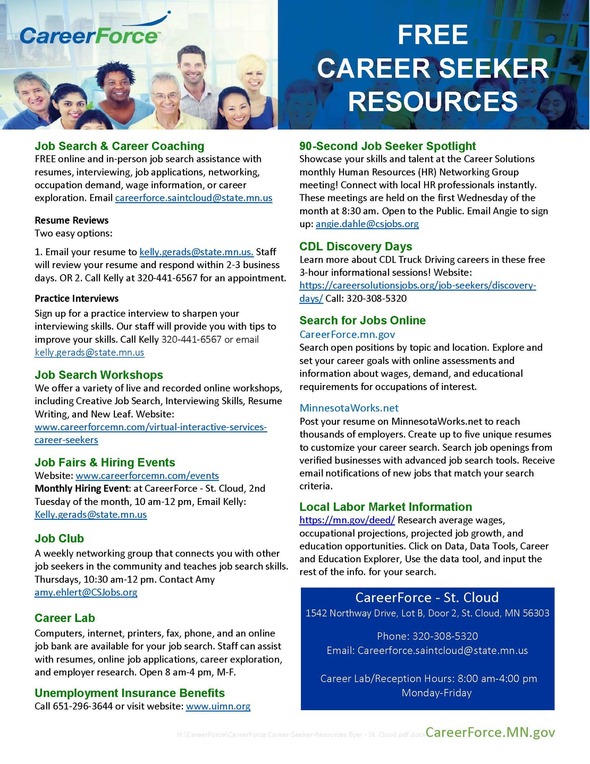 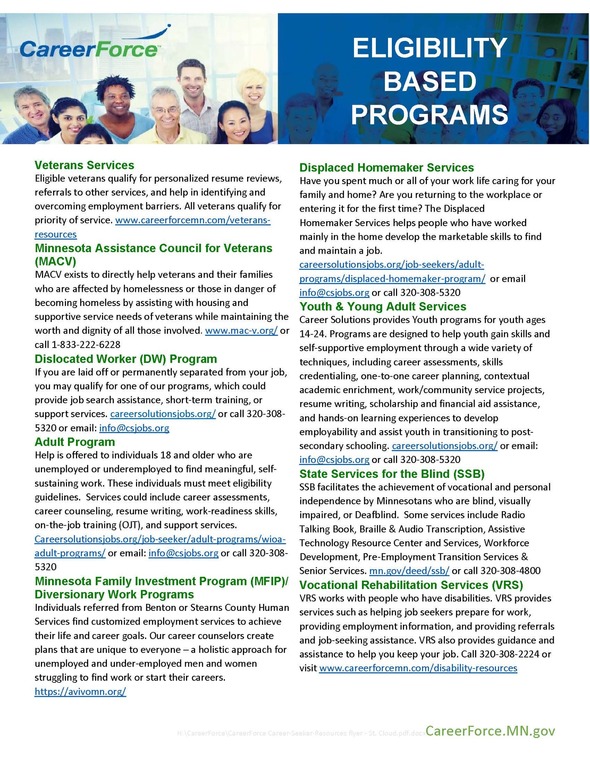 Flyer for free job help services at CareerForce. Lists support like resumes, interviews, job search help, workshops, and job fairs. Includes contact info and location in St. Cloud.

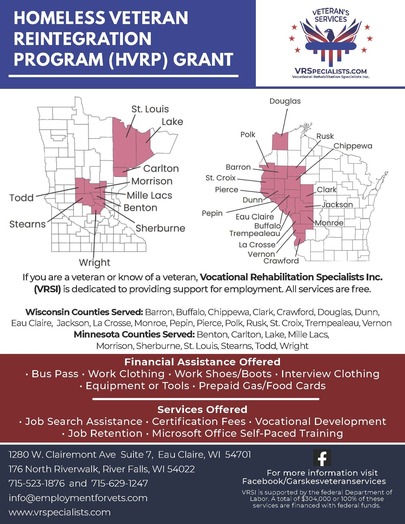
Flyer for a Homeless Veteran Reintegration Program (HVRP) grant offering free employment support, financial assistance, and services for veterans in select Minnesota and Wisconsin counties.
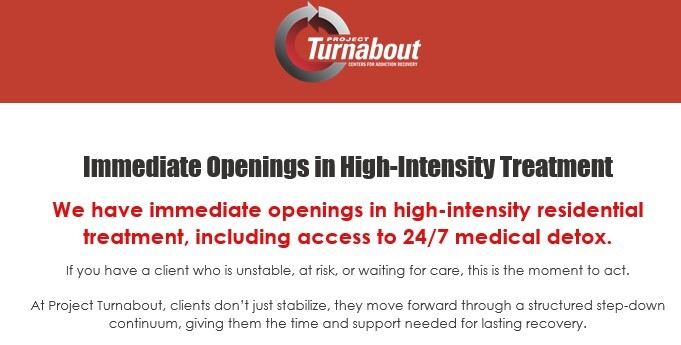
Flyer for Project Turnabout announcing immediate openings in high-intensity residential treatment, including 24/7 medical detox.
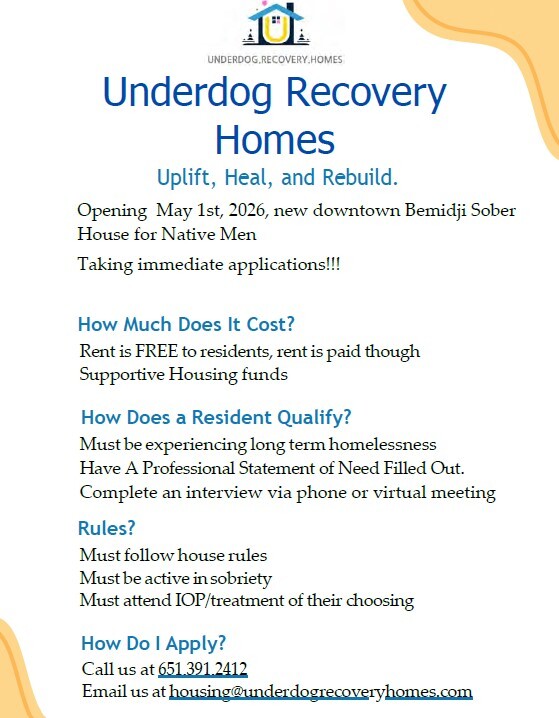
Flyer for Underdog Recovery Homes. Sober housing for Native men opening May 1, 2026 in Bemidji. Free rent through supportive housing. Must be homeless and in sobriety. Call or email to apply.
Alpha Emergence Behavioral Health currently operates a 16-bed reentry housing program in Minneapolis, primarily serving individuals leaving incarceration and/or experiencing homelessness who are required to register. This housing is largely funded through public assistance and housing support programs. Our program remains at full capacity with an active waiting list, highlighting the ongoing demand for retentry housing options.
We are now exploring a “second-step” housing model specifically designed to serve individuals required to register on the Predatory Offender Registry (POR) who have completed initial placement (e.g., county-funded housing, halfway house, or treatment) and are transitioning toward greater independence.
This effort is focused on understanding housing needs within the 7-county Twin Cities metro area (Anoka, Carver, Dakota, Hennepin, Ramsey, Scott, and Washington counties).
This housing would be designed for individuals who:
- Are required to register on the Predatory Offender Registry (POR)
- Are employed (full or part-time) and able to pay rent (self-pay model)
- Have completed or are transitioning out of structured or publicly funded placements
- Continue to face barriers to traditional housing due to registry status and related factors
- May or may not also qualify for public assistance (e.g., SNAP or General Assistance), though housing itself would not be subsidized
Model features would include:
- Private bedrooms with shared common spaces
- Not Section 8 or subsidized housing
- No on-site staffing (independent living environment)
- Optional access to case management through an outpatient program, as needed
To complete this survey and help inform us of the housing needs of those required to register on the POR, follow the link below. Thank you for your input.
POR Housing Need Survey
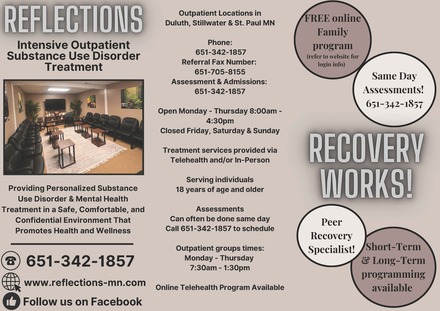
Reflections outpatient treatment flyer. Intensive outpatient substance use and mental health services in Duluth, Stillwater, and St. Paul. Offers in-person and telehealth care, same-day assessments, and programs for adults. Phone number and website listed.
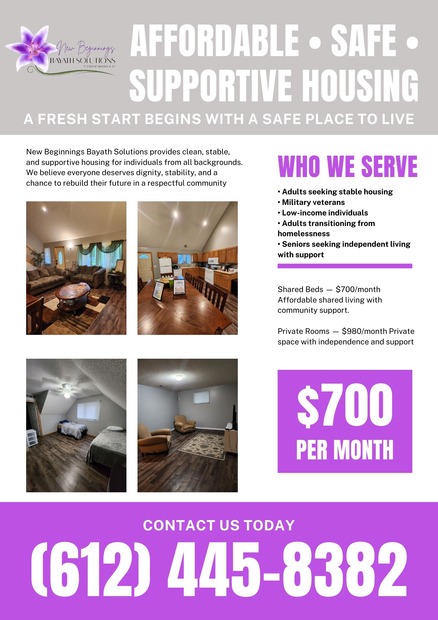
Supportive housing flyer for New Beginnings Bayath Solutions. Affordable shared and private rooms starting at $700/month. Serves adults, veterans, and people leaving homelessness. Contact phone number listed.
Minnesota rolls out steps for certification, Housing Support agreement process for recovery residences
Last year, the Minnesota Legislature moved to strengthen oversight of sober homes — now referred to as recovery residences in state statute — and increase protections for the people who live in them. The transition to this new model is under way, and potential recovery residences should start planning now for certification.
The Minnesota Department of Human Services has created a webpage with detailed information about the certification process, requirements for Level 1 and Level 2 recovery residences, key definitions, and steps for providers who may be interested in participating in Housing Support. The webpage will also have resources available for those who are ready to start the certification process.
To learn more about certification requirements and next steps, visit the Certified Recovery Residences webpage: mn.gov/dhs/certified-recovery-residences.
Level 2 Certified Recovery Residences can access Housing Support Program
Providers interested in becoming a Certified Recovery Residence are strongly encouraged to begin planning now. The certification process includes several steps, and providers interested in using Housing Support will need to obtain Level 2 certification and meet additional Housing Support Program agreement standards before entering into an agreement with DHS. Starting early will help ensure providers have time to prepare required policies, review certification criteria, and avoid delays once applications open
To learn more about how Level 2 Certified Recovery Residence operators can access Housing Support Program agreements, visit the Housing Support Program webpage for Certified Recovery Residence operators: mn.gov/dhs/CRR-housing-support
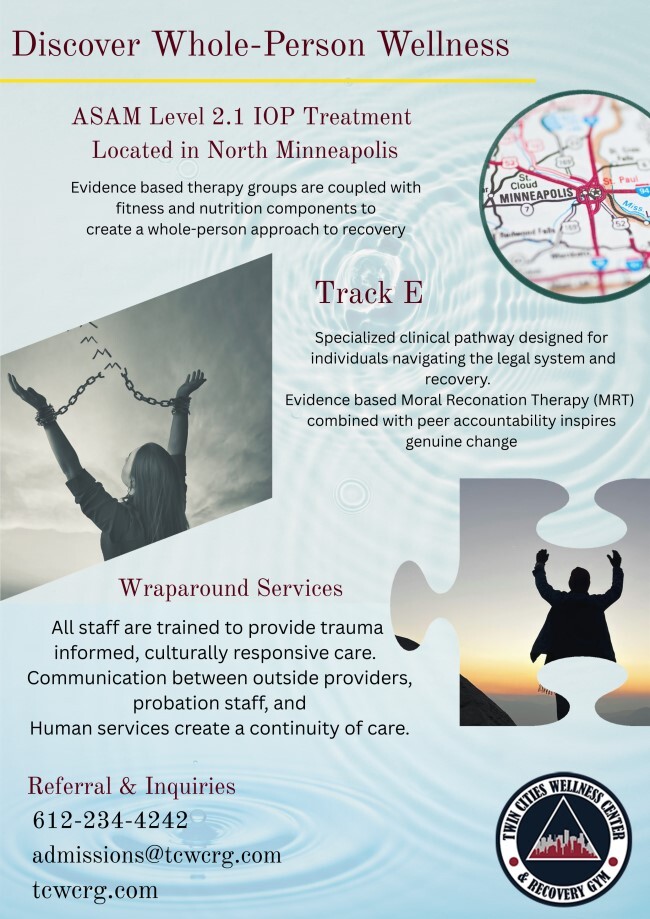
Flyer for a recovery program in North Minneapolis. It offers outpatient treatment, support groups, and help for people in the legal system. Contact details are at the bottom.
Click above image for more information on available funds
|