 April 2026

As spring arrives in Carver County, April is the perfect time to refresh your routines, including how you manage waste.
With Earth Day on April 22, Environmental Services encourages residents to take simple, impactful steps toward reducing waste.
Dispose properly
Start by making use of available disposal options for hard-to-manage materials, including seasonal collection events and year-round services at recycling sites including the Environmental Center.
Reuse building materials
Spring is also a great time to focus on building material reuse. Before disposing of items like cabinets, doors, lumber, or fixtures, consider whether they can be reused or donated to programs like ReclaimIT. Keeping usable materials in circulation saves money, reduces waste, and supports local reuse efforts.
Begin composting
Earth Day is also a chance to highlight expanded opportunities for organics recycling. Through the Love to Compost campaign and new support for multi-family properties, more residents can participate than ever before. Whether you compost at home or use an organics drop-off site, keeping food scraps out of the trash makes a difference.
Looking to go further? Schools, businesses, and organizations can apply for recycling grants to improve recycling and reduce waste.
This Earth Day—and all month long—take one step toward reducing waste. It adds up.
|
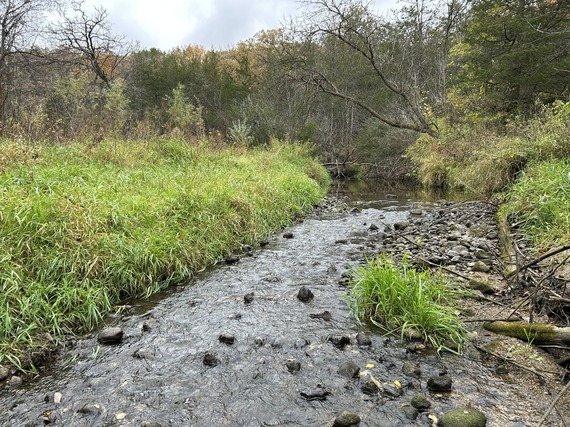
Most high detections occur after rainfall in May and June. A few practical adjustments in timing and application can reduce runoff and help protect both the creek and future use of the herbicide
Silver Creek flows through the corner of Sibley County into the southeastern portion of Carver County, where it joins Bevens Creek before entering the Minnesota River. It’s a small watershed—about 25,000 acres—but routine monitoring shows that acetochlor levels in the creek are high enough to require attention from those who farm and manage land in the area.
Acetochlor—an active ingredient in numerous herbicides like Harness, Tripleflex, SureStart and Warrant*—is widely used in the watershed to manage early‑season weeds in corn and soybeans. It’s typically applied before planting, shortly after planting, or early post‑emergence, often in combination with other herbicides to provide residual control.
Acetochlor has been detected in Silver Creek at levels above the State’s chronic water‑quality standard of 3.6 parts per billion. Because of these elevated concentrations, the Environmental Protection Agency has listed Silver Creek as impaired for acetochlor.
This designation means the creek fails to meet water‑quality standards. Elevated acetochlor levels can damage aquatic plants, reduce habitat quality, and stress or kill sensitive fish and invertebrates.
Most high detections occur from early May to early June, when rain follows herbicide applications. Later in the season, concentrations typically drop—but those early‑season spikes are driving the impairment.
Acetochlor is an important weed‑control tool in corn and soybean production. If high detections continue, future restrictions on its use in the Silver Creek watershed are possible. Taking steps now helps protect both water quality and the long‑term availability of acetochlor for growers who rely on it.
If you farm or rent land within or adjacent to the watershed, your management decisions directly influence how much acetochlor reaches the creek. The good news: a few targeted adjustments can make a meaningful difference.
As you plan for the upcoming planting season, consider reviewing your weed‑management strategy with your dealer or agronomist. The Minnesota Department of Agriculture recommends the following best management practices (BMPs) to reduce acetochlor runoff:
-
Shift timing when runoff risk is highest. Use non‑acetochlor herbicides early in the season and reserve acetochlor products for early post‑crop emergence applications when conditions are more stable.
-
Incorporate pre‑plant applications. If you typically apply acetochlor on the soil surface before crop emergence, switching to soil incorporation before planting can reduce losses from surface runoff.
-
Watch the weather. Avoid applying acetochlor when heavy rain is expected within 48 hours.
-
Use the lowest effective label rate for your soil type and consider premixes to reduce total acetochlor applied.
-
Maintain vegetative buffers along waterways, drainageways, and low areas where runoff collects before entering Silver Creek.
These BMPs are designed to protect water quality while supporting effective weed control. Even small changes in timing and application method can reduce runoff during the critical early‑season window.
Protecting Silver Creek is a shared effort. By adjusting herbicide timing, improving incorporation, and following BMPs, farmers and landowners can help reduce acetochlor levels and avoid future restrictions on its use in the watershed.
For more info, questions or assistance, contact the Minnesota Department of Agriculture, ptu.mda@state.mn.us, or 651-201-6029.
* Use of trade names is for educational purposes only. No endorsement is implied, and no discrimination is intended

The emerald ash borer (EAB) is an invasive beetle that has killed millions of ash trees across North America and continues to spread throughout Minnesota. Because infested trees often show no visible signs until significant damage has occurred, early treatment is key to protecting healthy trees.
Carver County Environmental Services is offering a cost-share grant program to help residents take action before it’s too late. Eligible property owners may receive up to $75 per tree (maximum of two trees) for treatment with a professional-grade injectable insecticide applied by a licensed arborist.
|

With $17,500 in total funding available, this program provides an affordable way to preserve ash trees and avoid the much higher cost of removal and replacement.
Funding is limited, so residents are encouraged to apply early. Visit the Carver County Environmental Services website for full details and application information.
|

Carver County offers financial assistance for residents and businesses to install projects that protect lakes and rivers within the Carver County Water Management Organization boundaries.
Common projects include rain gardens, shoreline restorations, native plantings, water retention and reuse systems, and more. The program will cover 75% of eligible costs up to a maximum reimbursement of $5000.
 Plastic film such as agricultural wrap, boat wrap, and greenhouse coverings, can be difficult to recycle through traditional programs. In Carver County, targeted partnerships are helping keep these materials out of landfills.
As Carver County prepares for its Spring 2026 Agricultural, Marine, and Greenhouse Plastic Recycling collection (April 17–June 17), past results highlight the program’s impact. In 2025, 32,000 pounds of plastic film were recycled, and since launching in 2019, more than 171,280 pounds have been diverted from landfills and burn barrels.
Through a partnership between Carver County Environmental Services, Revolution Plastics, and the University of Minnesota Extension, farmers, marinas, and greenhouse operators can recycle materials like silage and grain bags, boat wrap, greenhouse film, hockey rink liners, and stretch wrap. Materials must be clean and free of contaminants.
Participants use free recapture bags (holding up to 200 pounds) and drop off full, tied bags at the Carver County Public Works Facility (11360 US 212, Cologne). Drop-offs must be scheduled at least 48 hours in advance.
Starter packs are available at local partner locations or by request.
For more information or to participate, contact Carver County Environmental Services at (952) 361-1800 or Matt Steele at (952) 361-1808 or msteele@carvercountymn.gov.
This program complements statewide efforts like Wrap Recycle Right, expanding recycling options for plastic film.
|