 December 2025
For the first time in 30 years, a portion of the East Chaska Creek will see daylight.
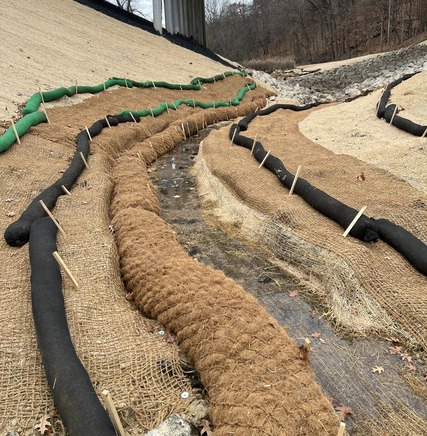
Since the 1990s, the segment of creek from Spring Peeper Meadow to Big Woods Lake flowed through an underground pipe. As part of the 82nd St. construction project in Chaska, the pipe was removed, and a 450 ft. stream channel was restored.
The new stream channel includes a floodplain and 10 new riffle areas. Riffles are shallow areas where water flows fast over rocks creating turbulence that brings oxygen into the water, which is needed to support aquatic life. The floodplain will help with larger storms, slowing and storing water to prevent erosion of streambanks.
In lake November, the water was redirected through the new channel bringing the stream back to its natural setting.
This project provides habitat for aquatic wildlife and reduces nutrient pollution to Big Woods Lake. The Carver County Water Management Organization received a grant for $180,000 from the Board of Water & Soil Resources to complete the project.
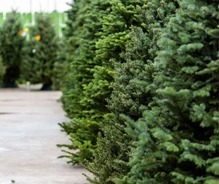
The Environmental Center will be accepting real Christmas trees at no charge through March 1, 2025. Real Christmas trees are biodegradable and can be reused or recycled for mulch and other purposes. You can bring trees in during regular hours of operation. Trees must be free of any lights, decorations, tinsel, or flocking. No other forms of yard waste will be accepted. We cannot accept wreaths due to the metal wiring.
Artificial Christmas trees and string lights are accepted at the Environmental Center year-round. Yard Waste | Carver County, MN
|
 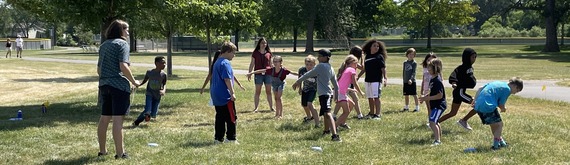
Are you a teacher or non-formal educator? Carver County will be hosting a Project WET training in 2026 and is looking for input on program format.
Project (Water Education for Today) is an international, interdisciplinary, water-science education program used by a variety of educators. This award-winning curriculum is an exceptional resource for educators and has numerous uses including in classrooms, day camps, home school groups, and youth groups.
About the curriculum
Project WET’s educator guides feature field-tested activities for formal and non-formal educators of children from pre-K through high school. Designed for educators, these guides provide in-depth information, engaging activities, and practical lesson plans to inspire and educate students of all ages about the importance of water and environmental stewardship. The activities come in both printed and downloadable formats. Some materials are also available in Spanish.
About the training
- Learn curriculum and classroom activities from Project WET educators
- Earn CEUs
- Receive Project WET activity guides
- Lunch included with registration fee ($20)
- Networking opportunities with fellow educators
Dates, times, and locations are still being finalized, but the training is likely to occur in late spring or early summer of 2026. If you would like to be placed on our interest list to receive updates, please fill out the form below.
|
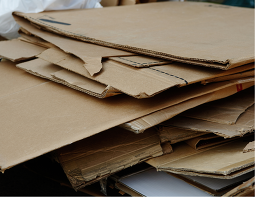
The holiday season brings a surge of cardboard boxes, mailers, and packing materials—and while recycling drop-off sites are a helpful resource, it's best to start with recycling at home. Carver County operates several rural drop-off locations for recycling and problem materials, including general recyclables, cardboard-only bins, and more.
If you're overwhelmed by boxes, first flatten and break them down to maximize space. Keep cardboard clean and dry; damp or food-stained boxes should be thrown away. Remove any plastic film, packing peanuts, or foam before recycling.
While there are dedicated cardboard sites, such as at the county’s rural drop-off facilities, they often fill up quickly—especially during December’s holiday rush. Reducing packaging, reusing shipping materials, and working extra cardboard through your at-home bins first is highly recommended. And remember, if your curbside recycling bin fills up, you can request additional bins for free from your waste hauler to help manage holiday volume.
|
Reduce holiday waste and support the community
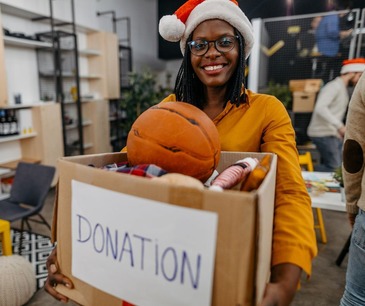
The holiday season often brings a noticeable increase in waste. From shipping boxes and packaging to old decorations and items we replace. Before tossing anything out, consider reuse or donation. Following the waste hierarchy (reduce, reuse, recycle, then dispose) is the most effective way to cut waste and support local reuse efforts.
Carver County offers several reuse-focused resources that make it easy to give items a second life and keep usable materials out of the landfill.
Local Reuse and Donation Resources
-
ReclaimIt — Carver County’s building-material reuse program accepts and redistributes quality items such as cabinets, fixtures, windows, doors, flooring, and salvageable lumber. Residents can donate materials or shop reclaimed items at accessible locations.
-
SouthWest Metro Lending Library — A nonprofit lending resource that allows residents to borrow items they need only occasionally—tools, equipment, kitchen items, games, and more. This reduces unnecessary purchases and keeps rarely used items in circulation. A membership to the lending library also makes a great low-waste holiday gift, giving recipients year-round access to shared items while supporting a community reuse model.
-
Reuse Minnesota Holiday Gift Guide — Reuse Minnesota’s annual gift guide offers a curated collection of secondhand, repurposed, refurbished, upcycled, and experience-based gift ideas from member organizations across Minnesota. It’s a helpful resource for anyone looking to give meaningful, low-waste gifts this season.
-
Carver County Reuse Resource List — Visit the county’s reuse webpage for a full list of local organizations offering repair, resale, lending, and donation opportunities throughout the year.
Choosing reuse first saves resources, reduces landfill demand, and strengthens local reuse networks during the busiest waste season of the year.
|