|
The Carver County Water Management Organization sends an annual bulletin with updates on the health and water quality of Lake Burandt. This bulletin is sent out every summer. If you would also like to receive our monthly newsletter for more frequent updates on our projects and programs, or, if you would like to unsubscribe from our newsletters visit Carver County e-notifications. We appreciate your interest and dedication to keeping our local lakes healthy!
|
|
Water quality updates
Lake Burandt received a C grade for water quality in 2024, which means the lake has average water quality with some algae blooms that may make recreation undesirable early and late in the season. Residents and staff have noticed consistent impairment in Lake Burandt's water quality in the past few years.
The graph shows water quality results from 2024 for phosphorus and chlorophyll-a concentrations, and transparency measurements. The dashed lines indicate the water quality standards set by the state. For phosphorus and chlorophyll-a, values above the state standard indicate poorer water quality conditions. For transparency, values below the state standard indicate poorer water quality conditions. Lakes are listed as impaired when the average summer values for a given water quality metric do not meet the state standard.
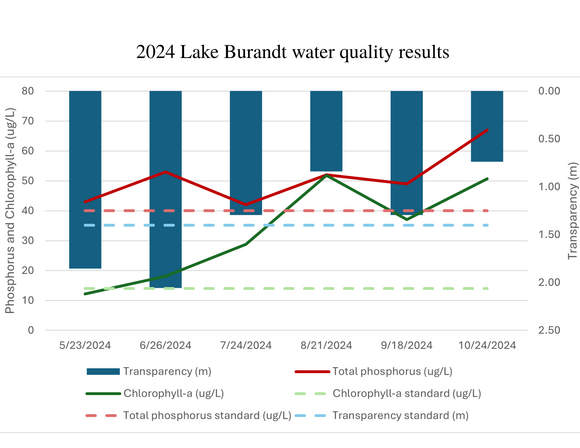 Lake Burandt water quality results from 2024. The phosphorus (red) and chlorophyll-a (green) axis is on the left side of the graph, and the transparency (blue) axis is inverted and on the right side of the graph. We want to see each water quality metric line remain below the dashed standard lines for the best lake health.
|
|
 Phosphorus
Lake Burandt was impaired for phosphorus in 2024 with a summer average of 53 µg/L.
This nutrient is necessary for lake health, but in high concentrations it can cause algae blooms. Phosphorus levels were high in the spring and fall but met the water quality standard of 40µg/L in early August.
|
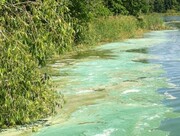 Chlorophyll-a
Lake Burandt was impaired for chlorophyll-a in 2024 with a summer average of 37.4 µg/L.
This compound is produced in algae and is a measurement of how much algae is in the lake. Chlorophyll-a concentrations met the water quality standard of 14 µg/L in late May but rose throughout the summer.
|
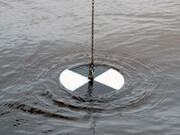 Transparency
Lake Burandt was impaired for transparency in 2024 with a summer average of 1.21 meters. Water transparency was fairly consistent throughout the year, with a few measurements that met the visibility standard of 1.4 meters.
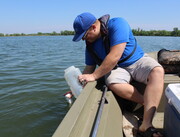
Staff measure transparency (clarity) using secchi disks. The disk is lowered into the water and the depth measured when the disk disappears. The deeper the reading, the better the water clarity.
|
|
Lake ecosystem updates
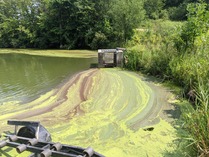
Blue-green algae blooms
Many lakes this summer are seeing blue-green algae blooms. Though often referred to as algae, blue-green algae are not algae at all, but types of bacteria called cyanobacteria. These cyanobacteria can produce toxins that cause illness in humans and animals (like pets) if they are inhaled or ingested.
Blue-green algae prefer warm water with temperatures higher than 75°F and calm, sunny weather. The blooms are often blue-green in color, but can also be blue, green, reddish-purple, or brown.
There is no way to tell if a blue-green algae bloom has or is producing toxins just by looking at it. It’s best to avoid contact with the water and keep children and pets away too. The toxins can also persist after the bloom has disappeared so watch for green scum on the shorelines which may mean there was a recent bloom. If you do come in contact, wash with fresh water afterwards.
|
|
|
No wake ordinance
With the summer's frequent heavy rainfalls, higher lake levels could trigger Carver County’s automatic no-wake ordinance. This ordinance applies only to Lakes Waconia, Bavaria, Reitz, and Pierson. The ordinance helps prevent shoreline erosion and property damage.
Other lakes in Carver County are not included in the ordinance because they are either covered by a city ordinance, they have lower use, or there have been no need for one in the past.
A no-wake means boats must travel at the slowest speed possible (under 5 mph) to maintain control and minimize waves. If the ordinance goes into effect, signs will be posted at public lake accesses and updates will be shared on the County’s website and social media. Staff will continue to monitor lake levels and keep the public informed if and when the no-wake rules are activated.
|
|
What can you do to keep Lake Burandt healthy?
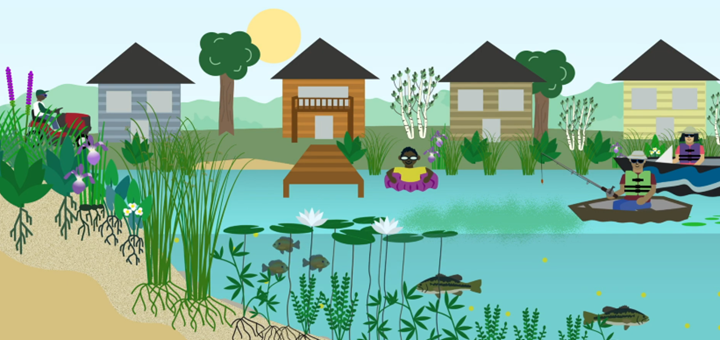
The ways we live on and around lakes have large impacts on water quality. Check out this video from the Anoka County Soil and Water Conservation District to see how we impact lake health, and what we can do to ensure we are good stewards of our water.
|
|
What's the deal with aquatic invasive species?
Aquatic invasive species (AIS) are non-native plants, animals, or pathogens that, when introduced to a new habitat, cause harm. There are several different aquatic species that are invasive in Minnesota such as common carp and zebra mussels.
|
|
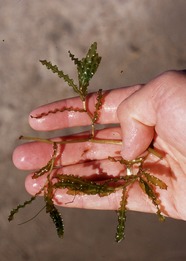
Why are aquatic invasive species harmful?
Aquatic invasive species are harmful to lakes and streams because they have the ability to alter the entire ecosystem. Plants, such as curly leaf pondweed, can form thick mats on the surface of the water. This overcrowds other aquatic plants and makes it challenging for fish to survive.
Invasive animals are also threatening to aquatic habitats. The common carp feeds on shallow rooted plants, taking an important food source away from native fish. Invasive species take over water bodies, often eliminating native species in the process.
How are they spread?
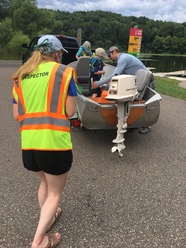
Aquatic invasive species can be spread by weather events, humans, and animals. The most common cause of spread are humans, particularly when entering or leaving a lake or river. Species can be inside live wells, on boat motors and trailers, and can get stuck on shoes and equipment. It is important to watch out for invasive species, so they are not spread from one water body to another.
|
|
|
 |
|
Prevention in Carver County
Carver County has an aquatic invasive species prevention and monitoring plan. The plan includes a watercraft inspection and decontamination program, monitoring program, rapid response plan, and education. All which seek to prevent the spread of aquatic invasive species and manage populations that exist.
|
What can you do?
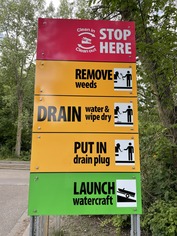
Follow the guidelines and best practices to prevent the spread.
- Clean off your boat and shoes before entering or leaving a water body.
- Drain and dry any equipment that is wet after leaving a lake, making sure not to transport water from one location to another.
- Dispose of any bait used. Do not dump the bait into the water. It is best to throw the live bait into a trash can.
- Know and follow Minnesota invasive species laws.
|
Volunteer at Starry Trek August 9
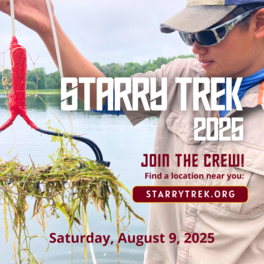
Starry Trek is a program that works to find and identify starry stonewort, an aquatic invasive species. In is an annual, one-day event in various locations around Minnesota. You will learn how to identify starry stonewort and other aquatic invasive species.
There were 197 volunteers that helped out in 2024.This year, Starry Trek is on August 9th! To learn more about the program and how to join, click the link below.
|
|
 |
Join the Nitrate Watch
 |
|
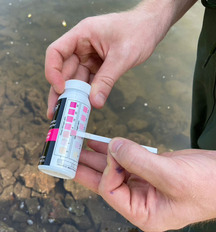
Nitrate is a naturally occurring compound that, when in high amounts, causes harm to water. Currently, there are incredibly high levels of nitrate in Carver County. Carver County needs your help monitoring the water near you to know where to focus improvements.
The Nitrate Watch is a program through the Izaak Walton Leage of America (IWLA). It provides nitrate sampling kits to various communities. Carver County has partnered with IWLA, and sampling kits are now available for you. You have the ability to help improve nitrate levels in the county! Click the link below to join
|
|
|
Water quality grants
The Carver County Water Management Organization wants to help you protect our water! If you have a project you would like to implement that will improve water quality, we can match 75% (up to $5,000) of the cost of your project. These projects include raingardens, shoreline restoration, water reuse projects, and more!
|
|
Pollinator habitat grants
The Carver County Soil and Water Conservation District has funding to help you install new pollinator gardens! These gardens provide food and shelter to native pollinators and keep our water clean by preventing soil erosion and stopping runoff from reaching lakes and streams. You may receive up to $2,000 to create this beautiful habitat!
|
|
Shoreline habitat restoration grants
How healthy is your shoreline? Native plants keep runoff out of our lakes and streams better than turf grass. The Carver County Soil and Water Conservation District has funding to convert your turf grass shoreline into native habitat. You may receive 75% (up to $2,500) to establish native shorelines that keep our lakes clean!
|
|
Smart irrigation controller discounts
Carver County participates in the Rachio, Inc. Redemption Program to provide smart irrigation controllers to residents at reduced costs. Smart controllers link to local weather conditions to provide exact water needs for lawns and gardens saving both water and money.
|
|
|
You can make a big difference in the quality of Lake Burandt! Please reach out to us with any questions, comments, or concerns about lake and stream health in Carver County.
|
|
|
|
|