|
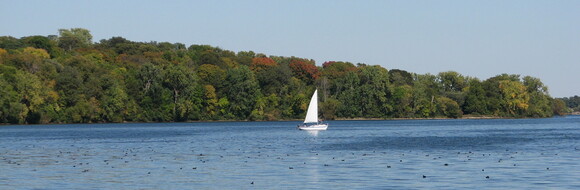
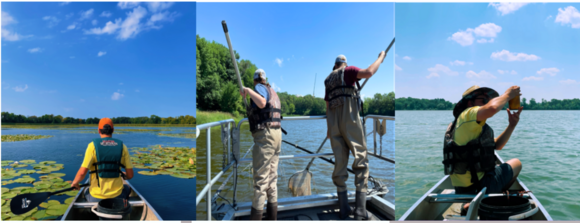
The Carver County Water Management Organization sends an annual bulletin with updates on the health and water quality of lakes and streams. This bulletin is sent out every summer. If you would also like to receive our monthly newsletter for more frequent updates on our projects and programs, or, if you would like to unsubscribe from our newsletters visit Carver County e-notifications. We appreciate your interest and dedication to keeping our local lakes healthy!
|
|
Meet our lakes and streams
Our many lakes and streams in Carver County rely on you to help keep them clean healthy. Learn more about water quality in the Carver County Water Management Organization, our ongoing projects and programs, and ways for you to get involved
|
|
Ecosystem updates
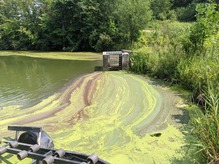
Blue-green algae blooms
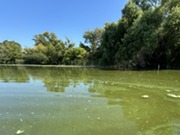
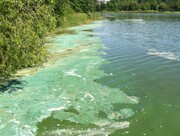
Many lakes this summer are seeing blue-green algae blooms. Though often referred to as algae, blue-green algae are not algae at all, but types of bacteria called cyanobacteria. These cyanobacteria can produce toxins that cause illness in humans and animals (like pets) if they are inhaled or ingested.
Blue-green algae prefer warm water with temperatures higher than 75°F and calm, sunny weather. The blooms are often blue-green in color, but can also be blue, green, reddish-purple, or brown.
There is no way to tell if a blue-green algae bloom has or is producing toxins just by looking at it. It’s best to avoid contact with the water and keep children and pets away too. The toxins can also persist after the bloom has disappeared so watch for green scum on the shorelines which may mean there was a recent bloom. If you do come in contact, wash with fresh water afterwards.
|
|
|
No wake ordinance
With the summer's frequent heavy rainfalls, higher lake levels could trigger Carver County’s automatic no-wake ordinance. This ordinance applies only to Lakes Waconia, Bavaria, Reitz, and Pierson. The ordinance helps prevent shoreline erosion and property damage.
Other lakes in Carver County are not included in the ordinance because they are either covered by a city ordinance, they have lower use, or there have been no need for one in the past.
No-wake means boats must travel at the slowest speed possible (under 5 mph) to maintain control and minimize waves. If the ordinance goes into effect, signs will be posted at public lake accesses and updates will be shared on the County’s website and social media. Staff will continue to monitor lake levels and keep the public informed if and when the no-wake rules are activated.
|
|
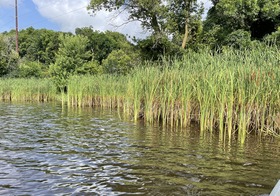
High water levels along shoreline
Flooding in spring 2024
|
|
Lake water quality updates
Staff members monitor 20 lakes in Carver County: Bavaria, Benton, Big Woods, Brickyard Clayhole, Burandt, Courthouse, Eagle, Fireman's, Gaystock, Goose, Grace, Hazeltine, Hydes, Jonathan, McKnight, Meuwissen, Miller, Reitz, Swede, and Waconia.
Lake grades
Each year we grade our lakes on an A-F scale based on our water quality data. Here is the report card for our lakes in 2024.
|
|
A: Brickyard Clayhole, Courthouse, Fireman's
Lakes with A grades are beautiful and clean, and can be enjoyed recreationally throughout the season.
All three of our grade A lakes are in downtown Chaska. These lakes were originally clay mines that were later filled with water. Courthouse Lake is a designated trout lake, which means it is stocked for trout each year and must maintain very high water quality.
|
|
Courthouse Lake in November 2023
|
|
B: Waconia
Lakes with B grades have good water quality, but algae may prevent some recreation, especially later in the summer.
Lake Waconia is a very popular destination for boating, fishing, and swimming. Lake Waconia is infested with multiple invasive species, such as zebra mussels, eurasian watermilfoil, and curlyleaf pondweed, but its water quality is generally good throughout the year.
|
|
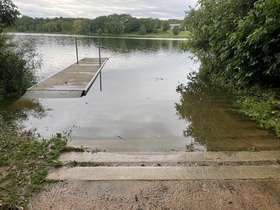
Lake Waconia Regional Park boat launch in July 2023
|
|
C:Bavaria, Burandt
Lakes with C grades have average water quality, and algae may limit recreation earlier in the summer with some algae blooms.
There was significantly improved water clarity on Lake Bavaria in 2024.
|
|
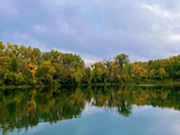
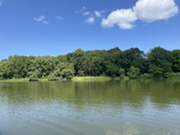
Lake Bavaria in October 2024
|
|
D: Big Woods, Grace, Hydes, Miller, Meuwissen, Reitz
Lakes with D grades have poor water quality and algae blooms that limit recreation throughout the year.
Though Big Woods and Meuwissen are impaired for chlorophyll-a, they have significantly improved from last year.
|
|
Hydes Lake algae blooms in August 2024
|
|
F:Benton, Eagle, Gaystock, Goose, Hazeltine, Jonathan, Swede
Lakes with F grades have very poor water quality and are not enjoyable for recreation.
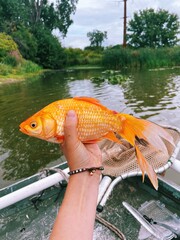
Lake Hazeltine, and Lake Jonathan are all part of the Grace Chain of Lakes, which are infested with invasive goldfish that muddy the water and kill native life.
|
|
Lake water quality results
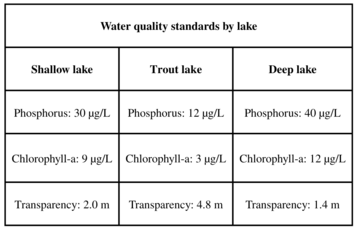
Water quality standards are based on a lake's classification. In Carver County, lakes are classified as deep, shallow, or trout. Each classification has its own set of water quality standards (see chart).
The graph below shows average summer water quality results for 2024 by lake for phosphorus, chlorophyll-a, and transparency measurements. For good water quality, we want to see lower chlorophyll-a and phosphorus measurements and higher transparency measurements.
Lakes are listed as impaired when the average summer values for phosphorus or chlorophyll-a are higher than their standard, or lower than their transparency standard.
|
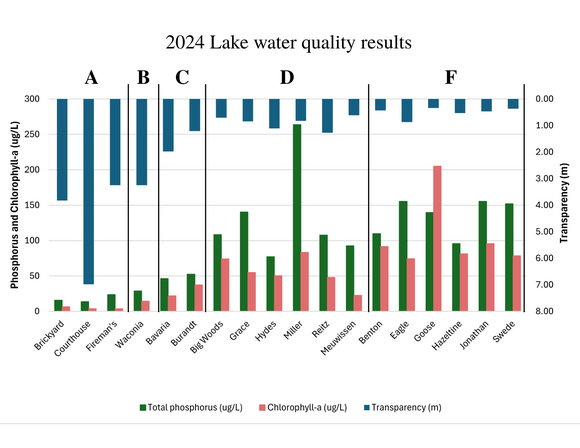 Carver County lake water quality results from 2024. The phosphorus (green bars) and chlorophyll-a (red bars) axis is on the left side of the graph, and the transparency (blue bars) axis is inverted and on the right side of the graph. The lakes are in order of their lake grade.
|
|
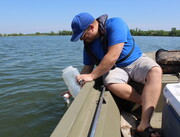 Phosphorus
This nutrient is necessary for lake health, but in high concentrations it can cause algae blooms.
In 2024, 5 lakes were not impaired for phosphorus: Brickyard Clayhole, Bavaria, Courthouse, Fireman's, and Lake Waconia.
|
 Chlorophyll-a
This compound is produced in plants and is a measurement of how much algae is in the lake.
In 2024, 3 lakes were not impaired for
chlorophyll-a: Brickyard, Courthouse, and Fireman's Lake.
|
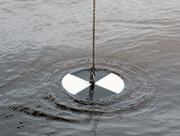 Transparency
Staff measure transparency (clarity) using secchi disks. The disk is lowered into the water and the depth measured when the disk disappears. The deeper the reading, the better the water clarity.
In 2024, 5 lakes were not impaired for transparency: Brickyard Clayhole, Bavaria, Courthouse, Fireman’s, and Lake Waconia.
|
|
Stream water quality updates
Staff members monitor six streams in Carver County: Assumption Creek, East Chaska Creek, West Chaska Creek, Bevens Creek, Carver Creek, and the South Fork of the Crow River. See below for the 2024 stream monitoring report.
|
|
Lake and stream water monitoring surveys
Check out the links below to see all of the data we collect on lakes and streams in Carver County!
|
|
|
The Carver County Water Management Organization managed 27 projects in 2024 to improve water quality in our boundaries. These projects included streambank and shoreline restorations, goldfish management, and native plantings, which will allow us to keep our lakes and streams clean and healthy for generations to come. Learn more about some of our projects below or check out our 2024 Annual Report.
Project highlights
|
|
Benton Lake vegetation transplant
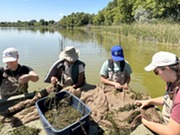
Benton Lake's water quality is poor and has been known to be infested with invasive carp. Because of this, there is very little aquatic vegetation. In recent years though, the carp population has dropped to a manageable level and water quality is improving. In 2024, water quality was observed to be stable enough to perform a vegetation transplant. 5 species of native aquatic plants were brought from donor lakes and installed. After further monitoring, it was found that the transplant was effective. Monitoring is continuing to fully determine the success of the project.
|
|
Curly leaf pondweed on Eagle Lake
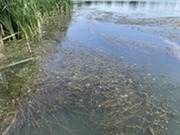
Curly leaf pondweed is an aquatic invasive species. It starts growing in the early spring and dies in the beginning of summer. It spreads rapidly and takes over the surfaces of lakes, shading native plants and making it difficult for boat navigation. Carver County surveyed curly leaf pondweed on Eagle Lake. It was found in incredibly high amounts, covering much of the lake's surface.
Turions were also surveyed. These are the small dormant buds of curly leaf pondweed that sit at the bottom of lakes and bloom when conditions are correct. Turions are an indicator for how much curly leaf pondweed there will be in the future. In Eagle Lake, over 2,000 turions were discovered. This shows there is likely to be a lot of curly leaf pondweed next summer.
Staff will continue to survey and use the data to determine how to successfully treat and/or remove curly leaf from Eagle Lake in the future.
|
|
Mats of curly leaf pondweed on Eagle Lake
|
|
Big Woods ravine project
The County completed a study looking at ways to stabilize a ravine on the east side of Big Woods Lake. A project plan was created last year and work on this project has now started. The goals of the project are to hard armor the head into the ravine, reshape the channel bottom with three grade checks, and grade slopes. This will reduce the amount of phosphorus and sediment entering the ravine and thus Big Woods Lake.
|
|
What's the deal with aquatic invasive species?
Aquatic invasive species (AIS) are non-native plants, animals, or pathogens that, when introduced to a new habitat, cause harm. There are several different aquatic species that are invasive in Minnesota such as common carp and zebra mussels.
|
|
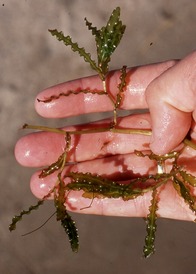
Why are aquatic invasive species harmful?
Aquatic invasive species are harmful to lakes and streams because they have the ability to alter the entire ecosystem. Plants, such as curly leaf pondweed, can form thick mats on the surface of the water. This overcrowds other aquatic plants and makes it challenging for fish to survive.
Invasive animals are also threatening to aquatic habitats. The common carp feeds on shallow rooted plants, taking an important food source away from native fish. Invasive species take over water bodies, often eliminating native species in the process.
How are they spread?
Aquatic invasive species can be spread by weather events, humans, and animals. Humans are a large threat to spreading invasive species, particularly when entering or leaving a lake or river. Species can be inside live wells, on boat motors and trailers, and can get stuck on shoes and equipment. It is important to watch out for invasive species, so they are not spread from one water body to another.
|
|
|
Prevention in Carver County
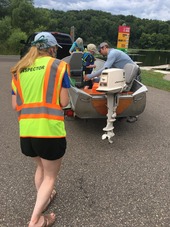
Carver County has an aquatic invasive species prevention and monitoring plan. The plan includes a watercraft inspection and decontamination program, monitoring program, rapid response plan, and education. All which seek to prevent the spread of aquatic invasive species and manage populations that exist.
|
What can you do?
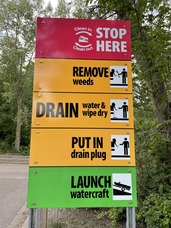
Follow the guidelines and best practices to prevent the spread.
- Clean off your boat and shoes before entering or leaving a water body.
- Drain and dry any equipment that is wet after leaving a lake, making sure not to transport water from one location to another.
- Dispose of any bait used. Do not dump the bait into the water. It is best to throw the live bait into a trash can.
- Know and follow Minnesota invasive species laws.
|
Join the Nitrate Watch
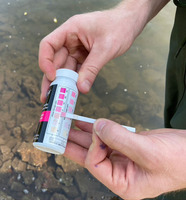
Nitrate is a naturally occurring compound that, when in high amounts, causes harm to water. Currently, there are incredibly high levels of nitrate in Carver County. Carver County needs your help monitoring the water near you to know where to focus improvements.
The Nitrate Watch is a program through the Izaak Walton Leage of America (IWLA). It provides nitrate sampling kits to various communities. Carver County has partnered with IWLA, and sampling kits are now available for you. You have the ability to help improve nitrate levels in the county! Click the link below to join.
|
|
|
Water quality grants
The Carver County Water Management Organization wants to help you protect our water! If you have a project you would like to implement that will improve water quality, we can match 75% (up to $5,000) of the cost of your project. These projects include raingardens, shoreline restoration, water reuse projects, and more!
|
|
Pollinator habitat grants
The Carver County Soil and Water Conservation District has funding to help you install new pollinator gardens! These gardens provide food and shelter to native pollinators and keep our water clean by preventing soil erosion and stopping runoff from reaching lakes and streams. You may receive up to $2,000 to create this beautiful habitat!
|
|
Shoreline habitat restoration grants
How healthy is your shoreline? Native plants keep runoff out of our lakes and streams better than turf grass. The Carver County Soil and Water Conservation District has funding to convert your turf grass shoreline into native habitat. You may receive 75% (up to $2,500) to establish native shorelines that keep our lakes clean!
|
|
Rachio smart sprinkler discount
Carver County participates in the Rachio, Inc. Redemption Program to provide smart irrigation controllers to residents at reduced costs. Smart controllers link to local weather conditions to provide exact water needs for lawns and gardens saving both water and money.
|
|
|
You can make a big difference in the quality of our waters! Please reach out to us with any questions, comments, or concerns about lake and stream health in Carver County.
|
|
|
|
|