 July 2025
Betterbin tip of the month
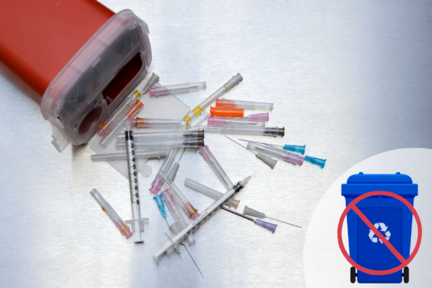
Proper disposal of needles, syringes, lancets, and other medical sharps is essential for the safety of recycling and waste management workers. When these items are placed in curbside recycling bins—or even trash bins uncontained—they can seriously injure workers and contaminate materials meant for recycling.
Why it matters
Recycling sorting facilities use high-speed equipment and rely on workers to manually separate materials. When a sharp is hidden in a bag or container, it poses a risk of puncture injuries. Even used lancets or pen needles can carry bloodborne pathogens, making any accidental contact a serious health hazard.
Proper disposal
-
Place used sharps in a red sharps container available for free upon request from the Carver County Environmental Center.
-
Secure the lid tightly when the container is full.
-
Bring the sealed container to the Environmental Center for safe disposal.
Sharps should never be placed in the trash or recycling. Help protect our workers by using the proper container and disposal method. Have more questions about recycling? Try Carver County’s recycling app Betterbin. Free to Carver County residents.
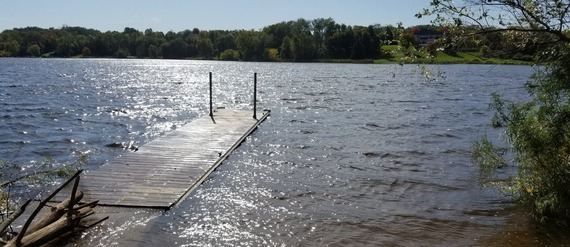 With recent heavy rainfalls, lake levels are rising, and some may trigger Carver County’s automatic no-wake ordinance. This ordinance applies to Lakes Waconia, Bavaria, Reitz, and Pierson when high water levels are reached, helping prevent shoreline erosion and property damage. A no-wake means boats must travel at the slowest speed possible (under 5 mph) to maintain control and minimize waves. If the ordinance goes into effect, signs will be posted at public lake accesses and updates will be shared on the County’s website and social media.
Currently, only Reitz Lake has the no wake ordinance activated. Staff will continue to monitor lake levels and keep the public informed if and when the no-wake rules are activated.
Residents get an additional $20 off July 21 - 28
 |
|
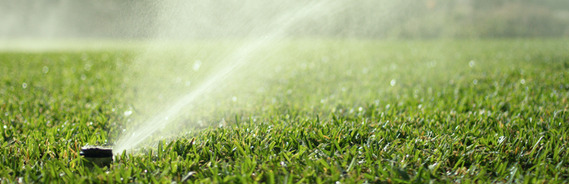
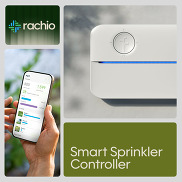
Carver County participates in Rachio's Redeem program where residents can get discounted smart controllers for irrigation systems. These controllers use local weather forecasts to help get the right amount of water to your lawn and gardens. Giving you a healthy lawn, preserving our groundwater, and saving you money on your water bill.
Get an extra $20 off during bonus week July 21-28.
|
August 5, 2025
6:00 p.m. to 7:30 p.m.
Chaska Community Center 1661 Park Ridge Dr, Chaska, MN 55318
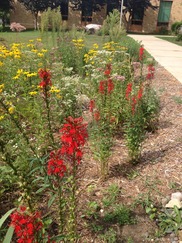
Whether you’re a native planting pro or considering your first native plant project, knowing how to maintain your native planting can keep it beautiful and thriving for years to come.
While native plants require less maintenance than traditional turfgrass lawns, maintenance needs for native plantings may differ by location, type of project, and establishment time.
In this workshop, learn best maintenance practices for your project and how to identify common threats to your native planting.
- Helpful tools/resources
- Preventative maintenance practices
- Identifying common invasive and aggressive species
- Scheduling maintenance throughout the year
- How maintenance changes over time
- Pollinator-friendly maintenance
|
Reveals opportunities to reduce and recycle
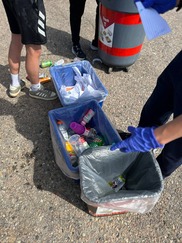
Carver County Environmental Services recently partnered with Chaska High School for a hands-on waste sort to better understand what’s ending up in trash and recycling bins. The event is held on-site with help from school staff and student volunteers and is part of the County’s ongoing efforts to improve recycling and organics diversion in schools.
What is a waste sort?
A waste sort involves collecting and sorting a day’s worth of garbage and recycling to analyze the types and amounts of materials being discarded. Items are separated into categories such as recyclables, organics (like food waste), and true trash to determine how much could have been composted or recycled instead. At Chaska High School, both trash and recycling bins were sorted from 64 classrooms and offices—representing about half the building.
|
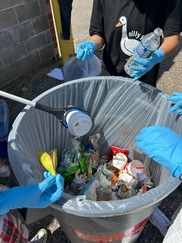
Key findings
- A total of 206 pounds of waste was collected in one day from the selected rooms: 92.2 lbs of trash and 113.9 lbs of recycling.
- Overall, about 61% of the total waste could have been recycled.
- 31% of the contents found in trash bins should have been in the recycling.
- Contamination in recycling bins was lower than expected. On average, about 14% of the materials in recycling bins should have gone to the landfill, which is not far off from the industry standard goal of 10% or less.
A common misconception is that school recycling is too contaminated to be properly recycled. In fact, the recycling collected at Chaska High School is close to meeting industry standards—showing that students and staff are making strong efforts. With a few small improvements, the school could easily reach best-practice levels.
|
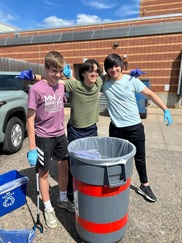
Why it matters
Understanding what’s in the trash helps schools and the County:
- Engage students in hands-on activities like waste sorts, which build lifelong habits around responsible waste disposal and environmental stewardship
- Develop targeted education for students and staff
- Reduce waste sent to landfills
- Support local and state waste reduction goals
Next steps
Carver County will continue working Chaska High School students and staff to:
- Improve bin placement and signage
- Reinforce sorting education for students and staff
- Continue improving waste diversion in challenging areas like the cafeteria
|
This waste sort is one of several taking place across Carver County schools and is helping shape smarter, more sustainable waste practices. With continued collaboration, Chaska High school has the potential to become a leader in school waste reduction efforts.
Interested in doing a similar project?
If your school, organization, or business is interested in conducting a waste sort or improving your recycling program, contact Carver County Environmental Services at (952) – 361-1800, message RecycleCarver on Facebook, CCEnvironmentalCenter on Instagram or visit the Environmental Services webpage.
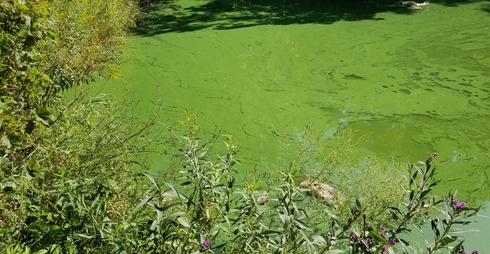
Staff are monitoring lakes for freshwater phytoplankton. Phytoplankton are algae that drift in lakes and rivers and are key part of freshwater ecosystems. Staff seek to understand the phytoplankton communities in our lakes, how they change over time, and identify popular lakes that may be at risk for harmful algae blooms.
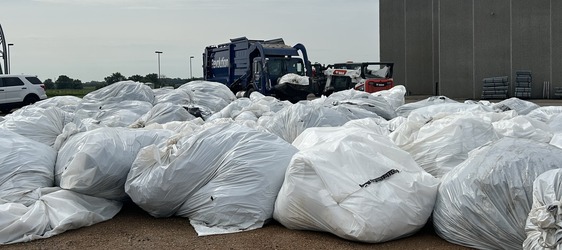
Carver County’s spring agricultural, marine, and greenhouse plastic recycling program wrapped up on June 17, 2025, marking the end of a successful season aimed at reducing landfill waste and promoting sustainable practices. Thanks to a partnership between Carver County Environmental Services, Revolution Plastics, and the University of Minnesota Extension Office, local farmers, marinas, and greenhouses recycled a total of 23,000 pounds of plastics.
The 23,000 pounds of film plastics were collected over a two-month period. This innovative program recycles valuable and energy-rich plastics destined for landfills and burn barrels while reducing disposal fees. Participants include farmers, marinas, and greenhouses looking to recycle bunker covers, silage and grain bags, boat film, greenhouse film, hockey rink liners, and stretch wrap.
The program began in 2019 and hosts two collections each year, one in spring and one in fall. Participants gather their plastics, place them into recapture bags, and drop them off at the Carver County Public Works Facility during collection periods. The plastics are hauled away and recycled by Revolution Plastics, a multinational business that specializes in recycling agricultural, marine, and greenhouse plastics. Carver County’s recovered plastics were delivered to Revolution’s recycling plant in Arkansas where they will be recycled into trash can liners and agricultural films.
Residents of Carver County can pick up a free starter pack of 5 recapture bags to collect plastics. Each recapture bag holds approximately 200 pounds of plastics.
For more information, please visit Agricultural, Marine and Greenhouse Plastic Recycling | Carver County, MN (carvercountymn.gov).
|